What a Fire Resistant Conveyor Belt Is
A fire resistant conveyor belt is a rubber or PVC-based belt designed to resist ignition and limit flame spread when it carries coal, ore, cement clinker, biomass or other combustible bulk materials. In practice, buyers often call the same product a flame retardant conveyor belt, and both names point to belts formulated so that a small heat source does not turn into a runaway belt fire. The belt still has to pull its normal load, so fire performance is achieved alongside strength, abrasion resistance and flexibility rather than instead of them.
This matters most where belts run through enclosed galleries, tunnels or transfer towers, such as coal mining conveyor belts underground, power plant coal handling systems, cement plant conveyor lines and port ship loading circuits. A fire retardant conveyor belt is not a substitute for proper housekeeping, belt monitoring and correct pulley alignment, but it adds a layer of protection when friction, hot material or electrical faults occur.
How the Belt Is Built
Most fire resistant conveyor belts use a fabric core or steel cord carcass covered with rubber layers. The carcass carries tension, while the cover compounds protect the core from impact, abrasion and heat. Fire resistance comes from the compound formulation, which is adjusted to reduce flame propagation and, in many mining specifications, to control anti-static behavior as well. A belt that combines both properties is often described as an anti-static conveyor belt with flame retardant capability.
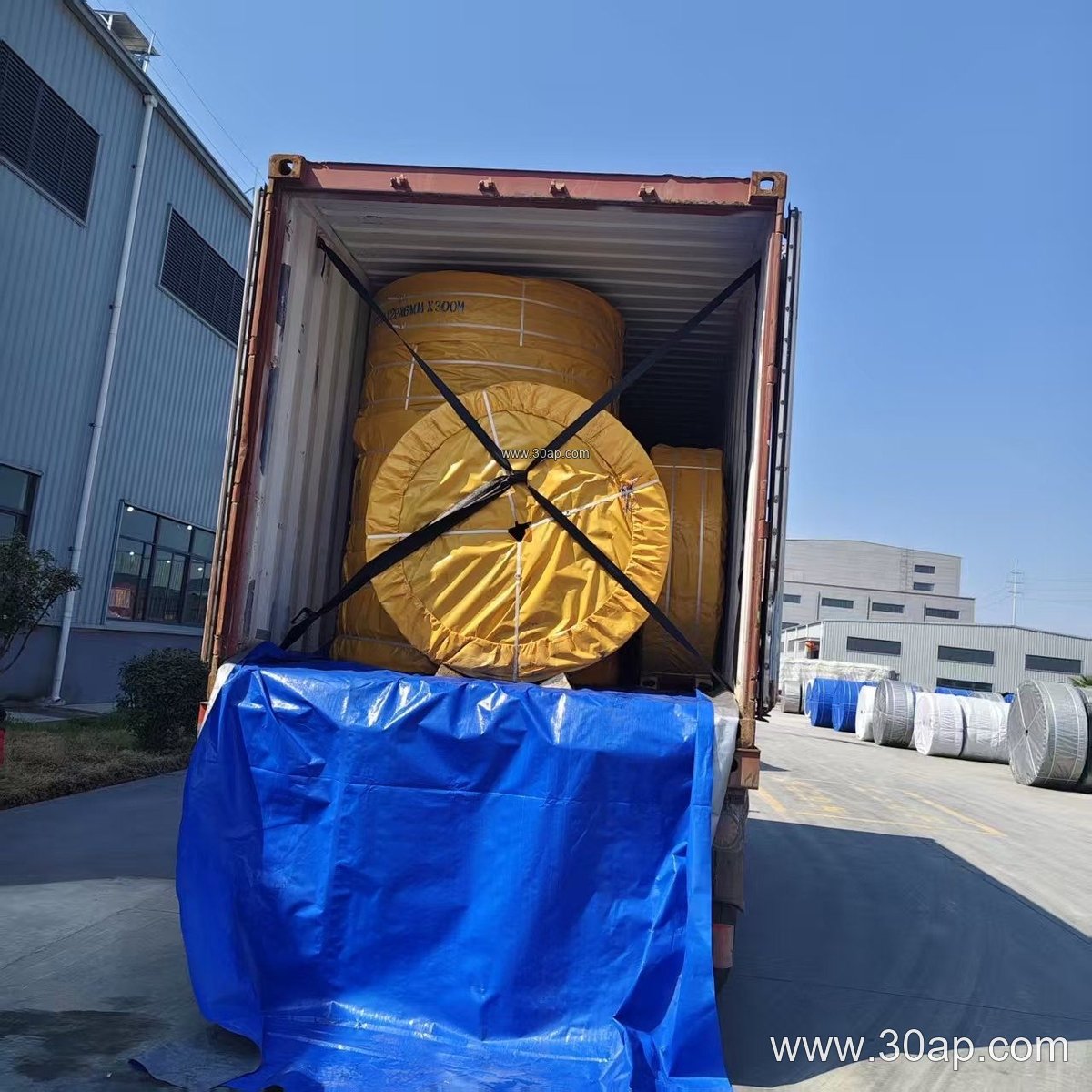
- Carcass options: EP conveyor belt (polyester-nylon), NN conveyor belt (nylon-nylon), multi-ply fabric core conveyor belt, or steel cord conveyor belt for long, high-tension routes.
- Cover construction: top and bottom cover thickness chosen for abrasion, impact and heat exposure; common combinations include 4+2 mm, 5+2 mm and 6+2 mm, with heavier builds for crusher discharge points.
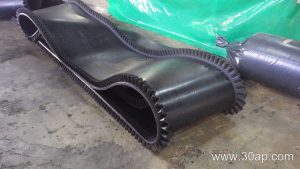
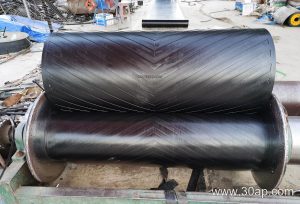
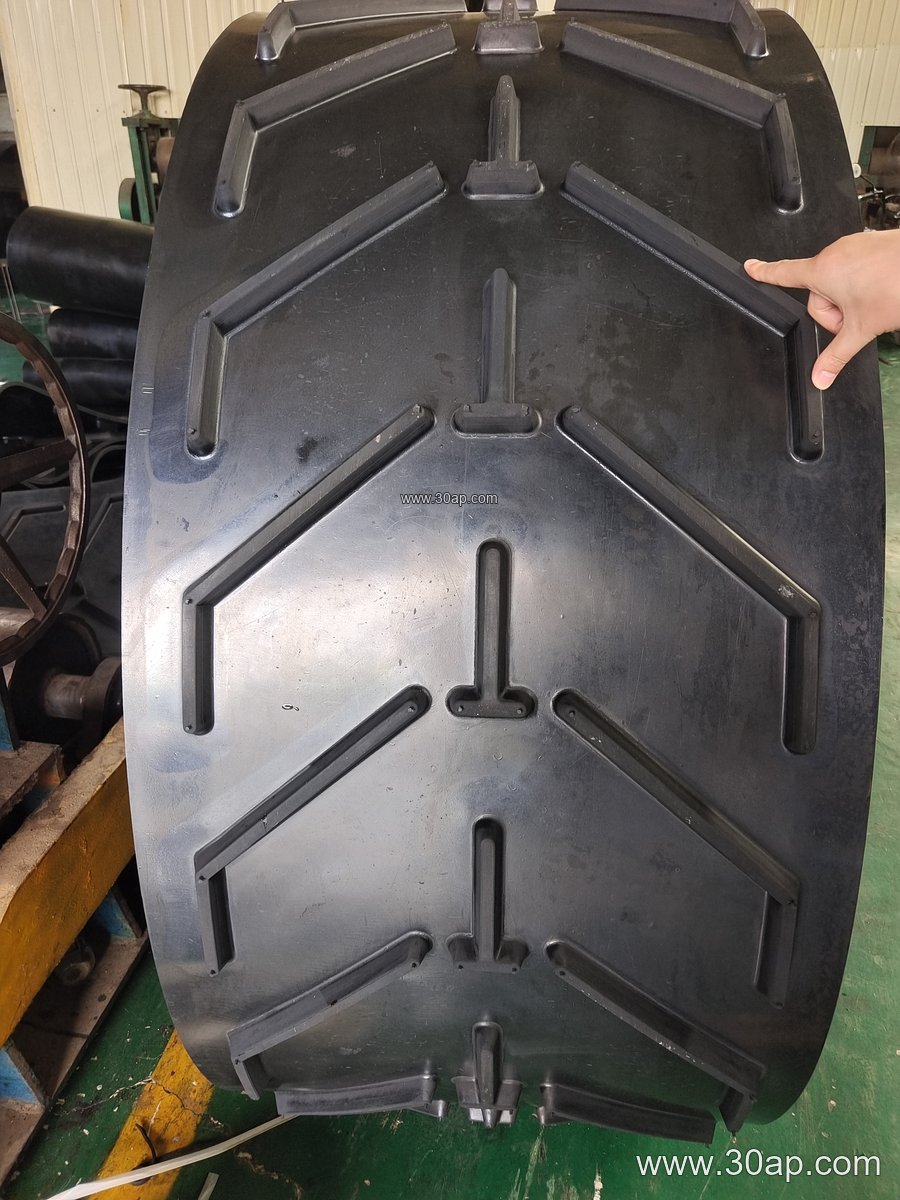
- Surface forms: smooth, chevron conveyor belt profiles for inclined haulage, or corrugated sidewall conveyor belt designs where material must be contained on steep sections.
For underground coal work, PVG conveyor belt and PVC conveyor belt constructions are widely used because they combine flame resistance with anti-static performance. A PVG800S conveyor belt, for example, is a common reference point in that family, though actual supply depends on the manufacturer and the project specification.
Typical Specifications and Reference Data
The table below shows common reference values. These are indicative ranges, not universal guarantees, and final selection should follow the conveyor design, material density, lump size and duty cycle.
| Parameter | Common reference values |
|---|---|
| Belt type | EP conveyor belt, NN conveyor belt, steel cord conveyor belt, PVG conveyor belt |
| Strength grades | EP200, EP315, EP400, EP500, EP630, EP800, EP1000, EP1250; ST1000 to ST3150 for steel cord |
| Belt width | B500, B650, B800, B1000, B1200, B1400, B1600, B1800, B2000 |
| Cover thickness | 3+1.5 mm, 4+2 mm, 5+2 mm, 6+2 mm, 8+3 mm |
| Carcass plies | Usually 2 to 6 plies for fabric core belts |
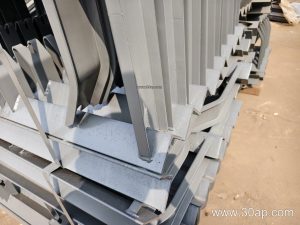
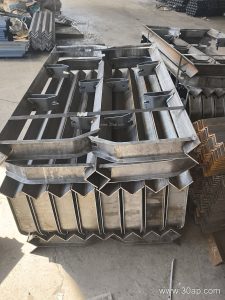
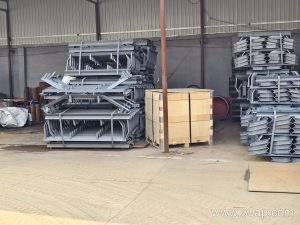
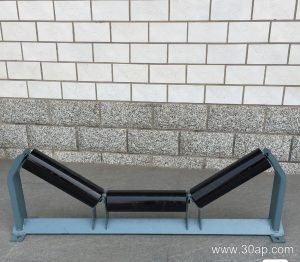
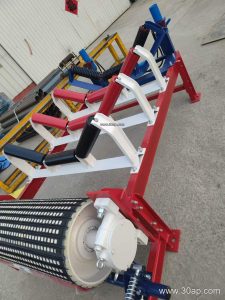
Width and strength are independent choices. A 1000mm or 1200mm belt may run on different pulley diameters depending on the conveyor design, so the belt width alone does not fix the pulley size. The same logic applies to idler roller spacing and conveyor bracket layout, which follow the loaded belt sag and the material being carried.
Where It Fits in the Plant
Fire resistant belts appear across bulk material handling: coal mining conveyor belts and underground mining conveyor belts, quarry conveyor belts and aggregate conveyor belts feeding crushers, cement plant conveyor lines moving clinker and raw meal, and power plant conveyor belts handling coal and limestone. In sand making plants and stone crushing circuits, a fire resistant belt is sometimes specified on sections near hot equipment or enclosed transfer points, while a high abrasion resistant conveyor belt may be the priority on the main haul.
For steep inclines, a chevron conveyor belt or corrugated sidewall conveyor belt can reduce rollback, and the fire resistant compound can still be applied to those profiles. Where oil or heat is present, an oil resistant conveyor belt or heat resistant conveyor belt may be needed instead of, or in combination with, flame retardant properties. Those are different duties and should not be treated as interchangeable.
Buyer Checklist
- Confirm the actual hazard: flame spread, static, hot material, oil, or a combination, and state it clearly in the inquiry.
- Match strength grade and ply count to the calculated belt tension, not to a neighboring line.
- Check cover thickness against impact points such as crusher discharge and transfer chutes.
- Verify belt width, splice type and whether an endless conveyor belt is required for the installation.
- Review pulley lagging, idler roller condition and conveyor bracket alignment during installation, since a misaligned system stresses any belt.
- Ask for the manufacturer’s test data on flame and anti-static performance rather than relying on a product name alone.
A fire resistant conveyor belt is a system component, not a standalone guarantee. Correct grade, careful splicing and steady maintenance of pulleys, idlers and frames keep the belt running safely in mines, cement works, power stations and ports.