What a Conveyor Leg Does on a Troughed Line
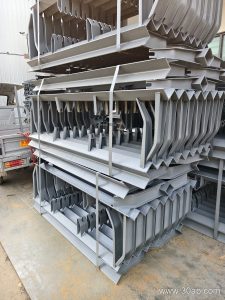
A conveyor leg is the vertical member of a support frame that carries the idler assemblies and, through them, the loaded belt. On a typical troughed section the legs are tied together by a cross beam, and the assembly is usually called an idler support or bracket frame. The leg itself does very little visually, yet its height, spacing and stiffness decide whether the trough stays at the designed angle and whether the belt runs centred. In a quarry transfer house or a power plant coal yard, a slightly short or twisted leg is often the reason a line drifts to one side.
Frames are commonly built from angle steel, channel steel or folded plate, welded or bolted. The leg profile follows the load: light aggregate lines may use angle sections, while heavy iron ore or crusher discharge points call for channel or folded plate with gusseted feet.
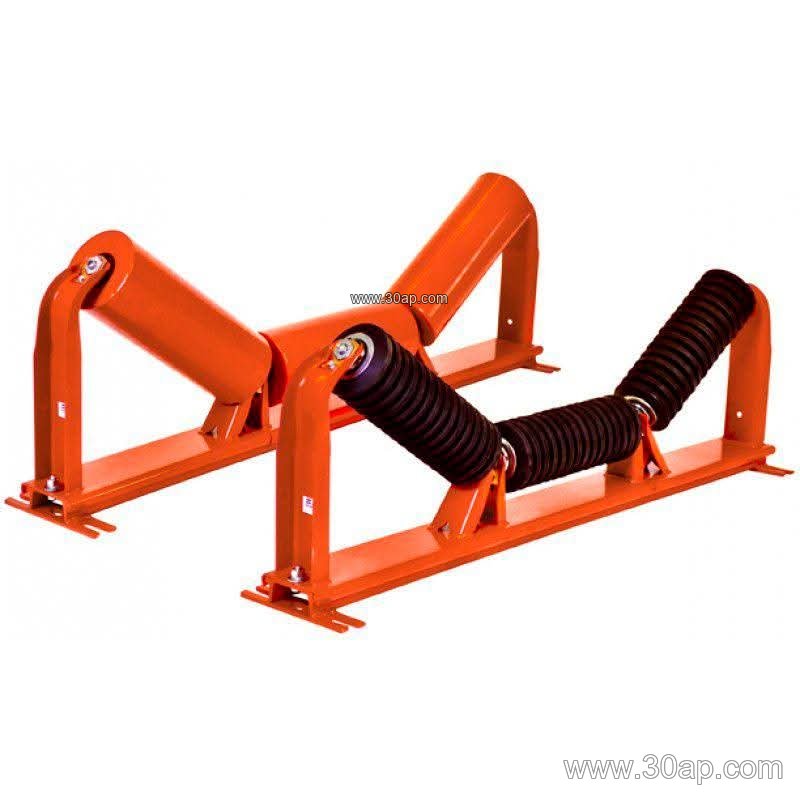
How the Frame Is Put Together
The structure is simple but the details matter. Two legs, a cross beam, mounting holes for the idler frames, and a base plate with slotted holes for floor anchoring. On adjustable versions the leg height can be trimmed on site so the trough line stays level after foundations settle. Fixed legs are welded to a set height and are cheaper, but they leave no room for correction.
- Legs and beam in angle or channel steel, bolted for easy replacement
- Slotted base plates for levelling and thermal movement
- Bolt-on idler mounting pads so a worn bracket can be swapped without cutting
- Optional cross bracing on tall frames or at transfer points
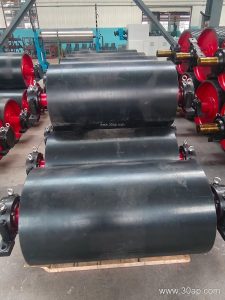
The frame must line up with the conveyor pulley centre lines at both ends, otherwise the belt enters the trough at an angle and wears the edges. It should also sit square to the conveyor belt path, since a skewed frame steers the belt as surely as a misaligned idler roller.
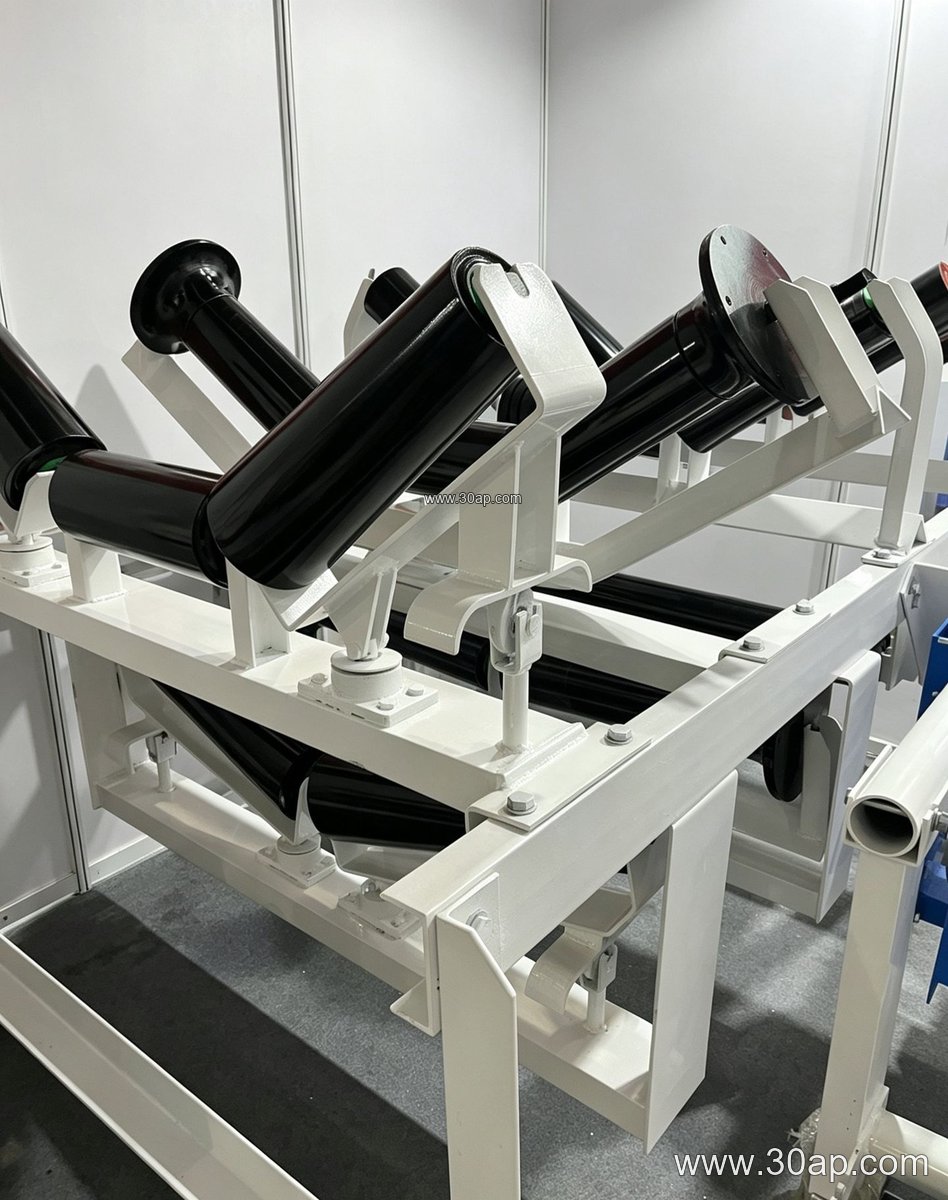
Matching the Frame to Belt Width, Trough Angle and Roll Diameter
Buyers often ask for a frame by belt width alone, but three values drive the design: belt width, trough angle and roll diameter. Common widths run from B500 to B2200, trough angles of 20, 30, 35 and 45 degrees are standard, and roll diameters of Ø89, Ø108, Ø133, Ø159 and Ø194 cover most duties. These are reference ranges, not fixed pairings; a B800 line can be built at 30 or 35 degrees, and the roll size follows load and speed rather than width by itself.
| Belt width | Trough angle | Roll diameter | Typical duty |
|---|---|---|---|
| B500 | 20–30 degrees | Ø89 | Small aggregate, sand |
| B650 | 30 degrees | Ø89–Ø108 | Crushed stone, cement additives |
| B800 | 30–35 degrees | Ø108 | General bulk handling |
| B1000 | 35 degrees | Ø108–Ø133 | Coal, ore, clinker |
| B1200 | 35–45 degrees | Ø133 | Heavy mine and port lines |
| B1400–B1600 | 35–45 degrees | Ø133–Ø159 | Iron ore, large tonnage |
| B1800–B2200 | 35–45 degrees | Ø159–Ø194 | High-capacity trunk conveyors |
Hole spacing and beam length change with width and angle, so they are set by drawing, not by a universal number. Shaft diameter is likewise a design decision, not something to read off a belt width table.
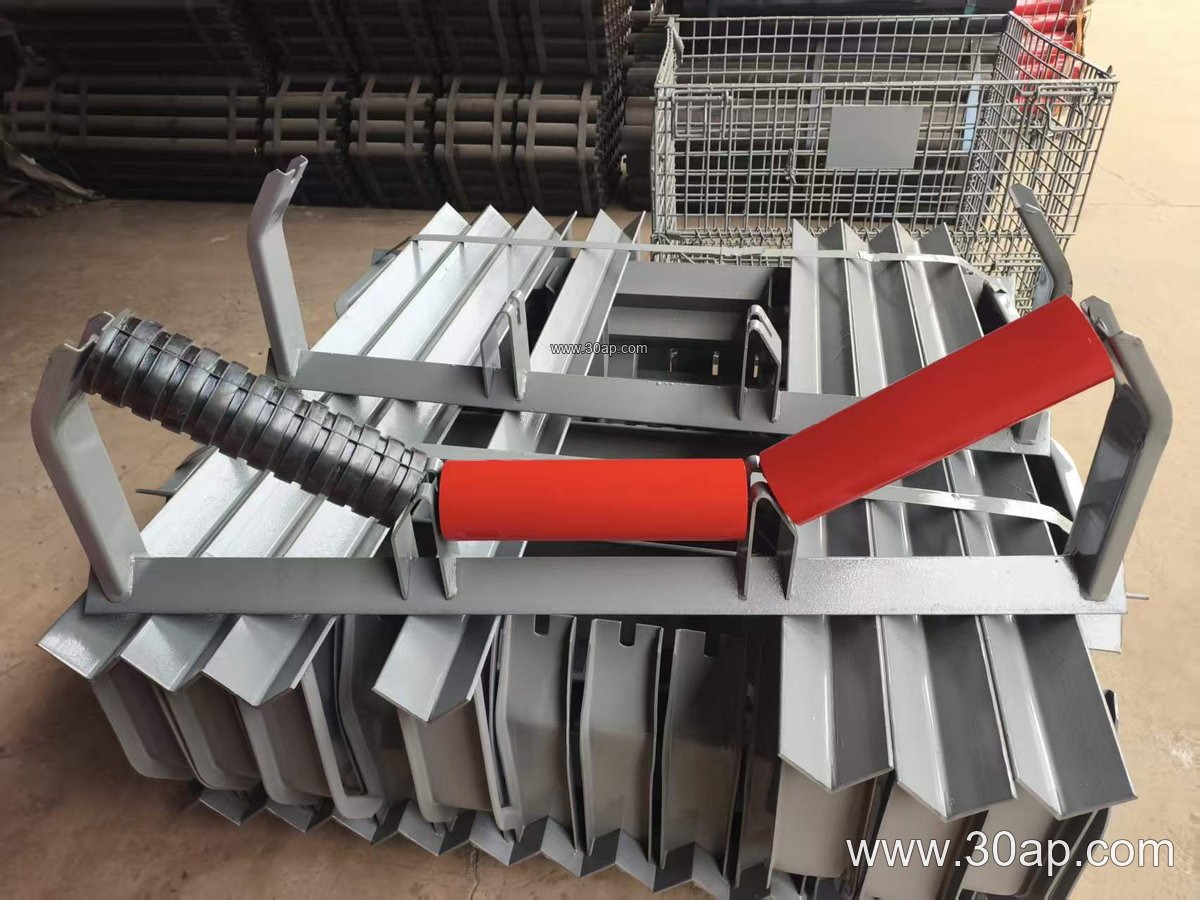
Where These Frames Earn Their Keep
In a limestone quarry the loading zone takes impact, so a buffer frame with resilient idlers protects both the frame and the belt. In a coal preparation plant, flame retardant and anti-static belting is usual, and the frames must be earthed through the structure. A cement plant’s clinker line runs hot, so heat resistant belting and frames that allow thermal growth are preferred. At a port ship loader, long spans mean taller legs and more bracing.
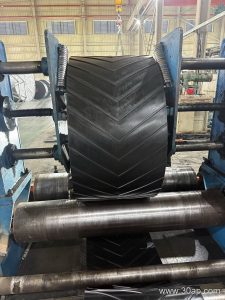
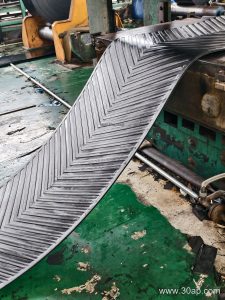
On inclined sections, a chevron or corrugated sidewall belt changes the load pattern and the frame spacing may need tightening. Where a pipe conveyor is used, the leg supports panel frames instead of trough idlers, so the geometry is entirely different.
Selection and Site Checks
Confirm the belt width, the trough angle you actually want, the roll diameter and the mounting hole pattern before ordering. Check that the frame height matches the adjacent conveyor bracket and pulley centres. On site, verify squareness, base grouting and bolt torque, and re-check alignment after the first week of running. A well-set leg frame is quiet, cheap to maintain, and keeps the belt where it belongs.