What a Rubber Impact Idler Does
A rubber impact idler is a conveyor idler roller built to absorb the force of falling material at loading and transfer points. Instead of a plain steel shell, it carries a series of rubber rings or a rubber-covered surface that cushions the impact of lumpy or heavy feed. On a quarry conveyor belt or a crusher conveyor belt, the difference is easy to see: the belt sits on a softer contact surface right under the chute, and the shock is spread over several rings rather than concentrated on one rigid spot.
This idler belongs to the impact idler family, and the rubber-ring version is one of the most common forms. It is not a substitute for a troughing idler, a return idler or a self-aligning idler; it has a specific job at the load point, and the rest of the conveyor still needs its normal idler set.
How It Is Built
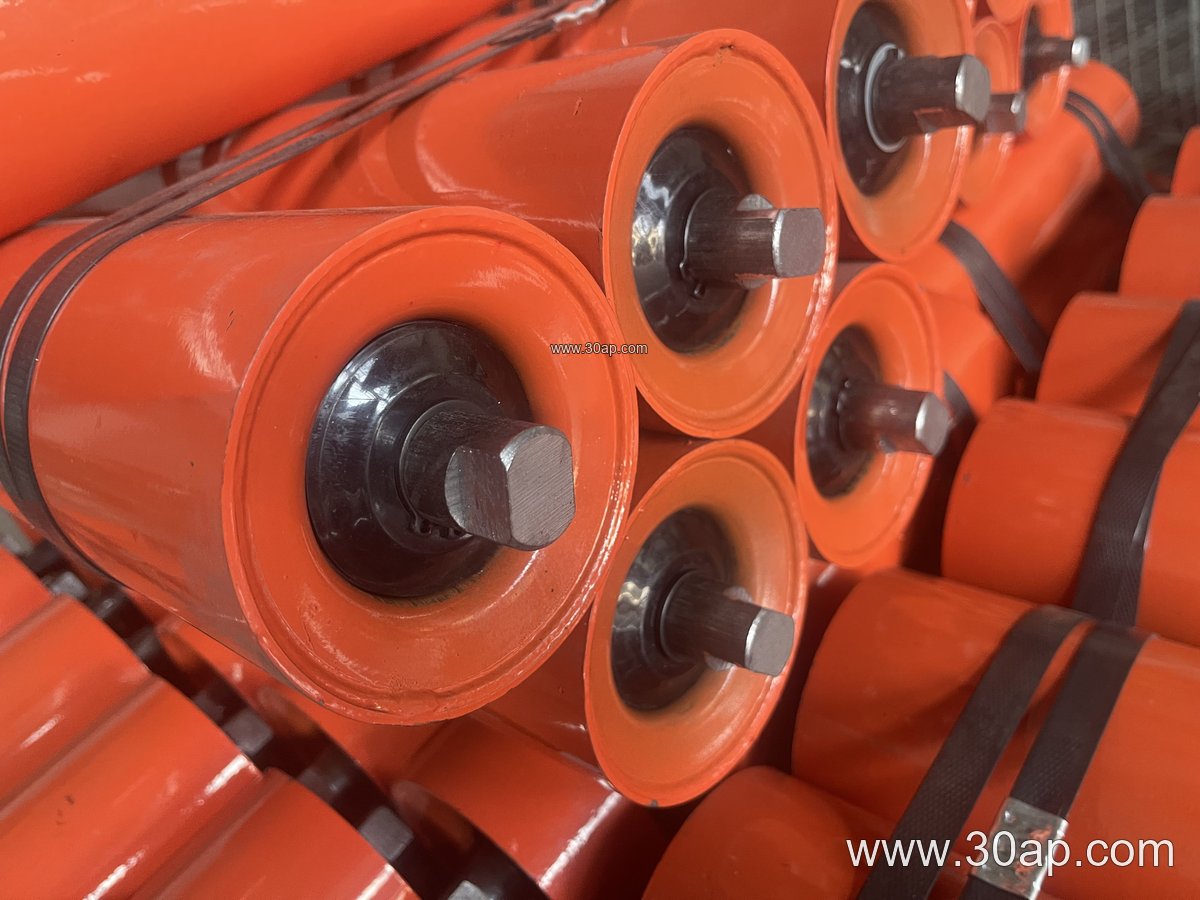
The basic frame follows standard idler practice: a shaft, bearing housings, and a shell. What changes is the outer surface. Rubber rings are fitted along the shell, often in a staggered pattern, and they compress slightly when the belt and material press down. The rings also help keep material from building up on the roller face.
- Roller diameter: commonly Ø89, Ø102, Ø108, Ø127, Ø133, Ø159 or Ø178 mm depending on belt width and load.
- Bearing sizes: 6204, 6205, 6305, 6306, 6308 and 6310 are common; the bearing is matched to the shaft and load, not to the belt width alone.
- Rubber ring hardness and thickness are selected for the drop height and lump size.
- Mounting is through a conveyor bracket or a fixed frame at the loading station.
The rubber rings are the wearing part. In a sand and gravel plant or a limestone mine, they may need replacement before the bearings do, so easy ring replacement is worth checking when comparing designs.
Where It Fits on the Conveyor
The usual position is directly under the loading chute, where a rubber conveyor belt receives crushed rock, ore or aggregate. A short run of impact idlers is often installed, sometimes mixed with standard troughing idlers on either side. In a coal handling system or a power plant coal yard, the same arrangement protects the belt at transfer towers. In a cement plant, impact idlers are common under clinker and limestone chutes.
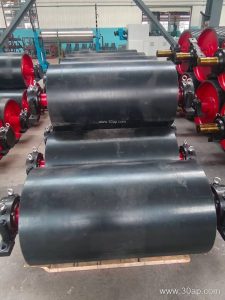
They are also used at the discharge of a crusher conveyor belt and at the head of a quarry conveyor belt where material drops onto the next stage. The rubber surface helps reduce belt cover damage, and it can lower noise compared with steel-only rollers. It does not replace a conveyor pulley at the drive or tail; those are separate components with different duties.
Choosing the Right Size
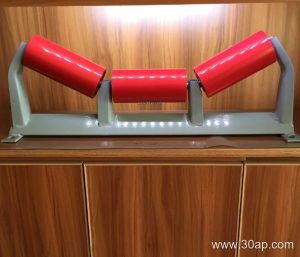
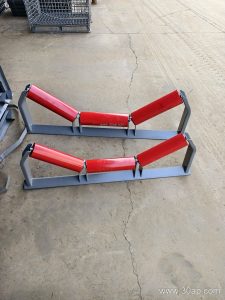
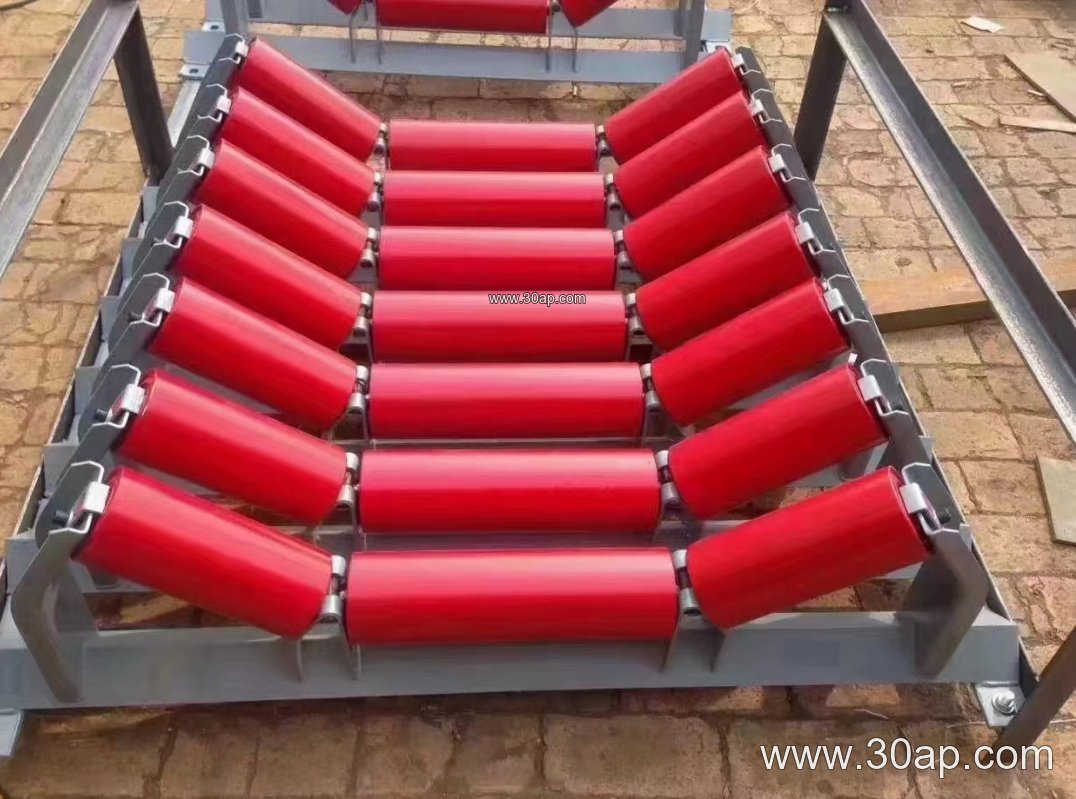
Selection starts with the belt width and the idler set form. A three-roll troughing set with 30-degree or 35-degree trough angle is common, and the impact idler is usually made to suit the same roll length as the adjacent idlers. For example, a B800 belt often uses a roll length near 315 mm in a three-roll set, while a B1200 belt may use about 465 mm. These are common examples, not fixed rules, and side rolls can differ from the centre roll.
Buyers should confirm the shaft diameter, bearing type and bracket spacing with the conveyor maker. A rubber impact idler for a 1200mm wide conveyor belt is not automatically suitable for a 1800mm wide conveyor belt, and the drop height matters as much as the belt width. Where the material is heavy and sharp, a thicker rubber ring and a larger roller diameter may be needed. Where the belt is a steel cord conveyor belt or a heavy-duty mining conveyor belt, the impact idler still works on the same principle, but the load rating should be checked.
Maintenance Notes
Check the rubber rings for cuts, flattening or missing sections, and check that the idler turns freely. A seized bearing can wear the belt edge and damage the rubber rings quickly. Keep the loading chute centred so material does not hit one side of the idler. In dusty locations such as a lime plant or a coal preparation plant, sealed bearing housings are preferred. Spare rings and a few complete idlers kept on site reduce downtime at the loading zone.
For any conveyor belt system, the impact idler is a small part of the total cost but a key part of belt protection. Matching it to the actual belt width, trough angle and material drop is more useful than choosing by catalogue number alone.