What a Conveyor Bracket Does on the Line
A conveyor bracket is the structural interface between the idler roller and the conveyor frame. It holds each roller at the correct height and angle so the conveyor belt keeps its trough shape under load. In a quarry or a cement plant, a weak or poorly matched bracket shows up quickly as belt misalignment, spillage, and premature roller wear. Procurement therefore deserves more attention than a simple count of steel pieces.
Buyers often search for a conveyor bracket, idler frame, or roller support frame. These names describe the same family of components; what changes is the mounting position and the amount of adjustment built in.
How the Bracket Is Built
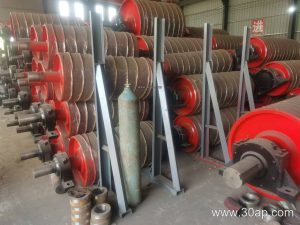
Most brackets are fabricated from angle steel, channel steel, or folded steel plate. The fabrication method affects stiffness and how well the bracket resists vibration from bulk material impact. A typical assembly includes a crossbeam, mounting slots or holes, and welded roller seats.
- Crossbeam length and hole spacing follow belt width and trough angle, so they are set by design rather than fixed numbers.
- Roller seats are positioned for the selected idler diameter and trough angle.
- Welds and galvanizing or painting matter in wet washing plants and coastal ports.
Because hole spacing changes with belt width and trough angle, a buyer should confirm the frame drawing rather than assume that one bracket fits every B800 or B1200 line.
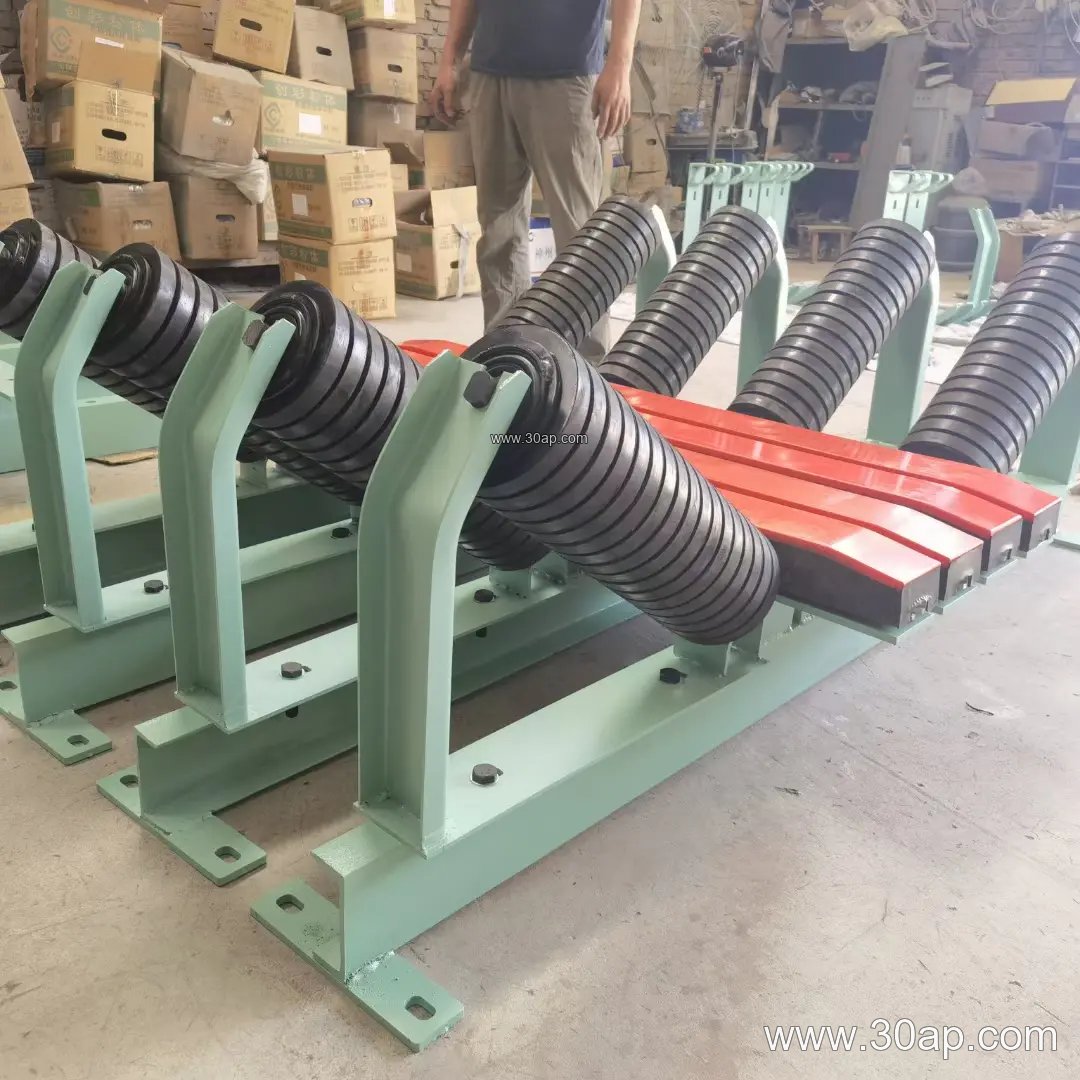
Common Bracket Positions and Their Roles
Carrying Side
Troughing brackets support three rollers and set the trough angle. A 20 degree, 30 degree, or 35 degree bracket is common, while 45 degree units appear on high-capacity lines handling abrasive ore or aggregate. Transition brackets ease the belt from flat at the tail pulley into the full trough.
Return Side
Flat return brackets and V-return brackets support the empty belt. V-return designs help center the belt and shed loose material.
Special Positions
Impact brackets sit under loading points and carry cushion rollers. Self-aligning brackets correct minor belt drift. Forward-tilted brackets, usually around 1.5 to 2 degrees, assist tracking on long runs.
Adjustable brackets let maintenance staff fine-tune the trough angle after installation. Fixed brackets are simpler and cheaper but demand accurate frame alignment from the start. Neither type replaces a drive pulley or a bend pulley; those are separate components with their own selection criteria.
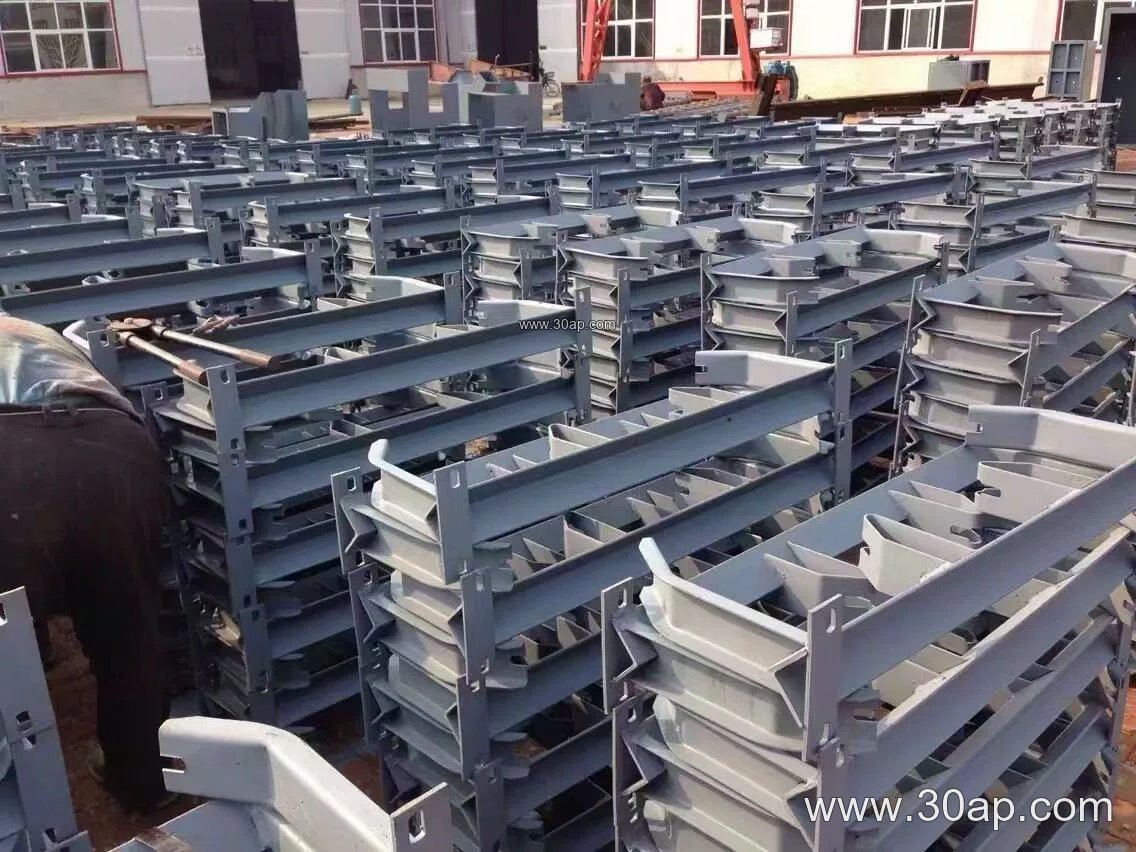
Matching Bracket, Roller, and Belt
A bracket only works well when roller diameter and belt width are considered together. Common roller diameters include Ø89, Ø108, Ø133, Ø159, and Ø194. A B650 line with a 30 degree trough might use Ø89 rollers, while a B1200 line at 45 degrees may run Ø133 or larger. These are examples, not fixed pairings; the final combination comes from the conveyor design.
| Belt width | Typical trough angle | Typical roller diameter |
|---|---|---|
| B500 to B650 | 20 to 30 degrees | Ø89 to Ø108 |
| B800 to B1000 | 30 to 35 degrees | Ø108 to Ø133 |
| B1200 to B1400 | 35 to 45 degrees | Ø133 to Ø159 |
| B1600 to B2000 | 35 to 45 degrees | Ø159 to Ø194 |
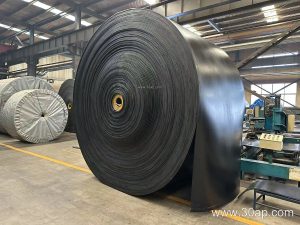
The belt itself also guides the choice. A heavy-duty mining conveyor belt or a steel cord conveyor belt carrying iron ore needs stiffer support than a food grade conveyor belt on a light packaging line. On a coal mining conveyor belt fitted with a flame retardant cover, bracket spacing should follow the loaded belt sag limits in the design. Where a chevron conveyor belt or a corrugated sidewall conveyor belt runs, check that cleats and sidewalls clear the bracket and roller assembly.
Procurement Checklist
- Confirm belt width, trough angle, and roller diameter against the frame drawing.
- State the mounting hole pattern and crossbeam length required.
- Specify material and surface treatment for the site conditions.
- Decide between fixed and adjustable brackets based on installation tolerance.
- Check clearance for skirted conveyor belt edges and any transition zones.
- Request dimensional drawings before batch production.
For aggregate conveyor belt lines and power plant coal handling, spare brackets for impact and transition positions are worth keeping on site. A small stock of the most wear-prone sizes reduces downtime when a bracket bends after a jam.
Finally, keep bracket records linked to the roller and belt specifications. When a line is upgraded from an EP conveyor belt to a heavier steel cord conveyor belt, the support layout may need review. Accurate records make that review faster and keep the conveyor bracket procurement process predictable.