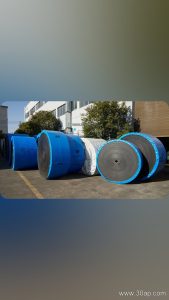
What the NN100 Conveyor Belt Is
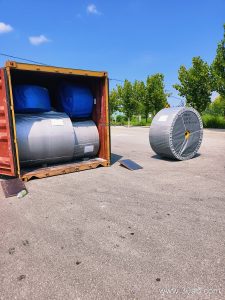
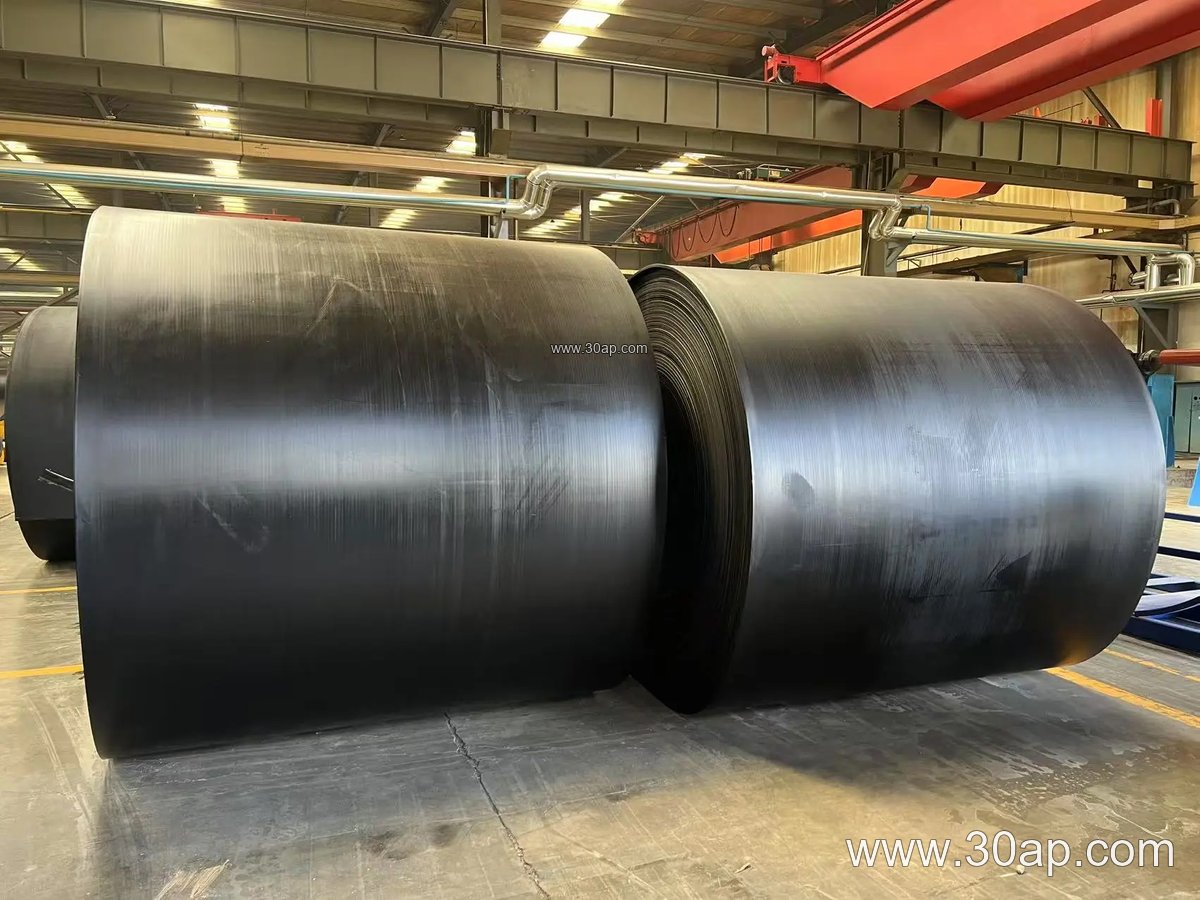
An NN100 Conveyor Belt is a fabric core belt built on nylon (NN) canvas plies, with a nominal breaking strength of 100 N/mm per ply. In practice it is a light-to-medium duty member of the nylon fabric belt family, sitting below NN200, NN300 and NN400 where heavier loads call for more plies or higher-strength fabric. Buyers often describe the same product as an NN conveyor belt or a nylon fabric core conveyor belt; both refer to the same construction, and the “100” marks the strength class rather than a width or a cover grade.
The nylon carcass is the reason this belt gets specified in the first place. Nylon filaments stretch further before failure than rigid carcasses, absorb shock at transfer points, and tolerate the flexing that comes with small pulleys and frequent starts. That makes the NN100 Conveyor Belt a sensible first choice for medium-duty bulk handling where impact and fatigue matter more than raw tensile capacity.
Construction and Cover Options
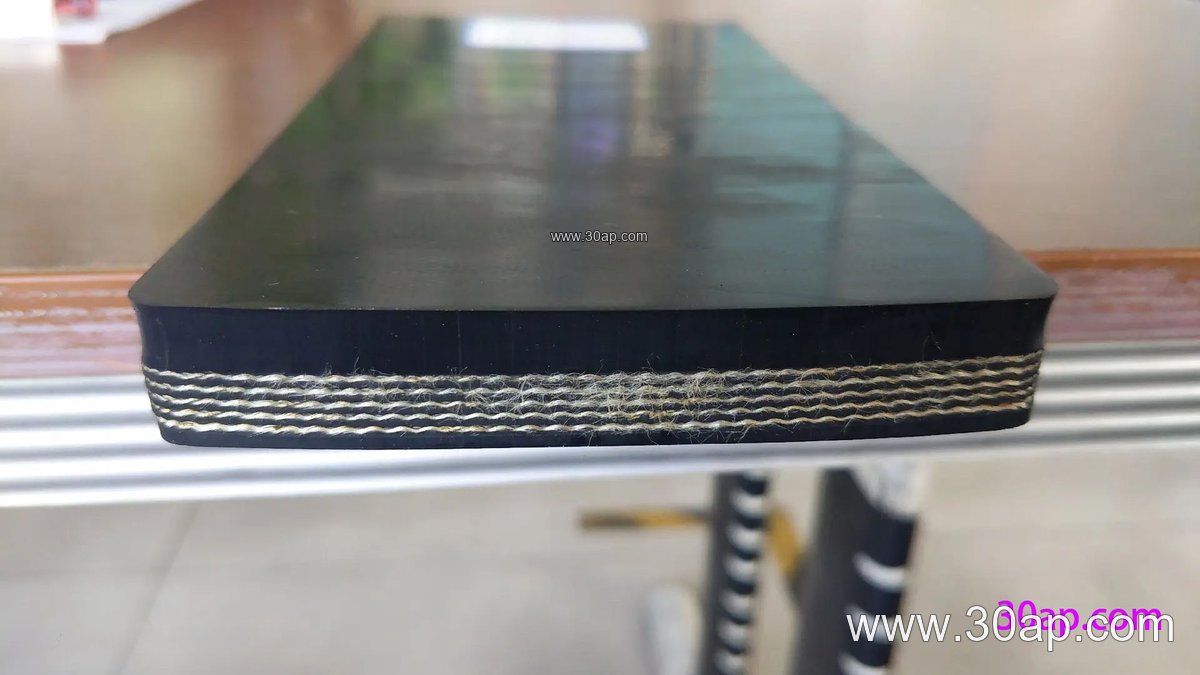
The belt is usually built as a multi-ply fabric core: two to six plies of NN canvas, bonded with rubber skim, protected top and bottom by cover rubber, and finished with cut or moulded edges. Cover thickness is stated as a top-plus-bottom pair, and typical combinations include 3+1.5 mm, 4+2 mm, 5+2 mm, 6+2 mm and 8+3 mm. Heavier covers suit abrasive stone and ore; thinner covers suit lighter, cleaner material.
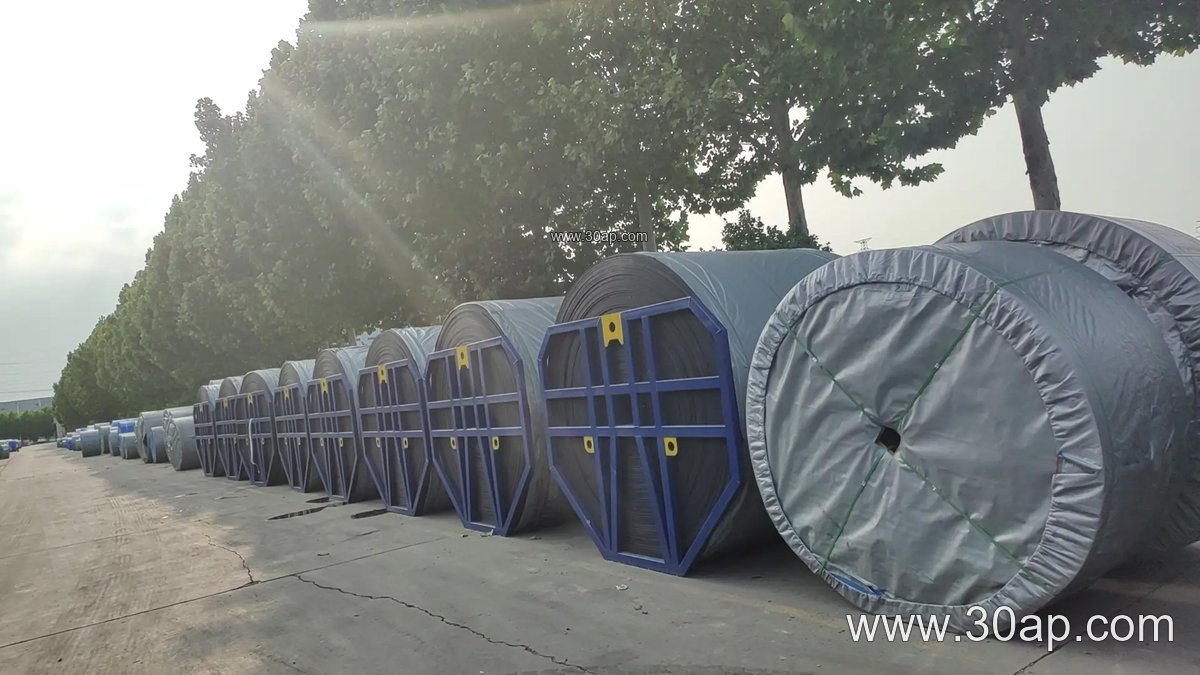
Compound selection changes what the belt can do without changing the carcass. Common variants include abrasion resistant, heat resistant, oil resistant, flame retardant and anti-static grades, and cold resistant versions for winter operation. For underground coal work, PVG and PVC belts are the usual statutory choice, so an NN100 belt is generally not substituted there; the comparison is useful because it shows where fabric core belts stop and solid-woven belts begin.
Where It Fits in the Plant
Typical duty includes cement plant limestone and clinker lines, power plant coal yards, sand and aggregate plants, quarry screens and crusher discharge, and general bulk material handling in ports and recycling facilities. On a mining conveyor belt system the NN100 grade often appears on secondary and tertiary runs rather than the main trunk, where steel cord or higher-class fabric belts carry the tonnage.
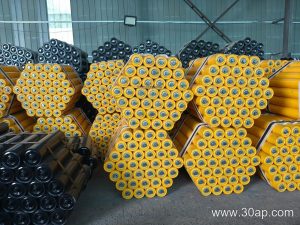
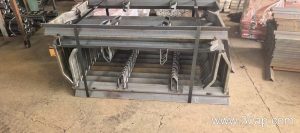
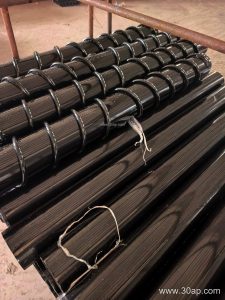
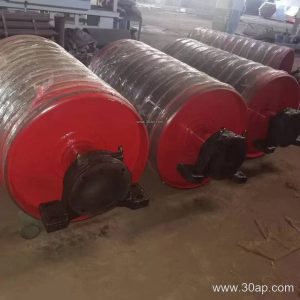
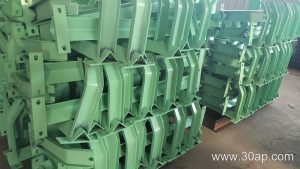
Belt width is chosen from the material, tonnage and lump size, not from a fixed rule. Common widths run from B500 and B650 through B800, B1000 and B1200, with wider belts such as B1400, B1600 and B1800 used on high-capacity lines. The pulley diameter is set by the carcass and the required bend, so a given width does not lock the belt to one pulley size; drive pulleys, tail pulleys and bend pulleys each have their own duty and are not interchangeable. Idler roller spacing, conveyor bracket layout and trough angle all influence belt life as much as the belt itself.
Reference Data for Early Planning
The table below is a planning aid, not a supply promise. Confirm final construction with the belt maker against your actual duty.
- Strength class – NN100 (100 N/mm per ply nominal)
- Carcass – 2 to 6 plies of nylon canvas, rubber skim bonded
- Cover grades – abrasion resistant, heat resistant, oil resistant, flame retardant, anti-static, cold resistant
- Cover thickness – 3+1.5, 4+2, 5+2, 6+2, 8+3 mm, others by design
- Widths – B500, B650, B800, B1000, B1200, B1400, B1600, B1800 and wider by request
- Edge type – cut edge or moulded edge
- Jointing – vulcanised splice or mechanical fastener, per site practice
Selection and Care Notes
Check three things before ordering. First, the duty: lump size, drop height and material temperature decide whether a standard cover is enough or a heat resistant or impact resistant grade is needed. Second, the layout: tight transitions and small pulleys favour the flexible NN carcass, while very long, high-tension runs may point toward EP or steel cord construction. Third, the environment: oily or chemical exposure, dust that can build static, and sub-zero starts each change the compound choice.
On site, keep the belt tracking, maintain skirt rubber and check that no material is trapped at the tail. Inspect splices and edges at each shutdown, and watch the conveyor pulley lagging and idler roller rotation, because a seized roller can destroy a cover in a short time. Store spare rolls indoors, away from sunlight and ozone sources, and rotate stock so the oldest belt is used first.
Used within its class, an NN100 Conveyor Belt is a cost-effective workhorse for medium-duty bulk conveying. Match the carcass, cover and width to the real duty, and the belt will do its job without being over-specified or under-protected.