What a Trough Idler Does on a Conveyor
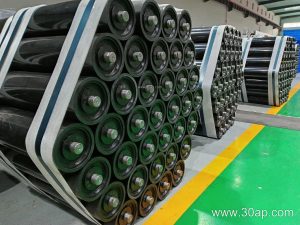
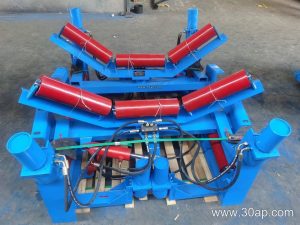
A trough idler is the set of rollers that supports the carrying side of a conveyor belt and shapes it into a trough. This shaping keeps bulk material centered, reduces spillage, and helps the belt track properly. The idler set usually consists of two or three rollers mounted on a common frame or bracket, with the side rollers angled upward. The angle, called the trough angle, is commonly 20, 30, 35, or 45 degrees. The choice depends on the material’s flowability and the belt’s ability to form a trough without excessive stress.
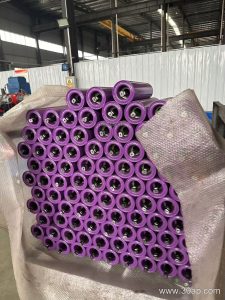
In a typical three-roll trough idler, the center roller is horizontal and the two side rollers are inclined. The assembly is held by a conveyor bracket that attaches to the conveyor’s stringer or frame. The idler roller itself may have a steel tube shell, and the shaft runs through bearing housings at each end. Bearings such as 6204, 6205, 6305, 6306, 6308, or 6310 are common, but the bearing size is matched to the load and roller diameter, not to the belt width alone. Roller diameters often range from Ø63 to Ø219 mm, with Ø89, Ø102, Ø108, Ø127, and Ø133 being frequent choices for general bulk handling.
Construction Details and Roller Options
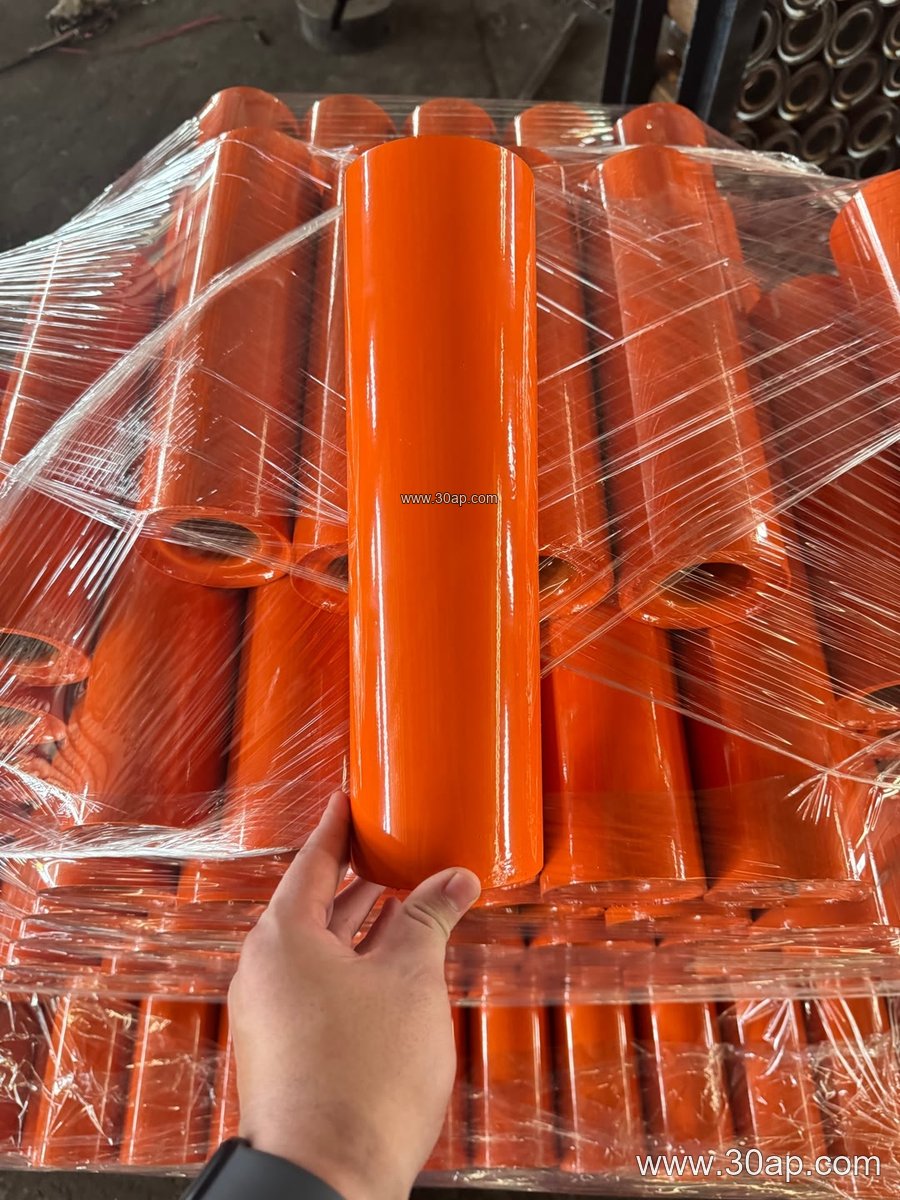
The shell of a trough idler is usually steel tube, but other surface forms exist for specific duties. Rubber discs or rubber rings can be added to cushion impact at transfer points; these are often called impact idlers or rubber-disc impact idlers. Nylon and ceramic surfaces are available for applications where material buildup or wear is a concern. The shaft is typically cold-drawn steel, and the bearing housing includes seals to keep out dust and water. Seal quality matters greatly in dusty environments such as a quarry, a coal preparation plant, or a cement plant, where fine particles can destroy bearings quickly.
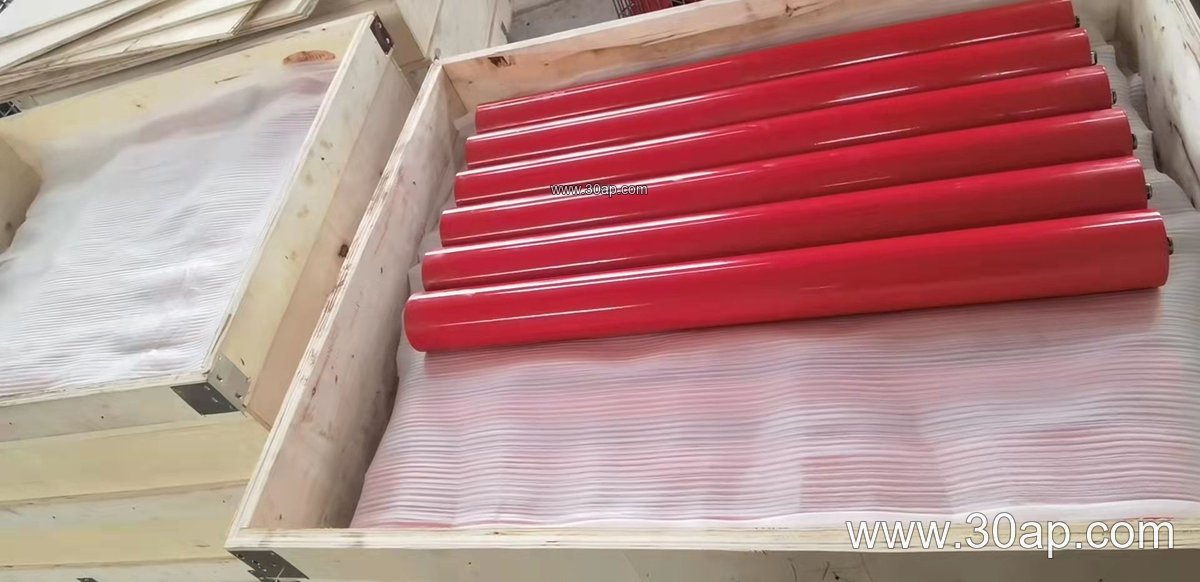
Trough idler sets come as single-roller, two-roller, or three-roller designs. Three-roller sets are the most common for high-capacity conveying because they form a deeper trough and support the belt more evenly. The roller length varies with belt width, trough angle, and the number of rollers. For example, a three-roller set on a B500 belt might use rollers around 200 mm long, while a B1000 belt might use rollers around 380 mm. These are typical examples, and side rollers can differ from the center roller. The belt width itself does not fix a single pulley diameter or shaft size; those are determined by the conveyor design and load calculations.
Where Trough Idlers Are Used
These idlers appear wherever a conveyor belt carries loose bulk material. In a limestone quarry, they support the belt after the primary crusher and help keep coarse rock contained. In a coal mining operation, flame retardant conveyor belt and anti-static properties are often required, and the trough idlers must be selected with appropriate seals and materials. A power plant coal handling system relies on trough idlers to maintain belt alignment through long transfer runs. Sand and aggregate plants use them on belts carrying gravel and crushed stone, where abrasion resistant conveyor belt is common. The idler frame and bracket must suit the conveyor structure, whether it is a fixed stringer or a wire-rope supported system.
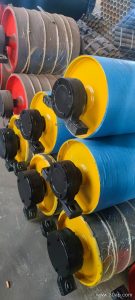
Other conveyor components work alongside the trough idler but are not interchangeable with it. A conveyor pulley at the drive, tail, or bend point serves a different purpose, and a return idler supports the empty belt. Mentioning a bend pulley here is only to distinguish its role; it does not replace the trough idler in the carrying run.
Specification Pointers for Buyers
When specifying a trough idler, consider the belt width, the trough angle, the roller diameter, the roller length, the bearing size, and the sealing arrangement. The table below gives common reference ranges; actual values should be confirmed with the conveyor designer.
| Parameter | Common reference |
|---|---|
| Roller diameter | Ø63, Ø76, Ø89, Ø102, Ø108, Ø127, Ø133, Ø159, Ø178, Ø194, Ø219 mm |
| Belt width | B400, B500, B650, B800, B1000, B1200, B1400, B1600, B1800, B2000, B2200, B2400 |
| Trough angle | 20°, 30°, 35°, 45° |
| Bearing | 6204, 6205, 6305, 6306, 6308, 6310 (selected by load and shaft) |
| Roller surface | Steel tube, nylon, ceramic, rubber rings |
For a B800 belt, a three-roller trough idler might use rollers around 315 mm long, but this is only a common example. The side rollers and center roller can have different lengths. The idler set must fit the conveyor bracket and frame, and the shaft diameter is determined by the load and bearing selection, not by the belt width alone. Buyers should also check the belt’s minimum pulley diameter for the drive and tail pulleys, as this affects the overall conveyor layout.
Maintenance and Selection Tips
Regular inspection of trough idlers helps prevent belt damage and material spillage. Listen for squealing bearings, check for wobbling rollers, and look for material buildup on the roller surface. In a dusty cement plant or a wet aggregate operation, seals may need more frequent attention. If the belt is mistracking, check the trough idler alignment and the condition of the idler rollers before adjusting the conveyor pulley. Choose the trough angle to match the material’s angle of repose; a 35-degree trough is common for many bulk materials, while a 45-degree trough may be used for fine, free-flowing materials that tend to spill. Always confirm the idler’s load rating with the manufacturer and ensure the bracket matches the conveyor frame.
For conveyors using EP conveyor belt or steel cord conveyor belt, the trough idler should be selected to support the belt’s weight and the material load without excessive sag. The idler spacing along the conveyor is also important; too wide a spacing can cause belt sag and material spillage. A conveyor pulley at the head end and a tail pulley at the take-up end are separate components, and their specifications should be reviewed together with the trough idler layout. In short, the trough idler is a simple but critical part of a belt conveyor system, and careful selection pays off in reliability and reduced downtime.