What a Conveyor Rubber Lagged Pulley Does
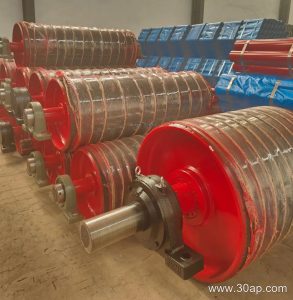
A conveyor rubber lagged pulley is a conveyor pulley whose outer shell is covered with a rubber layer, usually applied by hot vulcanization, cold bonding, or casting. The lagging raises friction between the pulley face and the conveyor belt, protects the steel shell from wear and material build-up, and helps keep the belt centered on the drum. In a typical bulk handling line, this component works alongside the conveyor belt, idler roller, conveyor bracket, and other conveyor pulley positions to keep material moving reliably.
The name describes the surface treatment rather than the pulley position. A lagged drum can serve as a drive pulley, a tail pulley, a bend pulley, a tension pulley, or a snub pulley. These are distinct roles and should not be treated as interchangeable when specifying or replacing a unit.
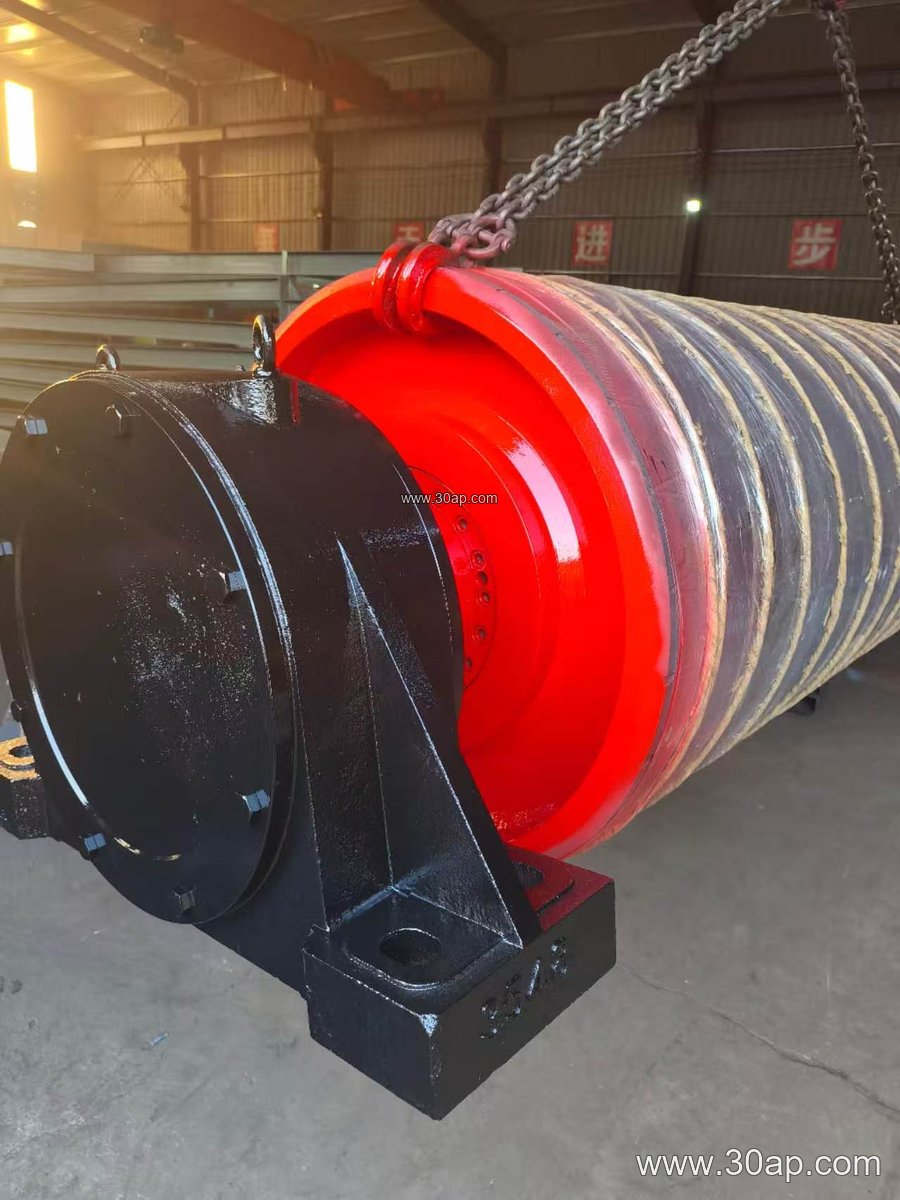
How the Lagging Is Built
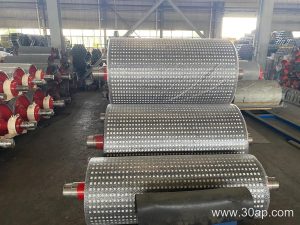
Most rubber lagged pulleys start with a welded steel shell, shaft, hubs, and end discs. After machining, the shell receives the rubber cover. Common surface forms include plain lagging, diamond groove lagging, herringbone lagging, and ceramic lagging for very abrasive duties. Thickness is frequently 8, 10, 12, 15, or 20 mm depending on the duty and belt tension.
Hot vulcanized rubber usually gives the strongest bond between rubber and shell, while cold bonded lagging can be a practical option for field repair. Diamond and herringbone patterns help shed water and fine material, which is useful in washing plants and wet tunnels. Plain lagging is often chosen where cleaning is easy and the main goal is simply friction and shell protection.
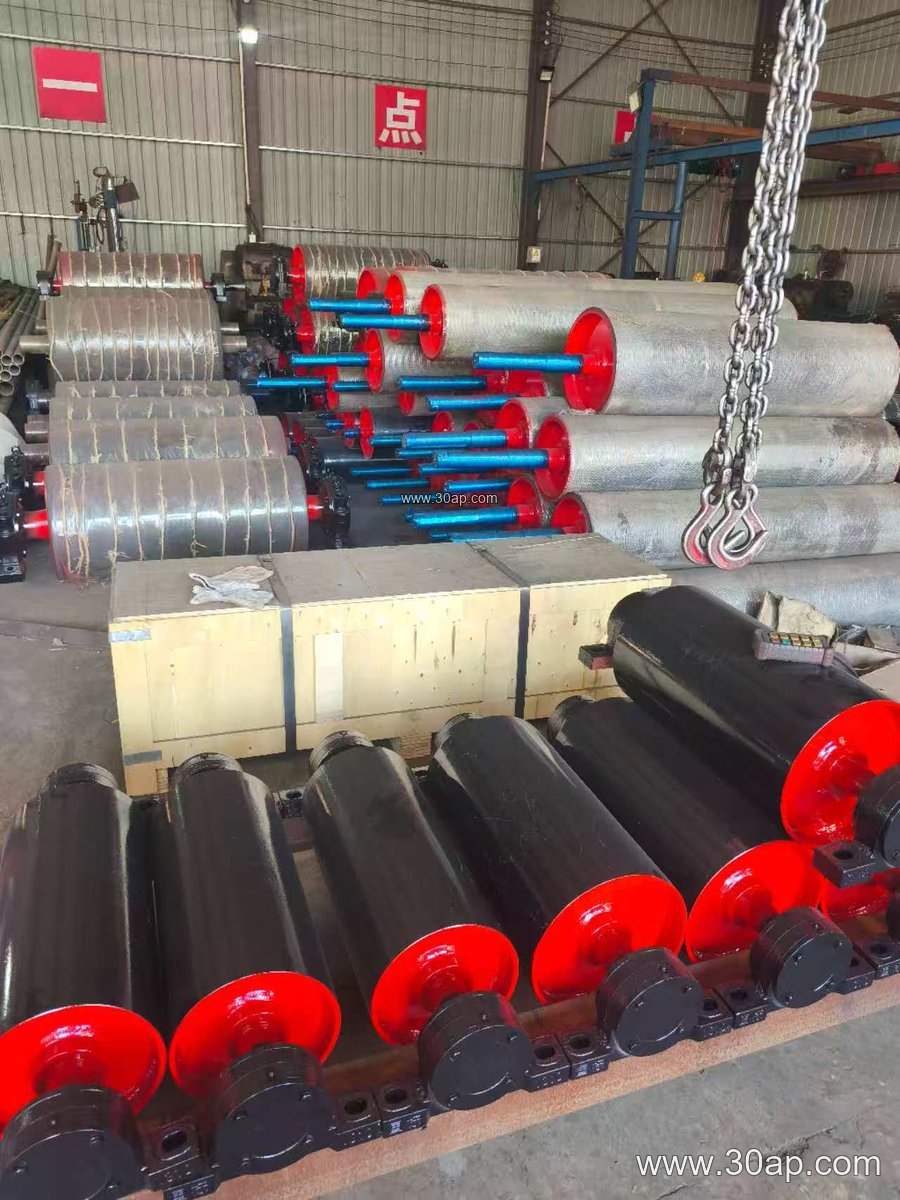
Where It Fits in the Conveying Line
Drive pulleys benefit most from lagging because they must transmit torque without belt slip. In a quarry or aggregate conveyor line, a lagged head drum is common on the discharge end, while a bend pulley may use a thinner cover. In a coal mining conveyor or a power plant coal handling system, flame retardant and anti-static properties of the rubber may matter, so buyers should confirm the lagging compound suits the site. A cement plant clinker line often demands abrasion resistant rubber because dust and sharp particles wear plain steel quickly.
Tail pulleys and tension pulleys also use rubber covers, but the goal there is often to protect the shell and reduce material wrapping rather than to increase driving grip. Snub pulleys increase belt wrap angle around the drive pulley, and a rubber surface can help there as well. Matching the lagging to the actual position avoids over-specifying one area and under-protecting another.
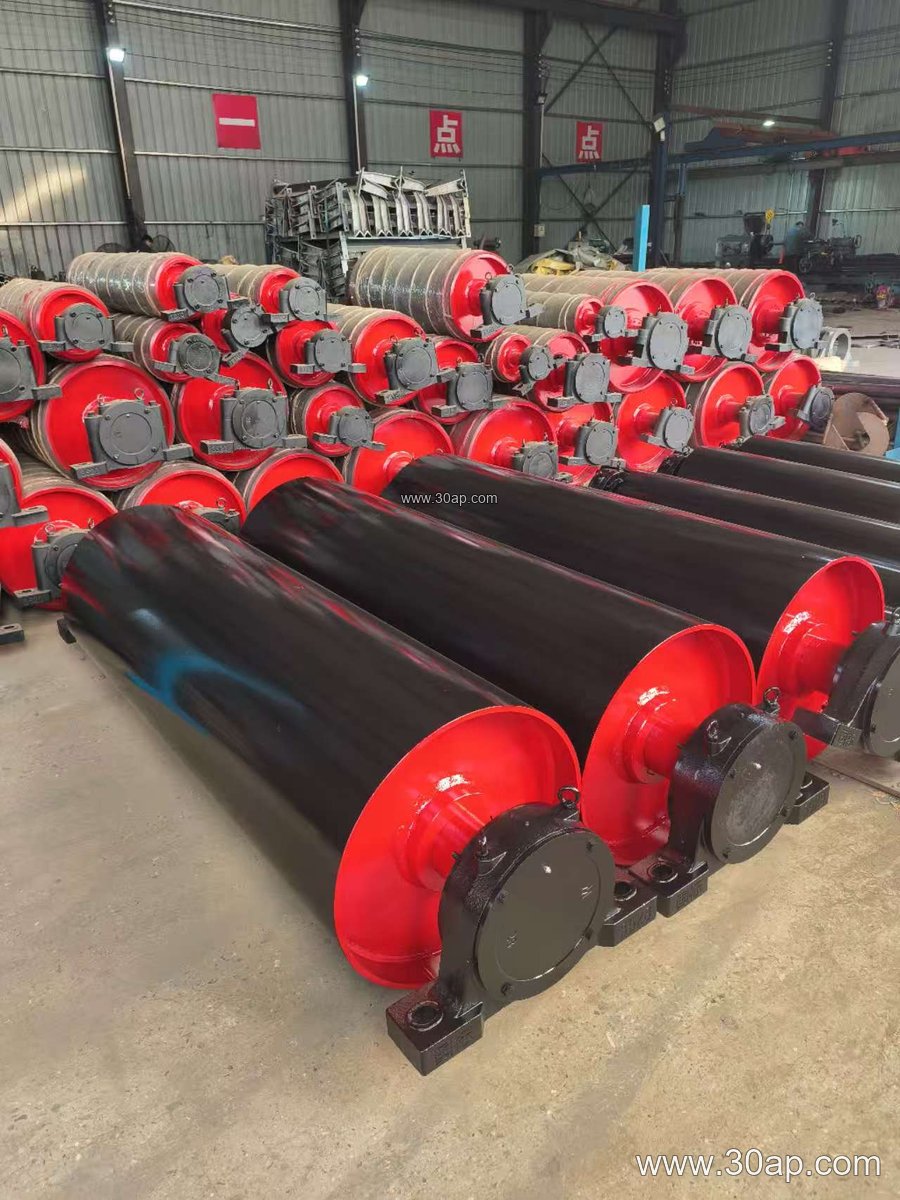
Common Dimensions and Surface Options
The table below shows reference values, not fixed rules. Final dimensions follow the conveyor design, belt tension, shaft torque, and load.
| Item | Common reference values |
|---|---|
| Belt width B | B400, B500, B650, B800, B1000, B1200, B1400, B1600, B1800, B2000 |
| Pulley diameter | Ø200, Ø250, Ø315, Ø400, Ø500, Ø630, Ø800, Ø1000, Ø1250 |
| Face width | Usually wider than the belt, e.g. B800 about 950 mm, B1000 about 1150 mm, B1200 about 1400 mm |
| Lagging thickness | 8, 10, 12, 15, 20 mm |
| Shaft diameter | Ø50 to Ø200 mm, selected by torque and bearing load |
| Surface form | Plain, diamond, herringbone, ceramic, cast rubber, hot vulcanized, cold bonded |
A combination such as B1200 × Ø1000 or B800 × Ø500 is read as a reference example only. Belt width does not lock a pulley to one diameter, and shaft size should never be guessed from belt width alone.
Buyer Checklist
- Confirm the pulley position: drive, tail, bend, tension, or snub.
- State the belt width, pulley face width, shell diameter, and shaft diameter.
- Describe the material being carried, such as iron ore, limestone, clinker, or coal.
- Check whether the rubber cover needs flame retardant, anti-static, oil resistant, or abrasion resistant properties.
- Ask how the lagging is bonded and whether field repair is expected.
- Review balance, bearing fit, and keyway dimensions before ordering.
Maintenance Notes
Inspect the rubber surface for cuts, glazing, and loose edges. Worn lagging reduces grip and can allow belt slip, especially on a drive pulley in a wet or dusty plant. Keep the drum face clean and check that the conveyor belt tracking is correct; misalignment accelerates edge wear on the lagging. When replacing a cover, record the old thickness and pattern so the new unit matches the duty. For more conveyor components, visit pkmachinery.com/conveyor-pulley and pkmachinery.com/conveyor-belt to compare options across a full conveying system.