What a 500mm Diameter Conveyor Pulley Is
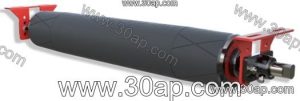
A 500mm diameter conveyor pulley is a cylindrical drum used to drive, tension, or redirect a conveyor belt in bulk material handling systems. With a nominal diameter of Ø500 mm, it falls in the mid-to-large size range, making it suitable for medium-duty to heavy-duty applications where belt tension and load capacity matter. This pulley is often found in quarry conveyor lines, cement plant clinker transport, and power plant coal handling. It works in tandem with idler rollers and conveyor brackets to keep the belt tracking smoothly.
Construction and Key Components
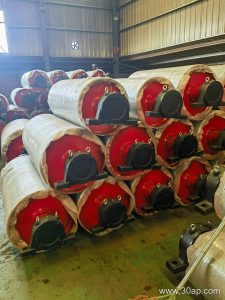
A typical 500mm diameter conveyor pulley consists of a steel shell, end discs, a shaft, and bearing housings. The shell is usually machined from seamless pipe or rolled plate, then welded to the end discs. The shaft is sized according to torque and radial load—common shaft diameters for this pulley size range from Ø80 to Ø160 mm, but the exact value depends on the drive power and belt tension, not on belt width alone. Bearings are selected to handle the resultant loads, and the pulley is often equipped with a lagging surface to improve grip.
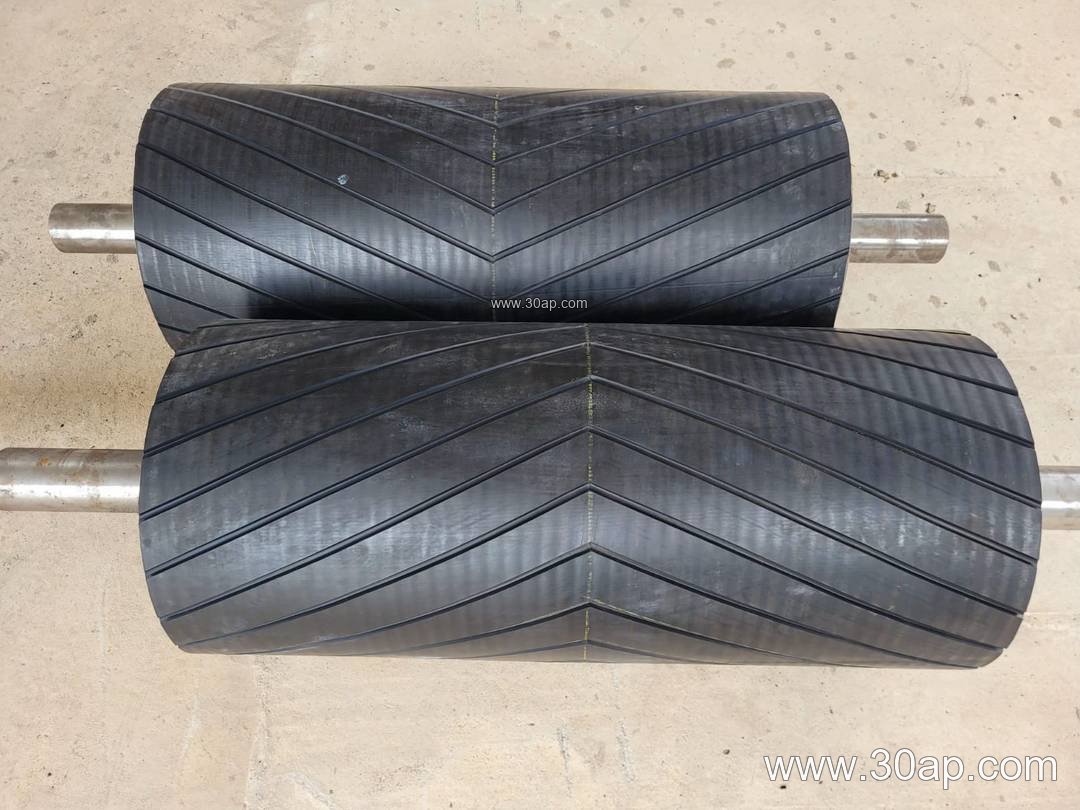
Surface options include plain finish, rubber lagging (cold-bonded or hot-vulcanized), diamond pattern lagging, and ceramic lagging. Lagging thickness commonly ranges from 8 mm to 20 mm. For a 500mm diameter pulley, a 10 mm or 12 mm rubber lagging is frequently used in abrasive environments such as aggregate conveyor lines.
Where It Fits in a Conveyor System
The 500mm diameter conveyor pulley can serve different roles depending on its position. As a drive pulley (head pulley), it transmits power to the belt and is often lagged to prevent slippage. As a tail pulley, it provides belt tension and can be self-cleaning with a wing design. As a bend pulley, it changes the belt direction without driving. Note that drive, tail, and bend pulleys are not interchangeable—each has a distinct function and design. A 500mm diameter bend pulley, for example, may have a plain surface and lighter construction than a drive pulley of the same diameter.
In a quarry or sand and gravel plant, this pulley size is commonly paired with a 800mm or 1000mm wide conveyor belt. The pulley face width is usually slightly wider than the belt—for a B800 belt, the pulley face might be around 950 mm. The combination depends on the belt type: a heavy-duty mining conveyor belt with steel cord reinforcement may require a larger shaft and stronger bearings than an EP conveyor belt of the same width.
Typical Applications
You will find 500mm diameter conveyor pulleys in several industries:
- Quarry and aggregate lines: driving crusher feed belts and screen discharge belts, often with abrasion resistant conveyor belt.
- Cement plants: handling clinker and raw meal, where heat resistant conveyor belt may be used on the same line.
- Power plants: coal handling systems that use flame retardant conveyor belt for safety.
- Mining operations: underground coal mining conveyor belt systems and ore transport, where a heavy-duty mining conveyor belt demands robust pulleys.
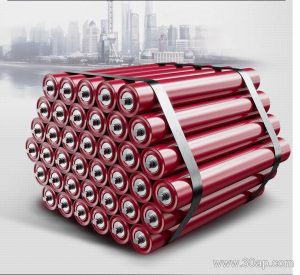
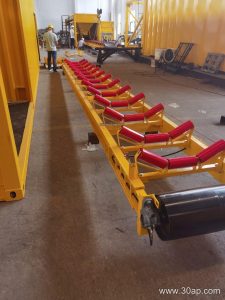
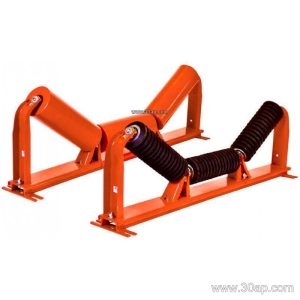
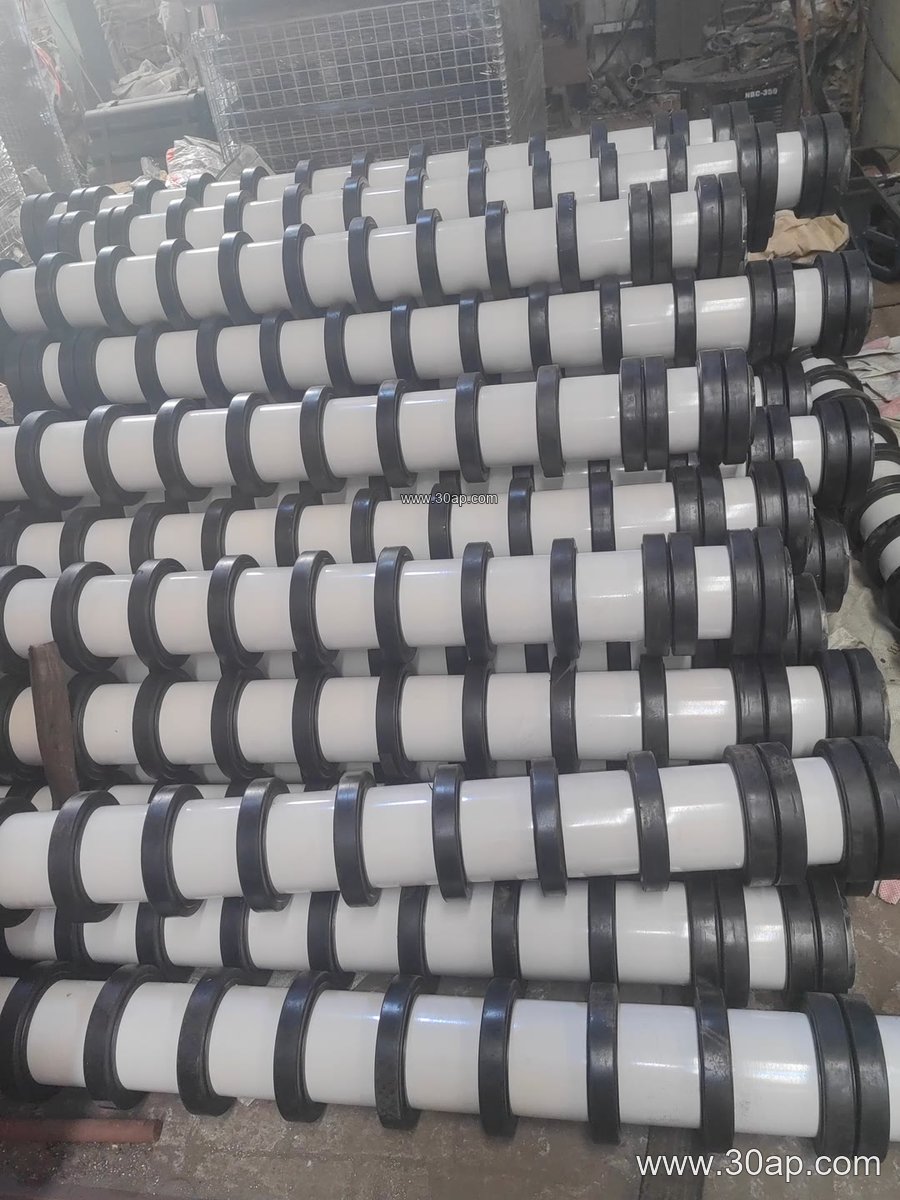
In these settings, the pulley works alongside conveyor idler rollers and conveyor brackets to maintain belt alignment and reduce spillage. For dusty or wet conditions, a self-cleaning wing pulley or a lagged surface can improve performance.
Specifications and Selection Tips
When specifying a 500mm diameter conveyor pulley, buyers should consider the following parameters. The table below lists common reference values—these are not universal fixed combinations, and final selection must be based on actual load calculations.
| Parameter | Common Reference Range |
|---|---|
| Diameter | Ø500 mm (nominal) |
| Belt width compatibility | B500 to B1200 (face width adjusted) |
| Shaft diameter | Ø80, Ø90, Ø100, Ø120, Ø140, Ø160 mm (by torque) |
| Lagging thickness | 8, 10, 12, 15, 20 mm |
| Surface types | Plain, rubber lagging, diamond lagging, ceramic lagging |
| Bearing type | Spherical roller bearing, pillow block |
Do not assume that a given belt width automatically dictates a specific shaft diameter—shaft size must be calculated from the actual torque and radial load. Also, a 500mm diameter pulley can be paired with various belt widths; for instance, a B650 belt might use a pulley face of about 750 mm, while a B1000 belt would need a face around 1150 mm. The pulley diameter itself is often chosen based on the required belt wrap angle, belt tension, and the space available for the conveyor bracket.
For abrasive materials, consider a pulley with high abrasion resistant conveyor belt compatibility and lagging that matches the belt cover grade. In coal mining, flame retardant conveyor belt and fire resistant conveyor belt are critical, and the pulley should be designed to avoid static build-up. If the conveyor uses an EP conveyor belt (e.g., EP100 or EP200), the pulley diameter should provide enough contact area to transmit power without excessive belt stress. Steel cord conveyor belt (ST1000, ST1250) may require a larger pulley diameter for adequate fatigue life, but Ø500 mm can still be suitable for moderate tension applications.
Maintenance and Buyer Checklist
Regular inspection of the pulley lagging, bearing condition, and shaft alignment extends service life. Look for worn lagging, loose bolts, and abnormal noise. Keep the pulley surface clean, especially in sticky material handling like cement or wet coal. When ordering, specify the belt width, belt type (e.g., multi-ply fabric core conveyor belt or steel cord), required lagging, shaft size, and bearing type. Confirm the pulley face width and the mounting dimensions to match the conveyor bracket. Remember that a 500mm diameter conveyor pulley is a component—its performance depends on correct integration with the conveyor belt, idler rollers, and structure.