What a Custom Conveyor Bracket Does on a Belt Line
A custom conveyor bracket is the fabricated support that holds idler rollers at the correct position and angle along a conveyor frame. Rather than forcing a standard part to fit an existing structure, a made-to-order bracket is produced around the actual belt width, trough angle, roller diameter and mounting hole pattern of the line. In a quarry or a power plant coal handling system, this usually means the bracket fits the frame the first time, without field drilling or shimming.
These brackets are part of the broader support family that keeps the conveyor belt tracking smoothly over the idlers and pulleys. They are not pulleys themselves, and they should not be confused with drive, tail or bend pulleys, which serve different mechanical roles. A bracket is a stationary structural item; its job is location and stiffness.
Construction and Material Options
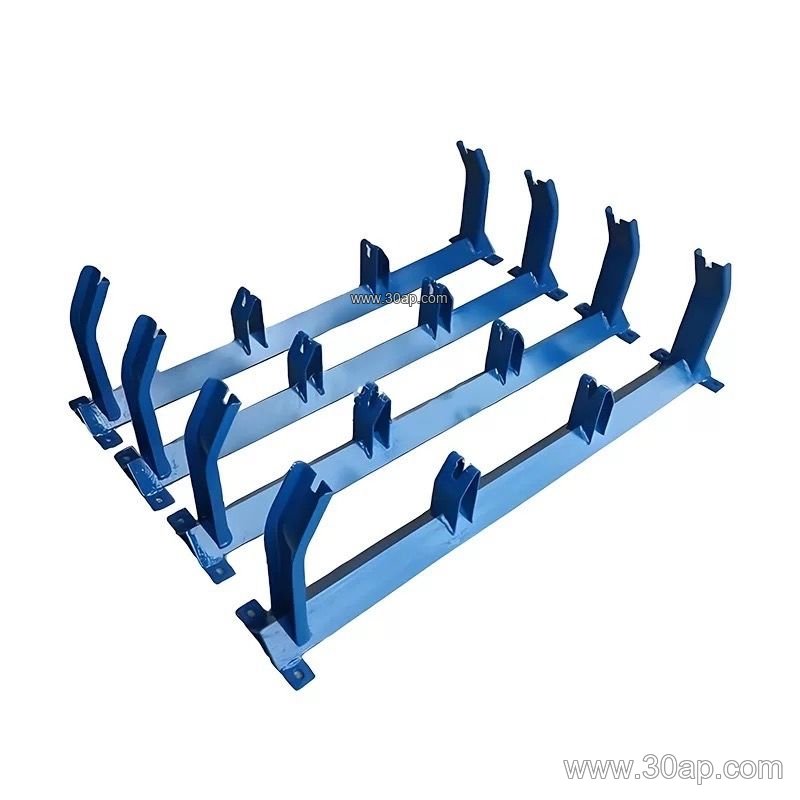
Most brackets are built from angle steel, channel steel or folded steel plate. The choice depends on load, span and the environment. A dusty cement plant may favor a heavier folded plate design, while a lighter sand and gravel line can use angle sections. Welded assemblies are common, and bolt-on designs help where access is tight.
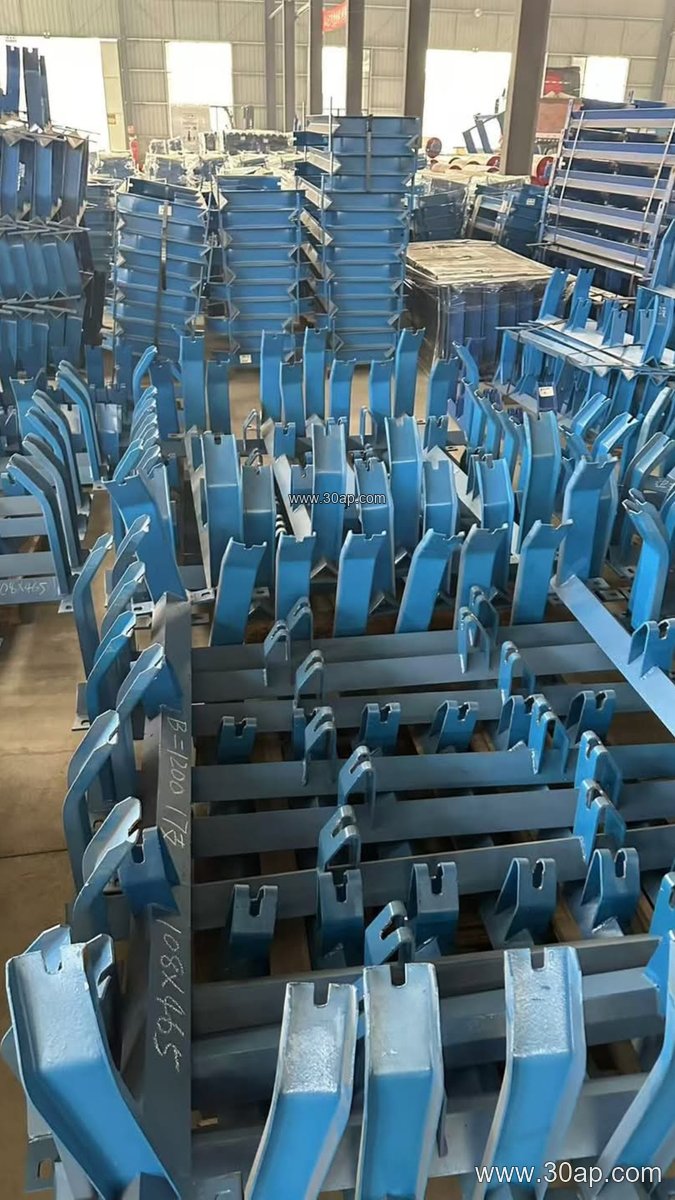
Typical reference data used when specifying a bracket:
- Belt widths commonly referenced: B500, B650, B800, B1000, B1200, B1400, B1600, B1800, B2000, B2200
- Trough angles: 20 degrees, 30 degrees, 35 degrees, 45 degrees; adjustable brackets can move between these
- Idler diameters: Ø89, Ø108, Ø133, Ø159, Ø194
- Forward tilt on leading idlers is usually about 1.5 to 2 degrees
Mounting hole spacing and crossbeam length are determined by design, since they change with belt width and trough angle. A bracket for B800 at 35 degrees with Ø108 rollers is a normal combination, and so is B1200 at 45 degrees with Ø133 rollers, but no single belt width locks in one angle or one roller size.
Common Bracket Positions
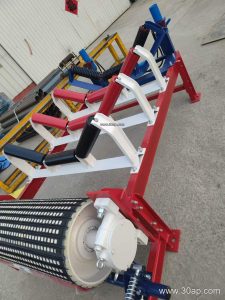
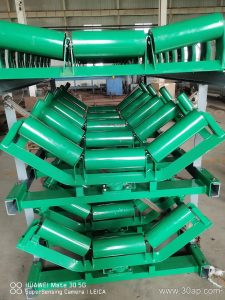
On the carrying side, troughing brackets set the three-roller profile that shapes the belt into a trough. Transition brackets ease the belt from flat at the pulley to full trough over a short distance, which matters on lines carrying abrasive ore or heavy rock. Impact brackets sit under loading points and are often paired with cushion rollers to absorb fall energy.
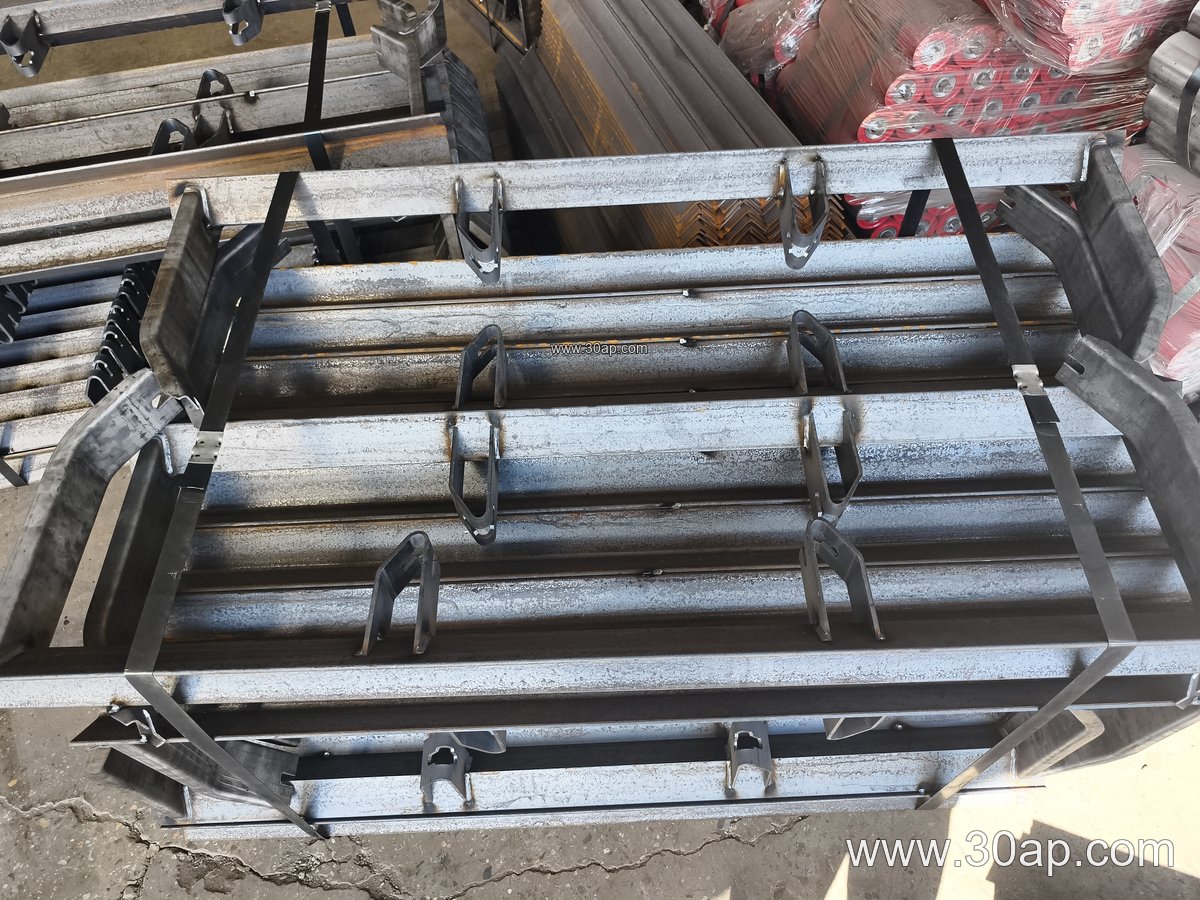
On the return side, flat return brackets and V-return brackets support the empty belt. Self-aligning brackets and forward-tilt brackets help correct mistracking before it becomes edge damage. Hanging brackets are used where the frame is suspended rather than floor-mounted.
Adjustable brackets deserve separate mention. A fixed bracket is welded or bolted at one trough angle, while an adjustable version lets maintenance staff change the angle within a range. That flexibility is useful on a crushing and screening line where belt loading changes seasonally.
Where These Brackets Are Used
Two settings come up often. In a limestone quarry or stone crushing plant, brackets carry the belt through dusty, high-impact duty, so abrasion resistant belt grades and sturdy troughing brackets are usually specified together. In a power plant coal yard, flame retardant and anti-static belt properties are important, and the bracket layout must suit the transfer points and long inclines.
Other users include iron ore and copper ore handling, cement kiln feed lines, steel plant sintering, port ship loading, and tunnel spoil removal. Each place has its own dust, moisture and temperature profile, and the bracket coating or material should reflect that.
Matching Brackets to Belts and Rollers
The bracket, the idler roller and the conveyor belt form one working set. A heavy multi-ply fabric core belt or a steel cord belt needs a stiffer support frame than a light fabric core belt. Where a pipe conveyor belt or a corrugated sidewall belt is used, the bracket geometry is often fully custom because standard troughing shapes do not apply.
Buyers should confirm belt width, trough angle, roller diameter, frame beam spacing and hole pattern before ordering. It also helps to state the environment, since heat resistant, oil resistant or cold resistant belt choices may call for matching bracket treatment.
Buyer Checklist Before Ordering
- Confirm the belt width and the actual frame dimensions, not just the nominal size
- State the required trough angle and whether adjustment is needed
- Give the roller diameter and the mounting hole spacing
- Describe the duty: impact, dust, moisture, temperature or corrosive atmosphere
- Ask how the bracket attaches to the frame, welded or bolted
- Request a drawing for approval before production
A well-made custom conveyor bracket is a small item with a large effect on belt life and uptime. Getting the dimensions and duty right at the order stage avoids most tracking and wear problems later.