What a Port Bulk Material Conveyor Idler Does
A port bulk material conveyor idler is the rotating support that carries the belt and its load along the conveyor line. In a port setting, the duty is rarely gentle: iron ore, coal, limestone, fertilizer, grain and other bulk cargoes arrive in surges, often with dust, moisture and salt air present. The idler roller must keep the conveyor belt tracking, limit belt sag between supports, and protect the belt from unnecessary wear. It is a small component compared with the drive pulley, but a failed idler can stop a ship unloading line.
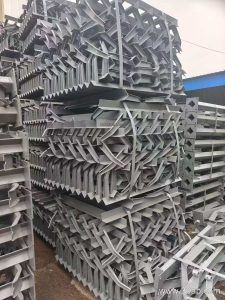
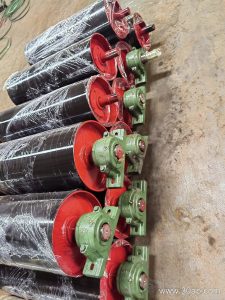
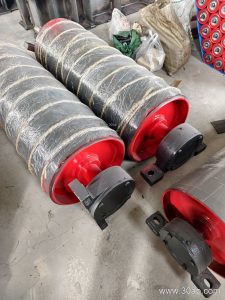
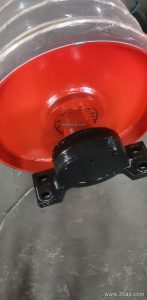
The idler is not the same as a conveyor pulley. Drive, tail and bend pulleys transmit power or change belt direction; idlers simply support and guide the belt. They are also distinct from the conveyor bracket that holds the idler frame in place. Keeping these roles clear helps buyers specify the right part instead of ordering a substitute that will not fit.
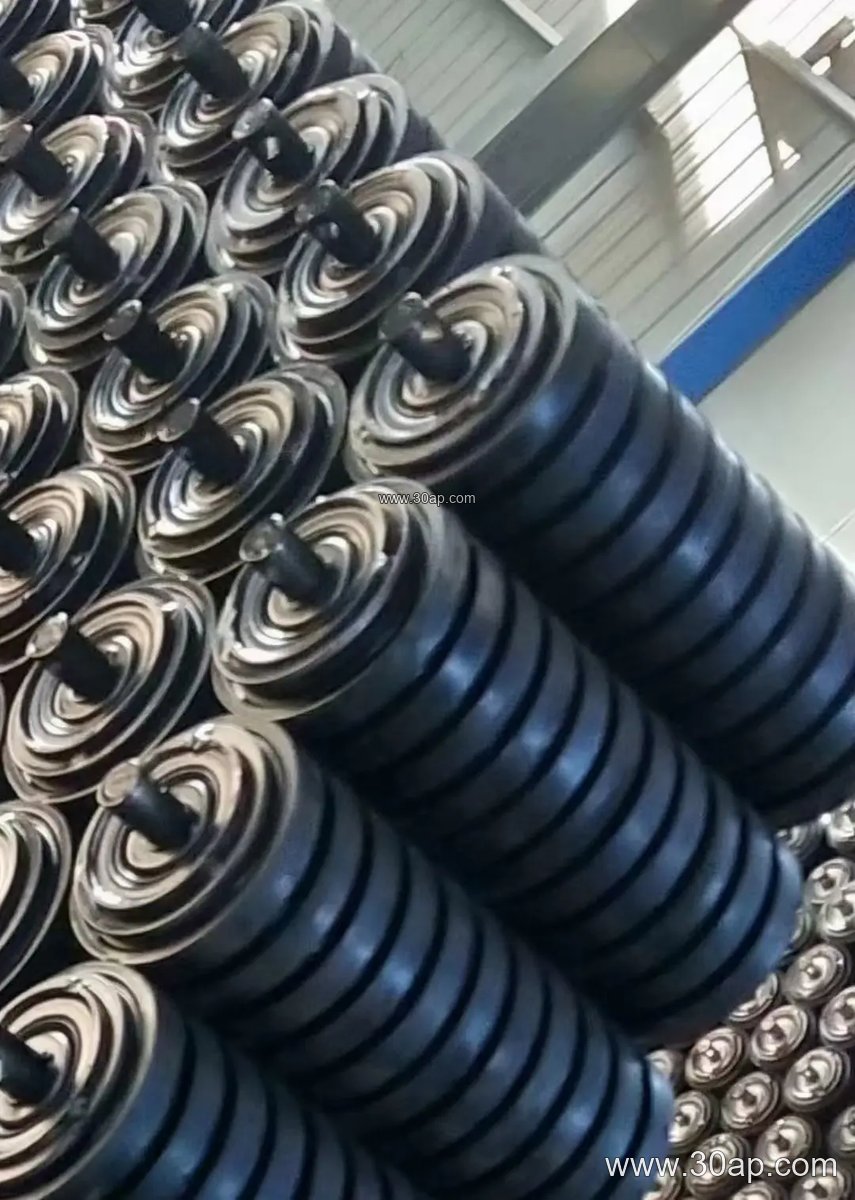
How the Idler Is Built
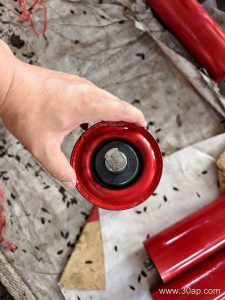
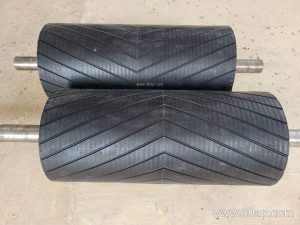
A typical unit combines a steel tube shell, a shaft, bearing housings and a sealing arrangement. The shell may be plain steel, nylon-coated, ceramic-covered or fitted with rubber rings, depending on whether abrasion, build-up or impact is the main concern. Bearings such as 6204, 6205, 6305, 6306, 6308 or 6310 are common in the range, but the correct bearing depends on load, speed and shaft design rather than on belt width alone.
Sealing matters as much as the bearing. Dust and water ingress are the usual causes of premature seizure in port service, so labyrinth seals, felt seals and grease retention features deserve attention during inspection. Roller diameters commonly range from Ø63 to Ø219 mm, and the choice should follow the load and belt speed rather than a single fixed rule.
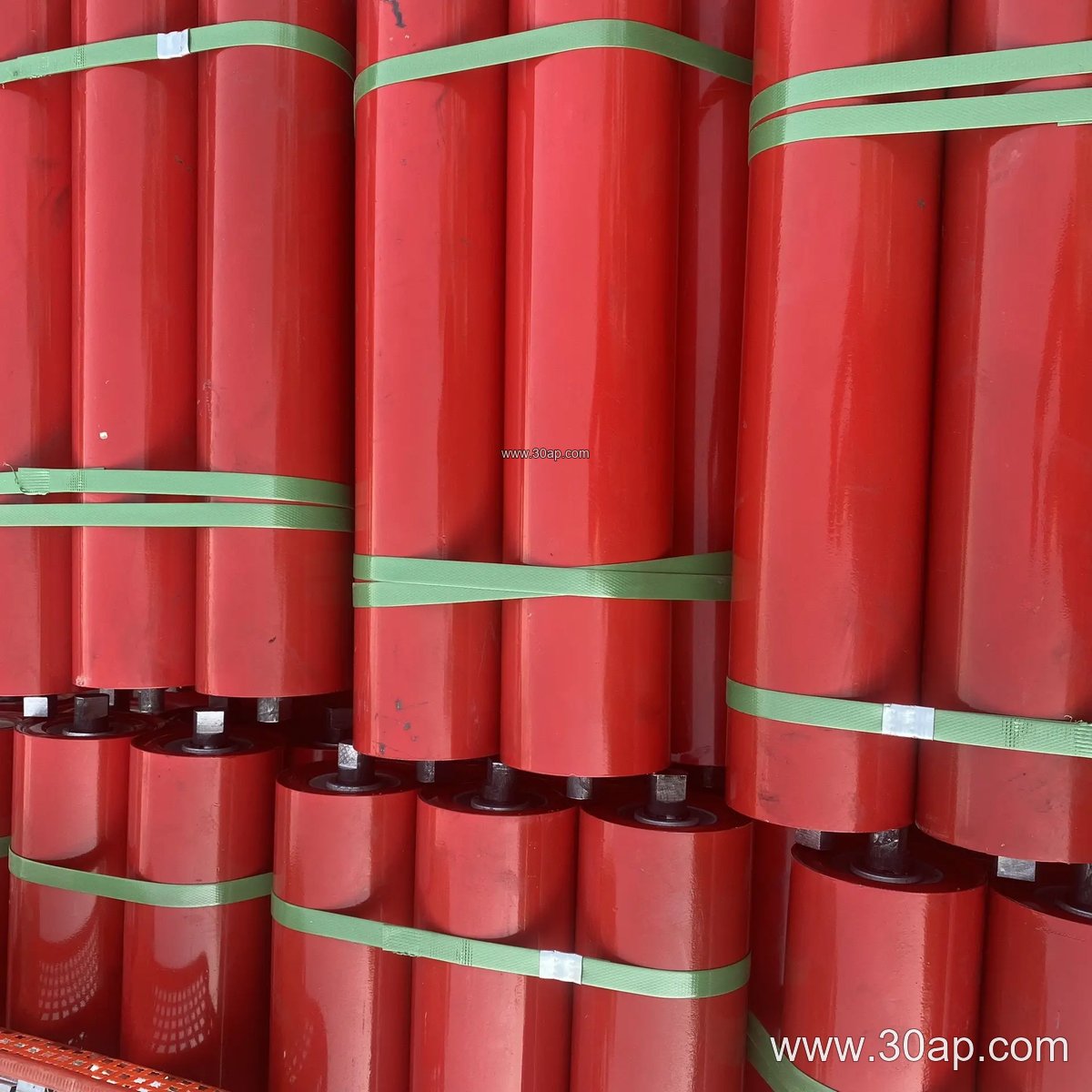
Arrangements Along the Conveyor
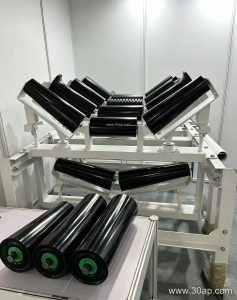
Troughing idlers are usually arranged as two-roll or three-roll sets, with trough angles of 20, 30, 35 or 45 degrees. A three-roll troughing set supports the loaded belt, while a transition idler eases the belt from flat to troughed shape near a pulley. Return idlers support the empty belt; flat and V-type return rollers are both common. Impact idlers with rubber rings are placed under loading points to absorb the shock of falling material. Self-aligning idlers, including friction and tapered types, help correct belt drift on long port conveyors.
Roll length changes with belt width, trough angle and frame form. For a three-roll troughing set, common roll lengths are roughly 200 mm at B500, 250 mm at B650, 315 mm at B800, 380 mm at B1000, 465 mm at B1200, 530 mm at B1400, 600 mm at B1600, 670 mm at B1800 and 750 mm at B2000. These are examples only; side rolls and centre rolls can differ, and the final length is determined by design.
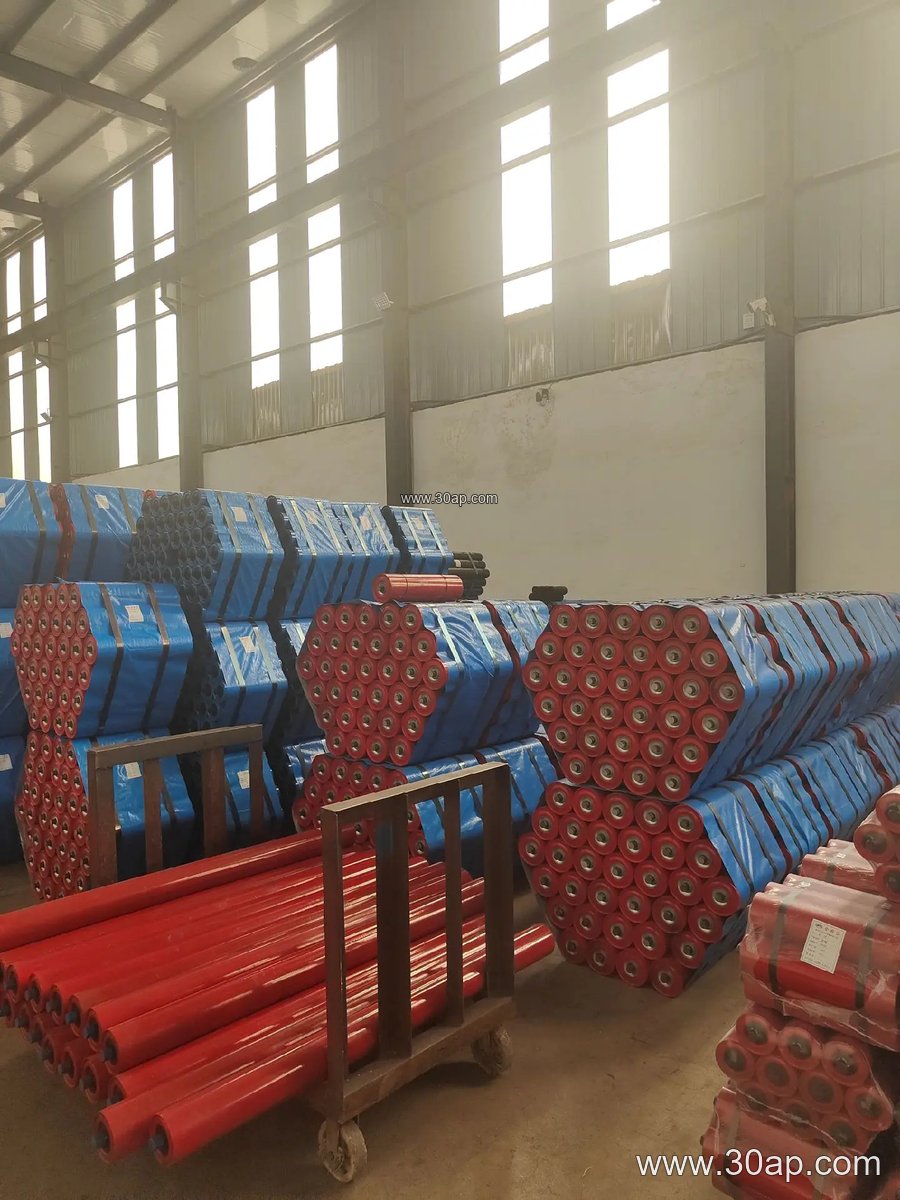
Where Port Idlers Are Used
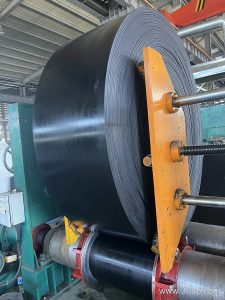
Port conveyors handle a wide mix of cargo, so idler selection often follows the material. Iron ore and copper ore lines favour abrasion-resistant shells and robust sealing. Coal terminals and power plant coal yards need flame retardant conveyor belt and fire resistant conveyor belt alongside reliable idlers. Cement plants and aggregate terminals may use an EP conveyor belt or a multi-ply fabric core conveyor belt, while long overland or ship loading runs sometimes use a steel cord conveyor belt. In dusty unloading areas, a pipe conveyor belt or a corrugated sidewall conveyor belt may appear, and the idler set must match that belt profile.
Other arrangements include a chevron conveyor belt for inclined transfer, a skirted conveyor belt at loading chutes, and a heat resistant conveyor belt near dryers or clinker. A cold resistant conveyor belt may be needed in cold climates, and an anti-static conveyor belt in areas where static build-up is a concern. The idler itself should be chosen with the same duty in mind, not as an afterthought.
What Buyers Should Check
- Confirm the belt width and the trough angle before ordering any idler set.
- Match the roller diameter and bearing to the actual load and speed, not to a guessed rule.
- State the environment: salt air, dust, moisture, impact or high temperature.
- Ask for the roll length and frame dimensions, since a conveyor bracket must fit the existing structure.
- Check seal type and lubrication provision for long service intervals.
- Keep spare idlers for loading zones, where impact damage is most likely.
For a port terminal, the practical approach is to review the whole conveyor line: belt type, pulley arrangement, bracket spacing and material characteristics. A well-matched idler roller reduces belt wear and downtime, while a poorly chosen one can damage the belt and interrupt unloading. Buyers who compare specifications carefully, and who treat idlers as part of the complete conveyor system, usually get longer service from both the belt and the rollers.