What the Drive Lagged Pulley Does
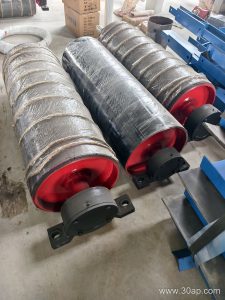
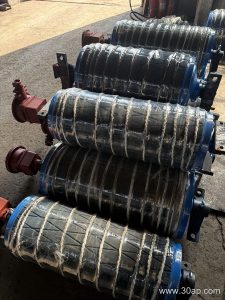
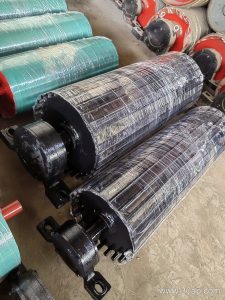
The drive lagged pulley is the powered drum at the head of a conveyor that transfers torque to the belt. Its lagging—a rubber or ceramic layer bonded to the shell—raises friction between drum and belt, reducing slip under load. In a quarry or cement plant, this pulley often sits in a dusty, high-torque environment where a bare steel shell would struggle to grip an abrasion resistant conveyor belt. Unlike a tail pulley, which mainly guides and tensions the belt return, the drive pulley must handle the full driving force, so its lagging and shaft design are critical.
Construction and Lagging Options
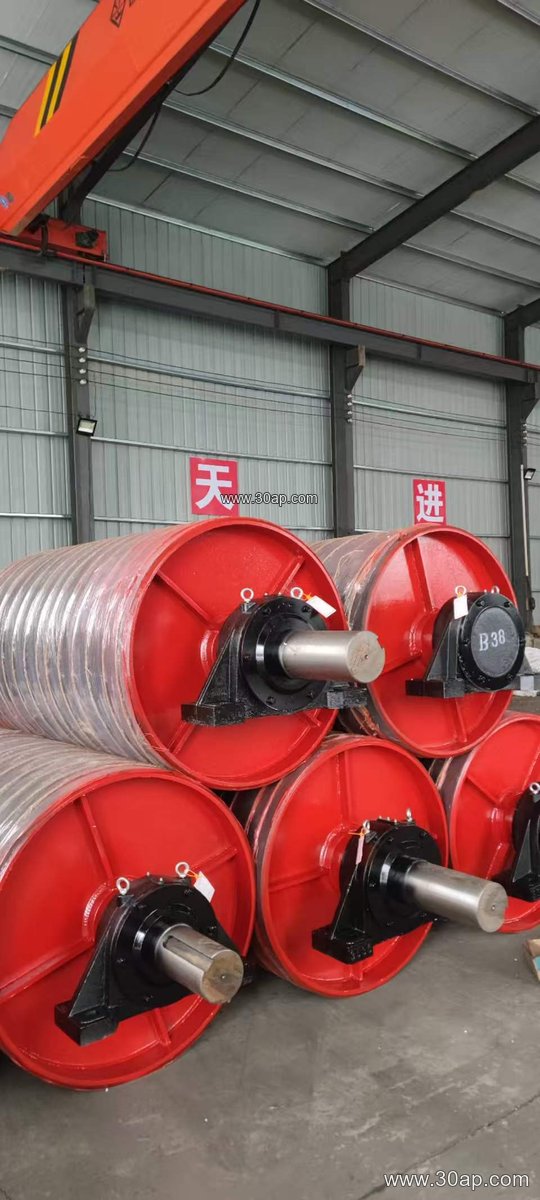
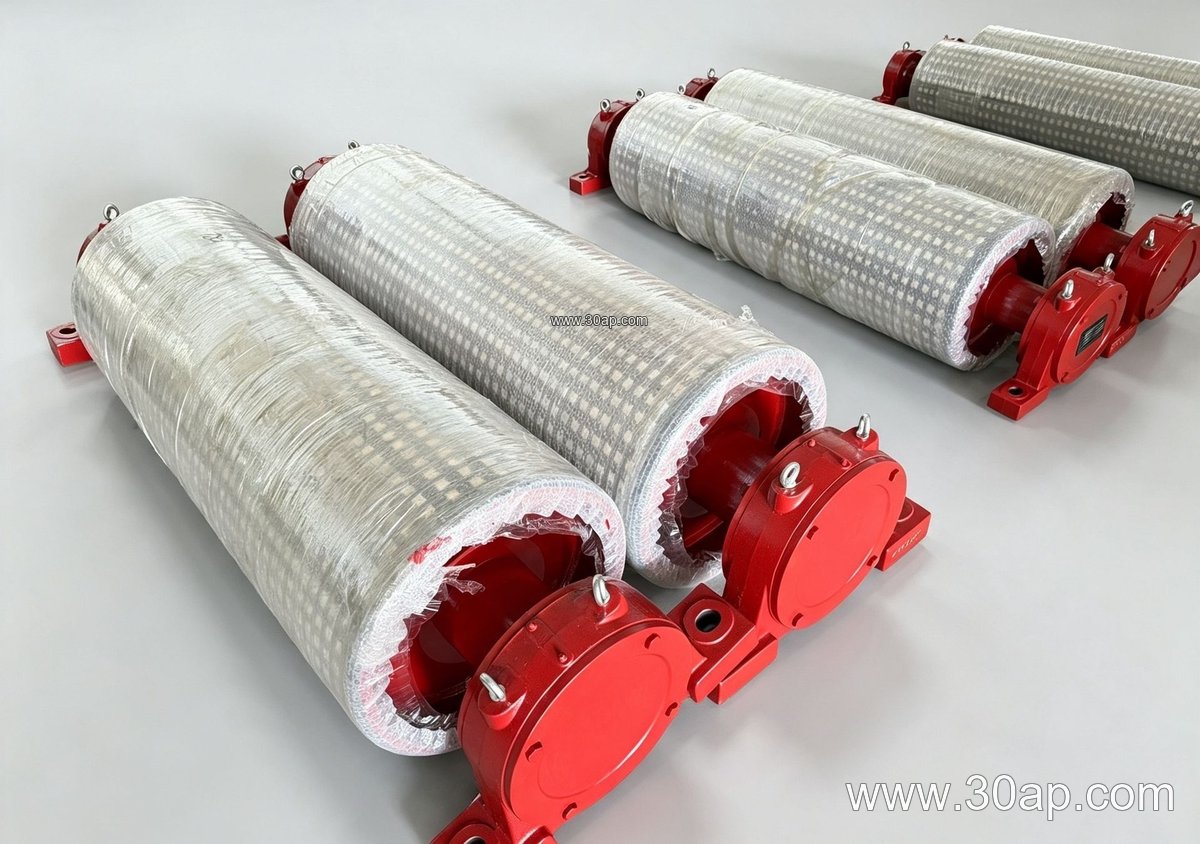
A typical drive lagged pulley combines a steel shell, welded end discs, a shaft, and bearing housings. Lagging is applied by hot vulcanization, cold bonding, or casting directly onto the shell. Common surface forms include plain rubber, diamond pattern, herringbone, and ceramic tiles. Thickness usually ranges from 8 mm to 20 mm; a thicker lagging suits high-torque drives but adds weight. The table below shows representative combinations—these are examples, not fixed rules.
| Belt Width (B) | Shell Width (approx.) | Common Diameter (Ø) | Lagging Type |
|---|---|---|---|
| B800 | 950 mm | Ø500 | Diamond rubber, 10 mm |
| B1000 | 1150 mm | Ø630 | Plain rubber, 12 mm |
| B1200 | 1400 mm | Ø800 or Ø1000 | Herringbone, 15 mm |
| B1400 | 1600 mm | Ø800 | Ceramic, 15 mm |
Shaft diameter is determined by torque and load, not by belt width alone. Typical shaft sizes run from Ø80 to Ø200, but a B1200 pulley might use Ø120 or Ø160 depending on the drive arrangement. Never assume a fixed shaft size from belt width.
Where It Fits in the Conveyor
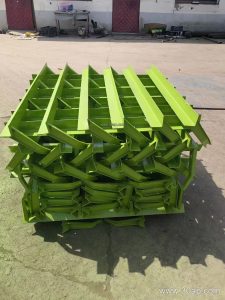
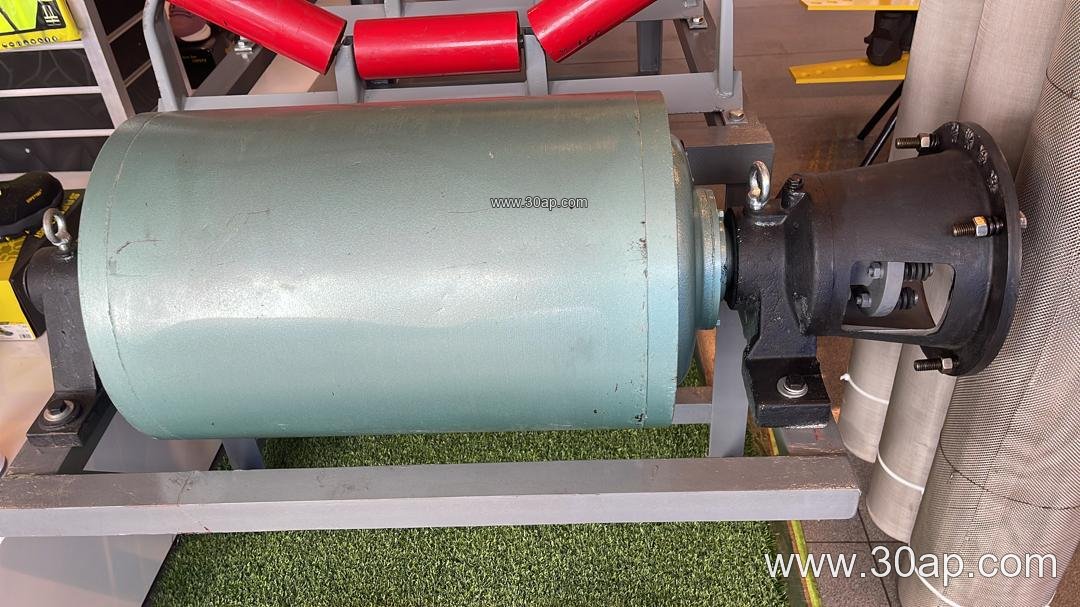
You will find the drive lagged pulley at the discharge end of a belt conveyor, often called the head pulley. In a coal mining conveyor system, it pulls the loaded belt over the head, discharging material onto a transfer chute or crusher. The same pulley type appears in power plant coal handling, aggregate plants, and port ship-loading conveyors. It works alongside idler rollers that support the belt and conveyor brackets that hold the structure. A bend pulley may redirect the belt path, and a take-up pulley maintains tension, but only the drive pulley delivers power. This distinction matters when ordering spares: a tail pulley is not a substitute for a drive pulley, even if dimensions look similar.
Selecting a Drive Lagged Pulley
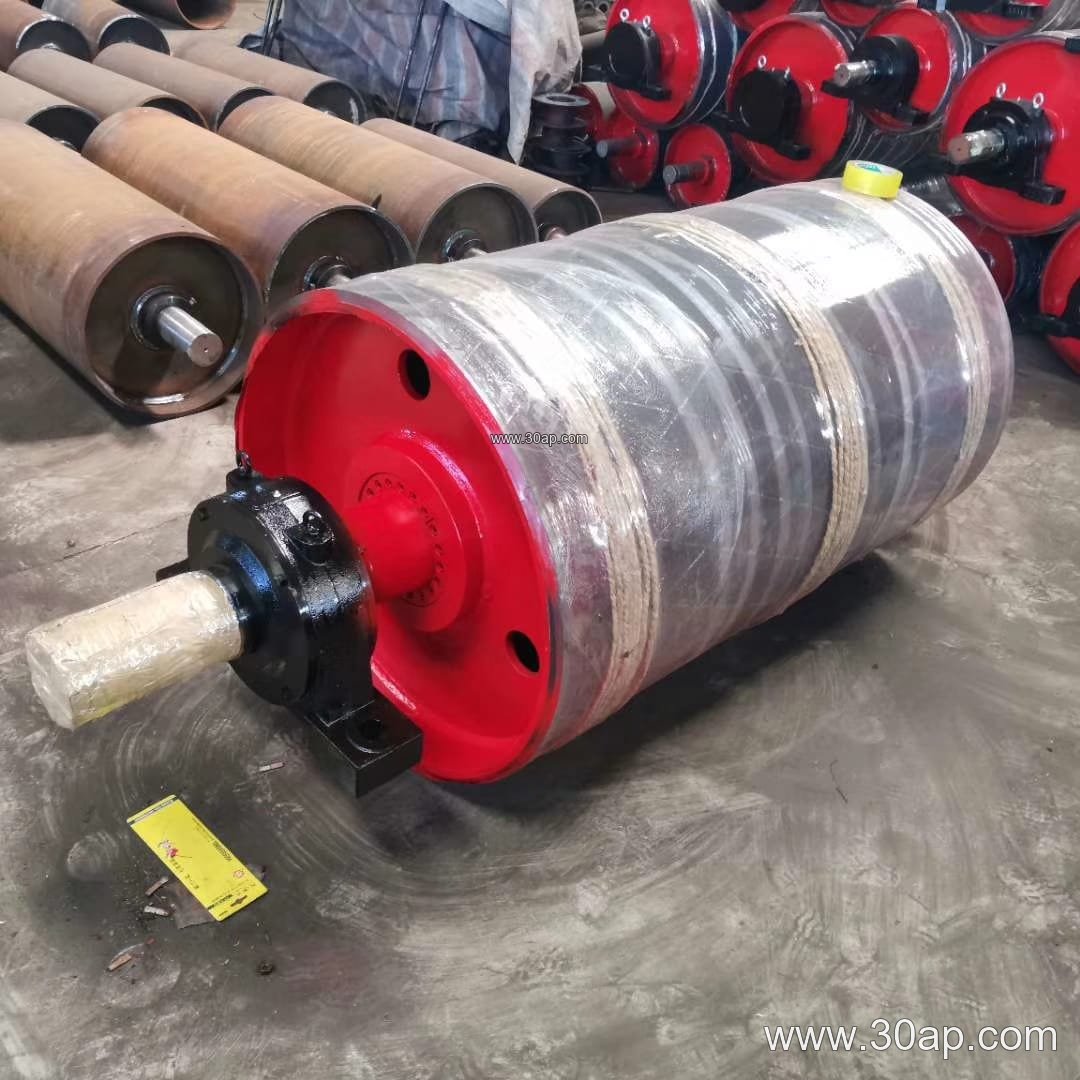
Start with the belt width and the required torque. For a heavy-duty mining conveyor belt carrying iron ore, a larger diameter (Ø1000 or Ø1250) reduces belt bending stress and improves grip. For a smaller aggregate line with an EP conveyor belt, a Ø500 or Ø630 drum may be sufficient. Lagging choice depends on conditions: diamond rubber for general grip, ceramic for high abrasion and wet conditions, and plain rubber for lighter duties. Consider the belt type—a steel cord conveyor belt may need a larger pulley diameter to avoid excessive flexing. Also check the conveyor bracket interface and bearing size. The table below lists common diameter and lagging pairings for reference.
| Application | Typical Belt | Suggested Pulley Diameter | Lagging |
|---|---|---|---|
| Coal mining | Flame retardant conveyor belt | Ø800–Ø1250 | Diamond rubber, 12–15 mm |
| Cement plant | Abrasion resistant conveyor belt | Ø630–Ø1000 | Ceramic or plain rubber, 10–15 mm |
| Port bulk handling | EP conveyor belt | Ø500–Ø800 | Herringbone, 10–12 mm |
Remember that shell width usually exceeds belt width by 100–200 mm, so a B1000 belt often uses a 1150 mm shell. This allows the belt to track without edge damage. For more details on matching pulleys with conveyor belts and idler rollers, visit our site at www.example.com/drive-lagged-pulley.
Maintenance and Buyer Tips
Inspect lagging for wear, glazing, or missing tiles. Worn lagging causes slip, belt tracking problems, and heat buildup. Replace lagging when thickness drops below about 70% of original. Check shaft alignment and bearing condition regularly, especially in dusty plants like a limestone mine or a fertilizer granulation line. When buying, specify belt width, pulley diameter, shaft diameter, lagging type and thickness, and bearing type. Ask for a dimensional drawing to confirm fit with your conveyor brackets. Avoid choosing a pulley by belt width alone—torque, belt tension, and duty cycle all influence the design. A well-matched drive lagged pulley keeps your conveyor running smoothly, whether you handle crushed stone, coal, or clinker.