What a Nylon Idler Does on a Conveyor
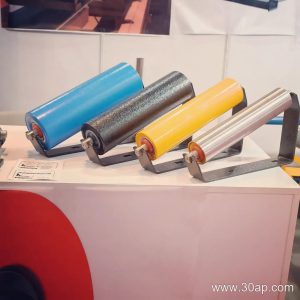
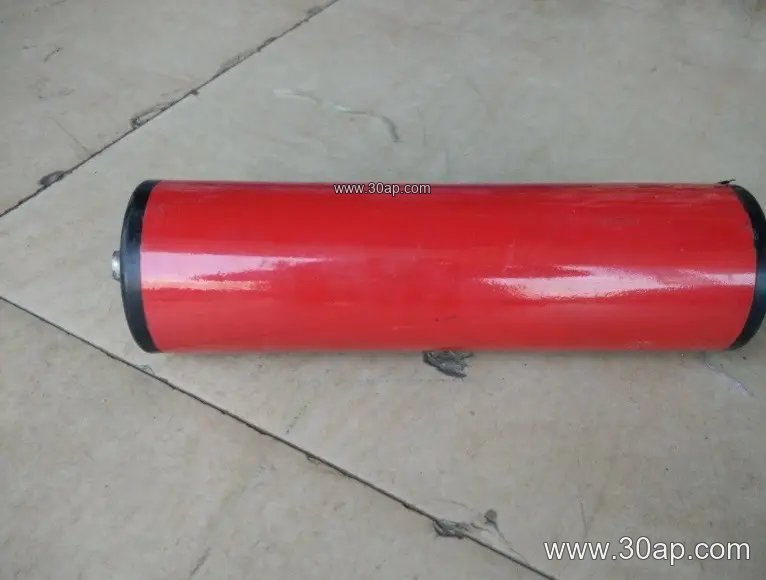
A nylon idler is a conveyor idler roller whose outer shell is made from nylon rather than the more common steel tube. It supports the conveyor belt along the carrying or return side of the line, keeps the belt tracking smoothly, and reduces friction between the belt and the structure. In a busy quarry, a coal handling plant, or a cement kiln feed line, these rollers are often chosen where weight, noise, and belt wear matter. The nylon surface is non-marking and tends to run quietly, which is useful on lines handling sensitive or light materials.
Because the shell is a polymer, the roller is lighter than an equivalent steel roller. That can ease manual handling during installation and reduce the load on the conveyor bracket and frame. It is still a load-bearing component, so the shaft, bearing housing, and sealing arrangement must be matched to the duty. A nylon idler is not a substitute for a drive pulley, tail pulley, or bend pulley; those are different components with different jobs. It belongs to the idler family, alongside troughing, impact, and return rollers.
How the Roller Is Built
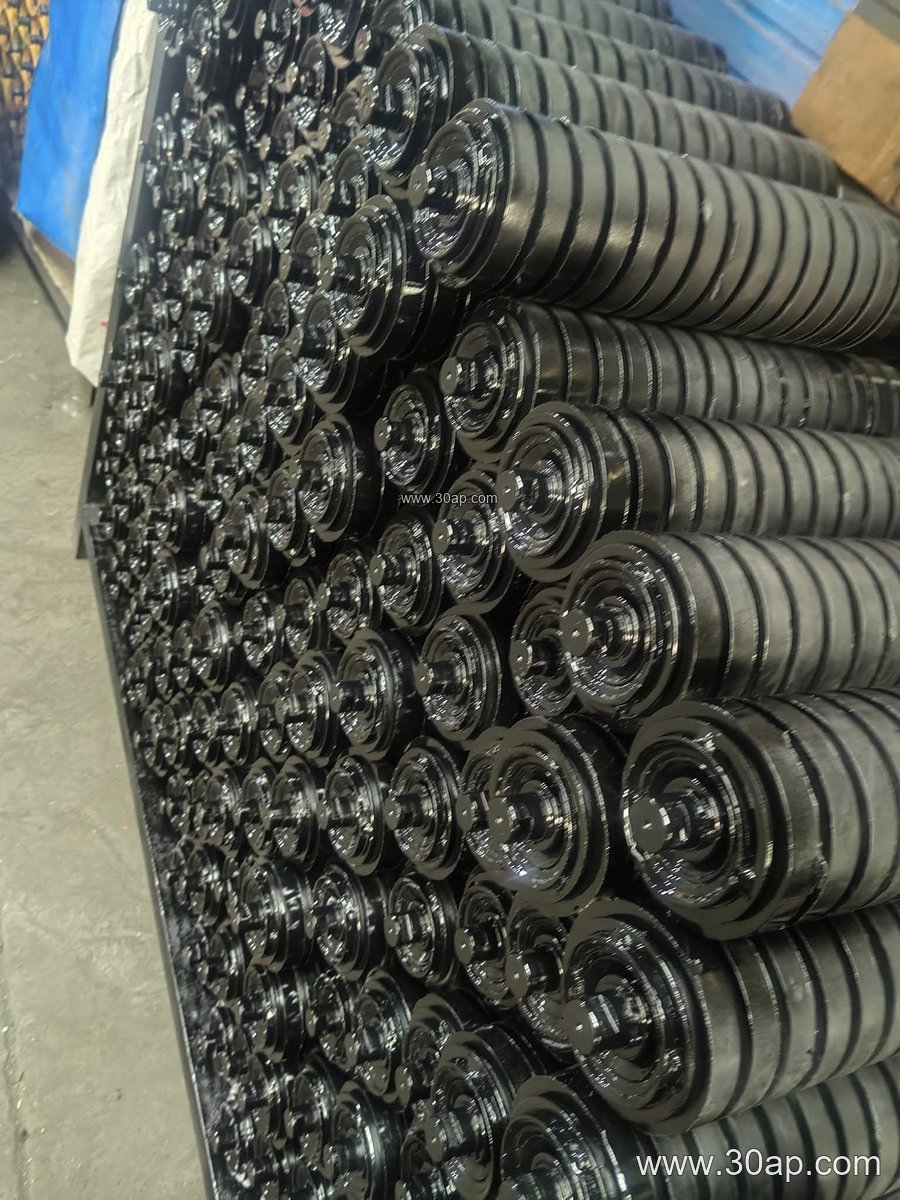
Most nylon idlers combine a molded or machined nylon shell with a steel shaft and sealed ball bearings. The shell may be a single nylon tube or a nylon sleeve fitted over a metal core, depending on the design. Common bearing sizes include 6204, 6205, 6305, 6306, 6308, and 6310, but the bearing is selected by load and speed rather than by roller diameter alone. Seals are critical in dusty environments such as a limestone mine or a sand and aggregate line, where fine grit can shorten bearing life.
The roller surface is smooth, which helps prevent material buildup and reduces the chance of belt damage. Some designs add a slight crown or use a tapered shape for training duties, but the plain cylindrical nylon roller remains the standard form. Roller length follows the belt width and the idler arrangement. For a three-roll troughing set, common roll lengths are roughly 200 mm at B500, 250 mm at B650, 315 mm at B800, 380 mm at B1000, 465 mm at B1200, 530 mm at B1400, 600 mm at B1600, 670 mm at B1800, and 750 mm at B2000. These are typical examples, not fixed rules, and side rolls can differ from the center roll.
Where Nylon Idlers Fit in the Line
These rollers are frequently used on the carrying side of a conveyor belt in light to medium duty service. They also appear on return runs where a smooth, non-marking surface is preferred. In a power plant coal yard or a fertilizer handling facility, the quieter running of a nylon roller can be an advantage near work areas. In a stone crushing circuit, however, heavy impact and sharp rock may call for rubber-disc impact rollers instead, and a nylon idler would be reserved for the calmer sections downstream.
Selection should consider belt speed, material weight, ambient temperature, and the presence of oil or chemicals. A nylon idler may not suit very hot service near a sinter line or a clinker cooler, where heat resistant rollers or steel shells are more appropriate. For abrasive ore duties, such as an iron ore or copper ore conveyor, the buyer should confirm the nylon grade and wall thickness with the supplier. Matching the idler to the conveyor pulley layout and the conveyor bracket spacing is part of the same design check.
Specifications Buyers Should Confirm
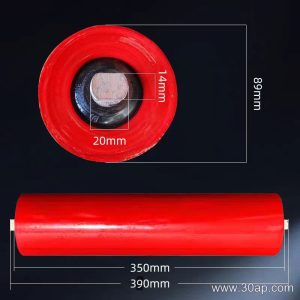
When specifying a nylon idler, the useful reference data usually includes roller diameter, belt width, roll length, shaft diameter, bearing size, and sealing type. Diameters commonly range from about 63 mm to 219 mm across the idler family, and the choice depends on belt width and load. A 500 mm or 650 mm belt may use a smaller roller, while a 1200 mm or 1400 mm belt generally needs a larger one. The table below shows typical reference values; treat them as guidance for discussion, not as a universal supply promise.
- Roller diameter options commonly seen: 63, 76, 89, 102, 108, 127, 133, 159, 178, 194, 219 mm
- Belt width references: B400, B500, B650, B800, B1000, B1200, B1400, B1600, B1800, B2000
- Troughing angles: 20, 30, 35, and 45 degrees, with about 1.5 to 2 degrees forward tilt on training idlers
- Bearing references: 6204, 6205, 6305, 6306, 6308, 6310
Do not assume that one belt width can only match one roller diameter, or that a given belt width fixes the shaft size. Those values come from the full conveyor design, including the belt tension and the load per idler. A supplier who asks for the belt width, material, speed, and ambient conditions is doing the right kind of check.
Installation and Maintenance Notes
Proper alignment at installation prevents most early failures. The idler should sit square to the belt centerline, and the frame should be checked for level. After the first few days of running, recheck the rollers for loose fasteners and free rotation. In a dusty coal mining or quarry environment, periodic cleaning around the seals helps extend service life. A nylon idler that stops turning will usually show a flat spot or a worn shell, and it should be replaced before it damages the belt.
Keep a small stock of common sizes so that a failed roller does not stop the line. Record the roller diameter, roll length, and bearing number for each position. For lines that also use a fabric core conveyor belt such as an EP conveyor belt or NN conveyor belt, the idler spacing and roller quality still matter to belt life. A well-chosen nylon idler, matched to the conveyor belt and frame, is a simple way to keep a bulk material line running smoothly.