What a Conveyor Support Leg Does on a Belt Conveyor
A conveyor support leg is the vertical member that carries the weight of the conveyor frame, idler roller stations, and the loaded conveyor belt down to the floor, foundation, or steel structure. In many installations the leg is bolted to a stringer or cross beam and works together with a conveyor bracket to hold the idler in the correct position. The leg looks simple, but it controls alignment, height, and the stiffness of the whole line, so it matters in quarry, cement, and power plant conveying as much as the pulleys and belting do.
Because the leg is a structural part rather than a rotating one, it is usually discussed together with the frame it supports. A well-designed leg keeps the trough angle steady, limits vibration, and makes maintenance of the idler roller and conveyor pulley access easier.
How the Leg Is Built
Most legs are fabricated from angle steel, channel steel, or folded steel plate. The top plate or bracket carries the stringer, while the base plate is drilled for anchor bolts. Height, hole spacing, and cross beam length usually follow the belt width, trough angle, and the frame design, so they are best confirmed from the layout drawing rather than assumed.
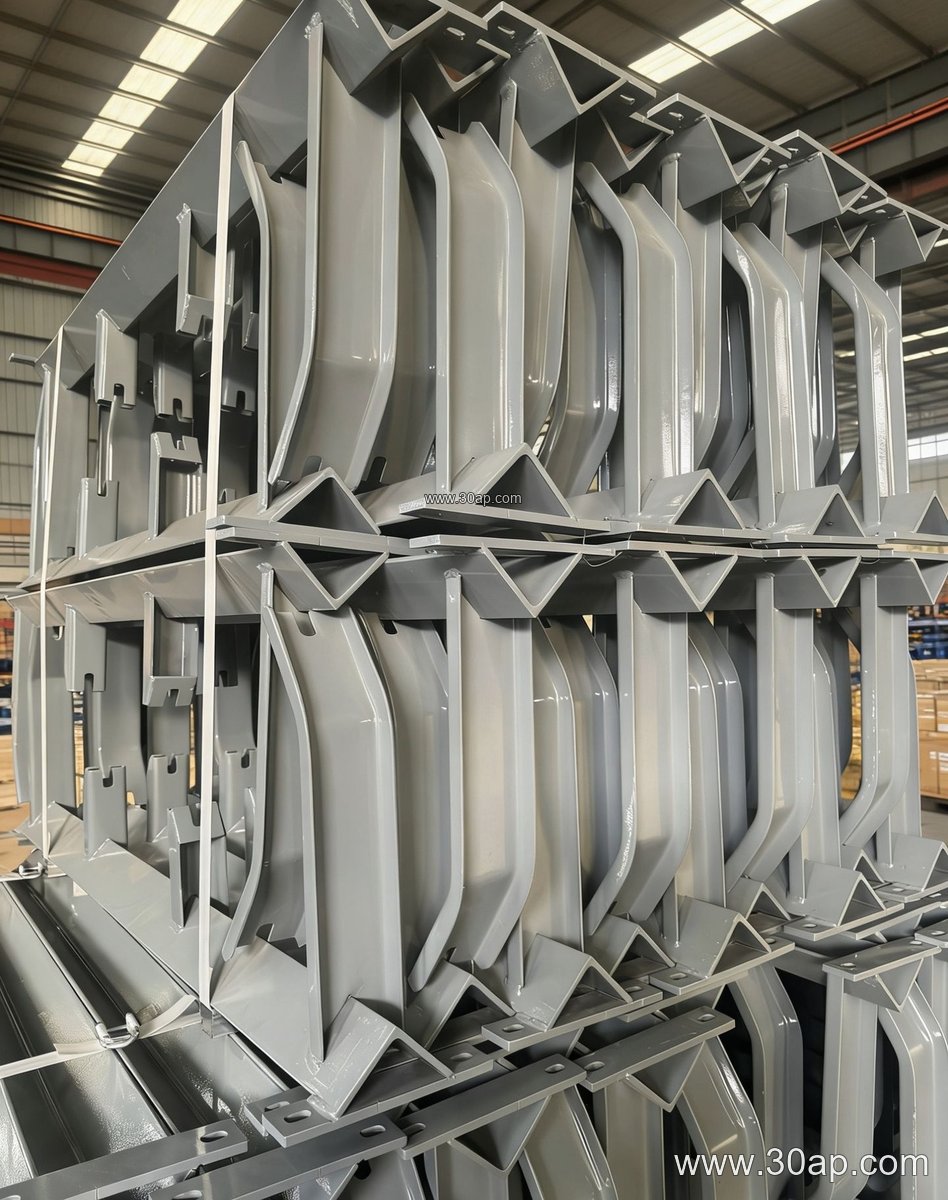
Common structural forms include:
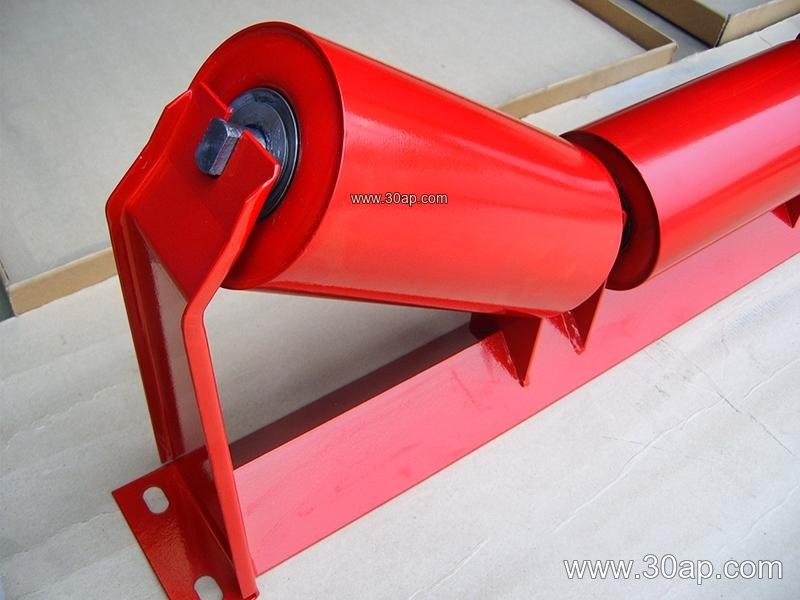
- Fixed legs welded or bolted to a rigid frame, used where the floor is level and stable.
- Adjustable legs with slotted holes or threaded sections, useful for levelling and for small height changes during installation.
- Hanger or suspension arrangements in confined spaces, where a floor leg is not practical.
Surface treatment is normally painted or galvanized, and the choice should match the site: dusty, wet, or corrosive conditions call for better protection. The leg is not a substitute for a bend pulley or a tail pulley; those are separate components with their own support requirements.
Where Support Legs Are Used
Support legs appear in nearly every fixed belt conveyor, from a small aggregate conveyor at a sand and gravel plant to long overland lines at an iron ore mine. In a coal washing plant they carry the frame above walkways and sumps; in a power plant coal yard they hold the transfer conveyors at a workable height. Port terminals and cement plants use them under long galleries where regular inspection of the belt and rollers is needed.
The load case changes with the duty. A heavy-duty mining conveyor belt running at high tonnage needs a stiffer leg spacing and stronger base than a light package line. Where a skirted conveyor belt or corrugated sidewall conveyor belt is used, the extra material and skirt boards may add local loads that the frame design should account for.
Matching the Leg to Belt Width and Idler Size
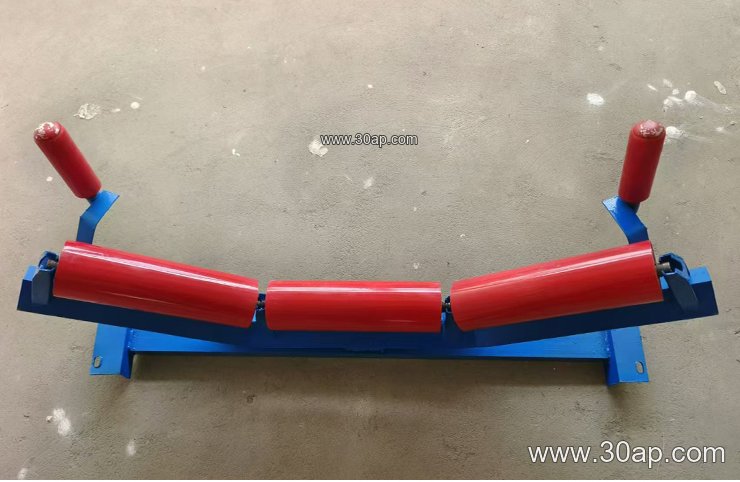
Buyers often ask which leg fits a given belt width. The answer depends on the trough angle, the idler diameter, and the frame type, not on width alone. The following reference values show typical combinations; they are examples, not fixed rules.
| Belt width | Typical trough angle | Typical idler diameter | Note |
|---|---|---|---|
| B500 | 20 to 30 degrees | Ø89 | Light aggregate duty |
| B650 | 30 degrees | Ø89 or Ø108 | Small quarry line |
| B800 | 35 degrees | Ø108 | Common in sand and gravel plants |
| B1000 | 35 to 45 degrees | Ø108 or Ø133 | Cement and coal handling |
| B1200 | 35 to 45 degrees | Ø133 | Mining and port duty |
| B1400 | 35 to 45 degrees | Ø133 or Ø159 | Heavy bulk material |
| B1600 to B2000 | 35 to 45 degrees | Ø159 or Ø194 | High tonnage lines |
Adjustable supports often allow the trough angle to be set within a range such as 20 to 45 degrees. Forward-leaning idler frames are frequently set around 1.5 to 2 degrees to help belt tracking. None of these figures should be treated as a universal match: the correct leg and bracket combination comes from the conveyor design, and hole spacing and beam length vary with belt width and trough angle.
What Buyers Should Check
- Confirm the frame type, belt width, trough angle, and idler roller diameter before ordering.
- State the floor or steel structure condition, since it affects base plate and anchor bolt design.
- Check whether adjustable height is needed for installation tolerance or future changes.
- Match the coating to the environment, especially in fertilizer, salt, or wet coal handling.
- Ask for the drawing showing hole spacing and cross beam length rather than relying on a catalogue number.
When the leg is part of a wider upgrade, review it together with the belting and rotating parts. A flame retardant conveyor belt for underground coal mining, a heat resistant conveyor belt near a clinker cooler, or an abrasion resistant conveyor belt at a crusher discharge all impose different loads and service conditions on the frame. Treating the support leg as a structural detail rather than an afterthought helps the whole conveyor run straighter and last longer.