What a Heavy-Duty Conveyor Idler Does on the Line
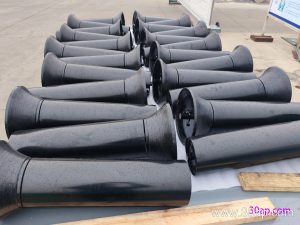
A heavy-duty conveyor idler is the rotating support that carries the loaded belt between the head and tail of a conveyor. In a quarry, a cement plant, or a power plant coal yard, the belt may run for kilometres, and every metre of it rests on idler rollers. The heavy-duty version is built for higher loads, coarser material, and longer service intervals than a light-duty roller. It is not a pulley; the drive pulley, tail pulley, and bend pulley transmit power and change belt direction, while the idler simply supports and guides the belt. On a typical bulk material conveyor, an idler roller can be found on the carrying side as a troughing set and on the return side as a flat or V-return roller.
How the Roller Is Built
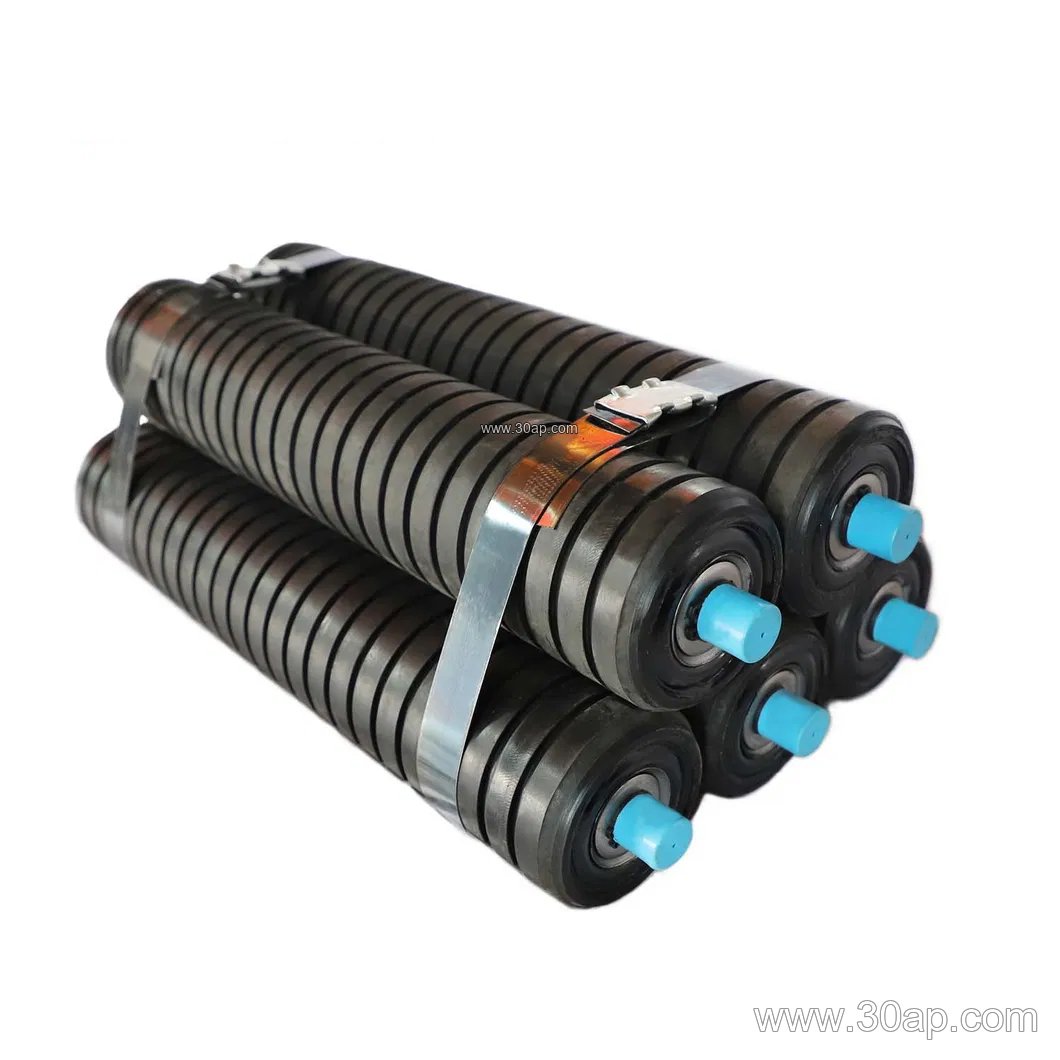
Construction starts with the shell, usually a steel tube, and the shaft that runs through it. Bearings sit in sealed housings at each end, and the seal arrangement matters as much as the tube wall thickness. Dust, grit, and moisture are the main enemies in a stone crushing line or a sintering plant, so a heavy-duty idler normally uses multi-stage labyrinth seals and grease-retained bearing cavities. The roller surface may be plain steel, nylon, ceramic, or rubber rings; rubber rings are common on impact zones below a crusher, while ceramic or nylon covers help where sticky material builds up. Bracket design also varies, and the conveyor bracket must match the frame so the roller sits at the correct height and angle.
Common Roller Diameters and Belt Widths
Diameters are selected by load and belt speed rather than by belt width alone. The table below shows typical ranges used in heavy-duty troughing and return positions. Side rollers and centre rollers in a three-roll set can differ, and a single belt width can work with more than one roller diameter.
| Item | Typical Range |
|---|---|
| Roller diameter | Ø89, Ø102, Ø108, Ø127, Ø133, Ø159, Ø178, Ø194, Ø219 mm |
| Belt width | B650, B800, B1000, B1200, B1400, B1600, B1800, B2000 mm |
| Trough angle | 20°, 30°, 35°, 45° |
| Bearing | 6205, 6305, 6306, 6308, 6310 |
| Roller length (three-roll troughing, example) | B800 about 315 mm, B1000 about 380 mm, B1200 about 465 mm, B1400 about 530 mm |
These figures are reference values, not fixed pairings. Final roller length depends on belt width, trough angle, and the idler set configuration.
Where Heavy-Duty Idlers Are Used
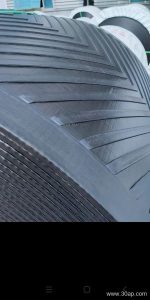
The heaviest duty appears where material is lumpy, abrasive, and wet. An iron ore or copper ore conveyor, a limestone quarry line, and a coal mining conveyor all place high impact and abrasion loads on the carrying side. In a coal-fired power plant, idlers under the coal conveyor must cope with dust and occasional spillage. In a cement plant, clinker and raw meal lines combine heat, fines, and abrasive dust. A heavy-duty mining conveyor belt running at high tension needs rollers that keep their roundness, because a flat-spotted roller will damage the belt edge and increase power draw. The same logic applies to a steel cord conveyor belt on a long overland route, where roller drag directly affects energy consumption.
Troughing, Impact, and Return Positions
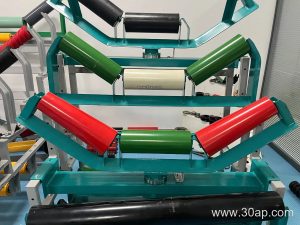
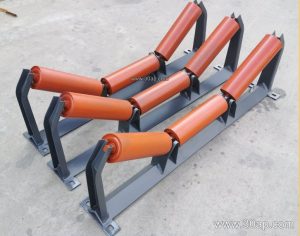
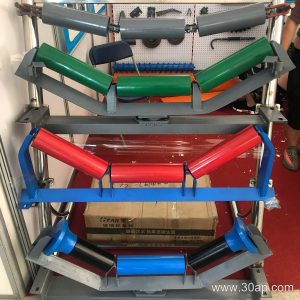
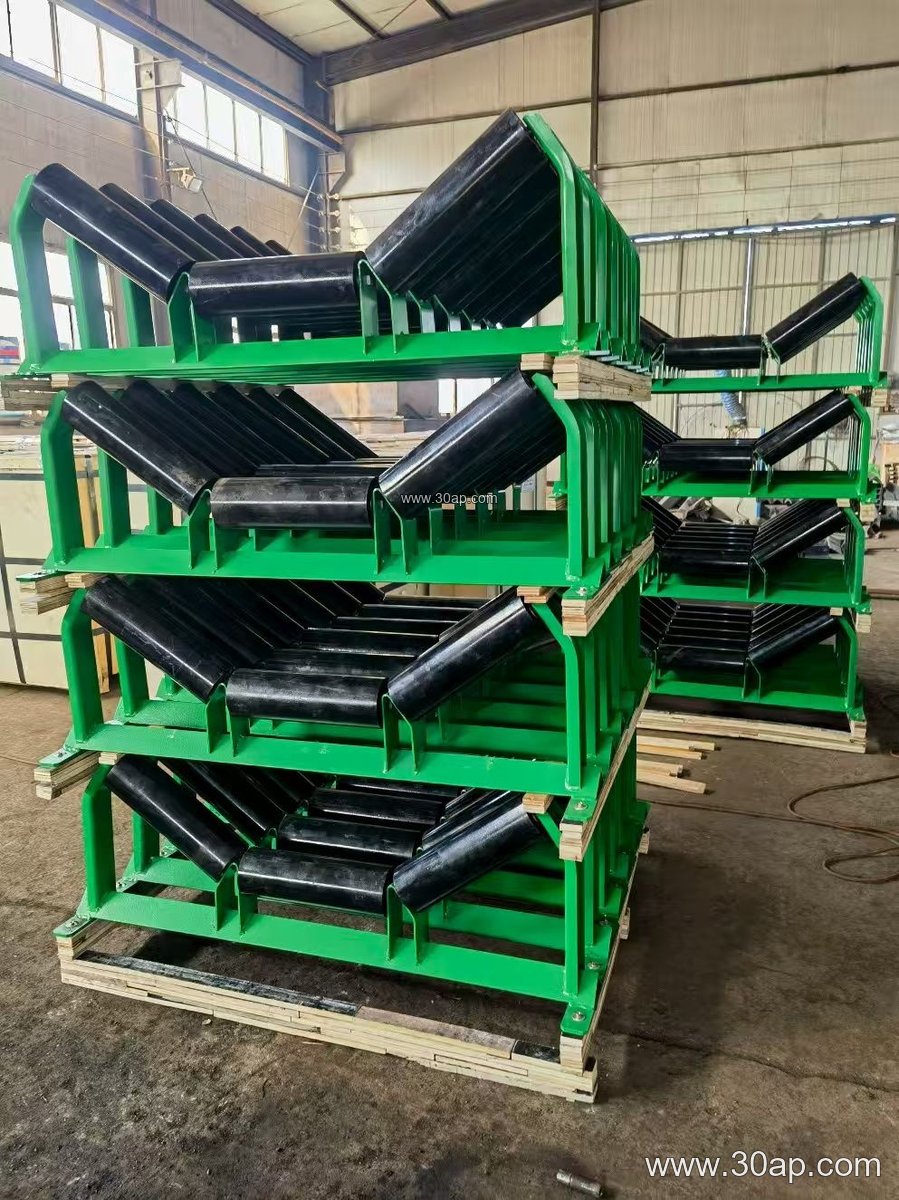
Troughing idlers are arranged in two-roll or three-roll sets to form the belt into a trough. A 35° trough is common for general bulk material, while a 45° trough suits fine, free-flowing material that would otherwise spill. Transition idlers sit near the head and tail to ease the belt from flat to troughed. On the return side, flat return rollers and V-return rollers keep the belt aligned and shed loose material. Impact idlers with rubber rings are placed under the loading point, often below a crusher discharge, to absorb the fall of rock. Self-aligning types, including friction and conical self-aligning idlers, correct minor belt drift on long conveyors.
What a Buyer Should Check
- Load and speed: confirm the calculated load per idler and the belt speed before choosing a diameter and bearing size.
- Sealing and lubrication: ask how the bearing housing is sealed and whether the roller is greased for life or relubricable.
- Shell and shaft: check tube wall thickness and shaft material; a heavier shaft resists bending at the bracket.
- Belt compatibility: a flame retardant conveyor belt and an abrasion resistant conveyor belt behave differently at the same tension, so match roller spacing to the belt construction.
- Spares: keep a small stock of the most wearing positions, such as impact and return rollers, rather than a full spare set.
Maintenance is mostly inspection. Listen for squealing bearings, look for a seized roller that has worn a flat spot, and check that the belt tracks centrally over the troughing set. Replacing a failed heavy-duty conveyor idler early prevents edge damage to the belt and avoids unplanned downtime in a port terminal or an aggregate plant. For buyers comparing suppliers, request the roller drawing, bearing designation, and seal type, then verify that the conveyor bracket and frame dimensions match the existing structure. A well-chosen idler roller is a small component, but across a long conveyor it decides how smoothly the whole system runs.