What a Heavy-Duty Conveyor Idler Does on the Line
A heavy-duty conveyor idler is the rotating support under the belt that carries the load between the tail and head of a conveyor. In a quarry, a coal preparation plant or a cement kiln feed line, the belt may run for thousands of hours under abrasive rock, wet fines or hot clinker. The idler roller in these positions has to keep the belt profile stable, protect the conveyor belt from edge damage and keep friction low enough that the drive does not waste power. A standard idler may be adequate on a light package line, but a heavy-duty conveyor idler is built for shock loads, wide belts and long spans.
The working principle is simple: the idler rotates with the belt, the shell wears instead of the belt, and the bearing assembly carries the radial load. What changes in heavy service is the size of that load and the amount of grit and moisture around the seal.
How the Roller Is Built
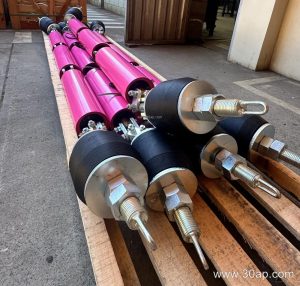
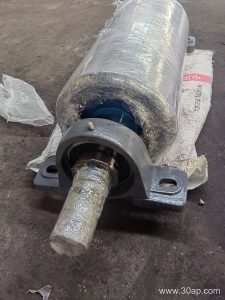
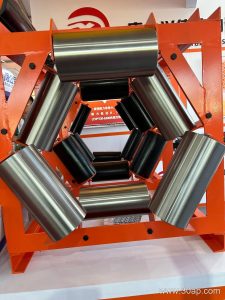
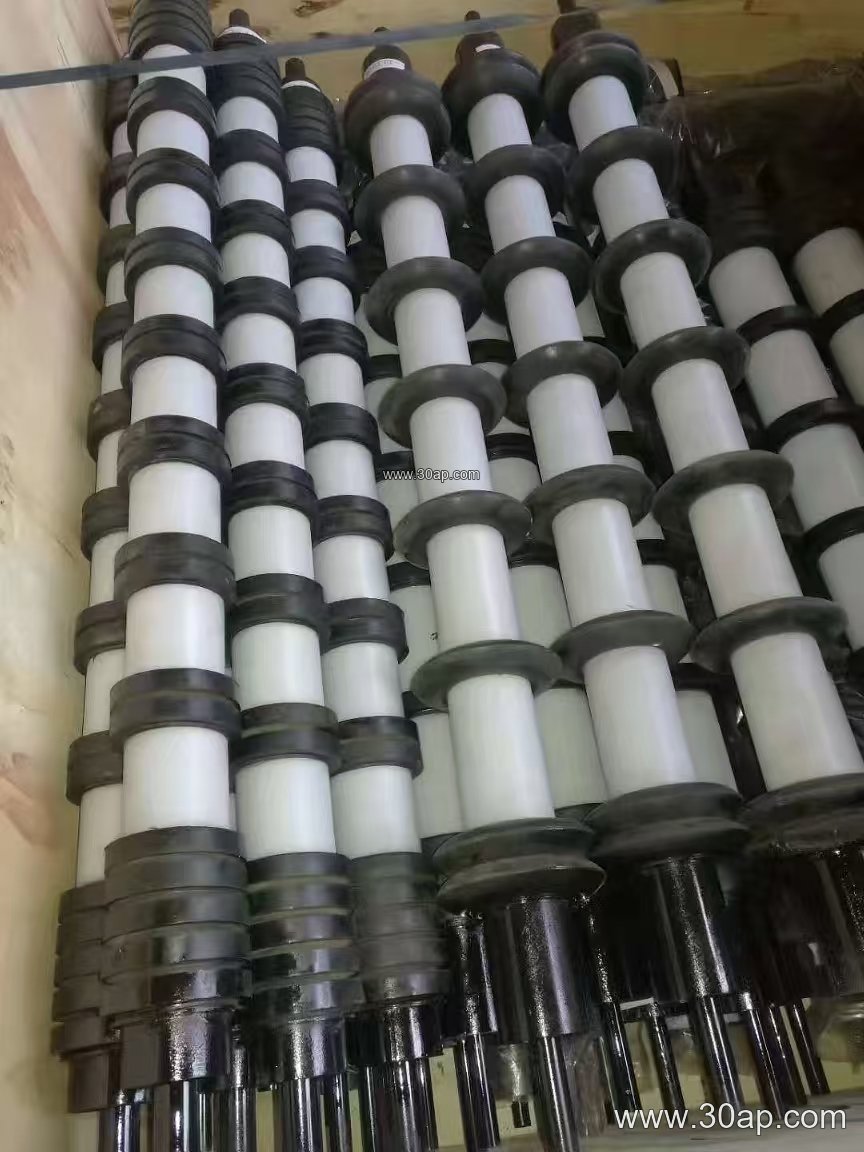
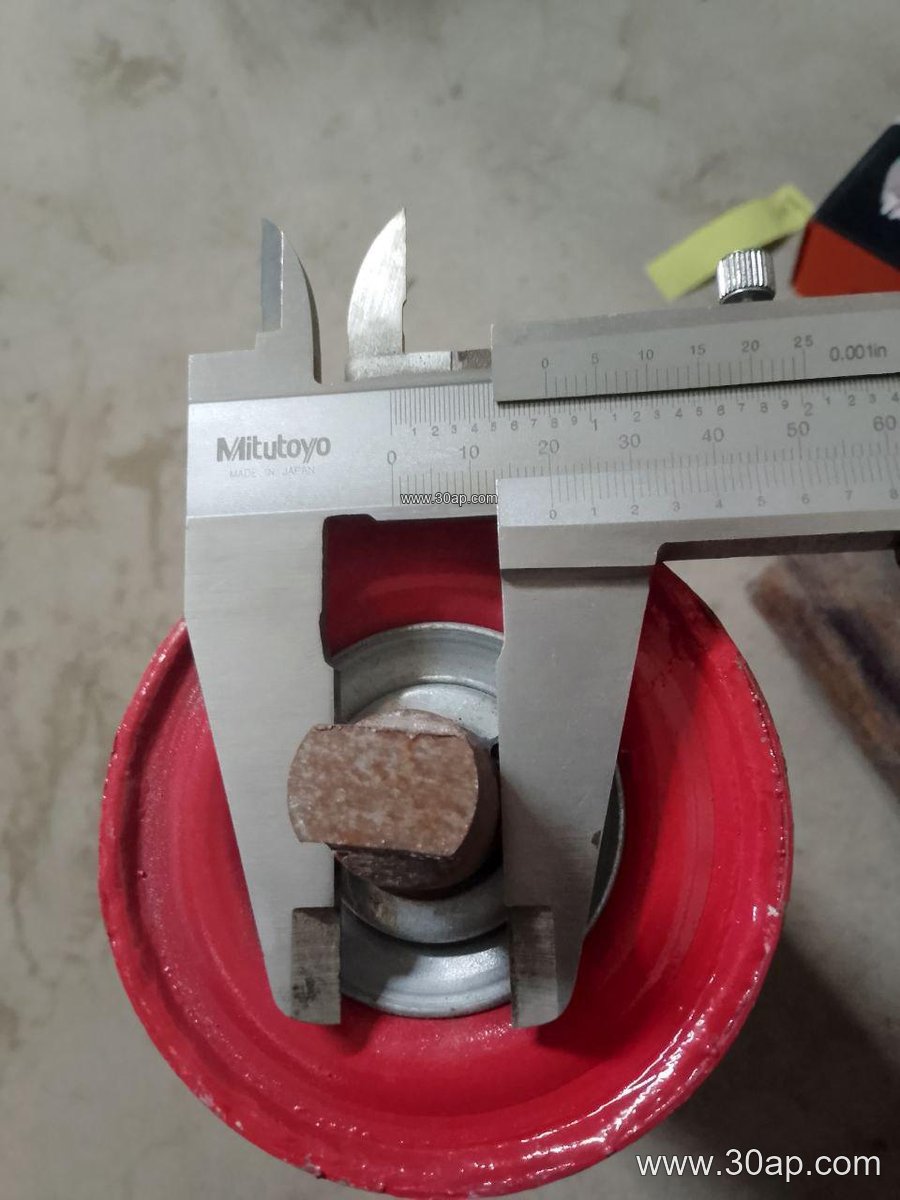
Most heavy-duty conveyor idlers use a steel tube shell, welded end caps, a through shaft and a sealed bearing housing. The shell may be plain steel, nylon-coated, ceramic-covered or fitted with rubber rings for impact absorption. Bearing selection is usually matched to the load and speed of the station rather than to belt width alone, with common sizes including 6205, 6305, 6306, 6308 and 6310. A labyrinth seal or a multi-stage lip seal keeps dust out of the bearing cavity; in a sand and gravel line this detail often decides service life.
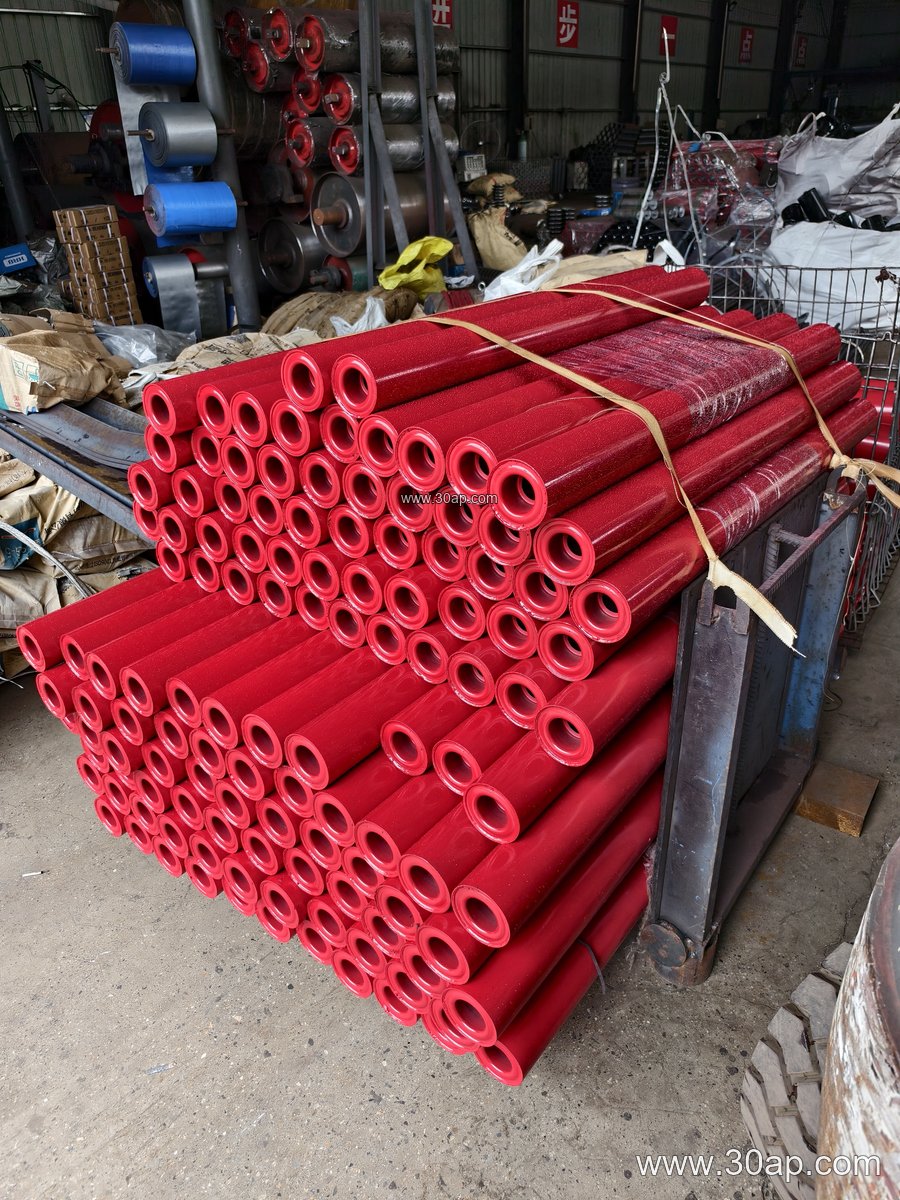
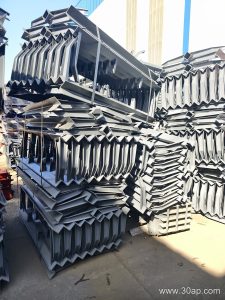
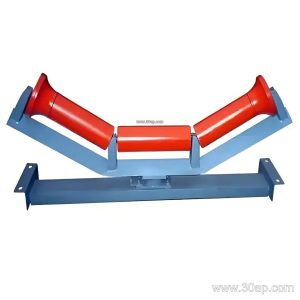
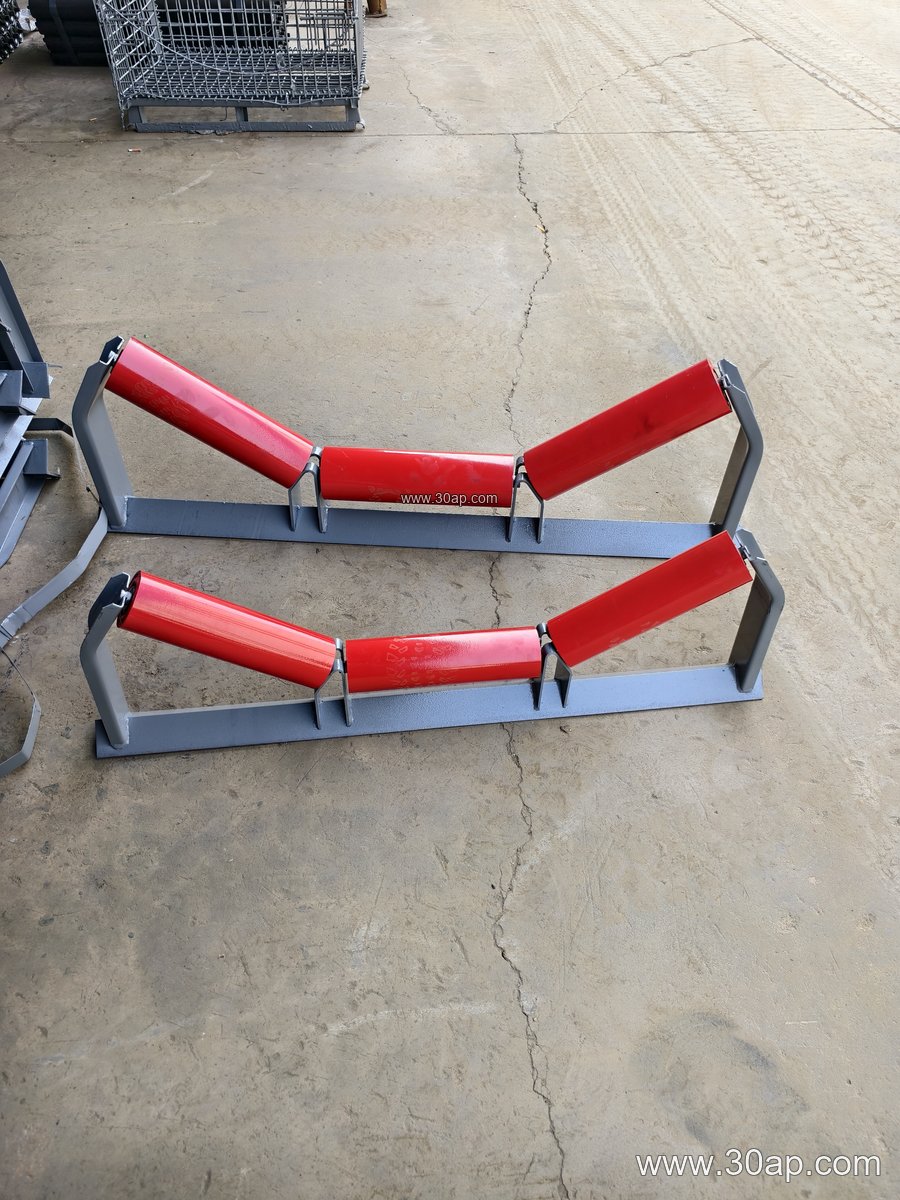
The frame that holds the roller is equally important. A conveyor bracket or idler frame sets the trough angle and the spacing between stations. On a three-roll troughing set, the side rollers are inclined while the centre roller stays flat, so the belt forms a trough that holds the material. The roller length changes with belt width, trough angle and frame type; for example, a three-roll set on a B800 belt commonly uses a centre roller around 315 mm long, while a B1200 belt may use roughly 465 mm. These are typical reference values, not fixed matches, and side rollers can differ from the centre roller.
Common Types and Where They Sit
- Troughing idlers on the carrying side, usually in two- or three-roll groups, at 20, 30, 35 or 45 degrees.
- Impact idlers with rubber rings under the loading point, where rock falls onto the belt.
- Return idlers, flat or V-shaped, supporting the empty belt on the return strand.
- Self-aligning idlers, including friction and tapered designs, to correct belt drift on long runs.
- Spiral or disc return rollers to shed sticky material before it builds up.
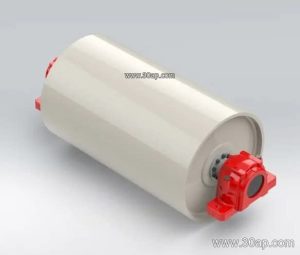
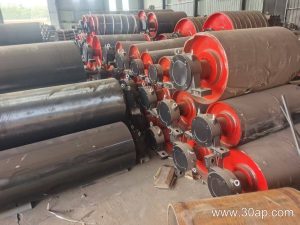
Drive pulleys, tail pulleys and bend pulleys are separate components and are not interchangeable with idlers; they transmit or redirect belt tension, while the idler only supports the belt. A conveyor pulley failure stops the line just as fast, so both deserve attention during inspection.
Typical Service Conditions
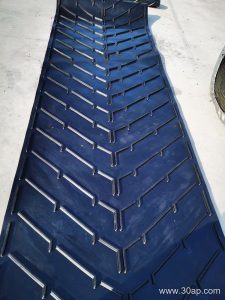
Heavy-duty idlers appear in iron ore and copper ore handling, limestone quarries, coal mining conveyor systems, power plant coal yards, steel plant sinter lines and aggregate crushing circuits. In these places the belt may be a thick abrasion resistant conveyor belt, a steel cord conveyor belt on a long overland run, or a flame retardant conveyor belt underground. The idler must suit the belt, the material and the environment: a dusty coal yard, a wet wash plant and a hot clinker line each put different demands on the seal and the shell.
Roller diameters commonly range from about 63 mm to 219 mm, and the choice depends on belt speed, load per station and available space. A larger diameter roller turns more slowly and can improve bearing life, but it also raises the belt line and changes the frame height.
What Buyers Should Check Before Ordering
Start with the belt width and the trough angle, then confirm the frame type, roller length and shaft end detail. Ask for the bearing size and seal design, the shell wall thickness and the surface finish. Confirm the roller diameter and the station spacing, because spacing affects belt sag between idlers. For a new project, request a drawing of the bracket and the mounting dimensions so the idlers fit the existing structure.
Onsite, check that rollers turn freely, that seals are not leaking grease and that the shell is not worn through. Replace worn idlers in matched groups where possible to keep the belt profile even. A well-chosen heavy-duty conveyor idler will not fix a misaligned frame or an overloaded belt, but it will remove one common cause of downtime in a busy bulk handling plant.