What a Belt Conveyor Head Pulley Does
The belt conveyor head pulley sits at the discharge end of a conveyor and performs two jobs at once: it drives the belt and it turns the material loose so it falls into the chute or stockpile. Because it is the last point of contact before the belt returns empty, its diameter, lagging and alignment strongly influence belt life and how cleanly the load releases. Operators in a limestone quarry, a coal preparation plant or a power plant coal yard often judge a conveyor by how well this pulley keeps the belt tracking and how little carryback escapes the head.
Although the terms are sometimes used loosely, a head pulley is not the same as a drive pulley, a tail pulley or a bend pulley. On many conveyors one unit serves as both drive and head pulley, but a tail pulley tensions and redirects at the loading end, and a bend pulley only changes belt direction. Treating these positions as interchangeable leads to wrong lagging choices and poor belt training.
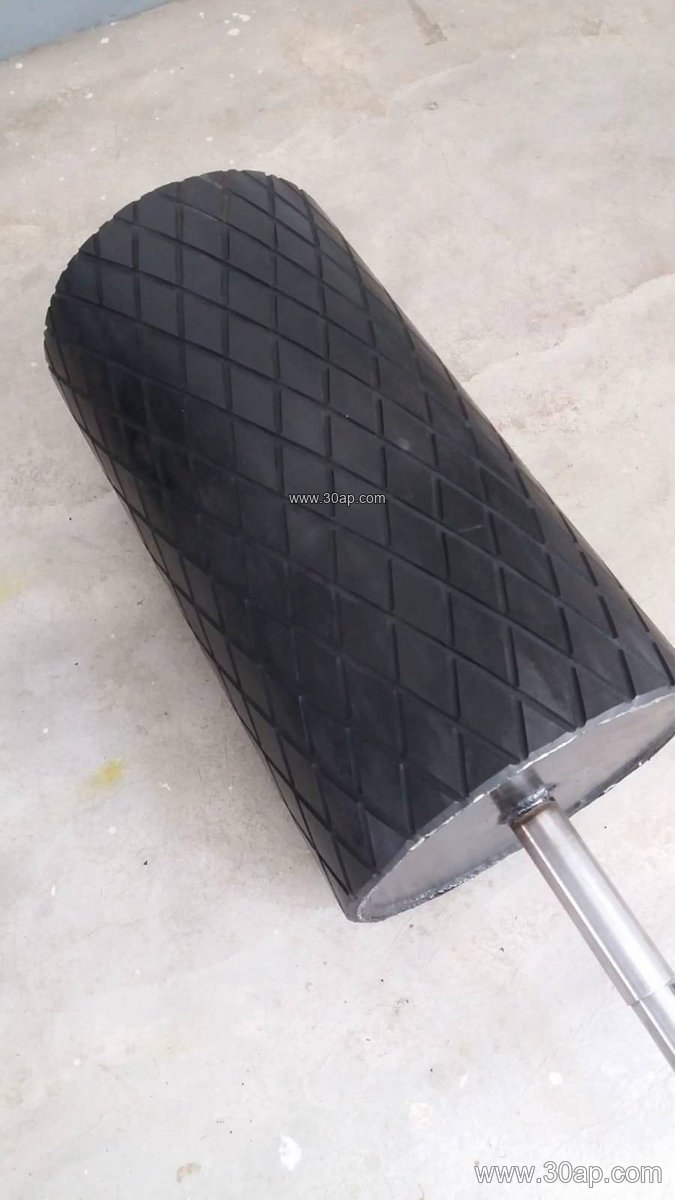
Construction and Surface Options
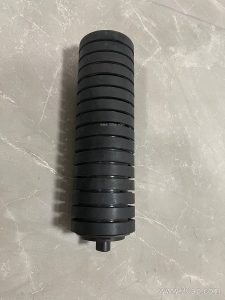
A typical head pulley is a welded steel drum with a machined face, end discs, a shaft and bearing housings that mount into the conveyor bracket. The shaft is sized by torque and radial load, not by belt width alone; common shaft diameters include Ø60, Ø80, Ø100, Ø120, Ø140 and Ø160 mm, while the final value follows the drive design. Face widths normally exceed the belt width so the belt is fully supported, for example about 1400 mm of face for a 1200 mm belt or about 950 mm for an 800 mm belt.
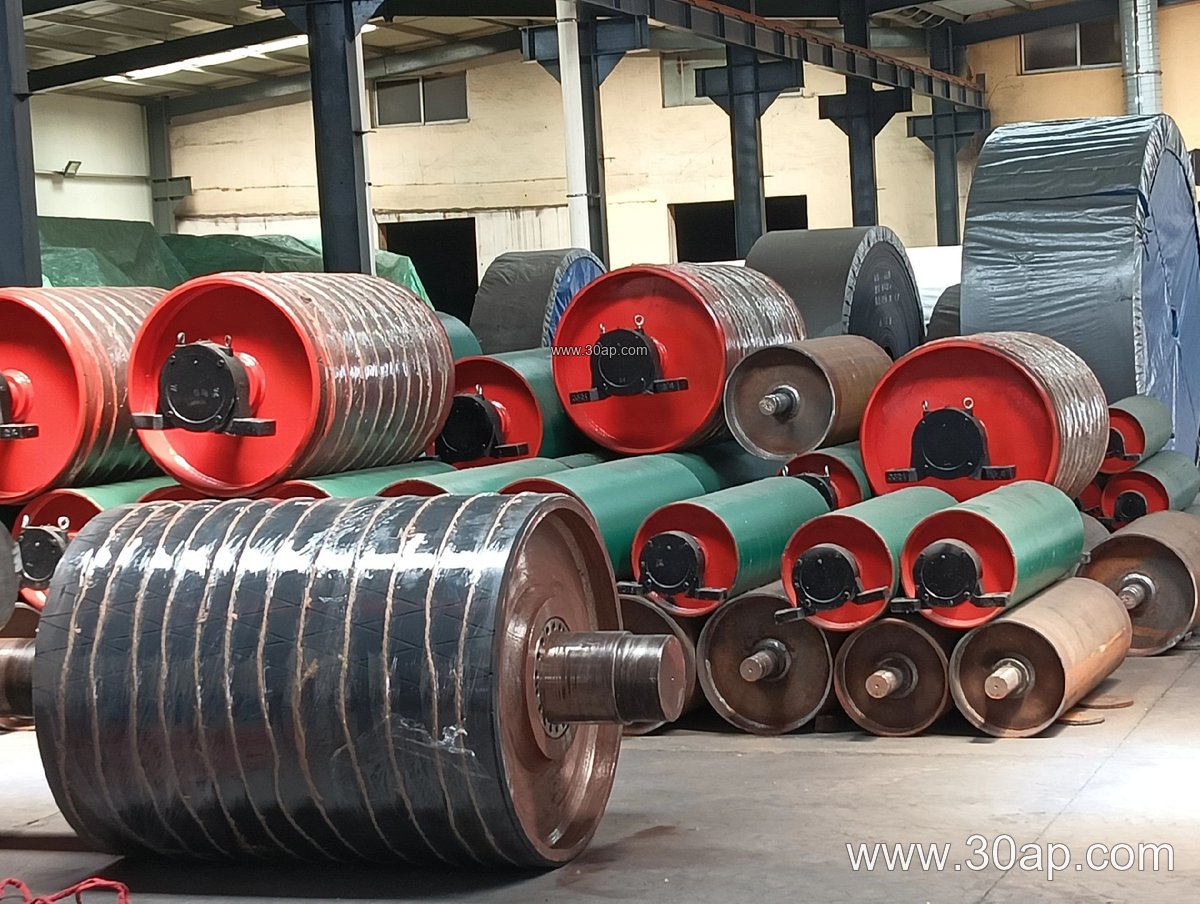
Surface treatment is where a head pulley earns its keep. Plain face is adequate for light, dry duties. Rubber lagging, applied cold or hot vulcanized, raises friction between drum and belt and cushions shock. Diamond or herringbone grooving helps shed water and fines, while ceramic lagging suits abrasive, high-tension service. Lagging thickness is commonly 8, 10, 12, 15 or 20 mm depending on belt tension and the duty cycle.
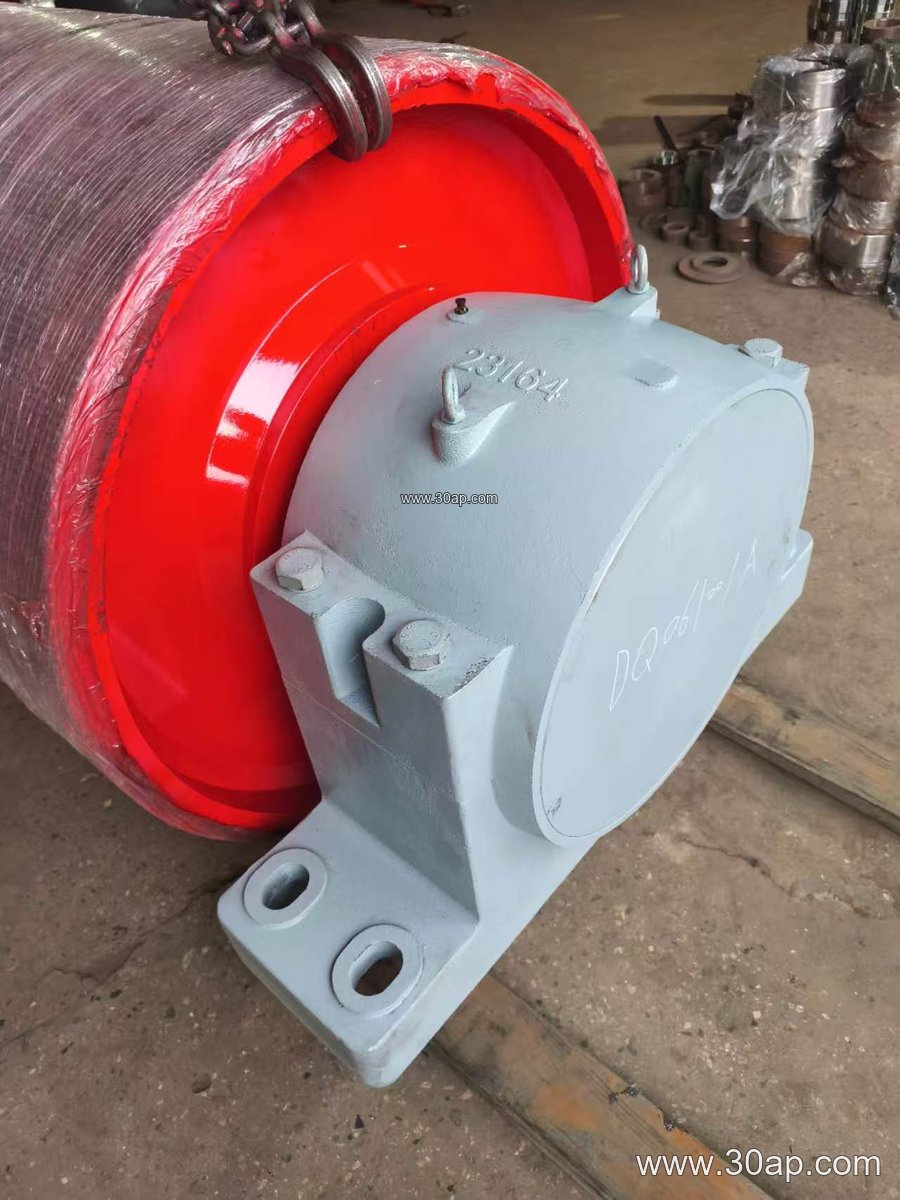
- Common diameters: Ø500, Ø630, Ø800, Ø1000, Ø1250 mm
- Typical combinations: B800 × Ø500, B1200 × Ø1000, B1400 × Ø800
- Belt widths served: B400 through B2400
- Lagging: plain, rubber, diamond, herringbone, ceramic
Matching the Head Pulley to the Belt
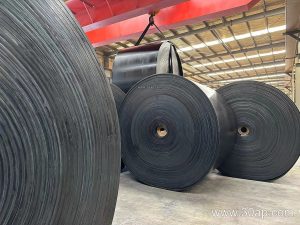
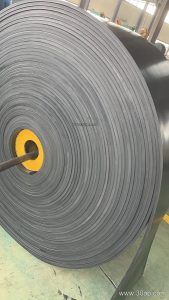
The belt and the pulley work as a pair. A heavy-duty mining conveyor belt carrying ore at high tension needs a larger drum to limit bending stress in the carcass, while a thin EP conveyor belt on a short aggregate line can run over a smaller diameter. Steel cord conveyor belt is less tolerant of small pulleys than fabric core constructions, so the ratio of pulley diameter to belt thickness deserves attention during layout.
Environmental conditions also steer the choice. A heat resistant conveyor belt discharging clinker or sinter needs a pulley that will not soften its own lagging, and a flame retardant conveyor belt in an underground coal mining conveyor must be paired with components that respect the same safety strategy. In a sand and gravel plant, abrasion resistant conveyor belt and ceramic lagging together reduce slip and wear. For fine, wet material, grooved lagging keeps the friction coefficient steadier than a smooth face.
Installation Points and Maintenance
Position matters. At the head, the pulley usually carries the highest belt tension, so bearing selection and frame rigidity are critical. A slight misalignment here will show up as belt edge wear hundreds of meters downstream. During installation, check that the pulley face is square to the belt centerline, that the conveyor bracket is shimmed flat, and that the lagging is clean before the belt is tensioned.
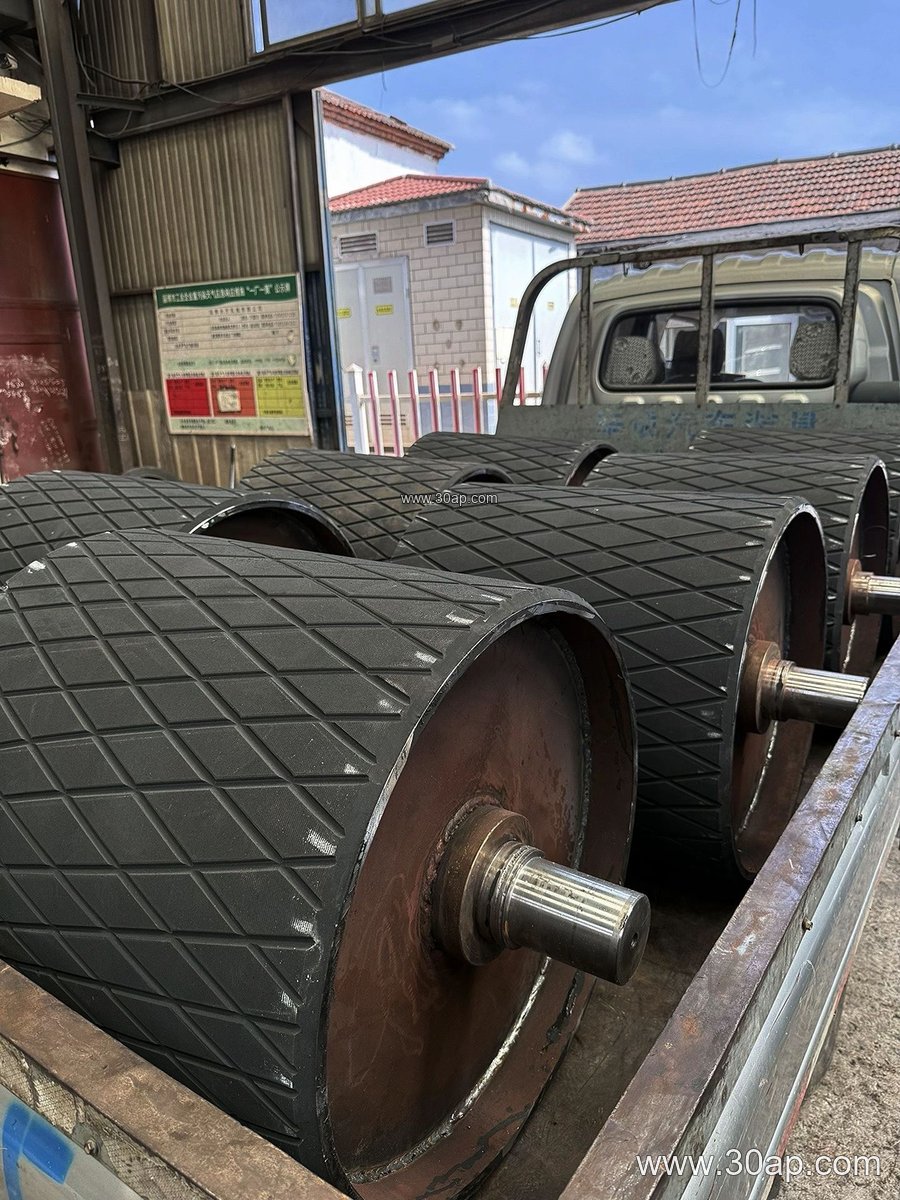
Routine checks are simple but valuable: listen for bearing noise, measure lagging wear at the center where the belt load is greatest, and confirm that the belt does not wander at the discharge. Replaceable lagging strips let maintenance crews restore friction without removing the whole drum. Keeping the head area free of buildup also prevents material from being pressed into the belt cover.
Buyer Checklist
Before ordering, confirm the belt width, the required face width, the design tension, the shaft and bearing arrangement, and the discharge conditions. Ask how the lagging is bonded and whether the groove pattern suits wet or dry material. State the environment clearly: a quarry, a cement plant, a port bulk terminal and a fertilizer warehouse each place different demands on the drum. The right belt conveyor head pulley is the one sized to the actual duty, not copied from a neighboring line.