What a Conveyor Frame Does on a Belt Conveyor
A conveyor frame is the structural backbone that holds the idlers, pulleys and belt in line along the length of a belt conveyor. It carries the weight of the loaded belt, keeps the belt tracking correctly and ties the whole conveyor into the plant structure. In a quarry, a coal preparation plant or a cement plant, the frame is usually the largest single steel item in the conveyor, so getting it right matters for both uptime and maintenance cost.
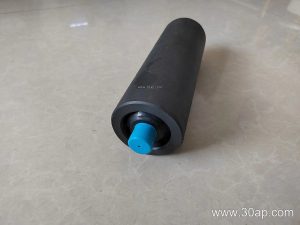
People sometimes call this product a belt conveyor frame, and the two names refer to the same thing. A conveyor frame is not a pulley and not an idler roller; it is the assembly that supports them.
How a Conveyor Frame Is Built
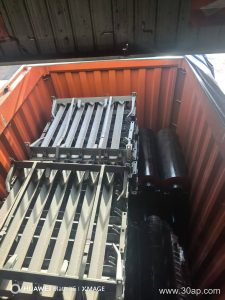
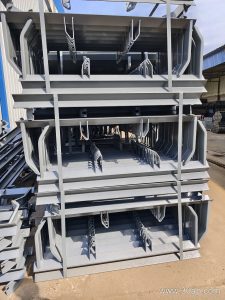
Most frames are fabricated from angle steel, channel steel or folded steel plate. A typical arrangement includes stringers running along each side, cross beams that carry the idler stations, support legs or trestles, and connection plates for the pulleys at the head and tail. A conveyor bracket is often welded or bolted to the stringer to locate each idler set at the correct height and angle.
The frame is normally split into transportable sections so it can be shipped and assembled on site. Bolted joints are common where the conveyor may need to be extended later or moved as the working face advances.
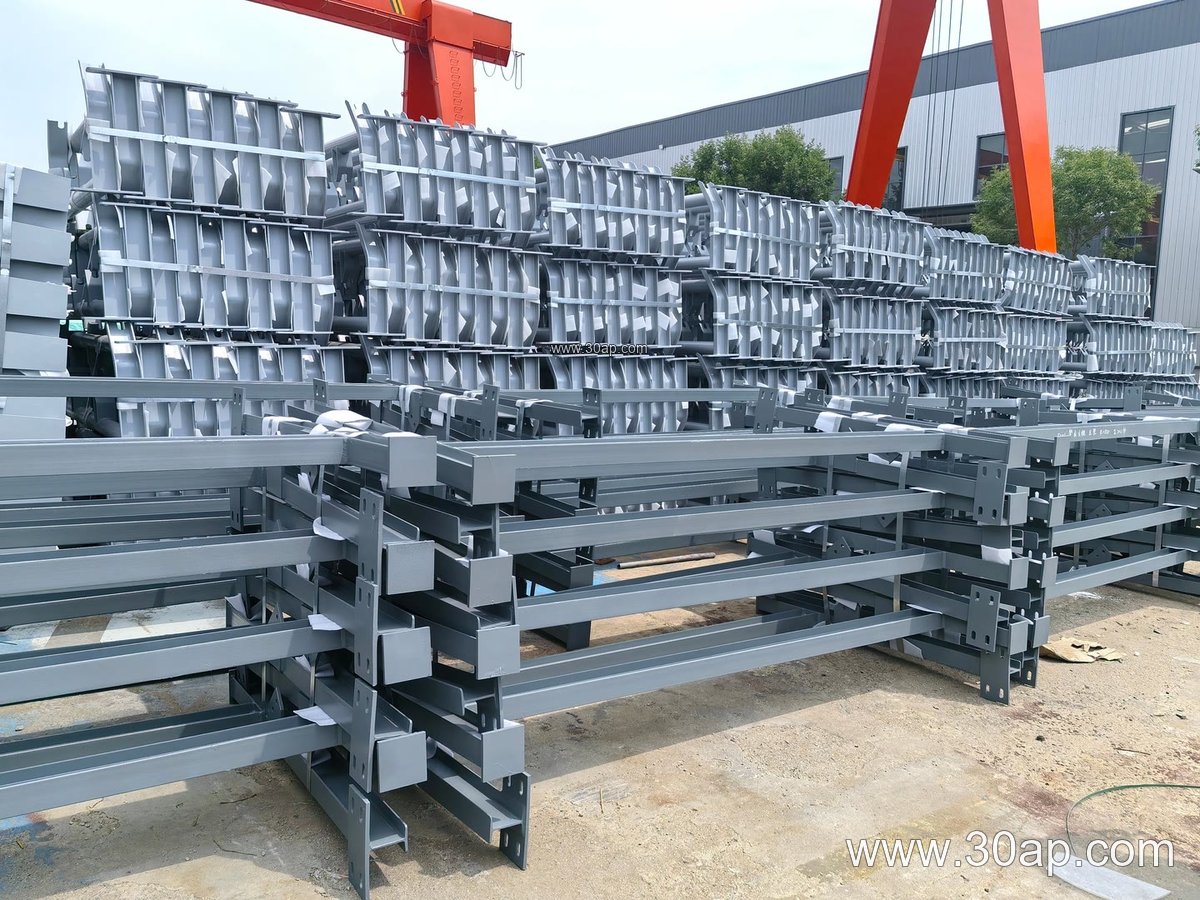
Frame Types and Where They Sit
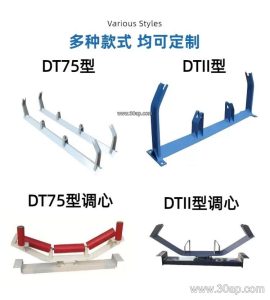
The type of frame section depends on its position along the conveyor and the job it does. Common arrangements include:
- Carrying side trough frames that set the trough angle of the idlers
- Transition frames near the head and tail pulleys, where the belt changes shape
- Return side frames, including flat return and V-return designs
- Impact frames with cushion idlers under the loading point
- Self-aligning and forward-leaning frames for belt tracking
- Suspended frames hung from the structure above
- Adjustable frames that allow the trough angle to be changed
These are not interchangeable. A trough frame on the carrying side and a return frame on the lower strand serve different purposes and are positioned differently. Likewise, the drive pulley, tail pulley and bend pulley each have their own mounting points on the frame and are not swapped for one another.
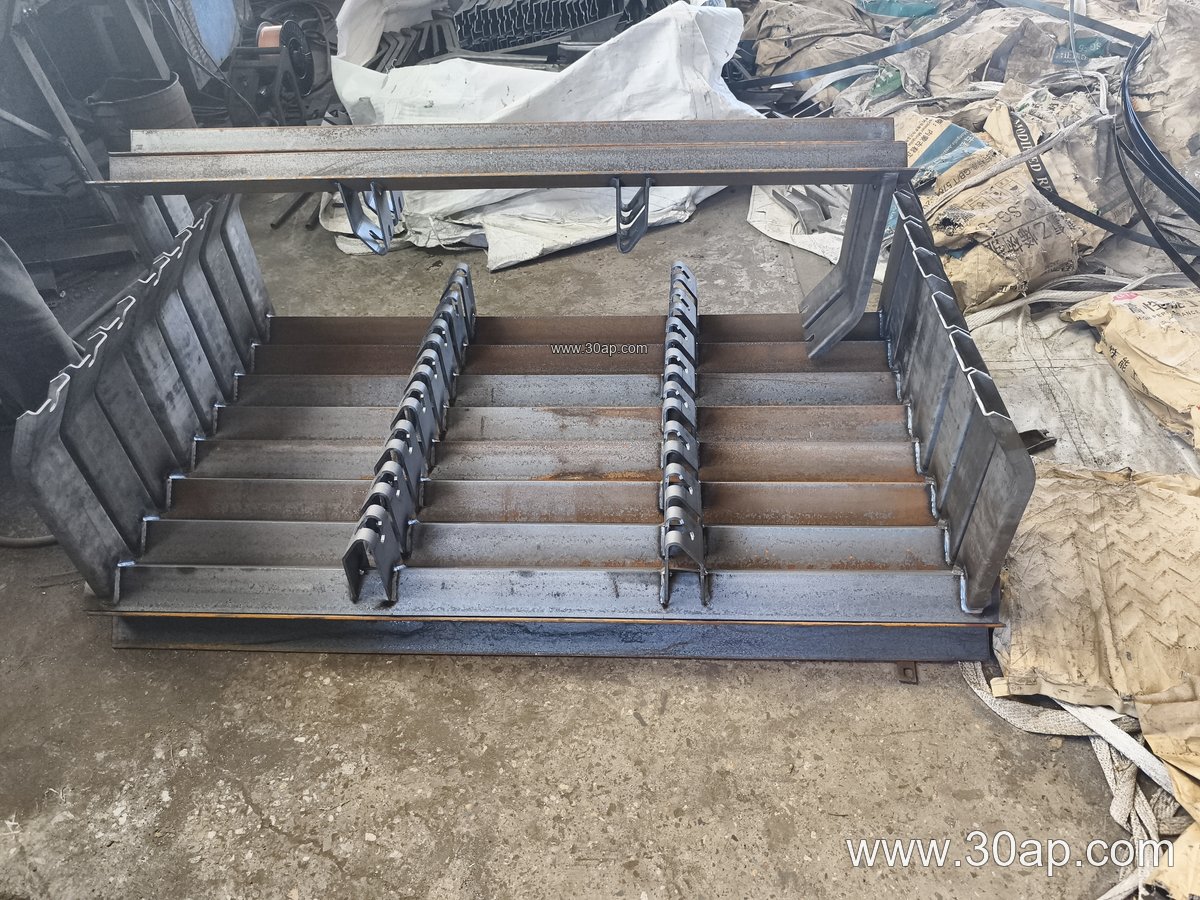
Matching the Frame to Belt Width, Trough Angle and Roller Diameter
Frame dimensions follow the belt width, the chosen trough angle and the idler roller diameter. A few representative combinations show the range, but they are examples only, not fixed rules:
| Belt width | Trough angle | Typical roller diameter |
|---|---|---|
| B650 | 30 degrees | Ø89 |
| B800 | 35 degrees | Ø108 |
| B1200 | 45 degrees | Ø133 |
| B1600 | 35 degrees | Ø159 |
| B2000 | 30 degrees | Ø194 |
Standard belt widths in frame design usually run from B500 up to B2200, with trough angles of 20, 30, 35 or 45 degrees. Adjustable frames can be set between these angles on site. Forward-leaning idler frames are often set at about 1.5 to 2 degrees to help the belt centre itself. Hole spacing and cross beam length change with belt width and trough angle and should be confirmed against the drawing rather than assumed.
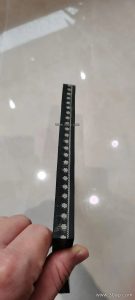
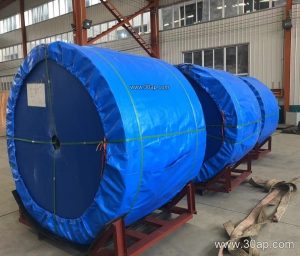
The belt itself also influences frame choice. A heavy steel cord conveyor belt on an ore conveyor needs a stiffer, more robust frame than a lightweight fabric core belt on a small transfer conveyor. In dusty or wet conditions, a pipe conveyor belt or a corrugated sidewall belt may call for special frame sections at the transition zones.
Where Conveyor Frames Are Used
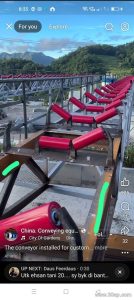
Frames appear wherever bulk material moves on a belt. In a limestone mine or aggregate plant, frames carry the belt from the crusher to the screening house. In a power plant coal yard, long overland frames support the belt across trestles and galleries. Similar structures serve cement plants, steel works, fertiliser plants and grain silos.
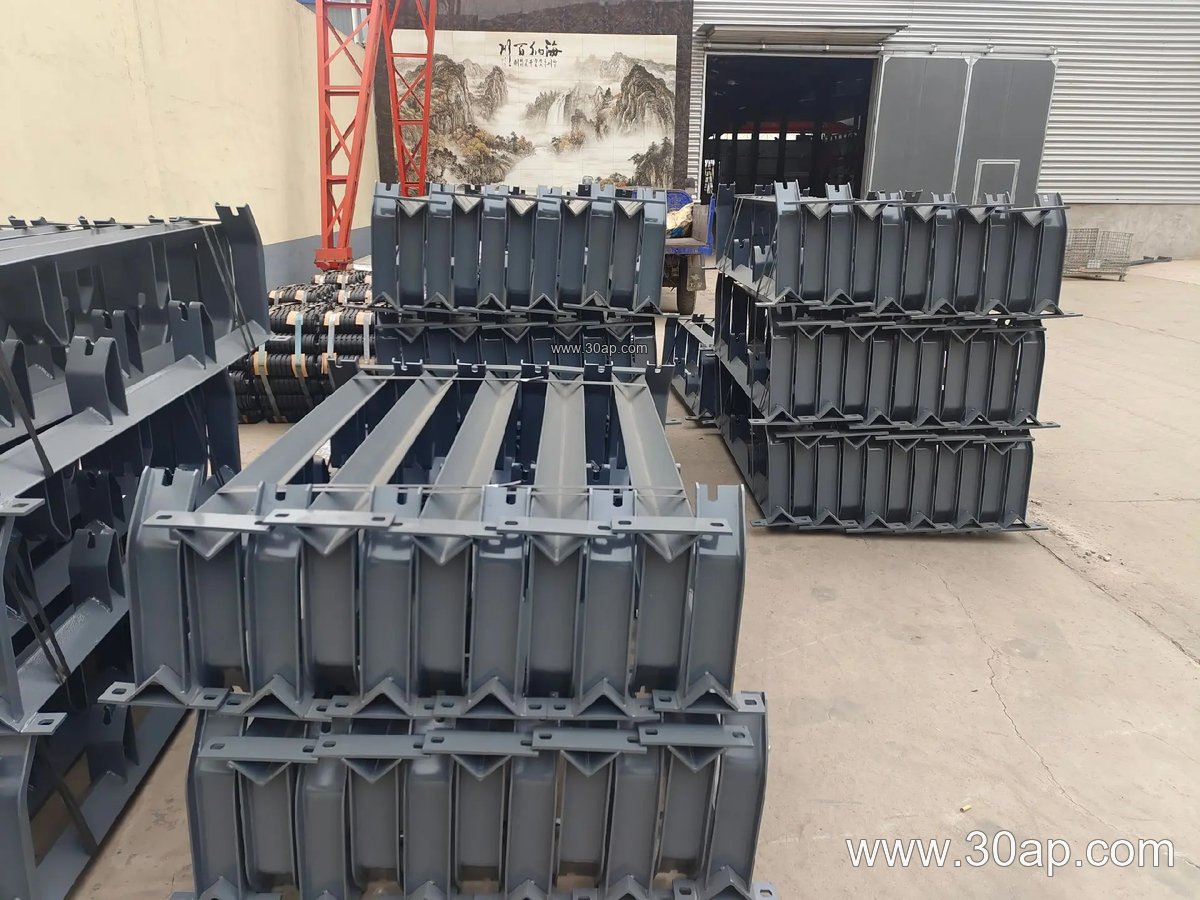
The environment affects the finish and the detailing. A frame in a wash plant may need drainage gaps and corrosion protection, while a frame in a coal handling system is often built to resist dust build-up around the idler stations.
What Buyers Should Check Before Ordering
Before placing an order, confirm the belt width, the required trough angle, the idler diameter and the pulley positions. Ask for the frame drawing with mounting hole spacing and overall height, and check that the frame matches the conveyor profile and the existing structure. Consider whether the conveyor will be extended, since bolted modular frames are easier to modify than fully welded ones.
Also review the loading point. If the belt receives large lumps, an impact frame with cushion idlers reduces damage to both the belt and the frame. For long conveyors, the number of frame sections and the leg spacing affect installation time and cost.
A well-specified conveyor frame keeps the belt, idlers and pulleys working together for years, while a poorly matched one shows up quickly as belt misalignment, edge wear and loose bolts.