What an Iron Ore Conveyor Pulley Does
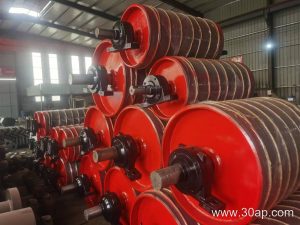
In a typical iron ore handling line, the Iron Ore Conveyor Pulley is the rotating drum that drives or redirects the belt. It is not a passive roller; it transmits torque, maintains belt tension, and shapes the belt’s path through crushing, screening, and stockyard circuits. While a drive pulley powers the belt, a tail pulley returns it, and a bend pulley changes direction without driving. These roles are distinct, and each demands its own design attention.
The working environment is harsh: abrasive dust, fines, and occasional wet ore. A pulley that suits a coal mining conveyor belt may not last long in an iron ore transfer house. That is why buyers often ask for abrasion resistant conveyor belt compatibility, heavy-duty construction, and reliable lagging.
Construction and Surface Options
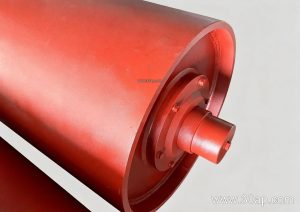
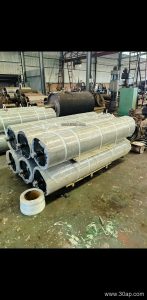
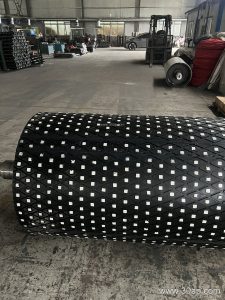
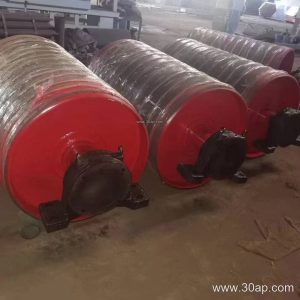
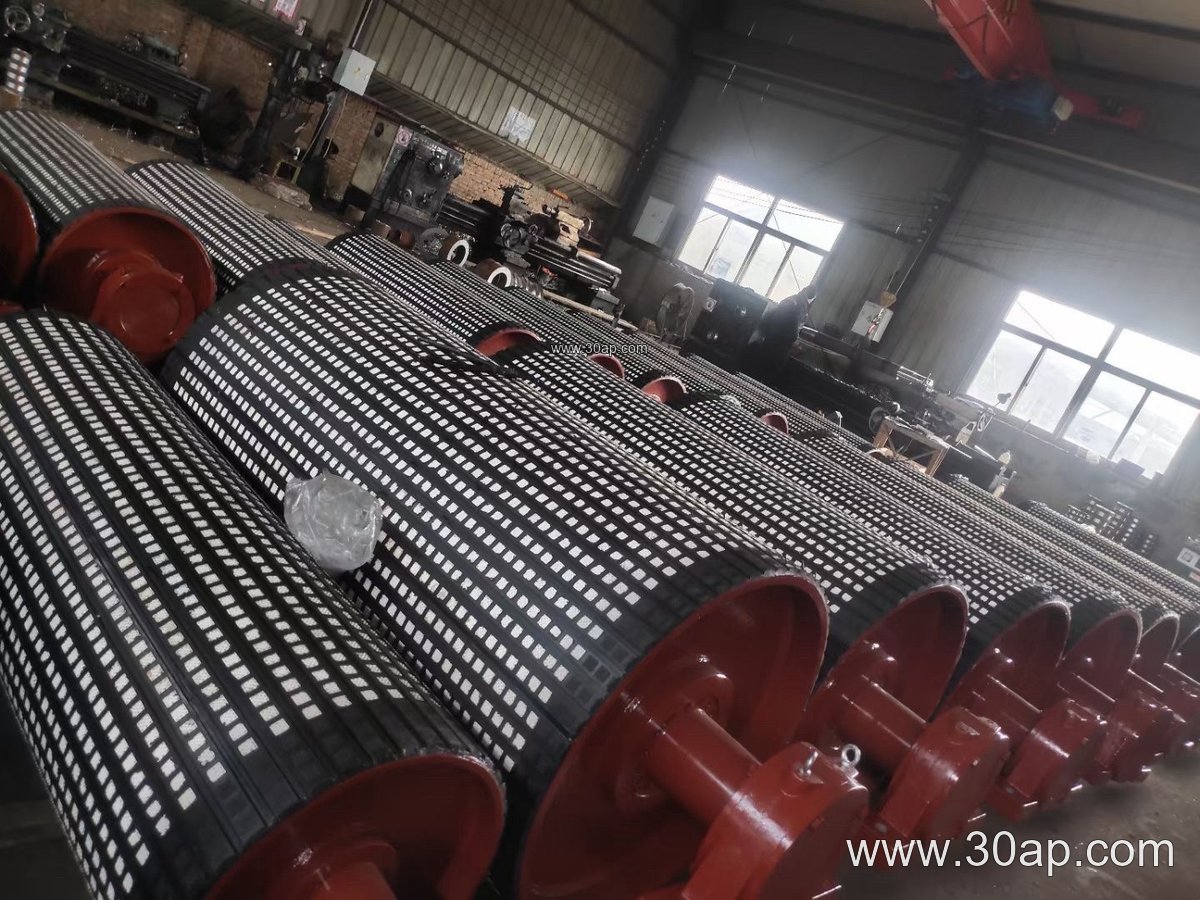
An Iron Ore Conveyor Pulley generally consists of a cylindrical shell, end discs, a shaft, and bearing housings. The shell can be smooth or lagged. Common surface forms include plain, cast rubber, cold-bonded rubber, hot-spliced rubber, diamond grooved, herringbone grooved, and ceramic lagging. Lagging thickness often falls between 8 mm and 20 mm, depending on the duty.
For heavy iron ore duty, diamond or ceramic lagging helps grip the belt and shed fines. Hot-spliced rubber lagging is often chosen where slippage and wear are concerns. The pulley face width is usually wider than the belt: for example, a B1200 belt commonly pairs with a pulley face around 1400 mm, while a B800 belt may use roughly 950 mm. These are reference examples, not fixed rules.
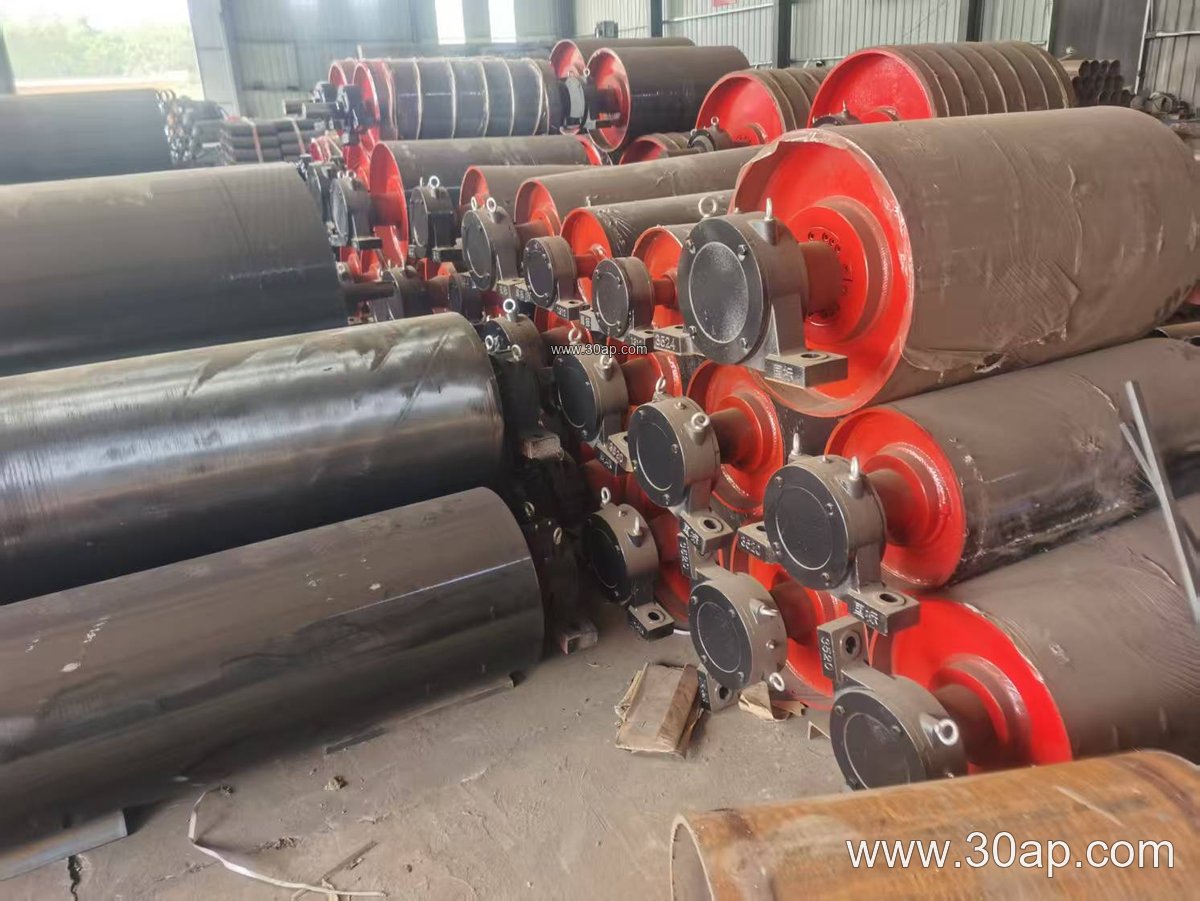
Shaft diameter is determined by torque and load, not by belt width alone. Common shaft sizes range from Ø50 to Ø200 mm. A B1000 × Ø800 pulley and a B1400 × Ø800 pulley can share a diameter but may have different shaft sizes. Do not assume one belt width maps to one shaft diameter.
Where It Fits in the Plant
Iron ore plants use these pulleys at several points. The head or discharge pulley sits at the transfer point, often with a bend pulley to increase wrap angle. The tail pulley returns the belt and may be a tension pulley in a take-up system. In a crushing and screening circuit, a wing pulley can reduce material buildup, but it is not a substitute for a drive pulley. Similarly, a conveyor bracket and idler roller support the belt, but they do not replace the pulley’s drive or redirect function.
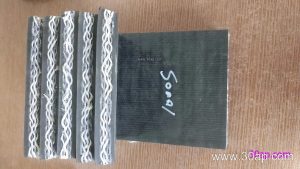
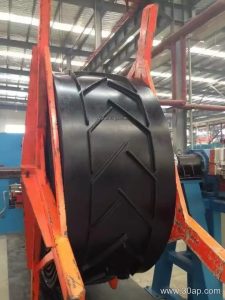
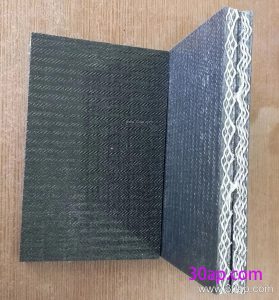
In a steel plant or pelletizing plant, heat resistant conveyor belt may be used nearby, but the pulley itself must still handle abrasive ore. In a port or stockyard, the same Iron Ore Conveyor Pulley may work with an EP conveyor belt or steel cord conveyor belt, depending on tension and distance. The pulley must match the belt’s tension rating and track alignment.
Selection and Sizing Notes
Buyers should specify belt width, pulley diameter, face width, shaft size, lagging type, and bearing arrangement. A common reference set includes:
- Belt width B650 with pulley face about 750 mm
- Belt width B1000 with pulley face about 1150 mm
- Belt width B1400 with pulley face about 1600 mm
- Pulley diameters such as Ø500, Ø630, Ø800, Ø1000, Ø1250
- Lagging thickness 10 mm, 12 mm, or 15 mm for abrasive ore
These values are for orientation only. Final dimensions depend on conveyor design, torque, and belt tension. A larger diameter can reduce belt stress but may increase cost and space needs.
Maintenance and Buyer Checks
Inspect lagging wear, check bearing temperature, and verify shaft alignment. Worn lagging reduces grip and can cause belt slip. Keep the pulley face clean; buildup of iron ore fines can misalign the belt. When replacing a pulley, confirm face width, shaft diameter, keyway, and bearing centers. Do not swap a drive pulley with a bend pulley or tail pulley—they are not interchangeable.
For abrasive circuits, consider ceramic or diamond lagging and a robust shaft design. If the belt is a fabric core conveyor belt or multi-ply fabric core conveyor belt, confirm the pulley diameter meets the belt’s minimum bend radius. For long overland lines with steel cord conveyor belt, pulley alignment and lagging quality become even more critical.
Finally, match the pulley to the actual duty. An Iron Ore Conveyor Pulley that works well in a dry stockyard may need extra protection in a wet transfer house. Buyers should ask for drawings, material certificates, and lagging specifications before ordering.