What a Turning Pulley Does on a Conveyor
A turning pulley is a drum that redirects the conveyor belt, changing its direction of travel without driving it. In many layouts it is the bend or return drum that guides the belt around a corner, back under the carry strand, or into a take-up zone. Because it does not transmit drive torque, its job is to keep the belt path smooth, control wrap angle, and help the belt track steadily. On a coal mining conveyor or a quarry line, a poorly chosen turning pulley can cause edge wear, belt wander, and extra load on the idler roller sets.
The same component is also called a bend pulley or direction change pulley. These names describe its function, not a different product. It should not be confused with a drive pulley, which transmits power, a tail pulley at the loading end, or a take-up pulley that maintains tension.
Construction and Surface Options
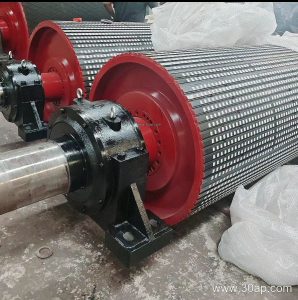
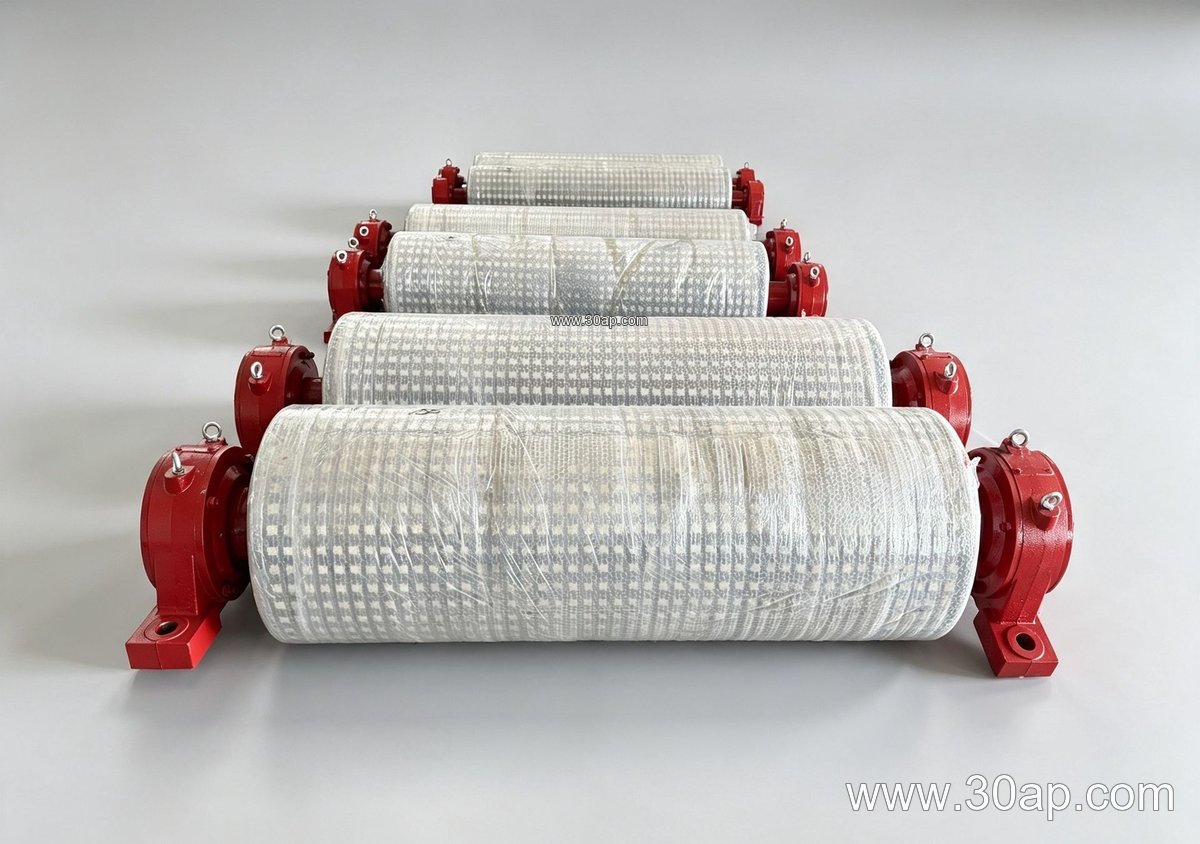
A turning pulley usually consists of a cylindrical shell, end discs, a shaft, bearing housings, and a lagging surface. The shell is welded steel, machined for balance, and fitted with a shaft sized by torque and radial load rather than by belt width alone. Bearings are selected for the expected radial load and operating speed.
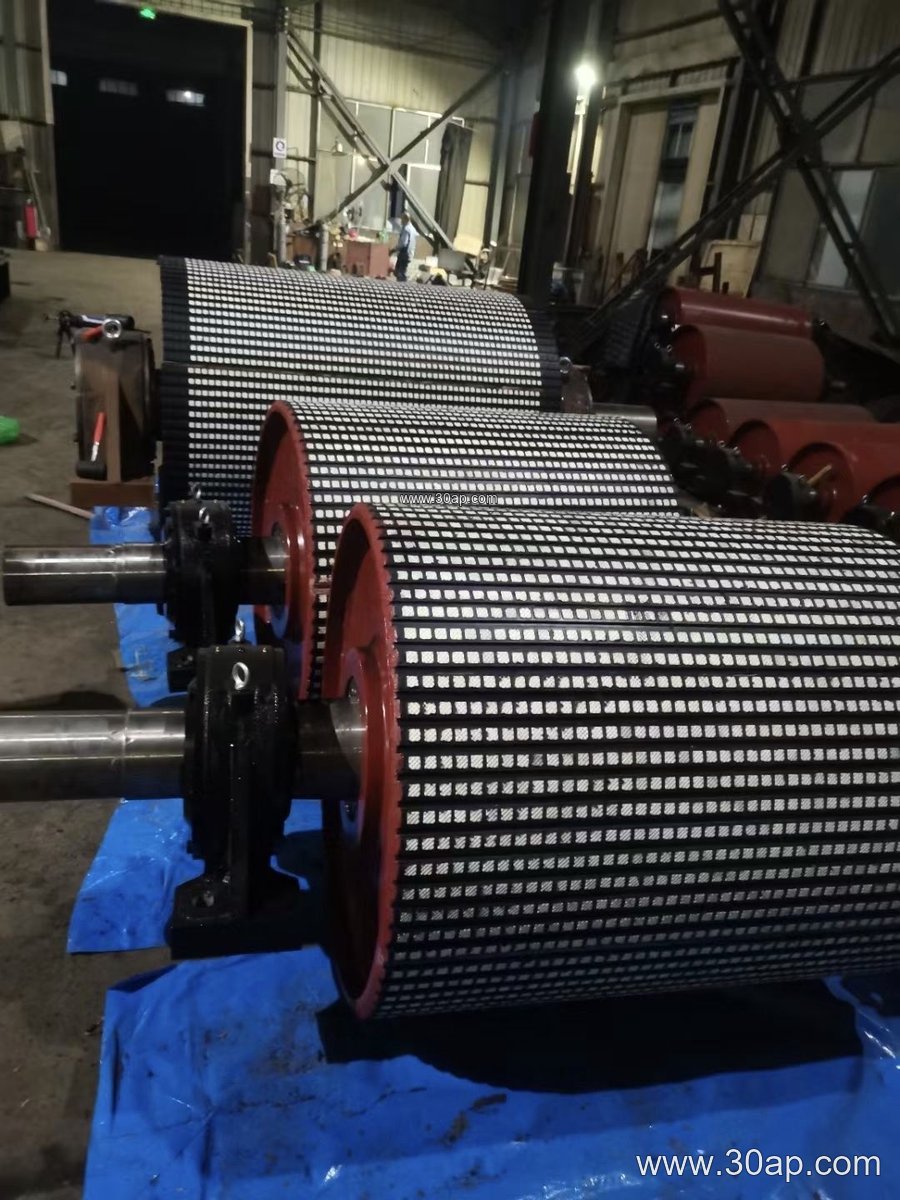
Surface treatment matters because the belt must grip without slipping or polishing the drum. Common forms include plain finish, cold-bonded rubber, hot-vulcanized rubber, diamond lagging, and ceramic lagging. Lagging thickness is often 8, 10, 12, 15, or 20 mm depending on duty. In a cement plant or power plant coal handling system, diamond lagging can improve traction and shed fine dust, while a plain face may suit light-duty return positions.
| Reference item | Typical range |
|---|---|
| Belt width B | B400, B500, B650, B800, B1000, B1200, B1400, B1600, B1800, B2000 |
| Pulley diameter | Ø200, Ø250, Ø315, Ø400, Ø500, Ø630, Ø800, Ø1000, Ø1250 |
| Face width | Usually wider than the belt, for example about 500 mm for B400 and about 1400 mm for B1200 |
| Shaft diameter | Ø50, Ø60, Ø70, Ø80, Ø90, Ø100, Ø120, Ø140, Ø160 |
| Lagging thickness | 8, 10, 12, 15, 20 mm |
These values are reference data. A B800 turning pulley might be built as B800 × Ø500, while a B1200 unit could be B1200 × Ø1000, but no single belt width fixes one diameter. Shaft size follows the actual torque and load calculation.
Where It Fits in a Conveyor System
Turning pulleys appear at head and tail transitions, in return runs, at take-up stations, and wherever the belt must change direction. In a limestone quarry or aggregate conveyor line, they help route the belt around a transfer point or into a tensioning frame. In an iron ore or copper ore handling circuit, they may sit ahead of a screen or crusher, working with a heavy-duty conveyor belt and sturdy conveyor bracket assemblies.
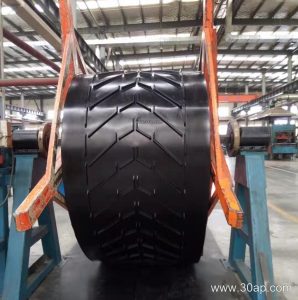
They also support specialized belts. A pipe conveyor belt needs carefully aligned turning pulleys to form and hold the pipe shape. A corrugated sidewall conveyor belt or chevron conveyor belt requires drums with adequate face width and clearance so the cleats or sidewalls pass without rubbing. A steel cord conveyor belt generally demands larger drum diameters and smooth lagging to avoid concentrated stress, while an EP conveyor belt or NN conveyor belt can often run on smaller drums if the belt manufacturer allows it.
Buyer Checklist
- Confirm the belt path and wrap angle so the pulley diameter and face width suit the layout.
- Match the lagging to the environment: abrasion resistant rubber in a sand and gravel plant, oil resistant covering near lubricated equipment, and flame retardant options in underground coal mining conveyors.
- Check that the shaft, bearings, and bearing housings are rated for the actual load, not just the belt width.
- Plan maintenance access, because a turning pulley hidden behind an idler roller frame is harder to inspect.
- Verify compatibility with the conveyor belt type, including heat resistant, cold resistant, or anti-static requirements.
Good alignment, correct lagging, and the right diameter keep a turning pulley from becoming a wear point. Whether the plant handles clinker, sinter, grain, or port bulk cargo, this drum is a small but critical part of reliable belt routing.