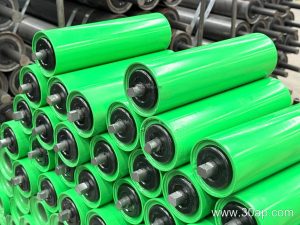
What Is a Head Drive Pulley
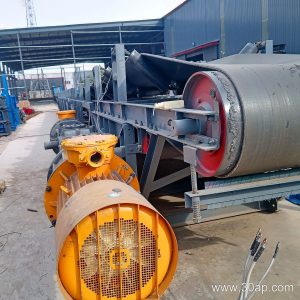
The head drive pulley is the powered roller at the discharge end of a belt conveyor. It grips the conveyor belt, transfers torque from the drive unit, and keeps the belt moving along the entire route. In many plants it is simply called the drive drum or head pulley, but make no mistake: it is not a tail pulley, a bend pulley, or a tension pulley. Each of those plays a different role, and they are not interchangeable. The head drive pulley sits at the head of the conveyor, often where material is released onto a chute, stockpile, or the next stage of processing.
Because it does the heavy pulling, this component is central to conveyor reliability. A well-matched head drive pulley helps maintain belt tracking, reduces slip, and protects the conveyor belt from unnecessary wear.
Construction and Surface Options
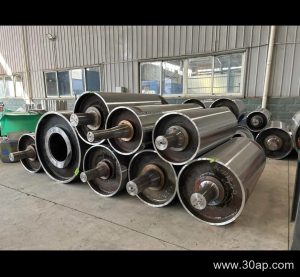
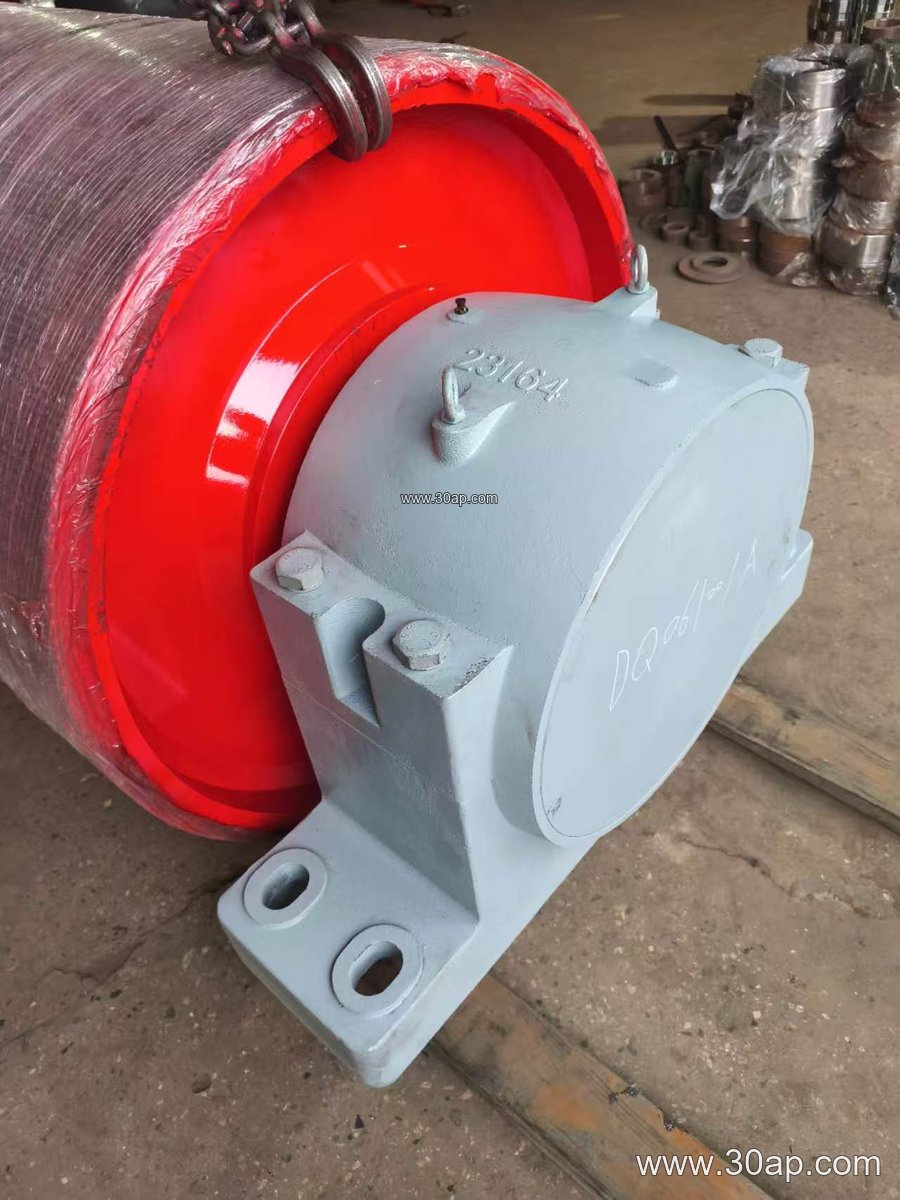
A typical head drive pulley is built around a steel drum with a shaft, bearing housings, and a lagging surface. The drum shell is usually machined for balance and welded to end discs. Shaft diameter is determined by torque and load, not by belt width alone—common shaft sizes include Ø50, Ø60, Ø70, Ø80, Ø90, Ø100, Ø120, Ø140, Ø160, Ø180, and Ø200 mm, but the final value should always follow the design calculation.
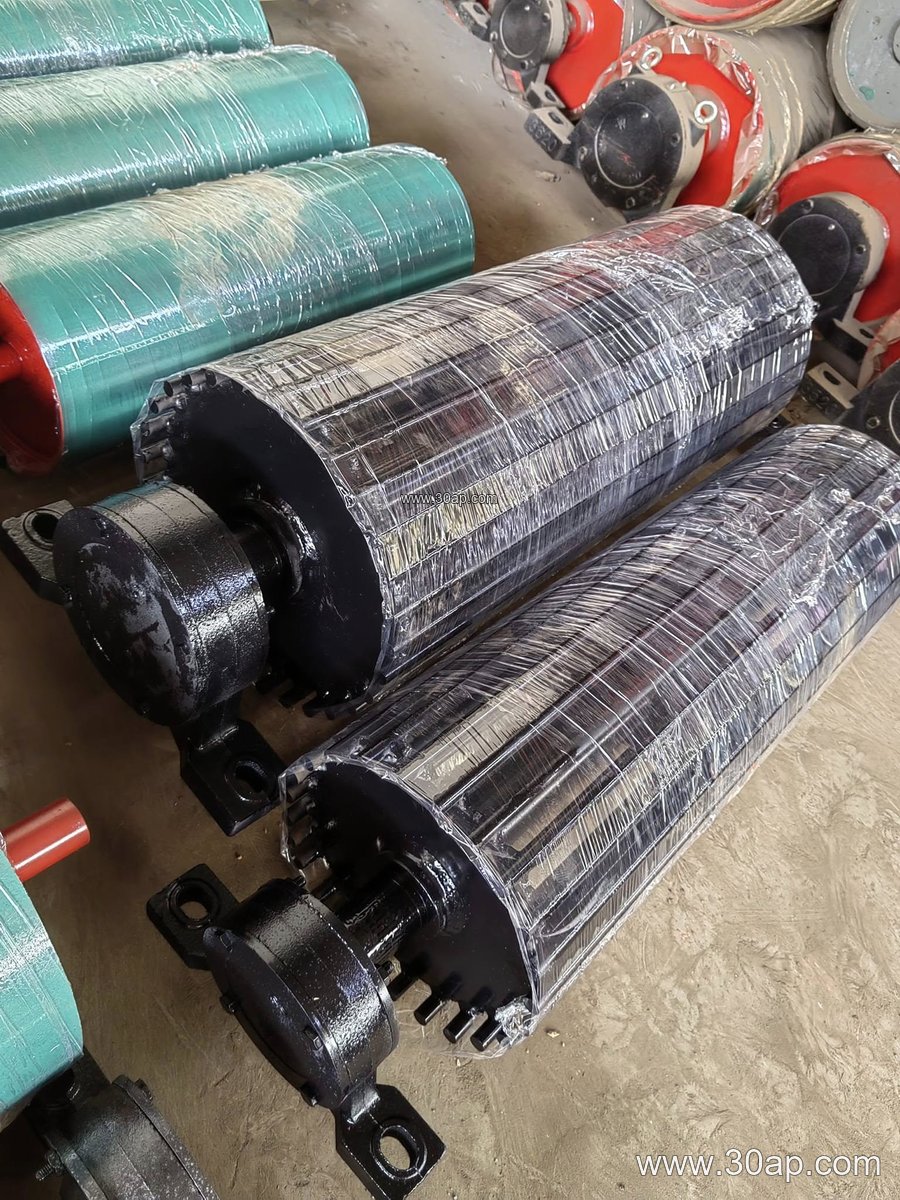
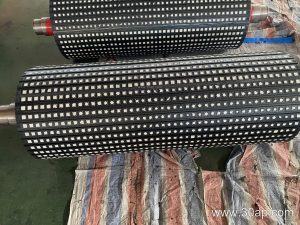
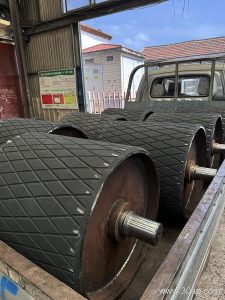
The surface form matters for grip and belt life. Plain steel is used in some light-duty or very clean applications. Rubber lagging—applied by cold bonding or hot vulcanizing—improves friction and cushions the belt. Diamond or herringbone patterns help shed water and fines, while ceramic lagging offers high wear resistance in abrasive conditions. Lagging thickness commonly ranges from 8 mm to 20 mm, with 10 mm and 12 mm frequently seen in bulk material handling.
Where It Fits in the Conveyor
The head drive pulley is installed at the discharge point. In a quarry or aggregate line, it often sits at the top of a transfer tower, throwing crushed rock onto a stockpile. In a coal mining conveyor or a power plant coal handling system, it may be enclosed in a drive house to control dust. In a cement plant, it can be found on clinker or limestone conveyors, while a port bulk terminal uses large head drive pulleys on ship loading conveyors.
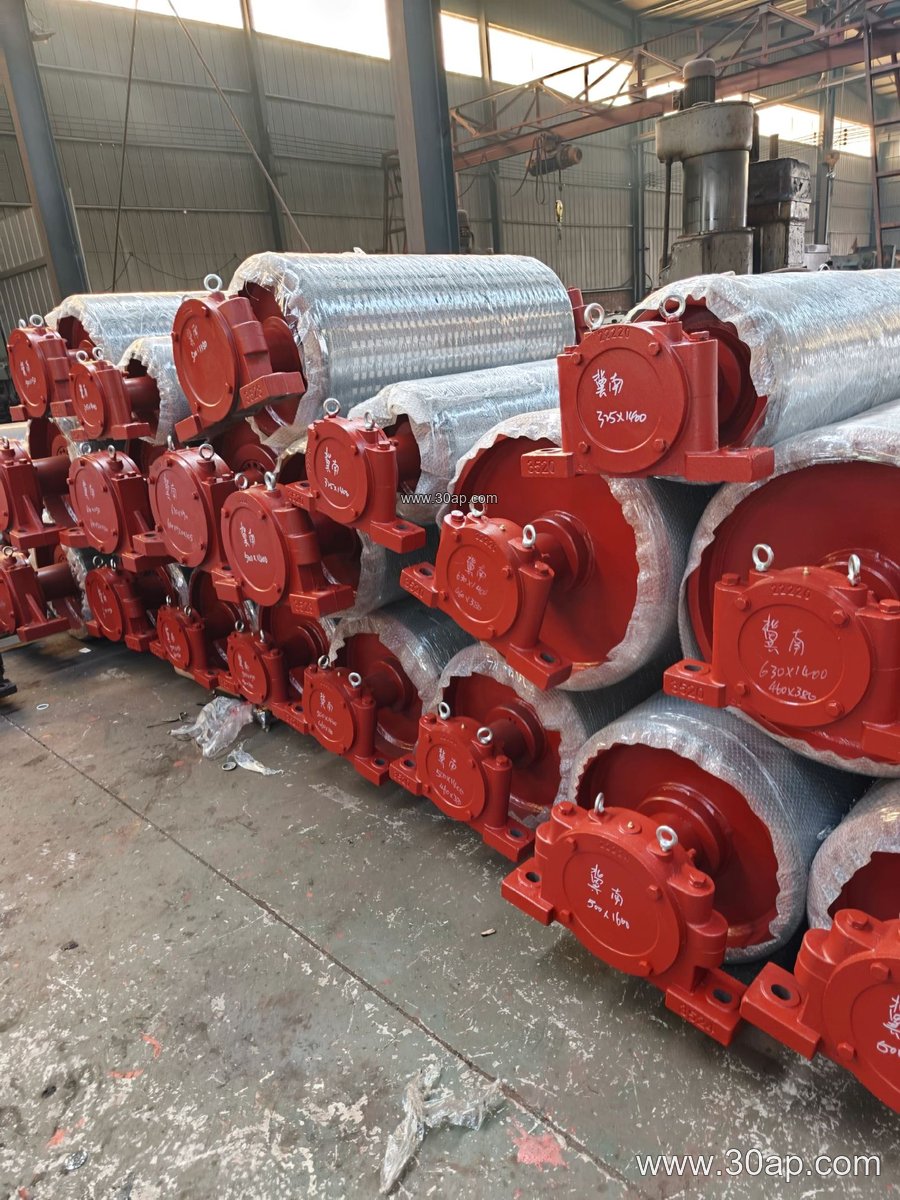
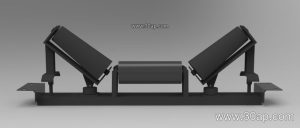
This pulley works together with the conveyor belt, idler rollers, and conveyor brackets. The belt wraps around the head drive pulley, and the friction between the lagged surface and the belt cover transmits the driving force. Proper wrap angle and take-up tension are essential—without them, even a well-built pulley will slip.
Matching Belt Width and Pulley Dimensions
Pulley face width is usually a little wider than the belt. For example, a B800 belt often runs on a pulley with roughly 950 mm face width, and a B1200 belt may use about 1400 mm. These are common references, not fixed rules. Diameter is selected based on belt speed, torque, and the required wrap angle. A B800 conveyor might use a Ø500 head drive pulley, while a B1400 system could call for Ø800 or larger. There is no single diameter that fits every belt width; the combination must be engineered for the application.
Below are typical reference combinations—use them as a starting point, not as a universal specification:
- B500 belt with Ø400 head drive pulley
- B650 belt with Ø500 head drive pulley
- B800 belt with Ø630 head drive pulley
- B1000 belt with Ø800 head drive pulley
- B1200 belt with Ø1000 head drive pulley
- B1400 belt with Ø1250 head drive pulley
For wider belts such as B1800 or B2000, diameters of Ø1400 to Ø1800 may be used in heavy-duty mining and port applications. Again, the final selection depends on the conveyor design.
Buying Considerations
When specifying a head drive pulley, start with the conveyor duty. A high abrasion resistant conveyor belt in an iron ore mine will demand a robust lagging and a sturdy shaft. A flame retardant conveyor belt in an underground coal mining conveyor brings additional safety requirements. The pulley must be compatible with the belt type—whether it is an EP conveyor belt, a steel cord conveyor belt, or a multi-ply fabric core conveyor belt.
Ask about the lagging material and thickness, bearing type and sealing, and balancing grade. Check that the pulley face width matches the belt width and that the shaft diameter is calculated from actual torque. Also confirm the mounting position—head drive pulleys are not the same as bend pulleys or tail pulleys, so the connection to the conveyor bracket must be correct.
Finally, plan for maintenance. Regular inspection of lagging wear, bearing condition, and belt tracking will extend the service life of the head drive pulley and the entire conveyor system. Whether the plant is a sand and gravel operation, a limestone quarry, or a fertilizer granulation line, the head drive pulley remains a critical link in keeping material moving.