What a Bend Pulley Assembly Does
A bend pulley assembly is the packaged unit that changes the direction of a conveyor belt without driving it. It usually sits at a tensioning station, a snub position, or a return-side transition, guiding the belt around a controlled arc so the belt can reach a take-up pulley, a gravity tower, or a compact take-up arrangement. Unlike the drive pulley that transmits torque and the tail pulley that supports the loading point, the bend pulley is a free-turning redirect. Engineers often call the same item a redirect pulley assembly, and that name describes the job well: the belt arrives, wraps part of the shell, and leaves on a new line.
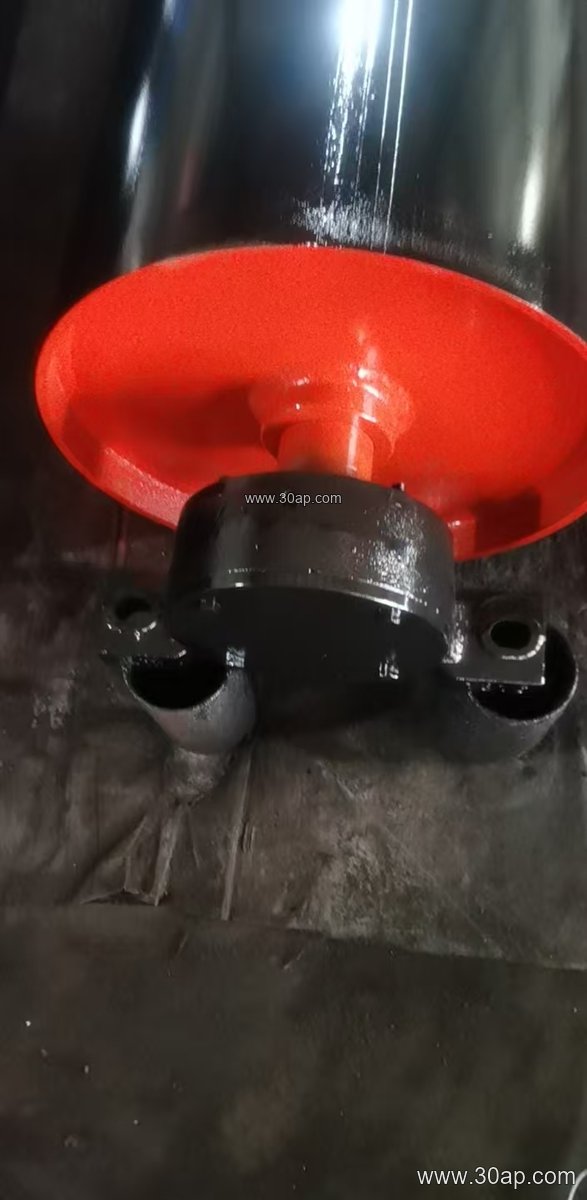
The assembly is more than a shell on a shaft. It combines the pulley body, hub and shaft, bearing housings, sealing, and a support frame that ties the unit to the conveyor structure. When the wrap angle is large or the belt is heavy, the frame also carries the reaction loads that the redirected tension creates.
How the Unit Is Built
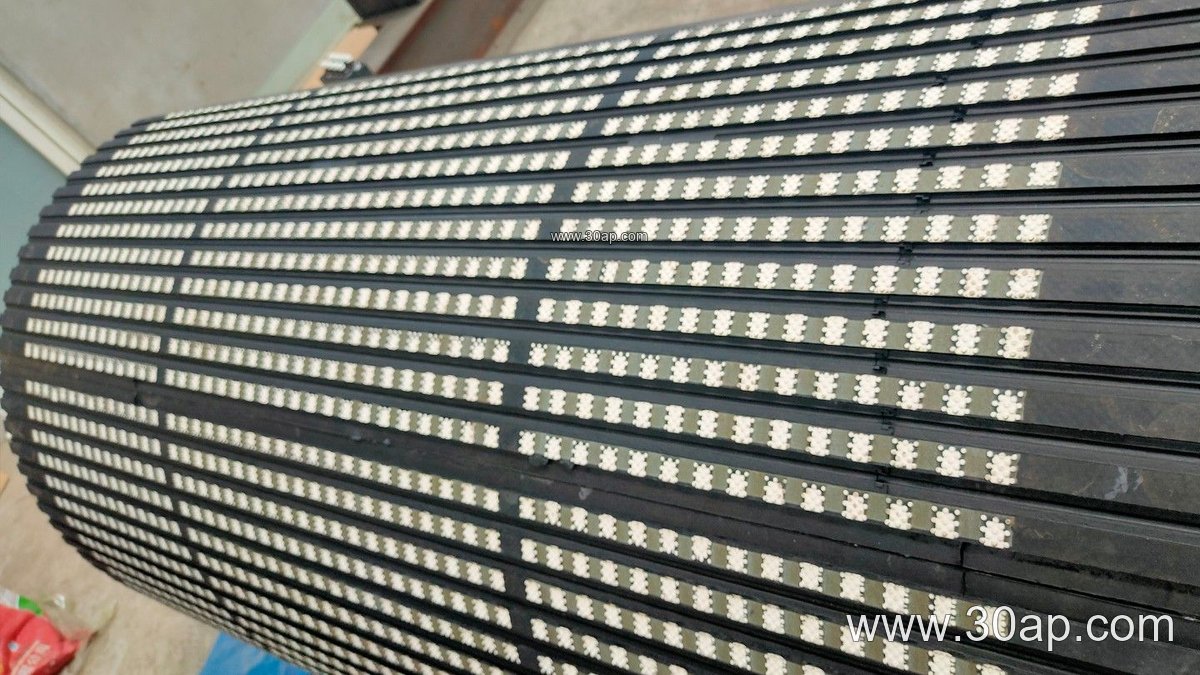
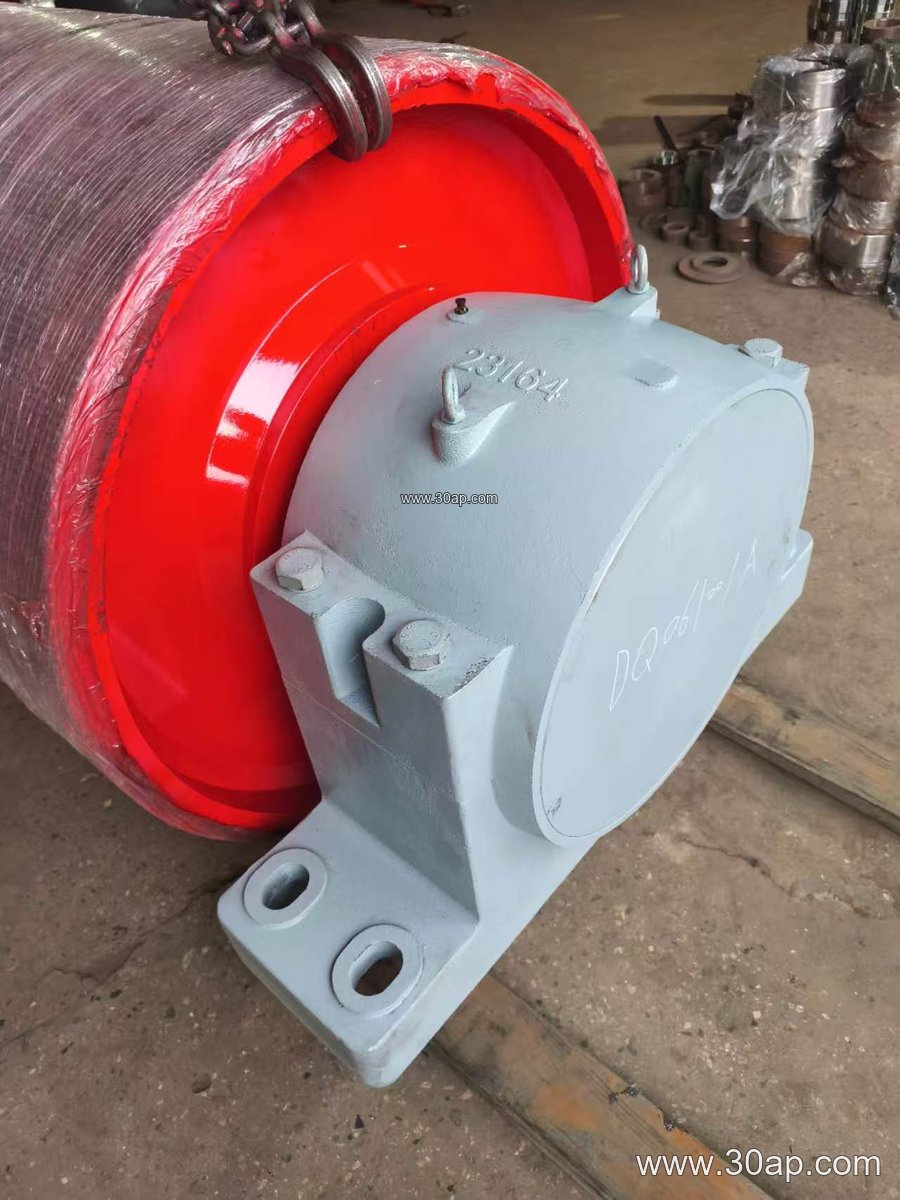
Most bend pulley assemblies use a welded steel shell with dished or flat end plates, a through shaft, and self-aligning bearing housings bolted to the frame. The shell may be plain, or it may carry lagging to improve grip and protect the surface. Common face widths track the belt: B800 belts are often paired with roughly 950 mm faces, B1000 with about 1150 mm, and B1200 with about 1400 mm, because the shell should be wider than the belt to allow for mistracking. Diameters are chosen by wrap angle and belt stiffness rather than by belt width alone, so B1200 may run on Ø800 in one plant and Ø1000 in another.
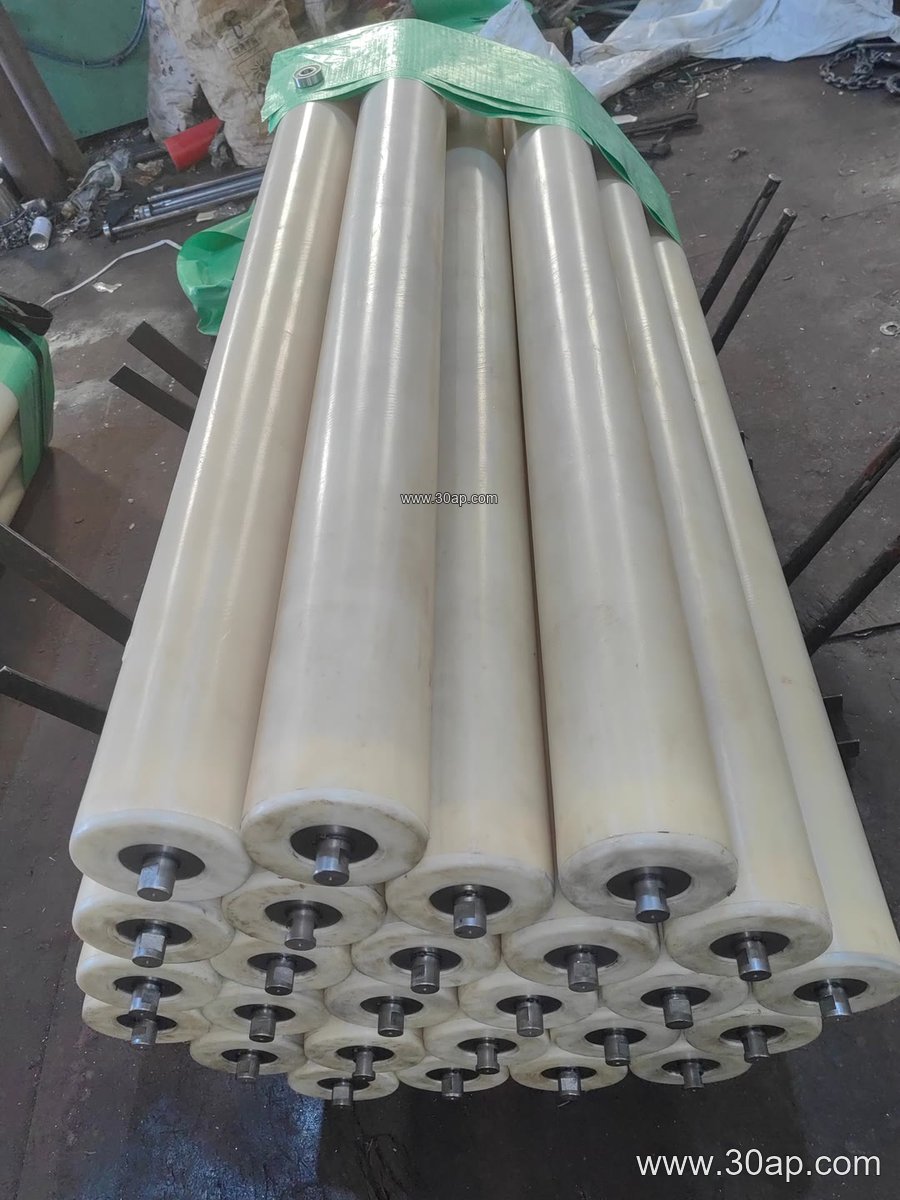
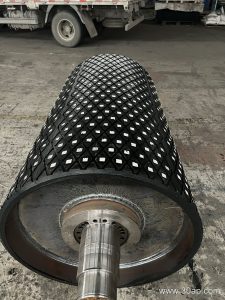
Bearing selection follows shaft load, not a fixed rule. Shaft diameters such as Ø80, Ø100, or Ø120 appear in these units, but the correct value comes from torque, radial load, and bearing life calculations. Lagging may be plain rubber, diamond grooved, or ceramic, usually 8 to 15 mm thick on a bend position, and the surface form should match whether the belt must simply be guided or also kept clean and tracked.
Where It Fits in the Plant
In a coal preparation plant, a bend pulley assembly is often found at the take-up tower, pulling the return strand down before the belt travels back to the tail. In a limestone quarry or an aggregate line, it redirects the belt around a structural column where a straight run is impossible. Cement plants use them near clinker cooler discharge conveyors, and power plant coal handling systems install them in confined transfer houses.
The unit works alongside the conveyor belt, conveyor pulley, idler roller, and conveyor bracket. A flame retardant conveyor belt in an underground coal mining conveyor may need a lagged bend pulley for better tracking, while an abrasion resistant conveyor belt carrying crushed rock loads the shell and bearings more heavily. In dusty service, sealed bearing housings and a simple, open frame that sheds fines are practical choices.
Specification Points Buyers Should Confirm
Before ordering, confirm the belt width, the required wrap angle, the belt tension at that point, and the available space for the frame. State whether the pulley is fixed or part of a moving take-up carriage. Then agree on shell diameter, face width, lagging type and thickness, shaft diameter, bearing type, and surface treatment.
| Parameter | Typical Range | Notes |
|---|---|---|
| Belt width | B650 to B1800 | Match face width to belt, e.g. B800 with about 950 mm face |
| Shell diameter | Ø315 to Ø1250 | Set by wrap angle and belt stiffness |
| Shaft diameter | Ø60 to Ø160 | Calculated from load, not belt width |
| Lagging | Plain, diamond, ceramic | 8 to 15 mm common on bend positions |
| Bearing housing | Self-aligning, sealed | Dust and water protection matter |
Ask for the assembly drawing, the calculated bearing load, and the balancing grade. For a high strength conveyor belt or a steel cord conveyor belt with high tension, the frame stiffness and the shaft deflection deserve a second look. Sites running EP conveyor belt and NN conveyor belt often keep one spare assembly because a seized bearing can stop the whole transfer line.
Installation and Maintenance Notes
Align the assembly square to the belt centerline and check that the wrap does not touch the frame during start-up surge. Lubricate bearings to the maker’s schedule, inspect lagging for wear and glazing, and watch for belt edge contact that suggests misalignment. Record vibration and temperature during routine rounds; a rising trend is a better warning than a sudden failure. Keeping the redirect pulley clean and correctly tensioned protects both the belt and the downstream conveyor pulley, and it keeps the line running in mines, quarries, cement works, and ports alike.