What a Rotating Self-Aligning Idler Does
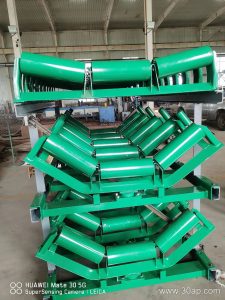
A rotating self-aligning idler, also called a self-tracking idler or training idler, is a conveyor component designed to keep the belt centered on its path. Unlike a fixed trough idler, this idler pivots or rotates about a vertical axis when the belt drifts sideways. The rotation is triggered by the belt’s edge pressing against a vertical guide roller or by the angled mounting of the idler frame. Once the belt moves off-center, the idler skews slightly, creating a steering effect that nudges the belt back to the middle. This automatic correction reduces edge damage, spillage, and downtime in bulk material handling lines.
Construction and Key Parts
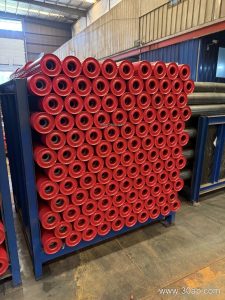
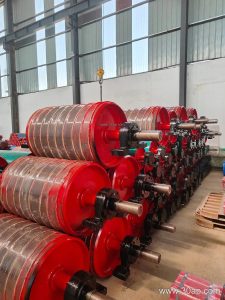
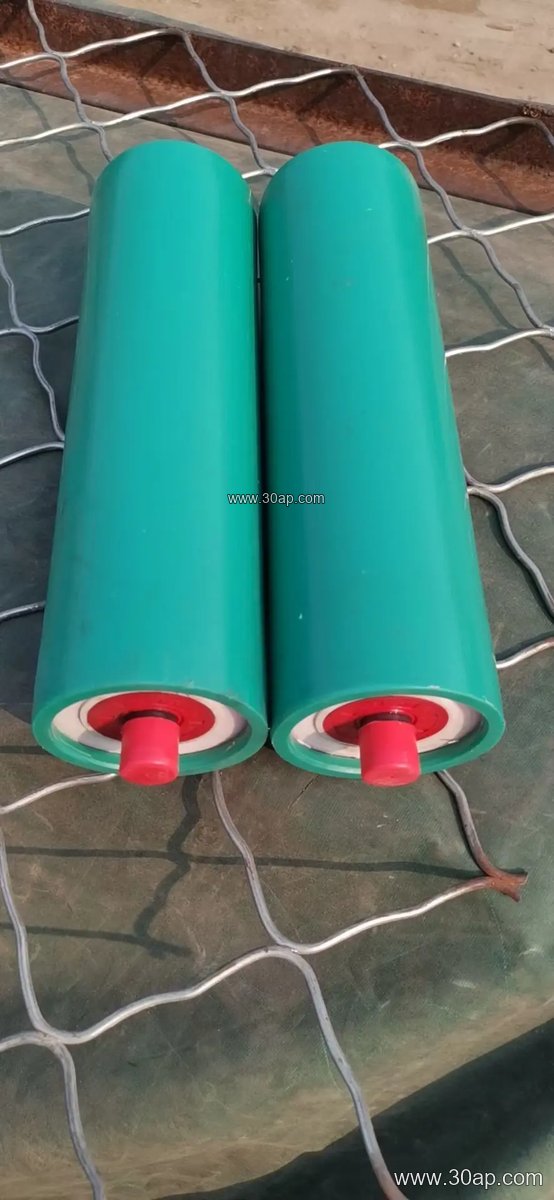
The assembly typically includes a sturdy base frame, a pivot shaft, and a set of carrying rollers. The pivot allows the entire idler set to rotate horizontally within a limited arc. A common design uses a small vertical roller at each end of the frame; when the belt touches it, the frame turns. The rollers themselves often have steel shells, and in dusty or wet conditions, rubber discs or ceramic lagging may be used to improve grip and shed material. Bearings are usually sealed deep-groove ball bearings; common sizes include 6205, 6305, and 6306, but the exact bearing depends on the roller diameter and load rating. Roller diameters are often chosen from a range such as Ø89, Ø108, Ø127, or Ø133 mm, while the belt width determines the overall frame length.
Where It Fits on the Conveyor
A rotating self-aligning idler is normally installed on the carrying side, a few meters after the loading point or before the head pulley. In a quarry or aggregate line, it helps control the belt after a crusher discharge where material impact can push the belt sideways. In a coal mining conveyor or a power plant coal handling system, it prevents the belt from rubbing against the structure. It can also be used on the return side, sometimes as a V-return training idler, to keep the empty belt centered. For very long belts, several units may be spaced along the line, but they are not a substitute for proper pulley alignment and adequate take-up tension.
Common Sizes and Configuration Notes
The table below gives typical reference values, not fixed rules. Actual dimensions are determined by belt width, trough angle, and the idler group type (two-roller or three-roller).
| Belt Width (mm) | Common Roller Diameter (mm) | Typical Roller Length for 3-Roll Trough (mm) | Common Bearing Size |
|---|---|---|---|
| B500 | Ø89 | 200 | 6204 / 6205 |
| B650 | Ø89 / Ø108 | 250 | 6205 / 6305 |
| B800 | Ø108 / Ø127 | 315 | 6305 / 6306 |
| B1000 | Ø108 / Ø133 | 380 | 6306 / 6308 |
| B1200 | Ø127 / Ø133 | 465 | 6308 / 6310 |
| B1400 | Ø133 / Ø159 | 530 | 6308 / 6310 |
| B1600 | Ø159 / Ø178 | 600 | 6310 |
These values are common examples; side rollers and center rollers may differ, and trough angles of 20°, 30°, 35°, or 45° change the roller length. Forward tilt of about 1.5° to 2° is sometimes used in training idlers to assist belt centering, but this is a design option, not a universal requirement.
Buyer Checklist
- Confirm the belt width and trough angle; a B800 belt with 35° trough needs a different frame than the same width with 45° trough.
- Check the belt speed and load: higher loads may require larger roller diameters and heavier bearings.
- Ask about the sealing arrangement; in coal mining or cement plants, dust ingress is a major cause of idler failure.
- Verify the mounting dimensions and pivot clearance to ensure the idler can rotate freely without hitting the conveyor bracket.
- Consider the belt type: a heavy-duty mining conveyor belt or an abrasion resistant conveyor belt may need a more robust training idler than a light fabric core belt.
For any conveyor system, matching the rotating self-aligning idler to the belt and the structure is essential. Whether the line handles iron ore, limestone, or grain, a properly selected training idler reduces maintenance and keeps the conveyor belt running true.