What a Four-Roll Idler Bracket Does
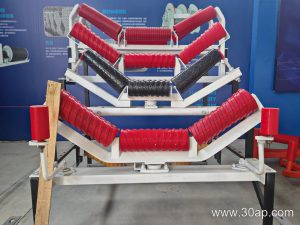
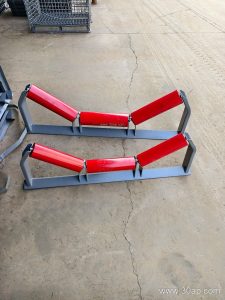
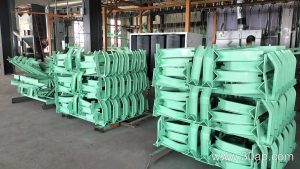
A four-roll idler bracket is a support frame that carries four idler rollers under the belt line, usually arranged so the two outer rolls form the troughing shoulders and the two inner rolls share the central load. It appears most often in high-capacity conveying where a standard three-roll arrangement would leave the belt sagging between rollers or would concentrate too much weight on a single center roll. In a quarry, a cement plant or a power plant coal yard, this bracket helps keep a wide, heavily loaded conveyor belt sitting in a clean trough shape instead of flattening under the material.
The bracket is not a roller and not a pulley. It is the structural interface between the conveyor frame and the idler roller set. Drive pulleys, tail pulleys and bend pulleys remain separate components with their own duties; the four-roll bracket only positions and supports idlers.
How the Bracket Is Built
Most units are fabricated from angle steel, channel steel or folded steel plate, then welded into a rigid crossbeam with mounting pads or slots for the idler shafts. The shape follows the intended trough profile: a fixed bracket is welded to one angle, while an adjustable bracket uses slotted or pivoted connections so the same frame can be set to different trough angles.
Typical build details include:
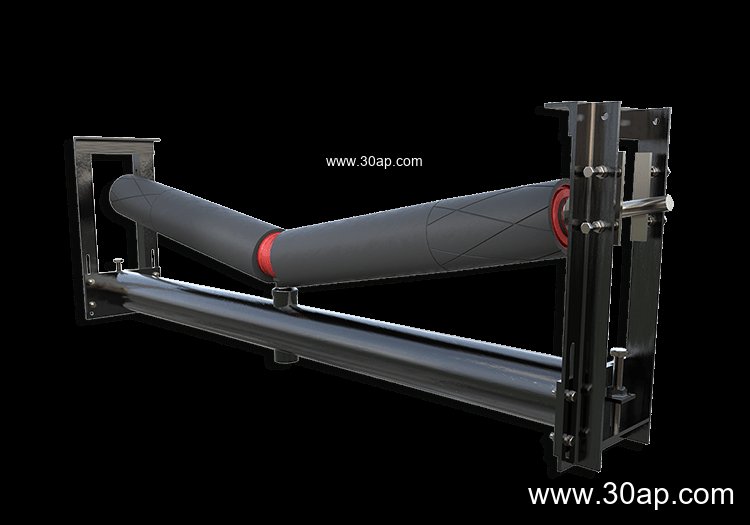
- Crossbeam length and hole spacing matched to the belt width and the chosen trough angle.
- Roller seats sized for the shaft end of the selected idler roller, not guessed from belt width alone.
- Reinforced center section where the two inner rolls meet, since this is the highest-load zone.
- Optional forward tilt of about 1.5 to 2 degrees on training positions to help belt centering.
Because the four rolls divide the load, the bracket usually allows a smaller roller diameter for a given belt width than a three-roll frame would demand, or it allows a wider belt without overloading the center roll.
Common Sizes and Configurations
The table below shows reference combinations that appear in conveying design. These are examples, not fixed rules; the final match depends on load, belt speed and the frame design.
| Belt width | Trough angle | Roller diameter | Typical use |
|---|---|---|---|
| B650 | 30 degrees | Ø89 | Light aggregate lines, small transfer points |
| B800 | 35 degrees | Ø108 | Sand and gravel plants, cement raw material |
| B1000 | 35 degrees | Ø133 | Coal handling, ore conveying |
| B1200 | 45 degrees | Ø133 | High-capacity troughing, deep material bed |
| B1400 | 45 degrees | Ø159 | Iron ore, heavy bulk material |
| B1600 | 35 to 45 degrees | Ø159 or Ø194 | Large port and power plant systems |
Adjustable brackets may cover 20, 30, 35 and 45 degrees in one frame. Fixed brackets are welded to a single angle. Neither approach makes a belt width automatically lock to one roller size.
Where It Fits on the Conveyor
The four-roll bracket is normally used on the carrying side, at main troughing stations and at transition zones where the belt changes from flat at the pulley to troughed in the run. In a coal preparation plant or a limestone crushing line, the transition bracket is often the place where belt edge stress appears first, so the extra roll support helps spread the bend over a longer distance.
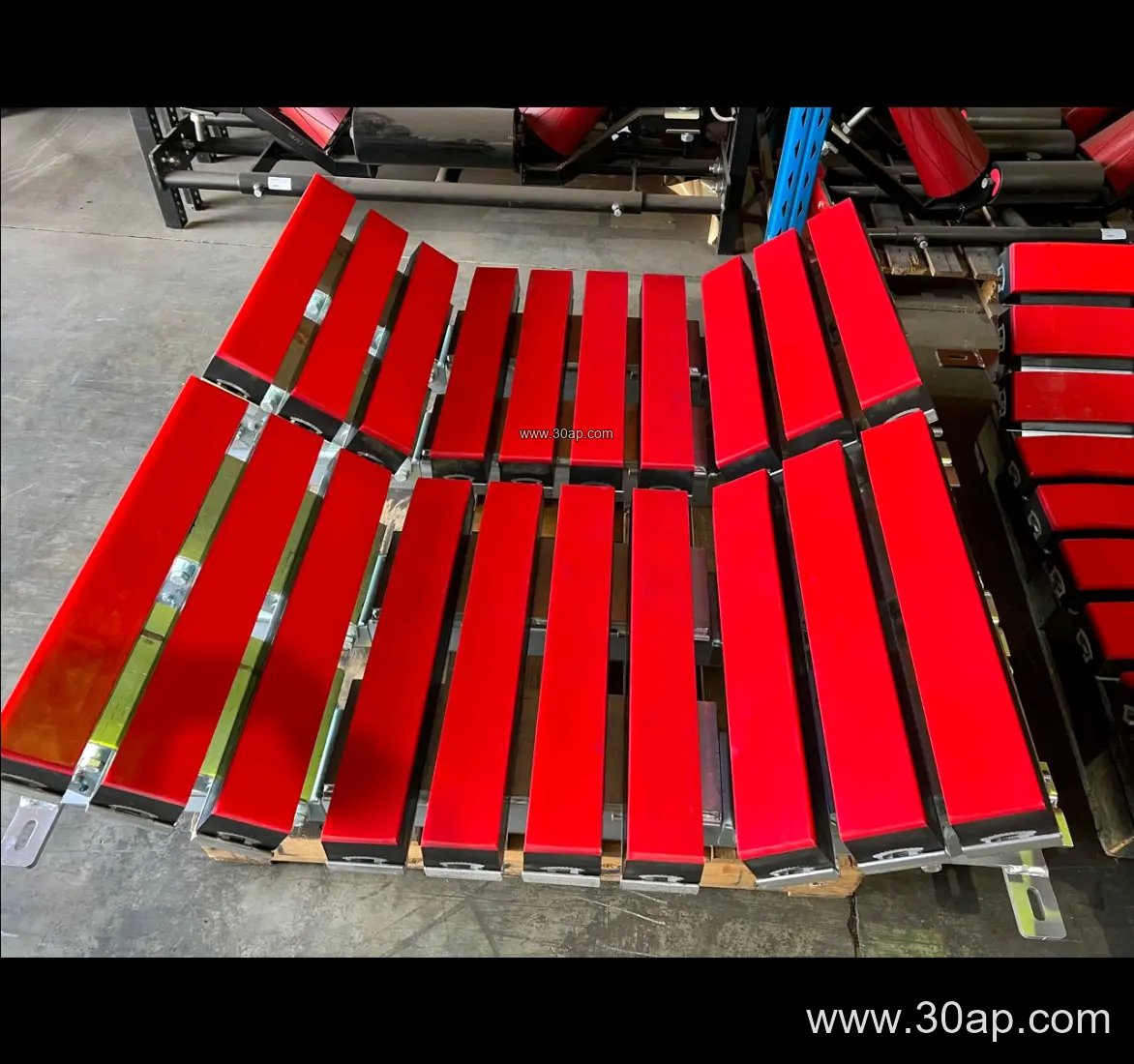
On the return side, a simpler V-return or flat return bracket is more common; the four-roll frame is rarely needed there. Likewise, impact brackets at a loading point are a different subtype, and they should not be treated as a substitute for the four-roll carrying bracket.
Buyer Checklist
Before ordering, confirm the belt width, the required trough angle, the roller diameter and the shaft end type. Ask for the mounting hole spacing and crossbeam length, since these change with width and angle. Check the steel section and weld quality, and confirm whether the frame is fixed or adjustable.
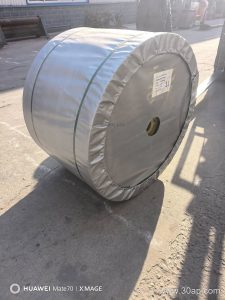
Match the bracket to the belt it serves. A heavy-duty mining conveyor belt on an ore line may call for a stiffer frame than a fabric core belt on a short aggregate run. The bracket should also suit the idler roller series already in use, so spares stay interchangeable across the plant.