What a Plain Lagged Pulley Does
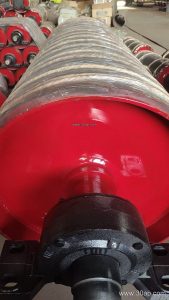
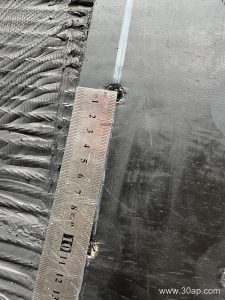
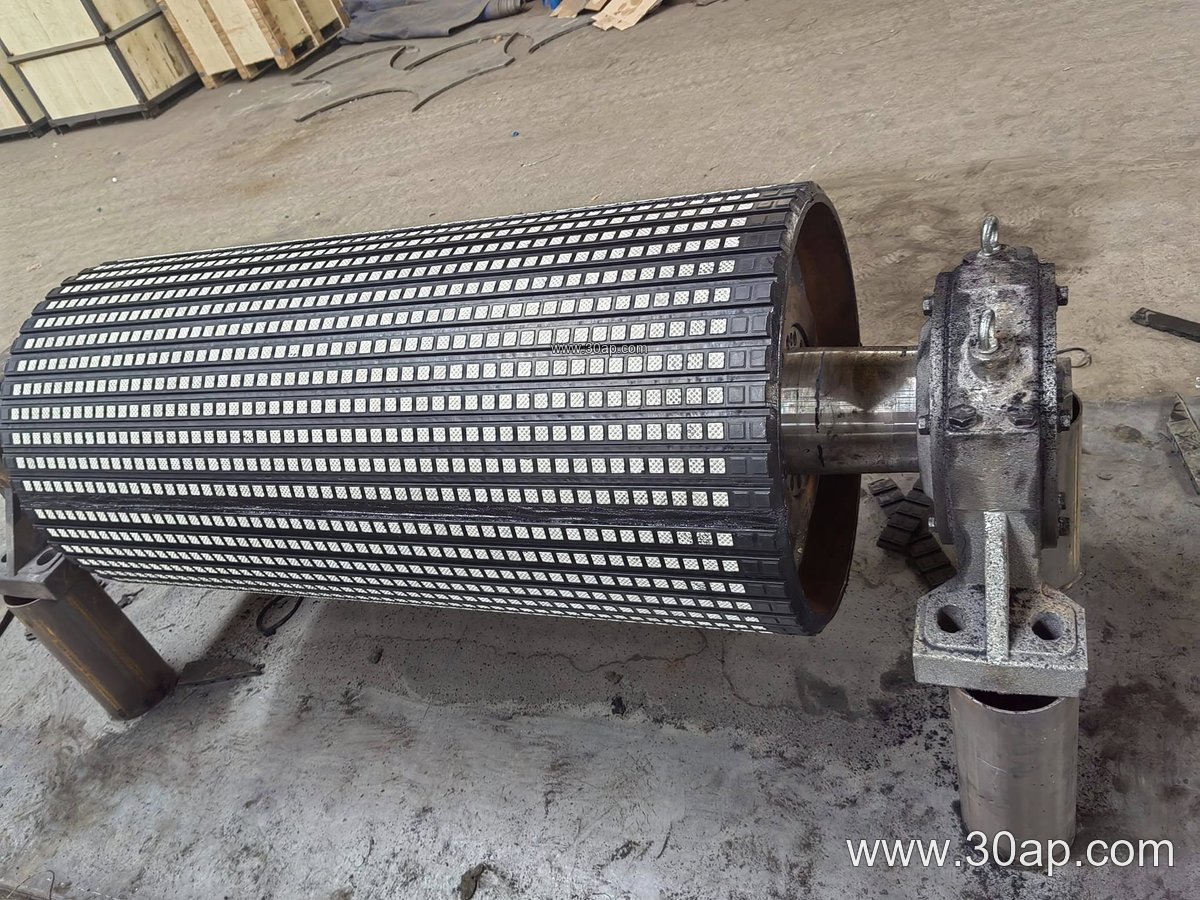
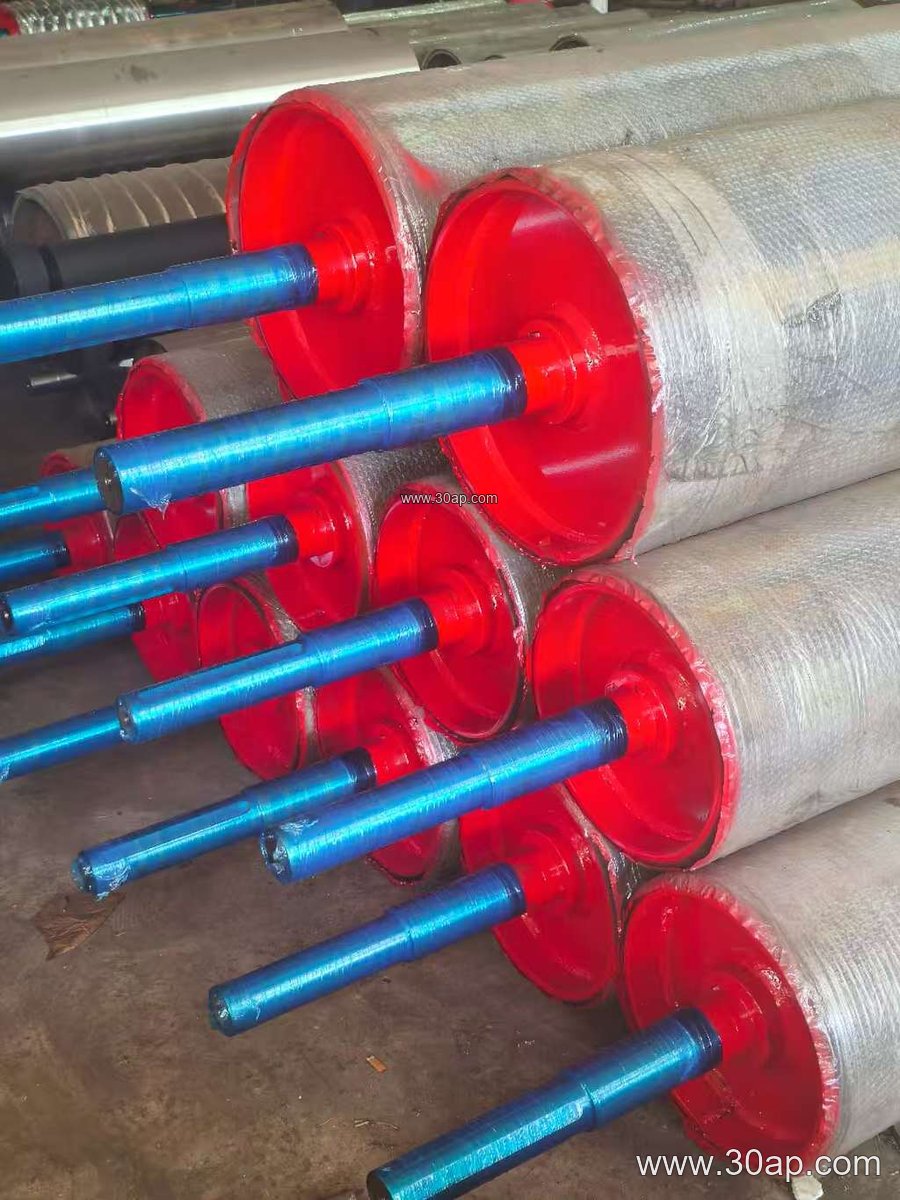
A plain lagged pulley is a conveyor pulley whose cylindrical shell is covered with a smooth rubber or elastomer layer, without grooves, diamonds, or ceramic tiles. This plain lagging improves grip between the pulley face and the conveyor belt, protects the shell from wear, and helps shed fine material in dusty service. It is a common choice for drive, tail, and bend positions in bulk handling systems, from a quarry conveyor to a coal mining conveyor belt line. The same product may be called a plain rubber lagged pulley or a smooth lagged conveyor pulley; these names refer to the same item, not to a different pulley type.
Construction and Surface Form
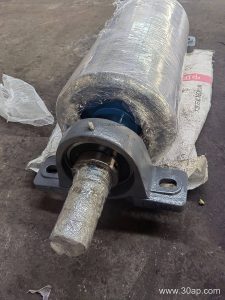
The pulley body is usually a welded steel shell with end discs and a shaft, machined for balance. The plain lagging is bonded to the shell by cold bonding or hot vulcanizing, and the surface stays flat. Common lagging thicknesses are 8, 10, 12, 15, and 20 mm, chosen according to belt tension and wear conditions. The pulley face width is normally wider than the belt: for example, a B800 belt often runs on a pulley with about 950 mm face width, while a B1200 belt may use roughly 1400 mm. Diameter and shaft size are design decisions, not fixed by belt width alone. A B800 × Ø500 plain lagged pulley and a B1200 × Ø1000 unit are both plausible combinations, but the final shaft diameter, often in the Ø80 to Ø160 range, depends on torque and load.
Where It Fits in the Conveyor
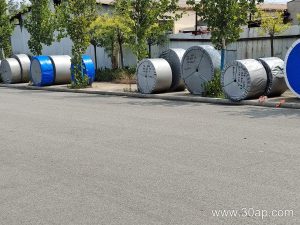
In a stone crushing plant or aggregate conveyor line, a plain lagged pulley is often used at the tail position, where it helps center the belt and resist slip under start-up loads. In a power plant coal handling system, it may appear as a bend pulley to guide an EP conveyor belt or a flame retardant conveyor belt around a curve. A cement plant may use it on a short transfer conveyor feeding a bucket elevator. It is also seen in iron ore and copper ore handling, where a heavy-duty mining conveyor belt runs over idlers and pulleys under abrasive conditions. Because the surface is smooth, it is less effective than grooved or ceramic lagging in very wet, oily, or muddy conditions, and it is not a substitute for a drive pulley with high-traction lagging in those cases.
Matching the Pulley to the Belt and Duty
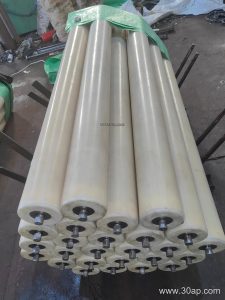
The pulley should suit the belt type and the operating environment. A multi-ply fabric core conveyor belt or an NN conveyor belt generally needs a pulley diameter large enough to limit bending stress, while a steel cord conveyor belt may require a larger diameter and a carefully specified lagging. In a coal mine, flame retardant and anti-static properties of the belt are critical; the pulley lagging should be selected to avoid static buildup and to resist oily contamination. For a heat resistant conveyor belt in a sinter plant, the lagging compound must tolerate moderate heat. A food grade conveyor belt application calls for a cleanable, non-toxic lagging surface. The table below gives common reference combinations, not universal rules.
| Belt width | Typical pulley face width | Example diameter | Common lagging thickness |
|---|---|---|---|
| B500 | about 600 mm | Ø250 to Ø400 | 8 to 12 mm |
| B650 | about 750 mm | Ø315 to Ø500 | 8 to 12 mm |
| B800 | about 950 mm | Ø400 to Ø630 | 10 to 15 mm |
| B1000 | about 1150 mm | Ø500 to Ø800 | 10 to 15 mm |
| B1200 | about 1400 mm | Ø630 to Ø1000 | 12 to 20 mm |
| B1400 | about 1600 mm | Ø800 to Ø1250 | 12 to 20 mm |
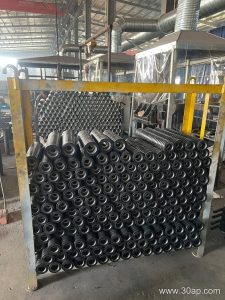
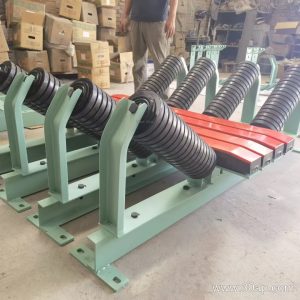
These values are common references; actual selection depends on belt tension, speed, and the pulley position. A plain lagged pulley at a bend location may use a smaller diameter than a drive pulley on the same conveyor. The idler roller and conveyor bracket arrangement also affect alignment and load distribution, so the whole conveyor layout should be reviewed together. For a quarry conveyor belt or an abrasion resistant conveyor belt application, a thicker plain lagging can extend service life, but it does not replace proper belt tracking and maintenance.
Buyer Checklist
- Confirm the pulley position: drive, tail, bend, or take-up. A plain lagged pulley is not interchangeable with a grooved drive pulley in high-traction duties.
- State the belt width, belt type (for example EP conveyor belt, NN conveyor belt, or steel cord conveyor belt), and operating environment.
- Specify the required face width, diameter, shaft diameter, and lagging thickness based on design calculations, not on a single rule of thumb.
- Ask for the lagging bonding method and rubber compound properties, especially for oil, heat, or fire risk areas.
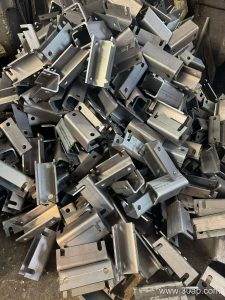
- Check that the pulley balances with the conveyor bracket and idler roller positions to avoid belt misalignment.
Whether the conveyor moves limestone in a quarry, coal in a wash plant, or clinker in a cement works, a plain lagged pulley can be a reliable, low-maintenance component when it is matched to the belt and the duty. Use the reference data as a starting point and confirm final dimensions with the conveyor designer.