What the EP300 Conveyor Belt Is
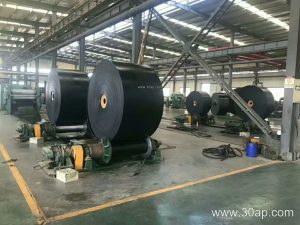
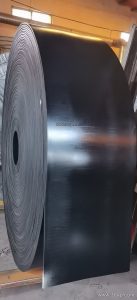
An EP300 Conveyor Belt is a fabric-core rubber belt built around polyester-polyamide (EP) plies with a nominal tensile strength of 300 N/mm per ply. It sits in the middle-upper band of the EP family, above lighter EP100 and EP200 grades and below EP400, EP500 and heavier constructions. Buyers often meet it under the equivalent name EP300 rubber conveyor belt, or as part of a multi-ply fabric core conveyor belt range where each additional ply raises the total breaking strength of the carcass.
EP is not the only fabric option. NN conveyor belt uses nylon warp and weft, which gives high elasticity and good impact absorption but more stretch under load. The polyester warp in an EP carcass keeps elongation lower and makes the EP300 a common choice for medium and long centre distances where take-up travel must stay reasonable.
How the Belt Is Built
The carcass is the load-bearing part, and the rubber covers protect it. Typical construction details include:
- Two to six EP plies, with ply count chosen according to the required breaking strength, troughability and pulley diameters in the conveyor design.
- Skim rubber between plies to prevent ply separation under repeated flexing.
- Top and bottom covers, commonly quoted as combined thicknesses such as 4+2 mm, 5+2 mm, 6+2 mm or 8+3 mm for heavy-duty mining conveyor belt service.
- Optional cover compounds for abrasion, heat, oil, flame retardance or anti-static performance, depending on the material carried.
Edge construction matters too. Cut edges are usual, but moulded edges help in wet or highly abrasive duty. Where material must be contained on steep inclines, a chevron conveyor belt or corrugated sidewall conveyor belt is a different product family rather than a variation of the flat EP300 carcass. Likewise, a steel cord conveyor belt replaces the fabric carcass entirely when strength needs go far beyond fabric capability.
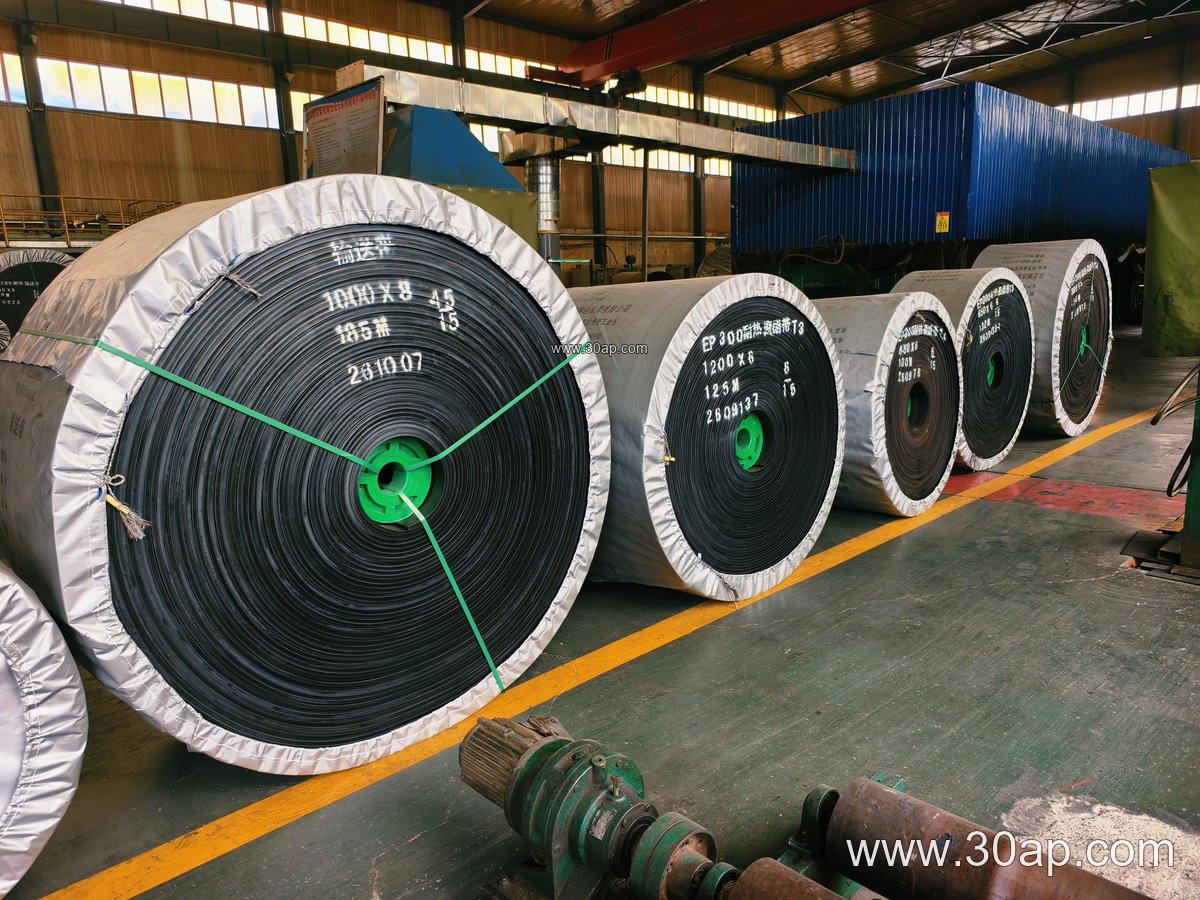
Where It Fits in the Plant
The EP300 grade appears across bulk material conveyor belt systems in mines, coal preparation plants, cement works, power stations, quarries, sand and aggregate yards, ports and crushing circuits. It handles crushed rock, ore, clinker, limestone, gravel and similar lumpy or granular loads at moderate to high tonnage. In a coal mining conveyor belt installation, a flame retardant conveyor belt or fire resistant conveyor belt specification may be required by the site, and the same EP300 carcass can be supplied with those cover compounds. For underground mining conveyor belt duty, antistatic behaviour is often requested alongside flame resistance.
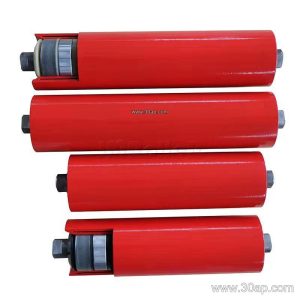
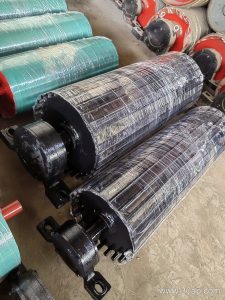
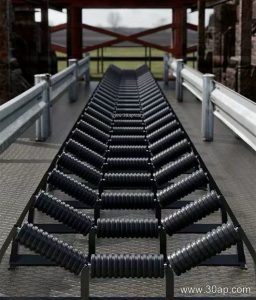
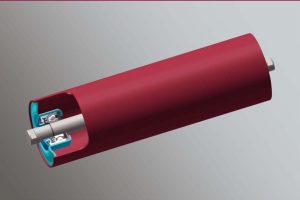
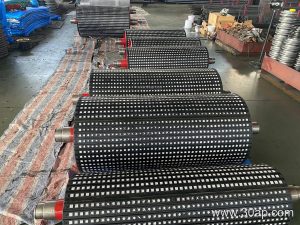
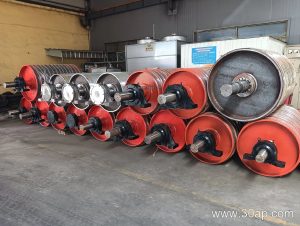
The belt does not work alone. It runs over a drive pulley, tail pulley and bend pulleys, and correct alignment depends on troughing and return idler roller sets, a properly squared conveyor bracket frame and suitable transition distances. Drive, tail and bend pulleys each have their own role and are not interchangeable parts, so the belt specification and the pulley schedule should be reviewed together.
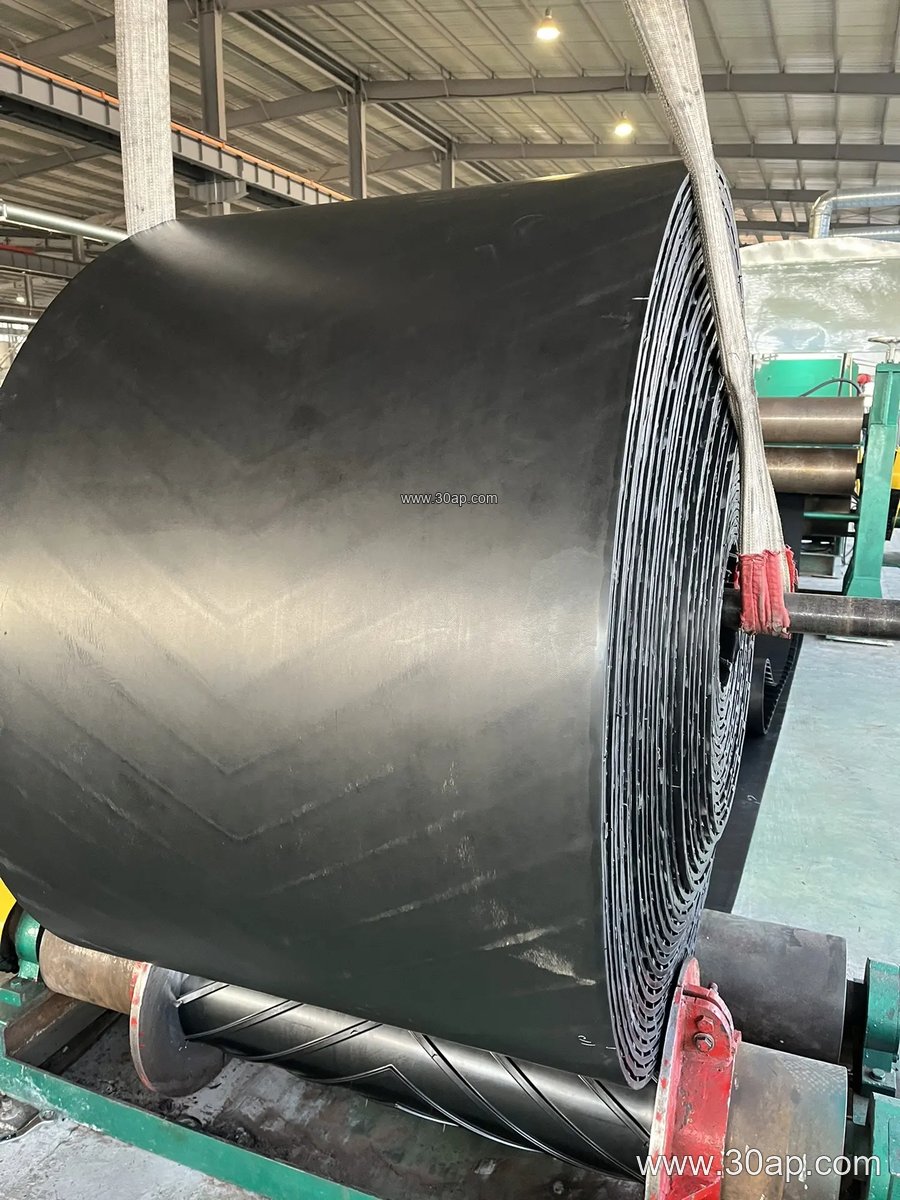
Specification Reference
The figures below are common reference values, not a fixed supply promise. Actual constructions vary by manufacturer and should be confirmed against the conveyor design.
| Parameter | Common reference range |
|---|---|
| Grade | EP200, EP300, EP400, EP500, EP630 |
| Belt width | B650, B800, B1000, B1200, B1400, B1600 |
| Ply count | 2 to 6 plies |
| Cover thickness | 4+2 mm, 5+2 mm, 6+2 mm, 8+3 mm |
| Cover options | abrasion resistant, heat resistant, oil resistant, flame retardant, cold resistant |
Note that belt width and pulley diameter are separate design decisions. A wider belt is not automatically tied to one pulley size; the pulley diameter must be checked against the carcass flexibility and the manufacturer’s minimum pulley recommendation for the selected ply count.
Selection and Maintenance Notes
Start with the duty: material type, lump size, belt speed, throughput and incline. Then check the tensile demand against the EP300 rating with a sensible safety factor, and confirm the cover grade against wear, temperature or oil exposure. Impact zones under a crusher discharge usually benefit from impact resistant conveyor belt construction or extra cover thickness, and a heavy-duty conveyor belt specification is justified where lumps are large and sharp.
On site, keep the belt tracking straight, inspect splice quality and watch for edge damage and cover wear. Clean return idler roller and pulley surfaces to avoid build-up that causes mistracking. Store spare belts flat and away from sunlight and ozone sources. When a replacement is ordered, supply the full description: grade, width, ply count, cover thickness and any special compound, so the new EP300 conveyor belt matches the existing conveyor rather than merely resembling it.