What an EP300 Conveyor Belt Is
An EP300 Conveyor Belt is a fabric-core rubber belt built around polyester-polyamide (EP) plies. The number 300 refers to the nominal tensile strength of the carcass, usually expressed in newtons per millimeter of belt width. In practical terms, this places the belt in the medium-to-high strength range of EP Conveyor Belt products, above EP200 and below EP400, EP500 and heavier constructions. Buyers often describe it simply as an EP Rubber Conveyor Belt or an EP Fabric Core Conveyor Belt, and all three names point to the same product.
The EP carcass combines polyester warp yarns with polyamide weft yarns. This pairing gives low elongation in service, good troughability and strong resistance to repeated flexing around pulleys. Compared with an NN Conveyor Belt, an EP belt typically offers better dimensional stability under load, which matters on long runs and inclined conveyors.
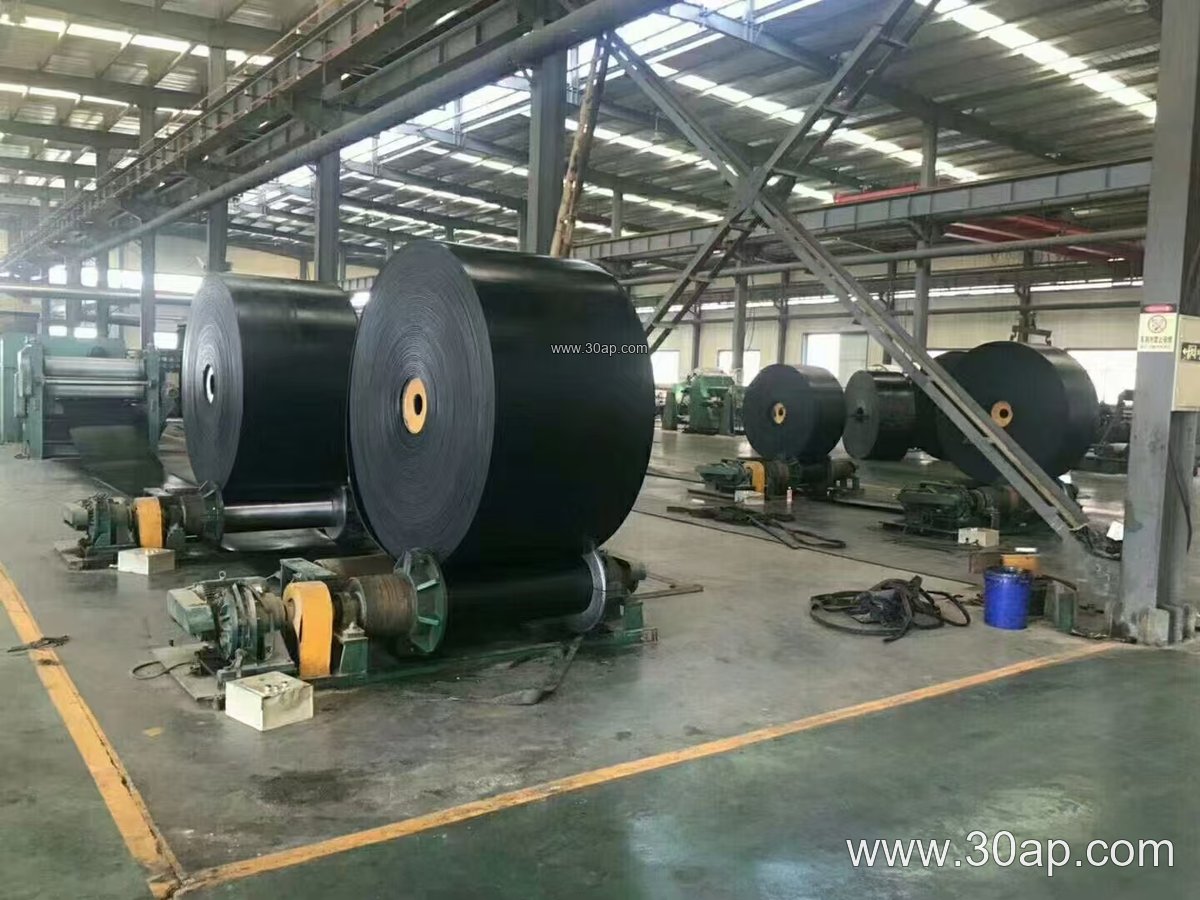
Construction and Typical Specifications
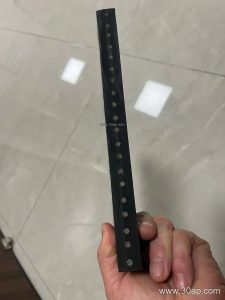
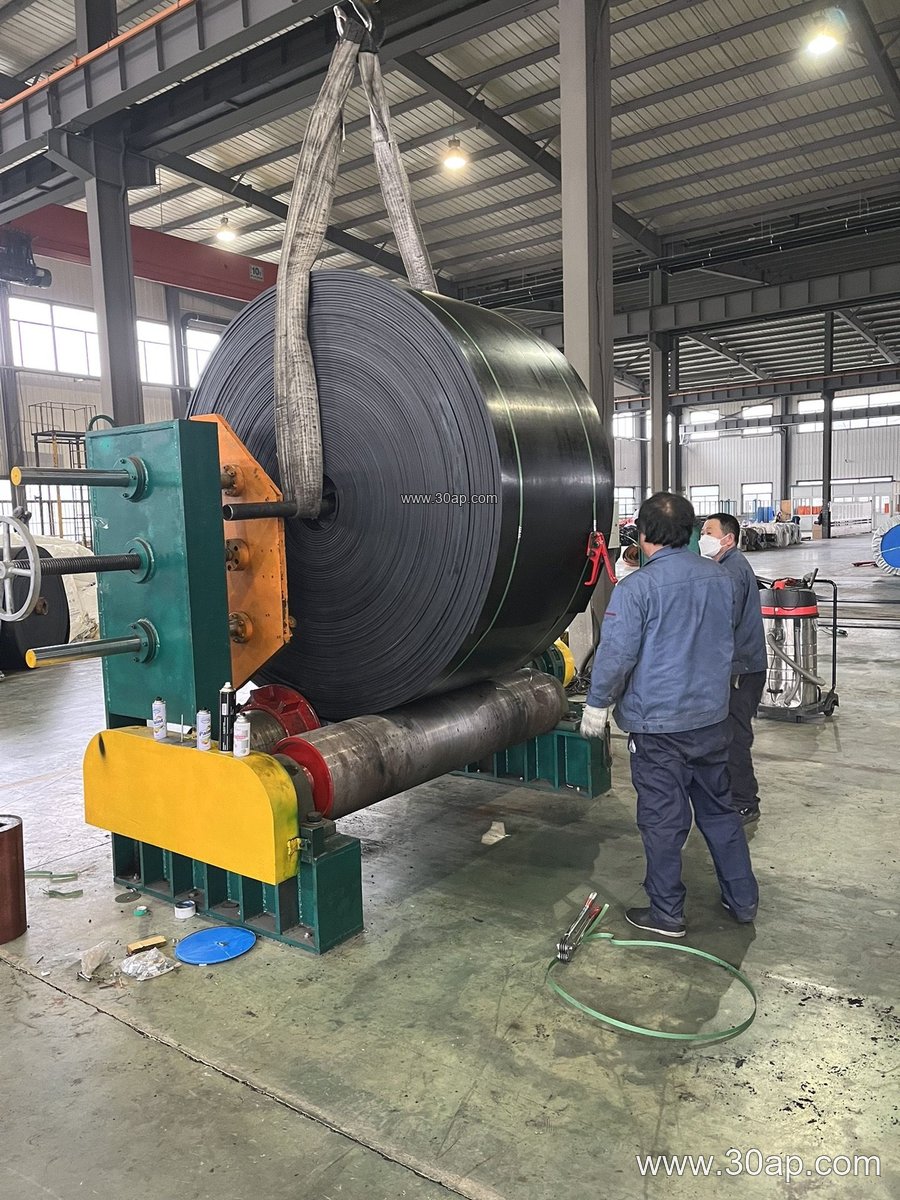
An EP300 belt usually contains two to six fabric plies, with the ply count chosen to suit the duty. Top and bottom rubber covers protect the carcass from abrasion, impact and moisture. Cover thickness is stated as top plus bottom, for example 4+2 mm or 6+2 mm. The figures below are common reference values only; actual supply depends on the manufacturer and the application.
- Strength grade: EP300, with EP200 and EP400 as neighbouring options
- Bandwidth: B500, B650, B800, B1000, B1200, B1400 and wider
- Cover combinations: 3+1.5 mm, 4+2 mm, 5+2 mm, 6+2 mm, 8+3 mm
- Carcass: 2 to 6 EP plies, depending on design
Specialised versions of the same platform include Abrasion Resistant Conveyor Belt, Heat Resistant Conveyor Belt, Oil Resistant Conveyor Belt and Flame Retardant Conveyor Belt grades. These change the rubber compound rather than the basic EP carcass concept. For underground coal work, PVG Conveyor Belt constructions are a separate family and should not be confused with standard EP belting.
Where It Fits in the Plant
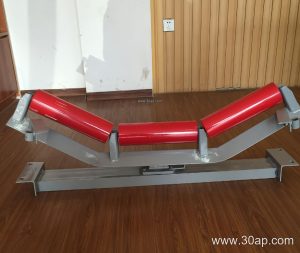
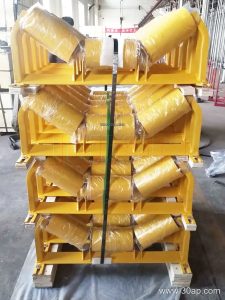
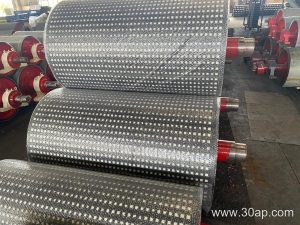
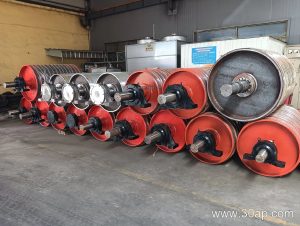
The EP300 grade suits main haulage lines in mining, cement plants, power stations, quarries and sand and aggregate yards. It handles crushed rock, ore, clinker, coal and bulk material on troughed conveyors supported by idler roller sets and frames. Drive, tail and bend pulleys guide the belt, and each pulley type has its own role; they are not interchangeable, and the belt specification should be matched to the pulley diameters and wrap angles set by the conveyor designer.
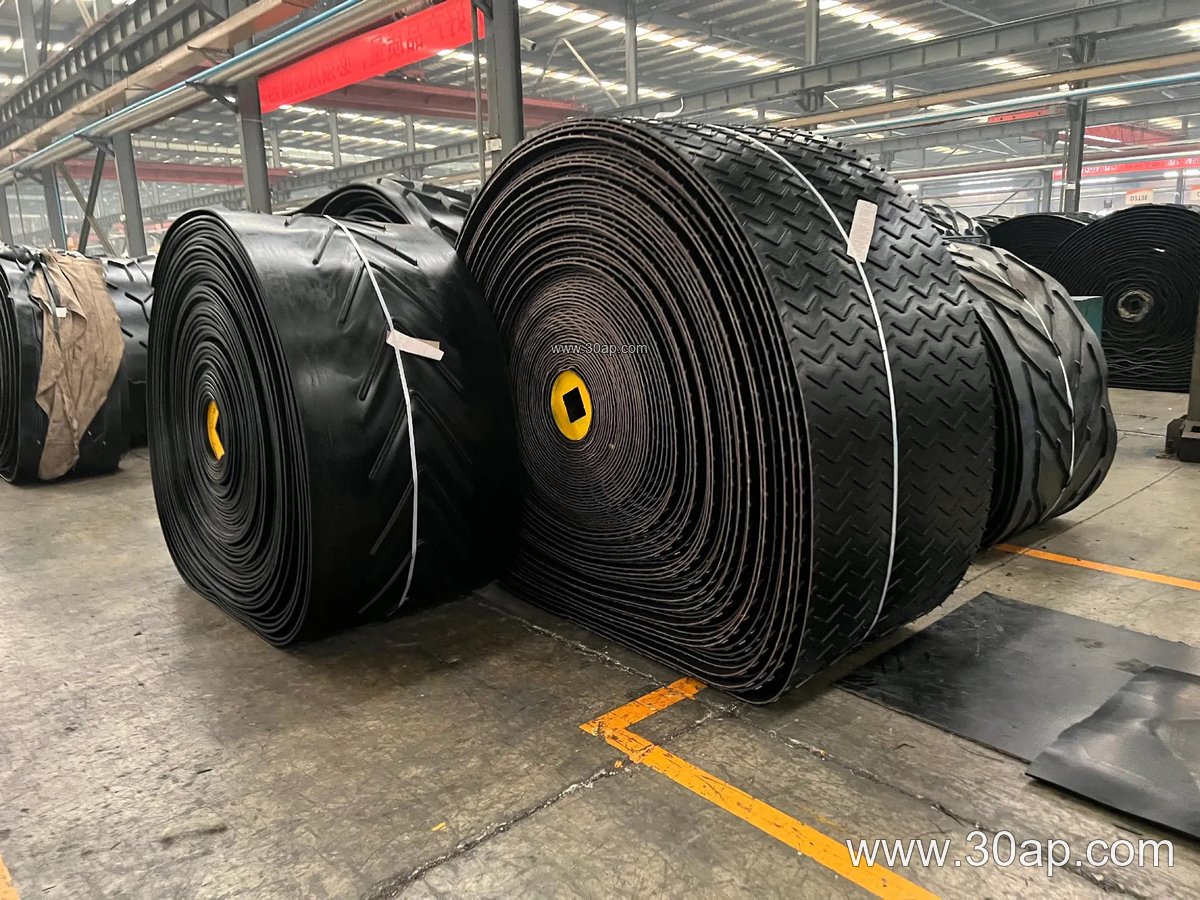
In a typical stone crushing line, an EP300 belt may carry material from the secondary crusher to the screening station. In a cement plant it can serve clinker or limestone transport. For very high tension or long centre distances, a Steel Cord Conveyor Belt may be the better fit, while a Chevron Conveyor Belt or Corrugated Sidewall Conveyor Belt is chosen when the incline is steep. Those are comparisons, not replacements for the EP300 subject here.
Selection Points for Buyers
Start with the calculated maximum belt tension, then confirm the ply count and strength grade with the supplier. Check the material size and drop height to decide cover thickness and whether an Impact Resistant Conveyor Belt compound is needed. Confirm the belt width against the conveyor frame, and verify the minimum pulley diameters for the selected carcass. On sites with fire risk, ask for a Flame Retardant Conveyor Belt or Fire Resistant Conveyor Belt grade; in cold climates, consider a Cold Resistant Conveyor Belt compound.
Splicing method also affects performance. Vulcanised splices usually give the most reliable joint for heavy-duty service, and the splice length should follow the manufacturer’s data for the ply count. Keep spare idler roller and conveyor pulley inspection on the maintenance schedule, because a seized roller or worn pulley lagging can damage an otherwise sound belt. For an overview of compatible components, see the conveyor pulley and conveyor bracket ranges offered alongside the belt programme.
Handling and Maintenance Notes
Store belts in a dry, shaded place and avoid sharp bends in the roll. During installation, align the structure and check that the belt trains correctly before loading. Track wear at the edges, cover gouges and splice condition at regular intervals. A well-matched EP300 Conveyor Belt with the right cover grade and a clean, well-aligned conveyor will usually deliver long service in demanding bulk handling duty.