What a Welded Pulley Is and Where It Fits
A welded pulley is a conveyor pulley whose shell is fabricated from rolled steel plate and joined to the end discs by welding, rather than being cast or assembled from bolted segments. In a bulk handling line it usually serves as the drive pulley, tail pulley, or bend pulley, and its job is to transmit motion, maintain belt tension, or change the belt path. Because the shell and discs are welded into one unit, the pulley can be built in large diameters and wide face widths without the weight penalty of a solid cast body. This makes it a common choice in quarry crushing circuits, coal preparation plants, and cement clinker transport, where the conveyor belt carries heavy, abrasive material and the pulley must survive continuous duty.
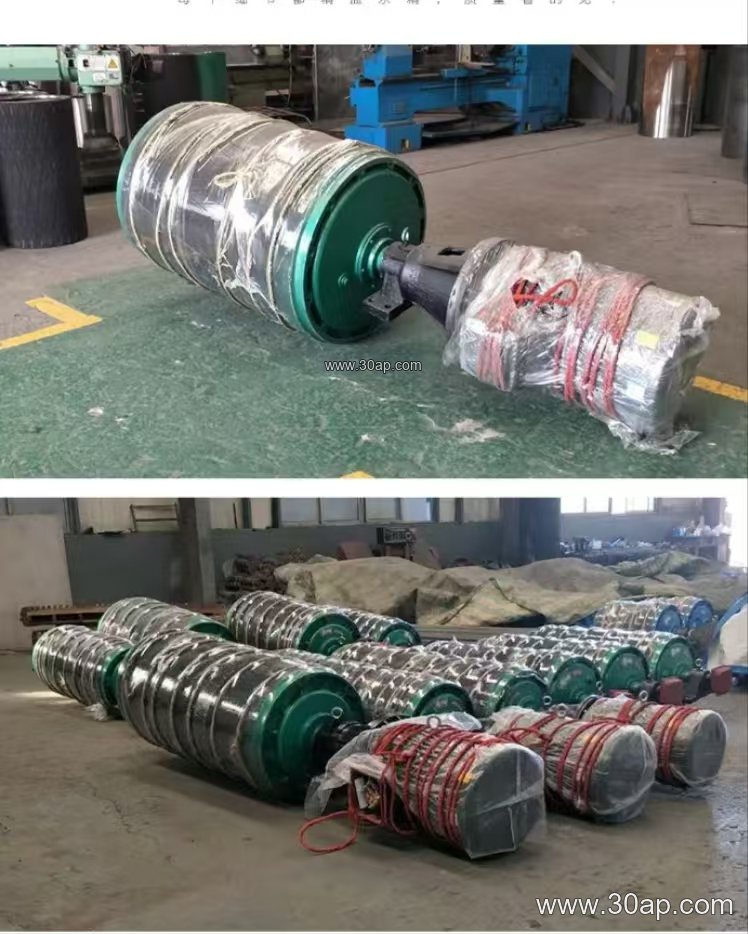
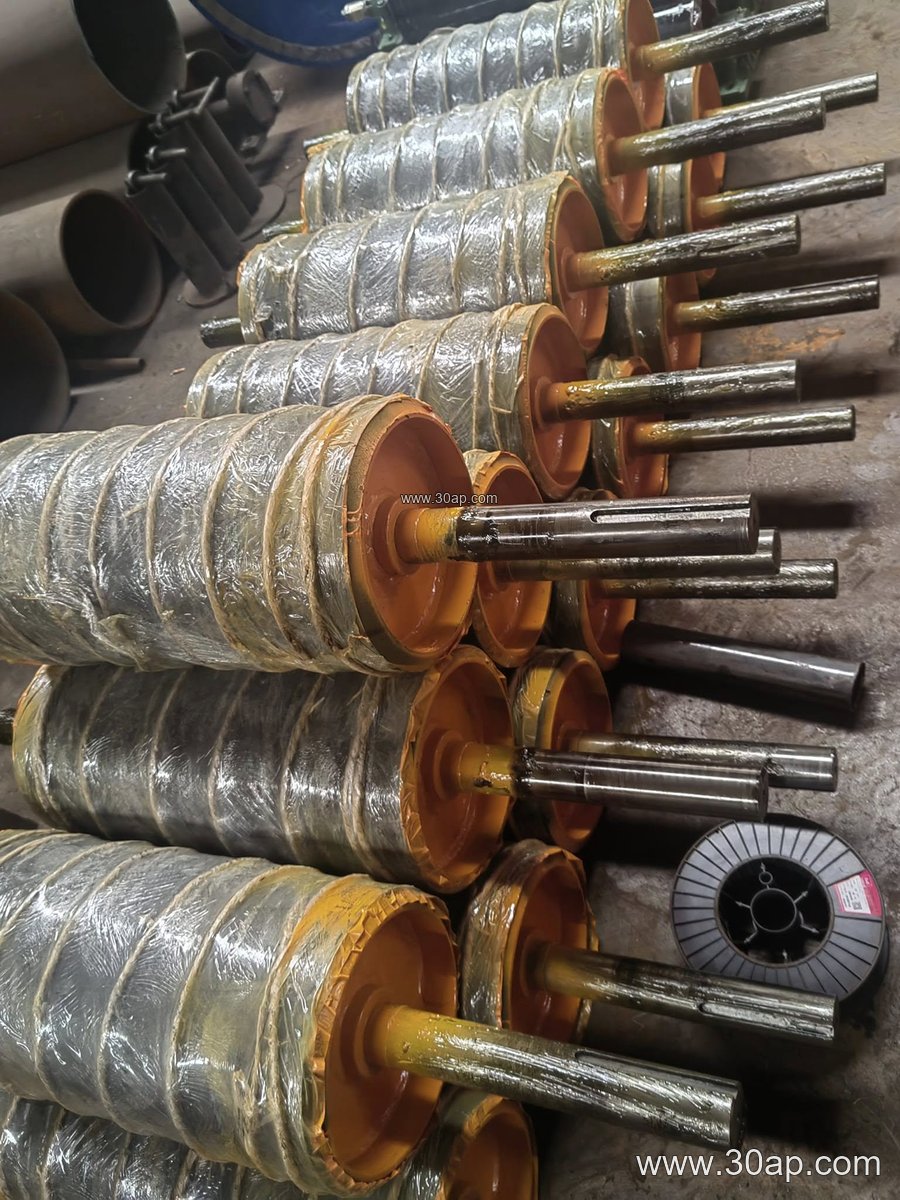
How the Welded Pulley Is Built
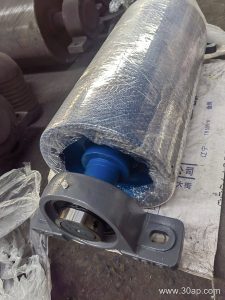
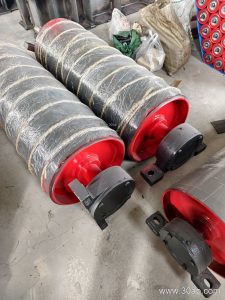
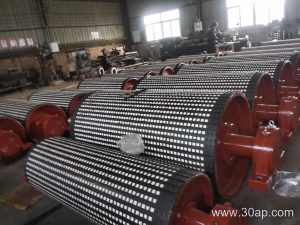
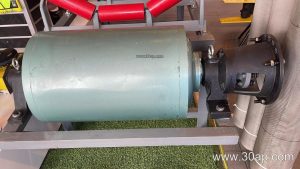
The typical welded pulley starts with a rolled steel shell, machined end discs, and a shaft that is either welded or keyed into the hub assembly. The shell-to-disc welds are continuous and often reinforced, and the finished drum is stress-relieved before machining to control runout. The shaft ends are turned to fit the bearing housings and the conveyor bracket. Surface finish matters: a plain shell is common for non-drive positions, while a drive pulley often receives rubber lagging to improve grip. Lagging can be applied by cold bonding or hot vulcanizing, and the pattern may be plain, diamond, or herringbone depending on whether the goal is friction, tracking, or material shedding. Common face widths run from about 500 mm for a B400 belt up to 2200 mm for a B2000 belt, and diameters range from roughly Ø200 to Ø1800 in heavy-duty service. Shaft diameter is sized by torque and bearing load, not by belt width alone.
Where Welded Pulleys Are Used
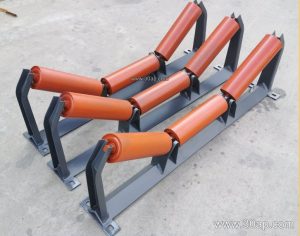
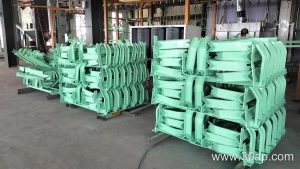
In a stone crushing line, a welded pulley at the head end drives the discharge belt, while a tail pulley keeps the belt aligned on the return side. In a coal mining conveyor, flame retardant conveyor belt and anti-static conveyor belt are often paired with welded pulleys that have been lagged for wet or dusty conditions. Cement plants use welded pulleys on clinker belts where heat resistant conveyor belt may be specified, and the pulley shell must be protected from fine abrasive dust. Power plant coal handling and port bulk terminals also rely on welded pulleys on long overland conveyors, where the pulley face width and shaft size are matched to the belt tension and the gearbox output. In each case, the welded pulley works with the conveyor belt, idler roller, and conveyor bracket as a system, so alignment and bearing fit matter as much as the drum itself.
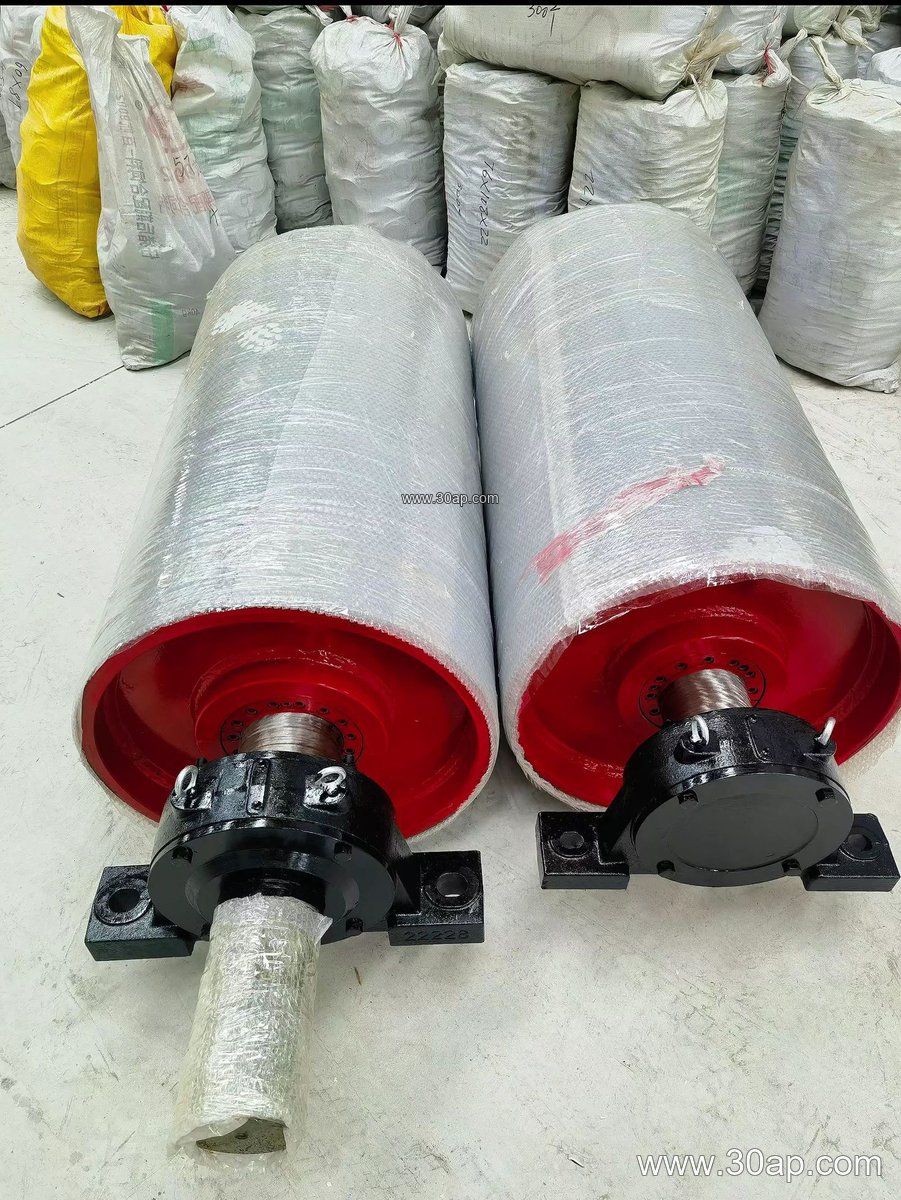
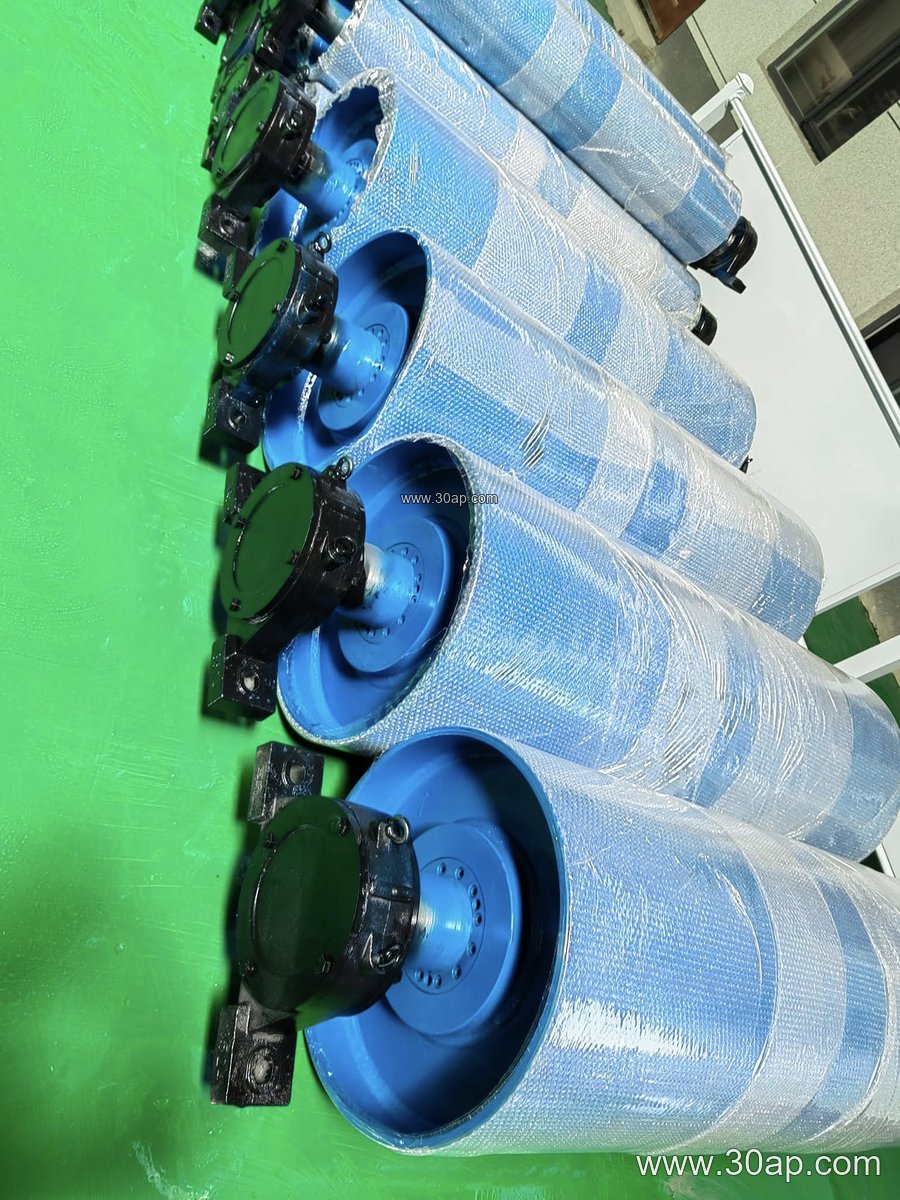
Matching the Pulley to the Belt and the Duty
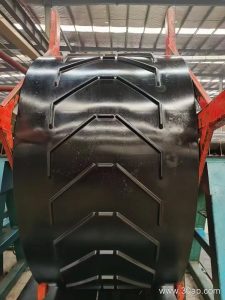
Buyers should start with the belt width and the required diameter, then confirm the shaft size from the drive torque. A B800 belt might run on a Ø500 welded pulley with a 950 mm face, while a B1400 belt could use a Ø800 drum with a 1600 mm face, but these are common references, not fixed rules. The lagging choice should follow the application: diamond lagging for general grip, ceramic lagging for high-wear drive positions, and plain lagging for bend pulleys where belt tracking is the main concern. The belt itself may be an EP conveyor belt, a steel cord conveyor belt, or a multi-ply fabric core conveyor belt, and the pulley surface should not be so aggressive that it damages the belt cover. In dusty quarry or mining service, a welded pulley with a slightly crowned face can help center the belt, while a flat face is often used on tension pulleys.
Buyer Checklist Before Ordering
- Confirm the pulley position: drive, tail, bend, or take-up, because the duty and lagging differ.
- Provide belt width, pulley face width, diameter, and shaft size, and state the bearing type.
- Specify the lagging pattern and thickness if the pulley is a drive unit, for example 10 mm or 12 mm rubber.
- Check that the conveyor bracket and bearing housing match the shaft end dimensions.
- Ask for the weld inspection and balance report if the pulley will run at high speed.
For more information on conveyor pulleys and related components, visit our site at www.example.com/conveyor-pulley or www.example.com/welded-pulley. A welded pulley is a long-life component when the shell, shaft, and lagging are specified together with the belt and the conveyor structure, so the best buying decision is the one that treats the pulley as part of the whole conveyor system rather than a standalone drum.