What a 1250mm Diameter Conveyor Pulley Is
A 1250mm diameter conveyor pulley is a large-diameter drum used in heavy-duty belt conveyors to drive, tension, or redirect the belt. At this size, it is typically found in high-tonnage operations such as iron ore mines, coal washing plants, and cement clinker lines where belt tensions and material loads are substantial. The 1250mm diameter helps reduce belt bending stress and improves traction when paired with an appropriate rubber lagging. This pulley is not a one-size-fits-all component; it is selected based on belt width, torque, and the specific position in the conveyor frame.
Construction and Key Components
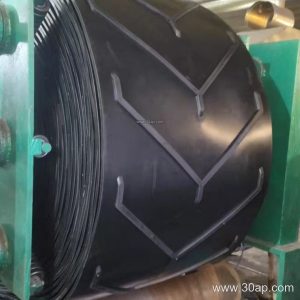
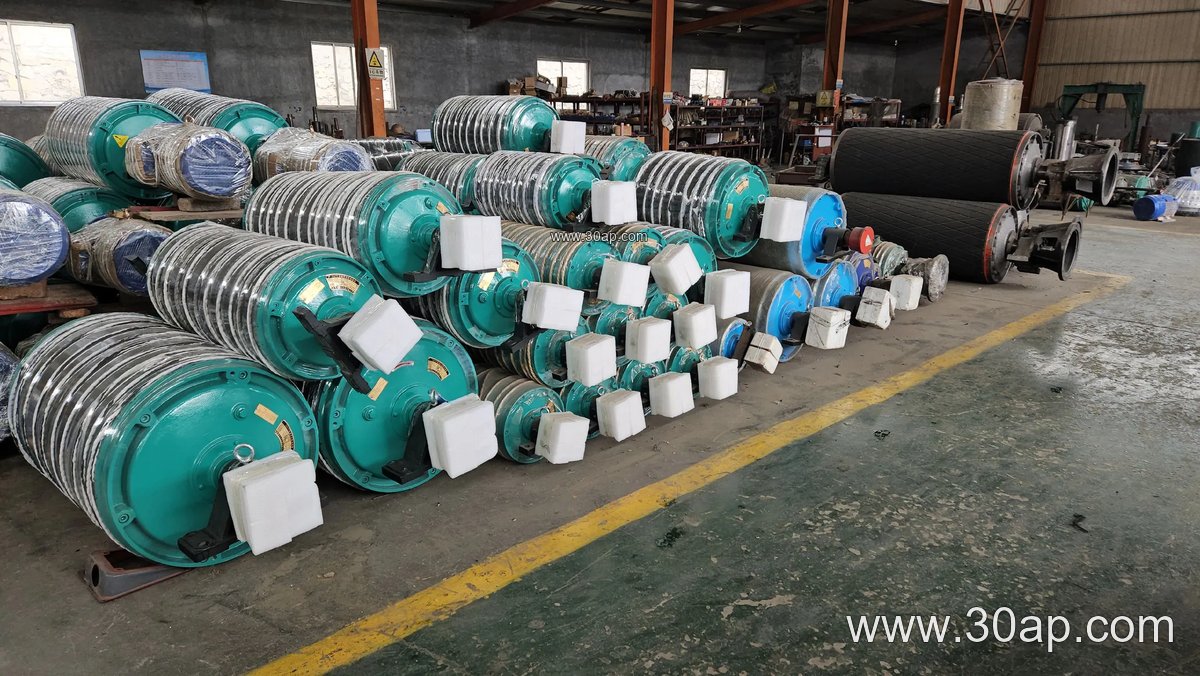
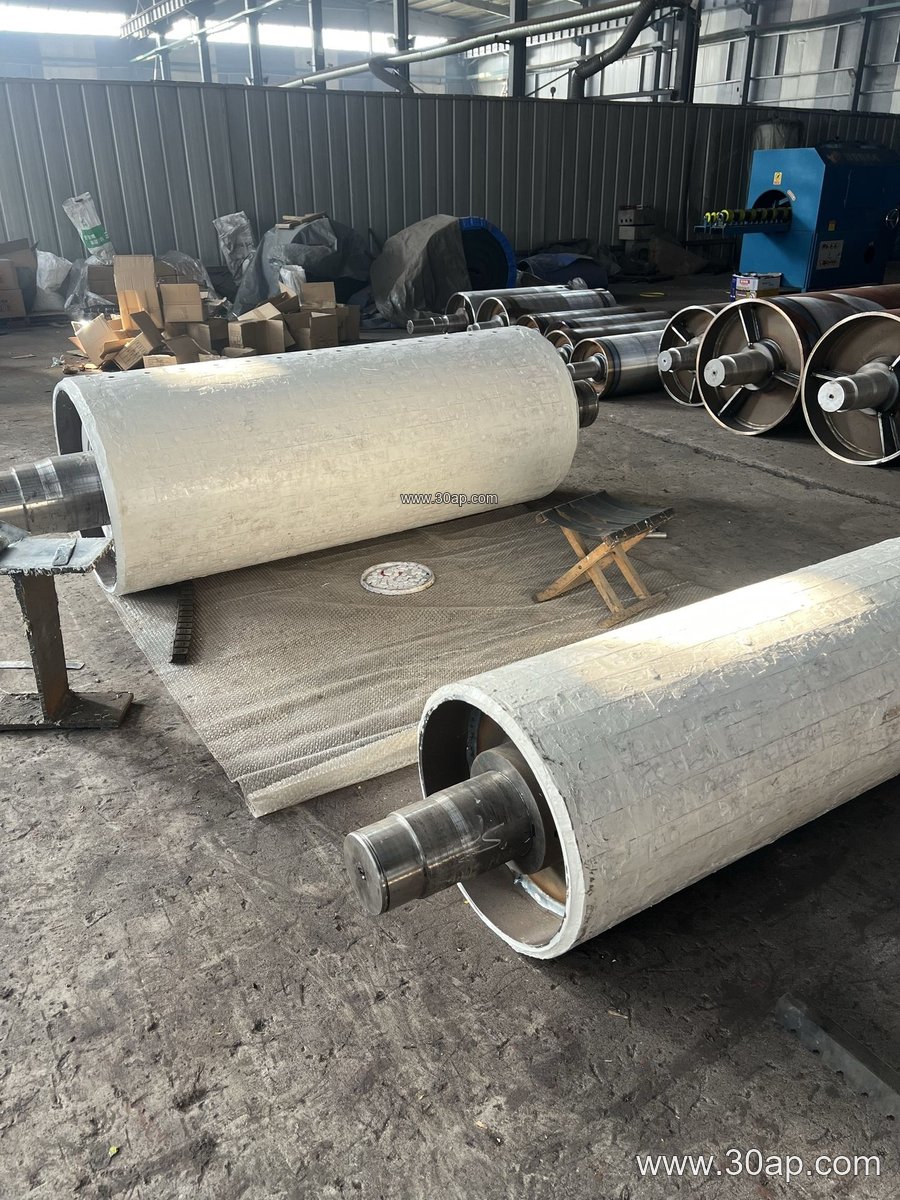
Manufacturers build these pulleys around a welded steel drum with a machined shell, reinforced end discs, and a shaft sized by torque and load rather than belt width alone. Common shaft diameters for this class range from Ø160 to Ø200, though final values are determined by design calculations. The pulley surface may be plain, or covered with cast rubber, cold-bonded rubber, hot-vulcanized rubber, diamond lagging, herringbone lagging, or ceramic lagging. Lagging thickness often falls between 8 mm and 20 mm depending on the required grip and wear life. The pulley face width is usually wider than the belt; for example, a B1800 belt might use a face width around 2000 mm, while a B2000 belt could call for approximately 2200 mm. Bearings, locking assemblies, and conveyor brackets are matched to the shaft and frame.
Where It Fits in the Conveyor
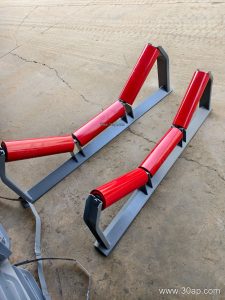
This large pulley is most often used as a drive pulley at the head of the conveyor, where it transmits power to the belt. It can also serve as a tail pulley to maintain belt tension, or as a bend pulley to change belt direction in confined spaces. In a typical coal mining conveyor, a 1250mm diameter drive pulley may work with a flame retardant conveyor belt and a series of idler rollers to move raw coal from the mine to the preparation plant. In a quarry or aggregate line, the same diameter might be used on a heavy-duty mining conveyor belt carrying crushed rock. The choice between drive, tail, and bend positions depends on the conveyor layout, and these roles are not interchangeable.
Matching the Pulley to the Belt and Load
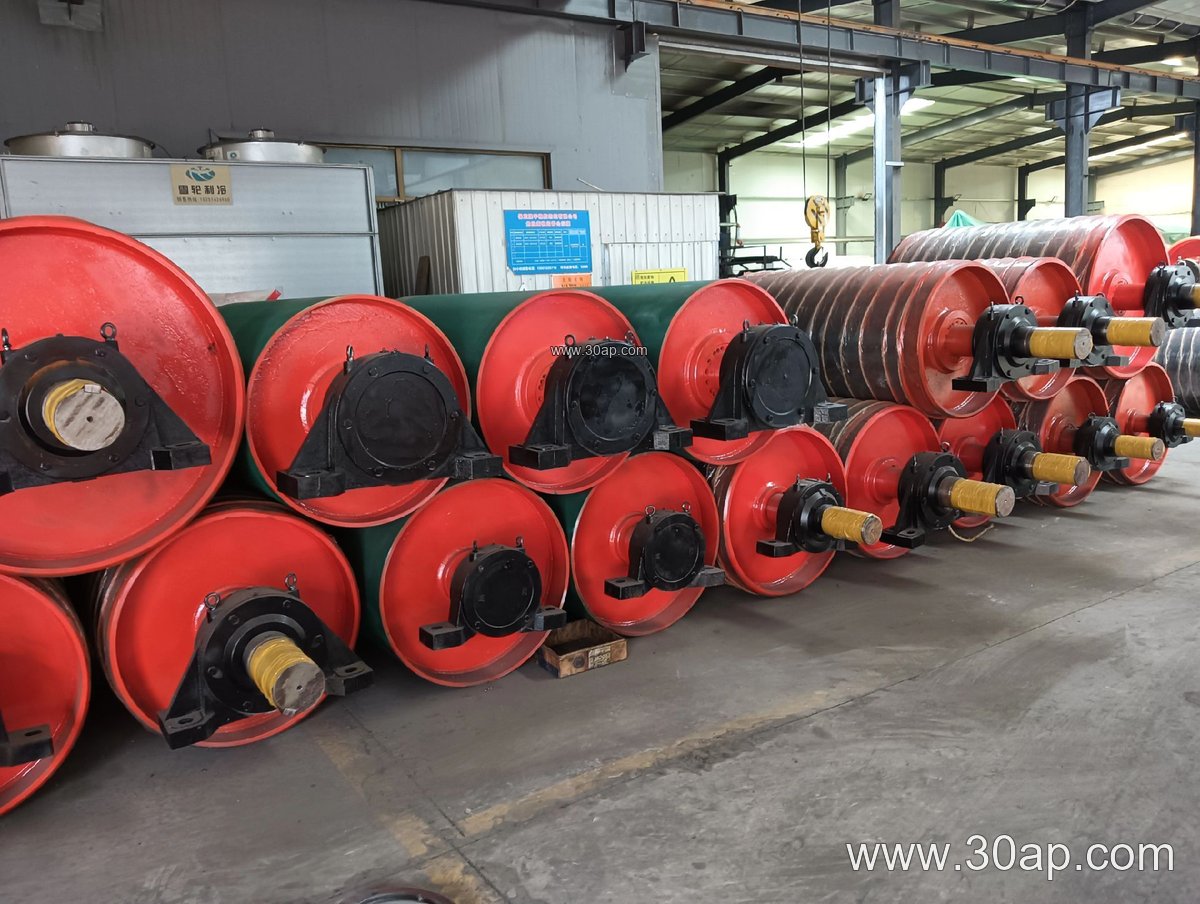
Selecting a 1250mm diameter conveyor pulley requires more than checking belt width. The belt type influences lagging and shell design: a steel cord conveyor belt may demand higher torque capacity and a smooth, well-crowned surface, while an EP conveyor belt or NN conveyor belt may call for different lagging patterns to prevent slip. In cement plants, a heat resistant conveyor belt might be used near kilns, and the pulley lagging should be chosen to tolerate elevated temperatures. For underground coal mining, a PVG conveyor belt or fire resistant conveyor belt is common, and the pulley must be built with appropriate flame retardant properties. Buyers should also consider the conveyor belt speed, the weight of the material, and the starting and stopping cycles. A 1250mm pulley can be paired with B1200, B1400, B1600, or even B2000 belts, but the final combination is determined by engineering calculations, not by a fixed rule.
Buyer Checklist and Maintenance Notes
Before ordering, confirm the pulley position (drive, tail, or bend), the belt width, the required lagging type and thickness, and the shaft diameter based on torque. Ask for the pulley face width and verify it matches your conveyor frame and brackets. Check that the lagging material suits the environment: abrasion resistant rubber for quarry and aggregate lines, oil resistant rubber for recycling or oily bulk materials, and ceramic lagging for high-wear drive pulleys. During operation, inspect lagging wear, check bearing temperatures, and ensure the pulley remains aligned with the conveyor belt and idler rollers. Proper maintenance extends the life of both the pulley and the belt, reducing downtime in demanding industries such as gold mining, copper ore handling, and power plant coal feeding.