What a Heavy-Load Conveyor Pulley Does
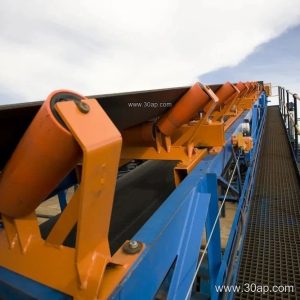
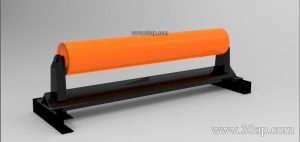
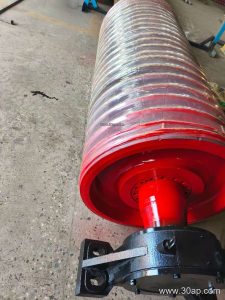
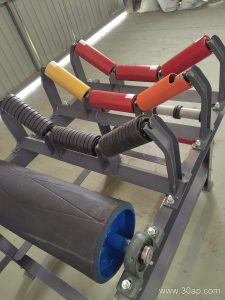
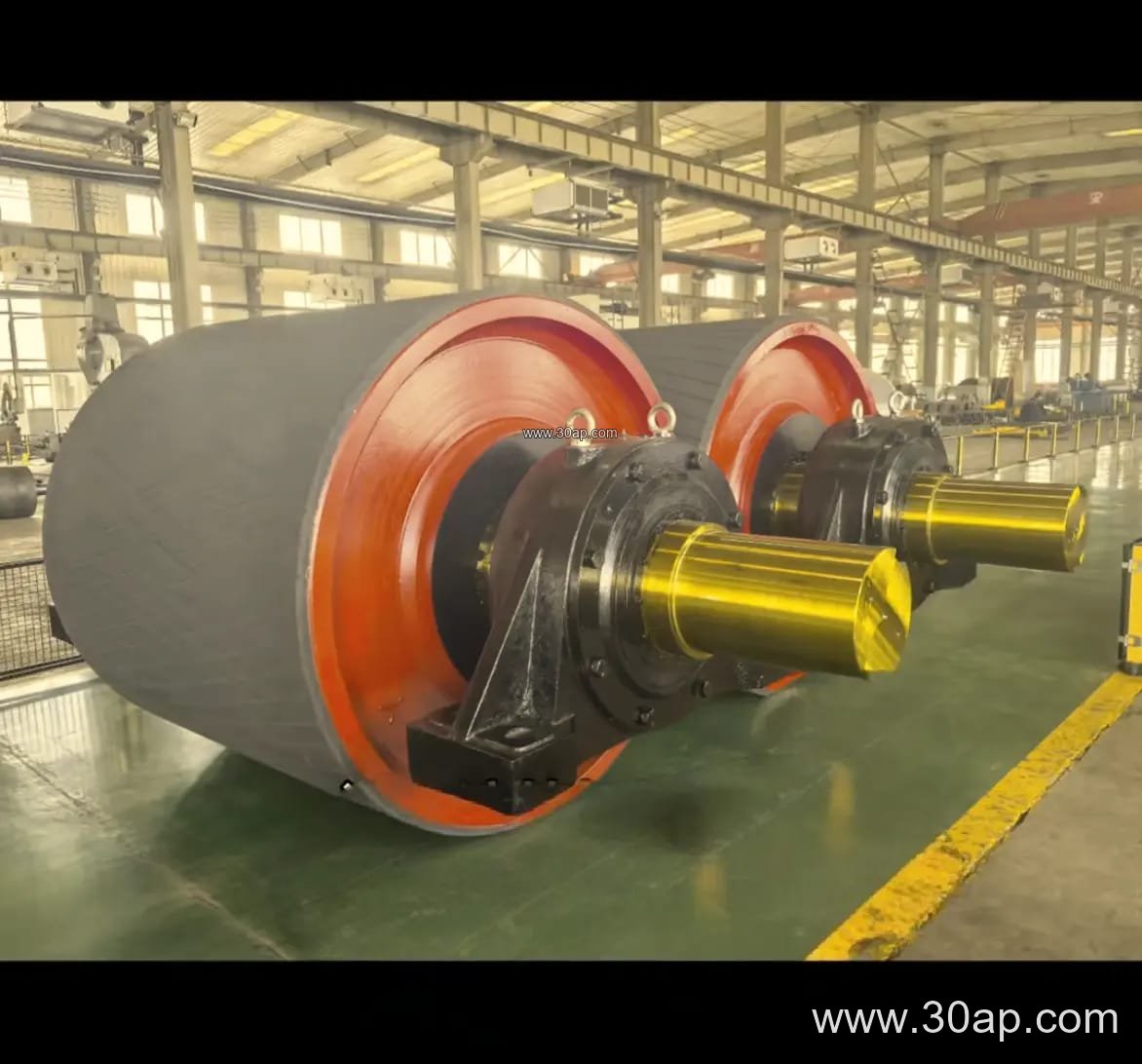
A heavy-load conveyor pulley is the drive or direction-changing drum that carries the belt in high-capacity systems. It is built to transmit torque, support belt tension, and resist wear when tonnage is high and starts are frequent. In a quarry, limestone mine, or iron ore plant, the pulley is often the component that decides whether a conveyor can run at full load without slipping or overheating. As a heavy-duty conveyor pulley, it works with the conveyor belt, idler roller, and conveyor bracket to keep the line tracking and turning.
Construction and Surface Choices
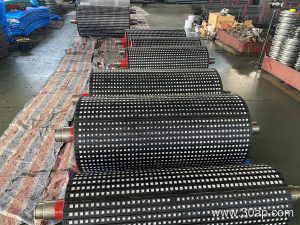
The body is usually a welded steel shell with machined end discs and a shaft sized by torque and load, not by belt width alone. Common shaft diameters include Ø100, Ø120, Ø140, Ø160, and Ø180, while larger drives may use Ø200 or more. Shell diameters commonly range from Ø400 to Ø1250, and pulley face width is normally wider than the belt; for example, a B1200 belt often runs on a pulley face of about 1400 mm. Surface forms include plain, diamond grooved, herringbone, ceramic lagging, and flat rubber lagging, with lagging thickness often 8, 10, 12, 15, or 20 mm.
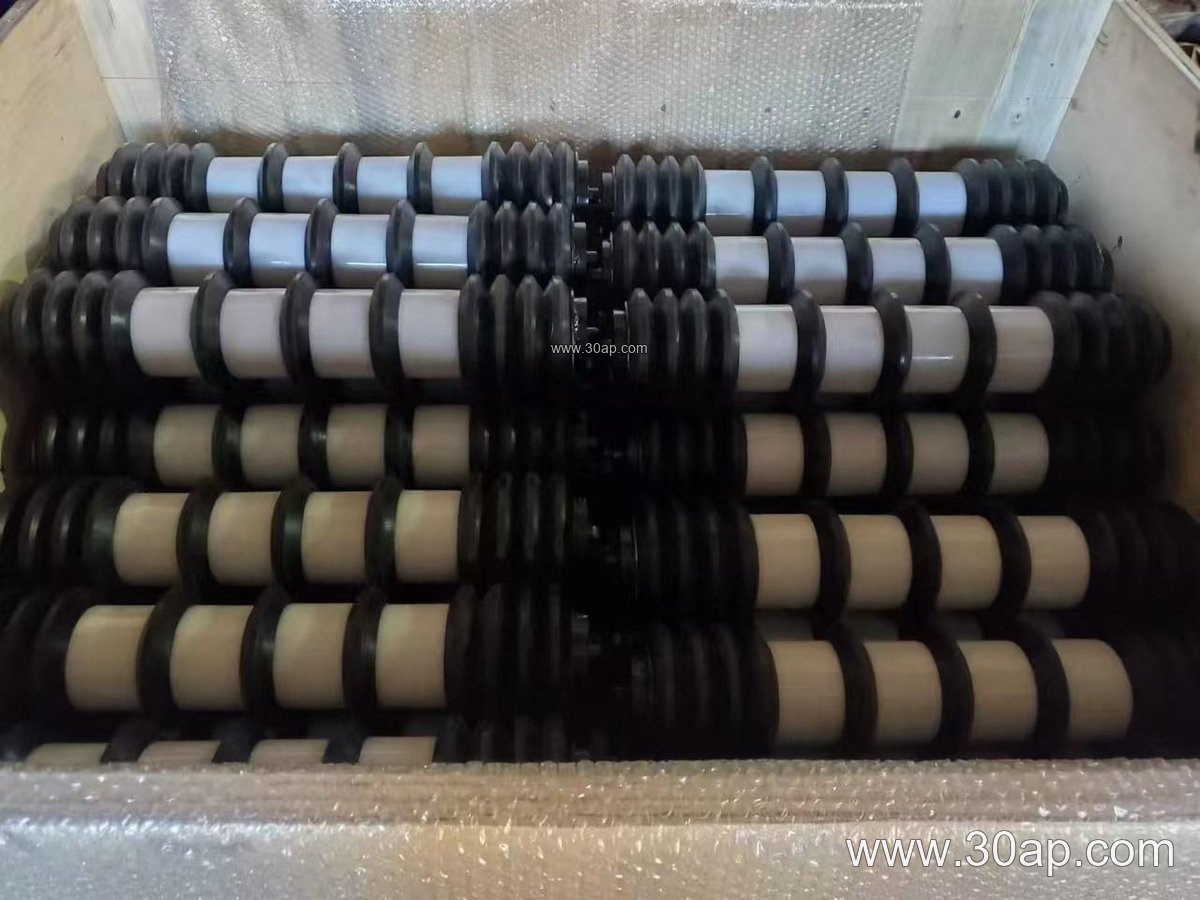
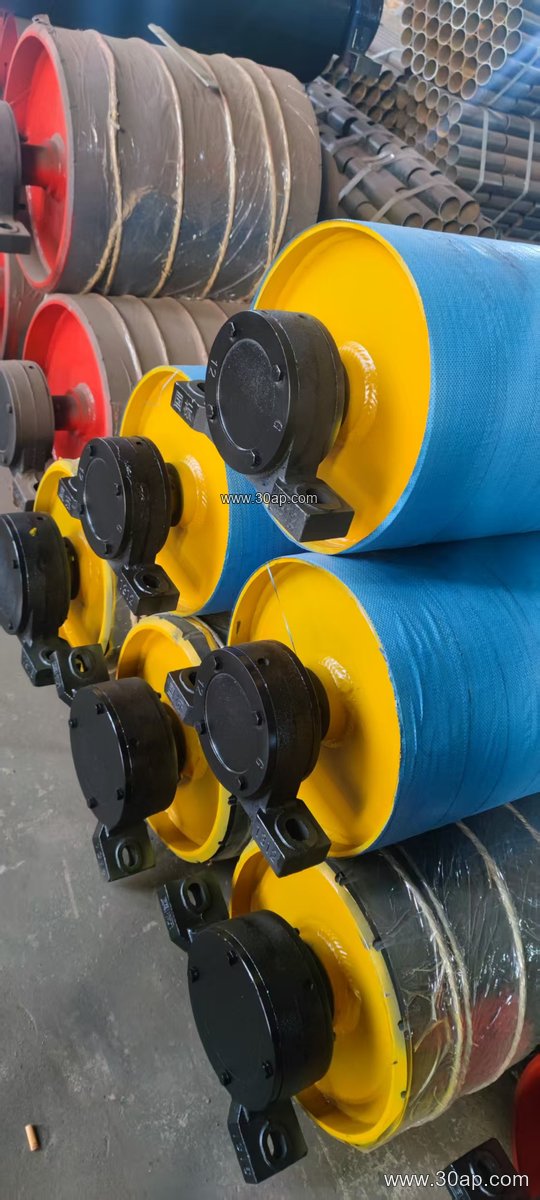
Lagging choice depends on the material and conditions. Abrasion resistant conveyor belt systems in a stone crushing line may benefit from ceramic or thick rubber lagging, while a coal mining conveyor belt that carries fines may need a smooth or grooved surface to shed material. The pulley is not a substitute for a drive pulley or tail pulley; each position has its own duty, and a bend pulley or take-up pulley should not be interchanged with the main drive drum.
Where It Fits in the Plant
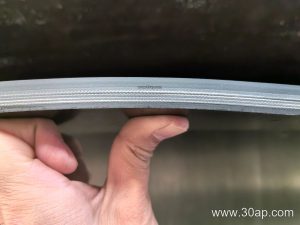
Heavy-load conveyor pulleys appear in primary crushing stations, sinter plants, power plant coal handling, port ship loading, and cement clinker lines. In a copper mine, the head pulley may see constant impact from coarse ore, while a tail pulley in a tunnel boring operation may face water and fines. The same drum design can be adapted for a steel cord conveyor belt carrying high tension or for a multi-ply fabric core conveyor belt in an aggregate conveyor belt circuit. The pulley must match the belt’s tension rating and the conveyor bracket’s bearing size.
Specification Reference
These values are common reference points, not fixed matches. Final sizing follows the conveyor design, belt tension, and shaft load.
| Parameter | Common Range or Example |
|---|---|
| Belt width (B) | B400, B650, B800, B1000, B1200, B1400, B1600, B1800, B2000 |
| Pulley diameter | Ø200, Ø250, Ø315, Ø400, Ø500, Ø630, Ø800, Ø1000, Ø1250 |
| Pulley face width | About 100–200 mm wider than belt; B800 ≈ 950 mm, B1200 ≈ 1400 mm |
| Shaft diameter | Ø50, Ø60, Ø70, Ø80, Ø90, Ø100, Ø120, Ø140, Ø160, Ø180, Ø200 |
| Lagging thickness | 8, 10, 12, 15, 20 mm |
| Surface form | Plain, diamond, herringbone, ceramic, flat rubber |
| Example combinations | B800 × Ø500, B1200 × Ø1000, B1400 × Ø800 |
Buyer Checklist
- Confirm the pulley position: drive, tail, bend, take-up, or snub. Drive and tail pulleys are not interchangeable, and a bend pulley has a different load profile.
- Check belt tension and starting torque before selecting shaft diameter. A B1400 belt does not automatically call for one fixed shaft size.
- Match lagging to the material: heat resistant conveyor belt lines may need different rubber than an oil resistant conveyor belt circuit.
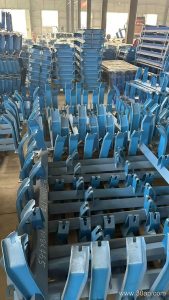
- Verify bearing and bracket dimensions with the conveyor bracket supplier so the pulley fits the frame without shimming.
- Ask for the dynamic balance report and lagging hardness when the pulley will run at high speed.
For a heavy-load conveyor pulley, the best result comes from a design review that includes the conveyor belt, idler roller spacing, and conveyor bracket layout. A pulley that is oversized for the shaft but undersized for the lagging will still wear early, so the whole assembly should be checked together.