What a Rubber Disc Idler Does
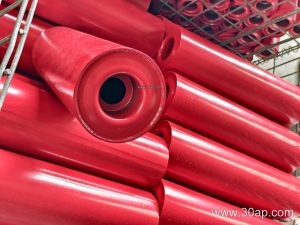
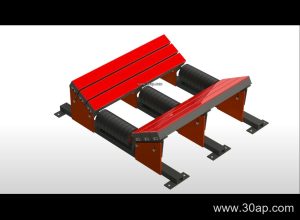
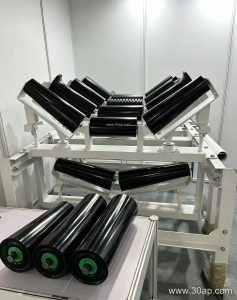
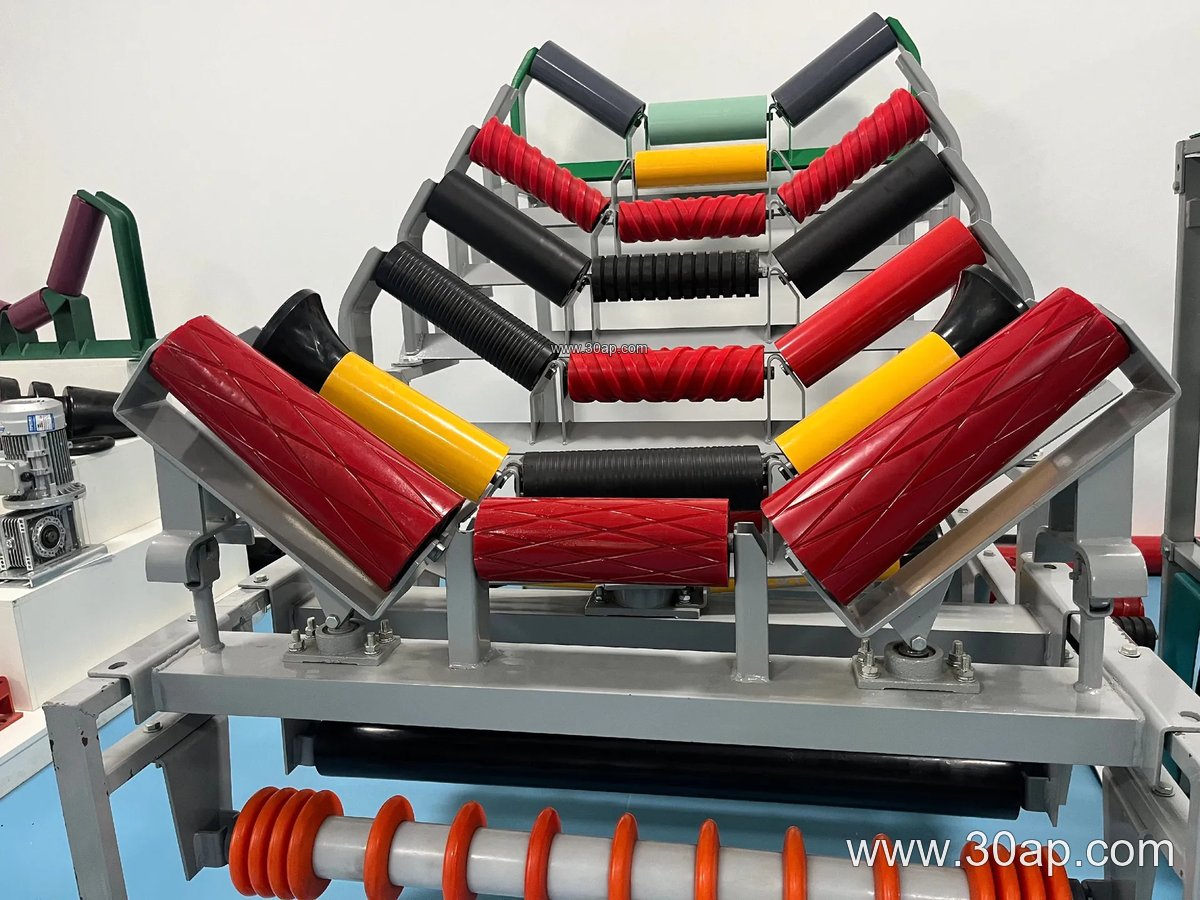
A rubber disc idler is a carrying roller built with a series of flexible rubber discs mounted along a steel shaft instead of a plain steel shell. In a conveyor line, this roller is usually installed at the loading point, where coarse material drops onto the belt and generates repeated impact. The rubber discs absorb part of that energy, reduce shock on the conveyor belt, and help keep the belt tracking steadily as it moves forward. In many plants the same component is simply called a rubber disc roller or rubber ring impact idler, and those names describe the same product.
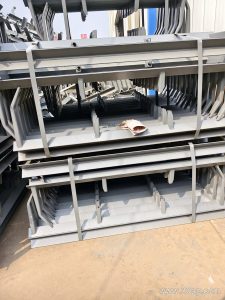
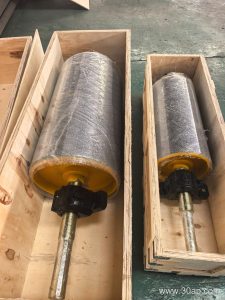
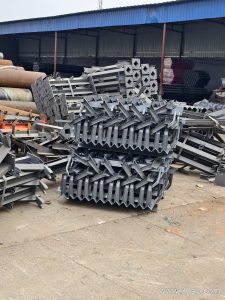
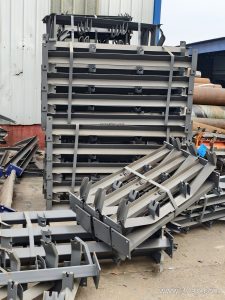
The working position matters. A rubber disc idler belongs to the impact or buffer family of rollers, and it is not a substitute for a drive pulley, a tail pulley, or a bend pulley. Those pulleys transmit power or change belt direction, while the disc idler only supports and cushions the belt. A conveyor pulley and a conveyor bracket still have their own roles in the same frame, so the idler should be selected as part of the whole conveyor layout rather than as a stand-alone item.
Construction and Surface Details
The basic build includes a shaft, bearing housings, sealing arrangement, and a set of rubber discs pressed onto the shaft. Common bearing sizes include 6205, 6305, 6306, and 6308, though the bearing must match the actual shaft and load design rather than a single belt width. Disc thickness, hardness, and spacing vary by manufacturer, and the gap between discs allows fines to fall away instead of packing around the roller.
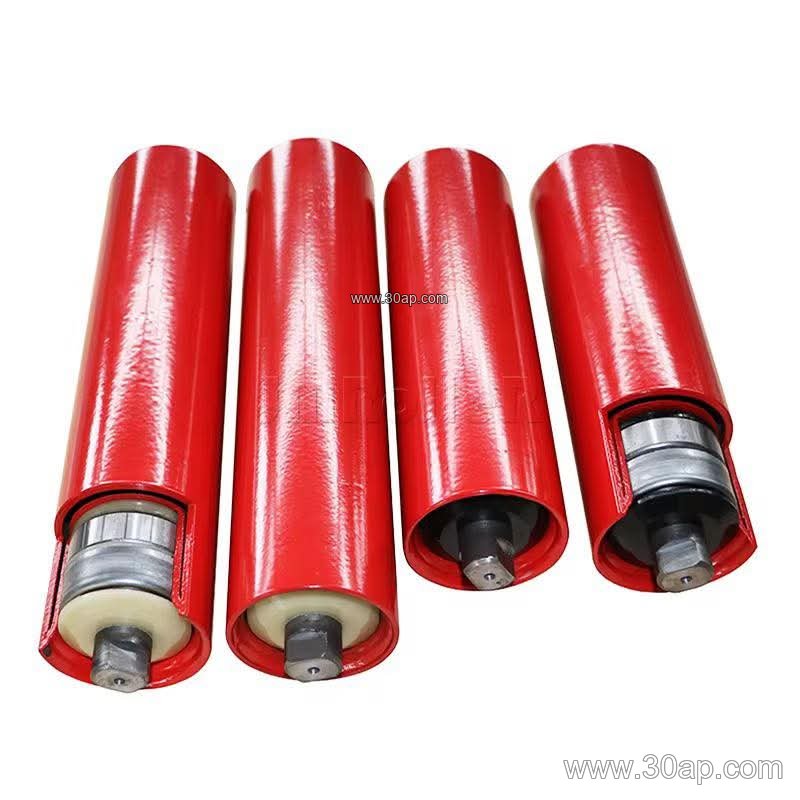
The rubber surface is the key difference from a steel-shell idler roller. Compared with a plain steel roller, the disc version offers more give under sharp lump loads, which suits primary crushing and transfer points. It is also less likely to cut or gouge the belt surface when large rocks land unevenly. Sealing quality deserves attention because dust and water ingress are the usual causes of early bearing failure in quarry and coal handling service.
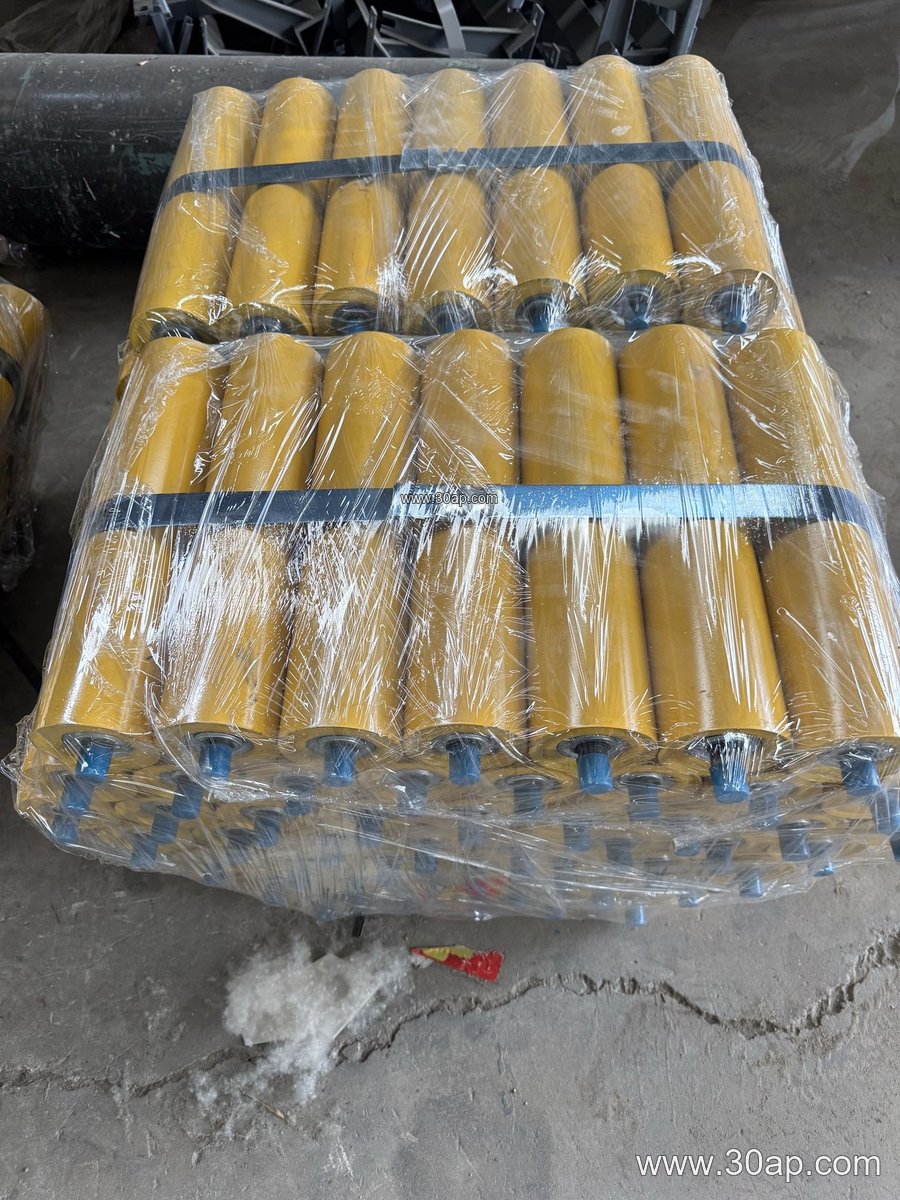
Where It Fits in Bulk Handling
Typical applications include crusher discharge zones in a quarry, transfer towers at a coal preparation plant, and belt loading sections in a cement plant or power plant coal yard. In sand and aggregate lines, a rubber disc idler is often placed under the feed hopper where the belt receives mixed-size stone. Similar cushioning rollers appear in iron ore and copper ore handling, though the final choice depends on lump size, drop height, and belt speed.
The roller works together with the rest of the conveyor. A heavy-duty mining conveyor belt carrying sharp ore may need a robust impact arrangement, while a long overland line with a steel cord conveyor belt may use cushion rollers only at selected transfer points. Belt construction, belt width, and the conveyor bracket spacing all influence how many disc idlers are needed and where they should sit.
Common Reference Dimensions
The table below gives common reference values for planning discussion. These are examples, not fixed pairings, and actual roller length should be confirmed against belt width, trough angle, and frame design.
| Item | Common Reference Range | Notes |
|---|---|---|
| Roller diameter | Ø89, Ø102, Ø108, Ø127, Ø133, Ø159 mm | Selected by load and belt speed |
| Belt width | B500, B650, B800, B1000, B1200, B1400 mm | Wider belts usually need longer rollers |
| Roller length, three-roll trough | About 250 mm at B650, 315 mm at B800, 380 mm at B1000, 465 mm at B1200 | Side rollers and center roller may differ |
| Trough angle | 20°, 30°, 35°, 45° | Affects material containment |
| Bearing | 6205, 6305, 6306, 6308 | Must match shaft and load design |
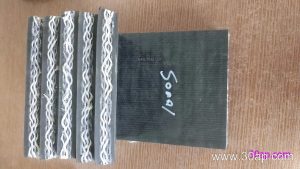
For a plant using an EP conveyor belt or an NN conveyor belt on a medium-width line, the disc idler is normally specified together with the trough angle and the frame dimensions. A fabric core conveyor belt with lower tension may tolerate a different roller spacing than a high strength conveyor belt, so the layout should be checked as a system.
Buyer Checklist
- Confirm the actual belt width and the roller length required by the frame, not just the nominal belt size.
- State the material type, lump size, and drop height at the loading point so the disc hardness and spacing can be matched.
- Ask about sealing design and bearing brand or grade, since dust and water are common failure causes.
- Check that the shaft diameter and bearing size suit the calculated load rather than being copied from another conveyor.
- Keep spare discs and complete rollers on hand for critical transfer points to reduce downtime.
Inspect the discs for cracks, flattening, or missing rings during routine maintenance. A worn disc idler can allow the belt to sag at the load zone, which may increase spillage and stress on the belt edges. Replacing worn cushion rollers early is usually cheaper than repairing a damaged belt.
For related conveyor components, buyers often review the conveyor belt specification together with roller and pulley data. A balanced selection across the belt, idlers, and pulleys keeps the whole material handling line running smoothly.