What an Impact Idler Bracket Does
An impact idler bracket is the support frame that holds the impact idlers directly beneath a conveyor loading point. Where normal carrying idlers only need to support the weight of the belt and the material already settled on it, the impact bracket and its rollers absorb the energy of falling rock, ore, clinker or aggregate. In a quarry, a crushing station or a cement plant receiving raw stone, this is often the most heavily stressed part of the whole conveyor structure.
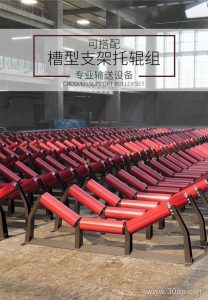
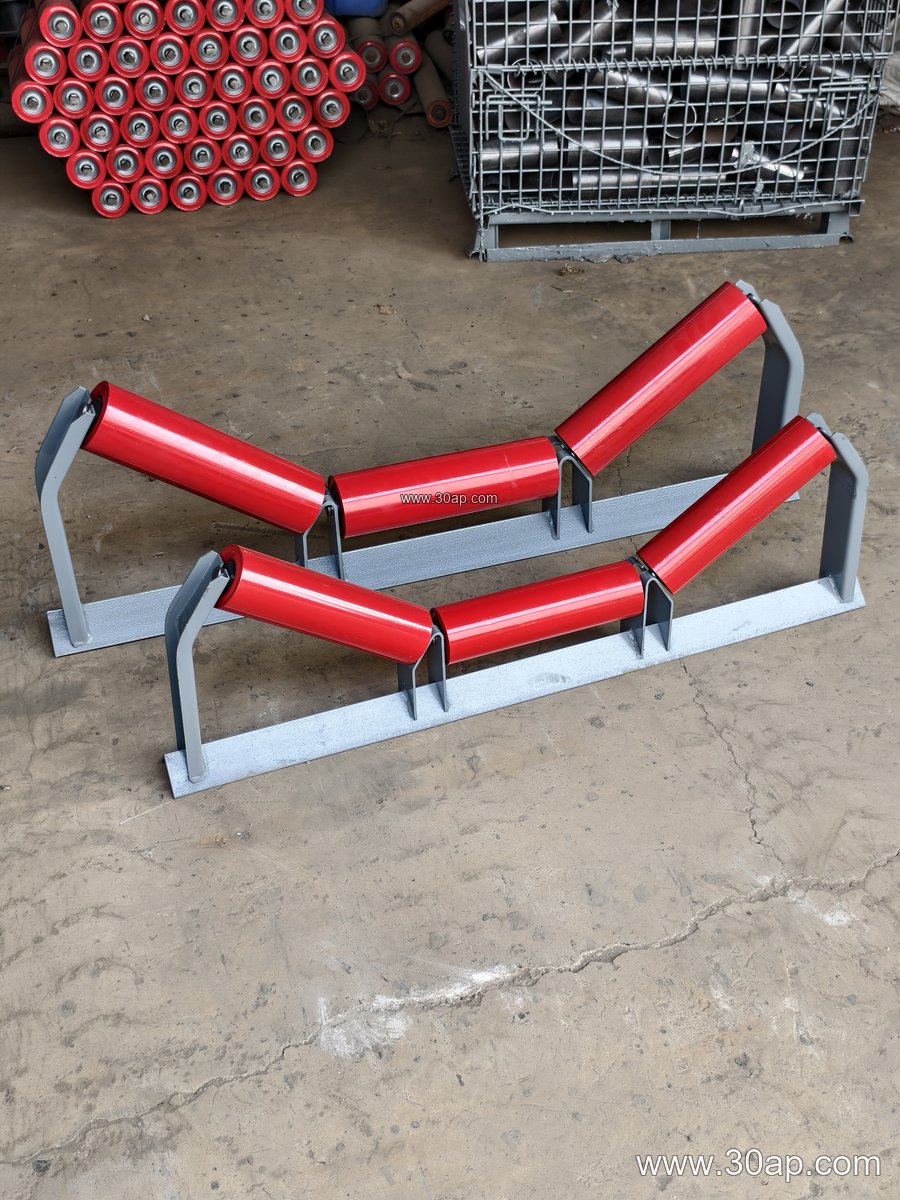
The bracket is not a standalone item. It works as a set with the impact idler rollers, the conveyor belt above them and the main conveyor bracket frame. If the frame flexes or the mounting holes wear oval, the rollers sit unevenly, the belt tracks poorly and the impact energy is transferred into the belt cover instead of being absorbed.
How the Bracket Is Built
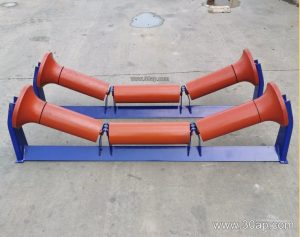
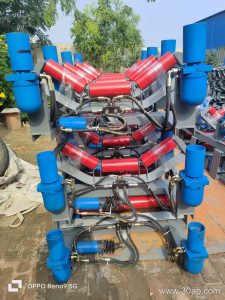
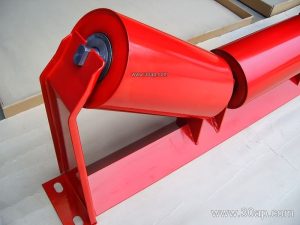
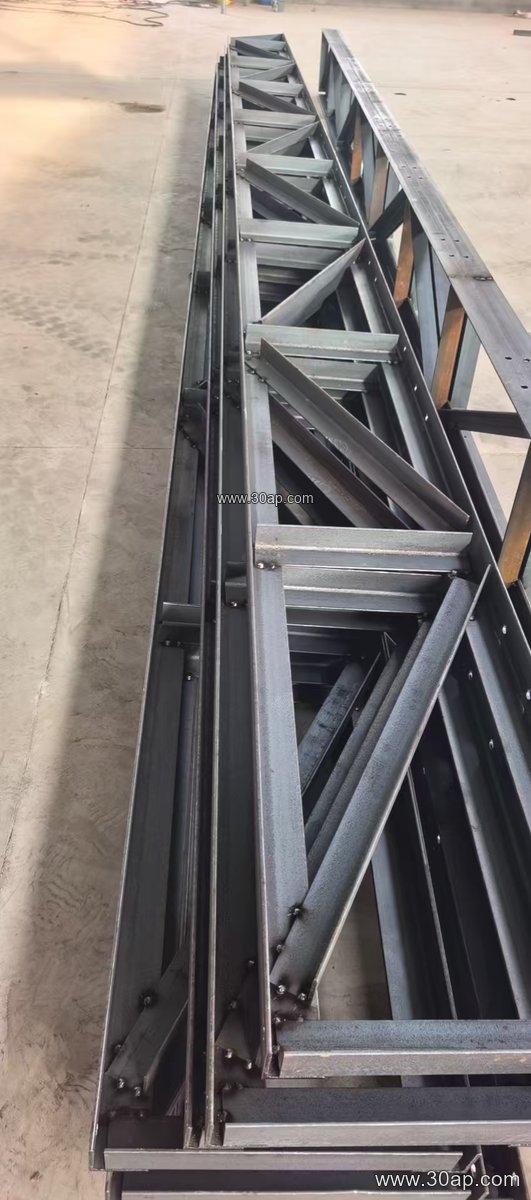
Most units are fabricated from angle steel, channel steel or folded steel plate, then welded and drilled for the idler shaft. Because the loading zone sees repeated shock, the design usually favors thicker sections and reinforced gussets rather than a light sheet-metal shape. A common arrangement is a rigid cradle that holds three idlers at a fixed trough angle, with rubber or spring cushions between the roller frame and the base in some designs.
Typical material and build references include:
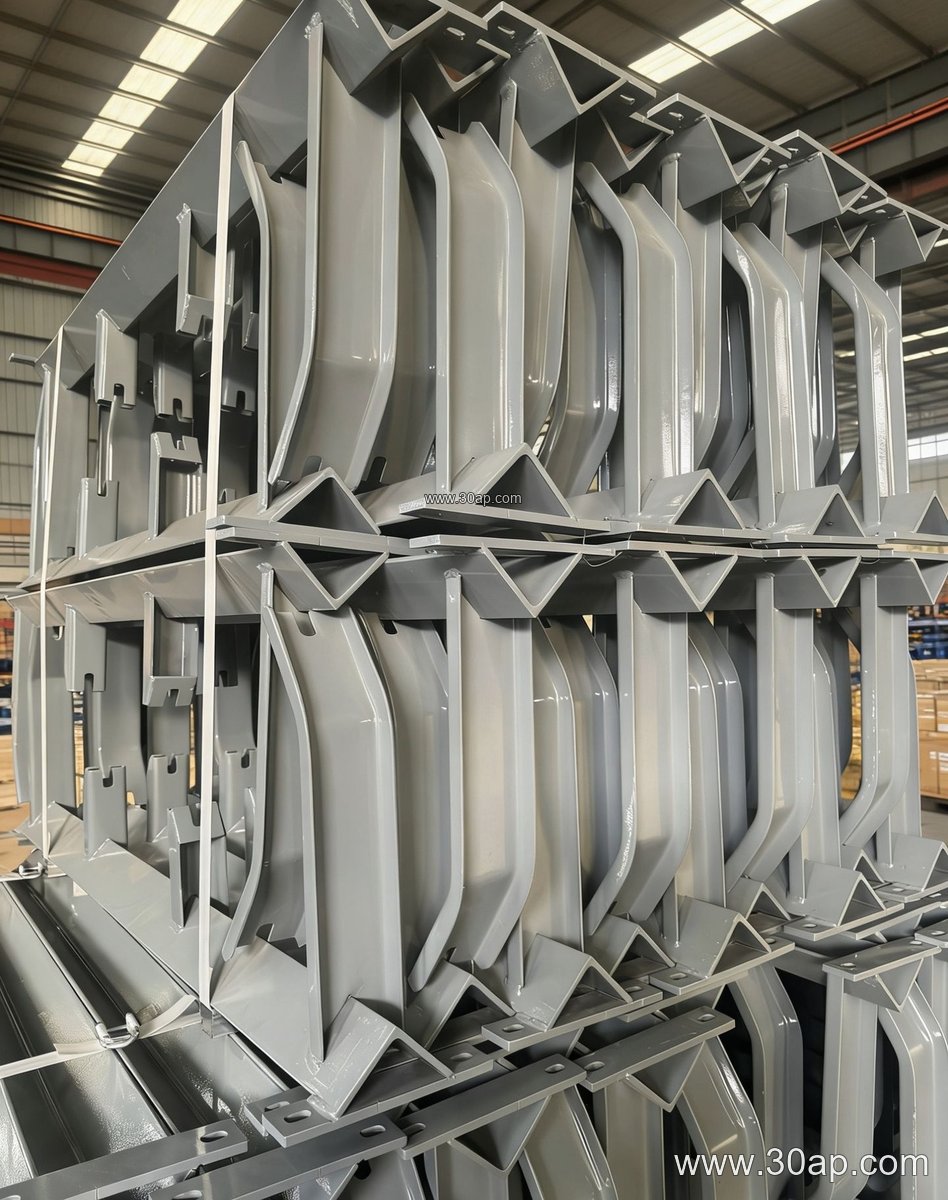
- Frame material: angle steel, channel steel, folded plate
- Surface treatment: painted or galvanized, according to site conditions
- Mounting: bolted to the conveyor stringer, with hole spacing set by belt width and trough angle
- Adjustability: fixed-angle versions and adjustable versions that can be set between common trough angles
Where It Fits on the Conveyor
The bracket belongs at the transfer point, just downstream of the chute or feed hopper. It is often followed by a transition bracket that gradually lifts the belt from the impact section to the standard carrying trough. On a coal mining conveyor or a power plant coal handling line, this zone may also include a skirted conveyor belt or a corrugated sidewall conveyor belt to contain the load, so the bracket height and roller position must match the skirt clearance.
In a sand and gravel line or a limestone mine, the same part protects the belt where trucks or loaders discharge onto the conveyor. In a steel plant sinter line, heat and abrasion combine, and the bracket may be paired with heat resistant conveyor belt grades. The bracket itself does not decide belt selection, but its geometry affects how the belt sits and wears.
Matching Bracket, Belt Width and Roller Diameter
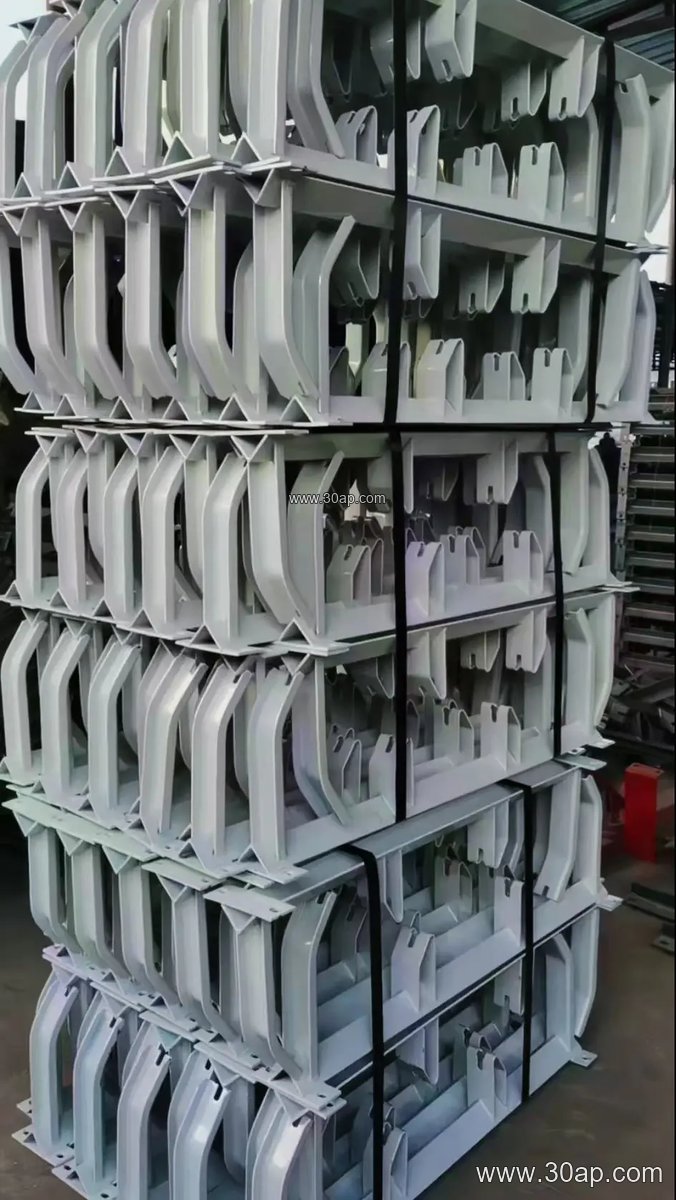
Buyers often ask for a simple rule, but there is no single belt width to one roller diameter chart. The bracket is normally specified together with belt width, trough angle and idler diameter, and the final combination follows the conveyor design. Reference values that appear in catalogues include belt widths from B500 to B2200, trough angles of 20, 30, 35 and 45 degrees, and roller diameters such as Ø89, Ø108, Ø133, Ø159 and Ø194. These are common ranges, not fixed pairings.
| Reference item | Common values | Note |
|---|---|---|
| Belt width | B500, B650, B800, B1000, B1200, B1400, B1600, B1800, B2000, B2200 | Hole spacing and crossbeam length vary with width and trough angle |
| Trough angle | 20°, 30°, 35°, 45° | Adjustable brackets can be set within this range |
| Roller diameter | Ø89, Ø108, Ø133, Ø159, Ø194 | Selected with belt width, load and impact energy |
| Forward tilt | about 1.5° to 2° | Used on some training and forward-leaning designs |
For example, a B800 impact station with a 35 degree trough and Ø108 rollers is a plausible reference combination, and a B1200 station with 45 degrees and Ø133 rollers is another. Neither should be read as a universal rule. A heavy iron ore or copper ore transfer may need a larger roller and a stronger frame than a similar width in a lighter duty line.
Selection and Maintenance Points
Check the impact energy first: drop height, lump size and throughput decide how much cushioning the bracket and rollers must provide. Then confirm the mounting dimensions against the existing stringer, since a replacement bracket that does not line up will force the whole impact section to be re-drilled. Look at the roller fixing method as well, because quick-change designs reduce downtime in a busy crusher or port conveyor.
During service, inspect the bracket for cracked welds, loose bolts, bent crossbeams and worn mounting holes. Impact damage usually shows first at the loading point, and a failing bracket can quickly damage an otherwise sound abrasion resistant conveyor belt or EP conveyor belt. Keeping the impact idlers turning freely and the frame square protects the belt cover and keeps the conveyor bracket frame aligned.
For more conveyor components, including idler roller, conveyor pulley and conveyor bracket options, visit our product pages and match the impact station to your actual loading conditions.