What a Cleaning Idler Does on a Conveyor
A cleaning idler is a roller assembly mounted on the return strand of a conveyor to scrape and shed material that has stuck to the belt surface. Carry-side spillage is only half the problem in bulk handling; the other half is the fines, dust and wet sticky product that rides back on the underside of the belt. Left alone, that residue builds up on the tail pulley, works into the bearings and throws the belt off track. A well-placed cleaning roller, often used together with a primary and secondary belt scraper, keeps the return run clean and protects the conveyor pulley and idler roller downstream.
In a quarry or a cement plant, the difference shows up quickly. A return strand caked with limestone dust wears the lagging and increases tracking corrections. Fitting a cleaning idler close behind the head pulley discharge point gives the belt a chance to shed fines before they reach the first bend pulley.
How the Roller Is Built
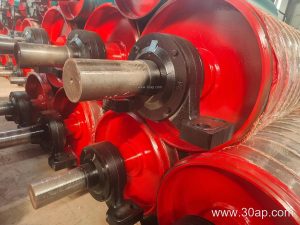
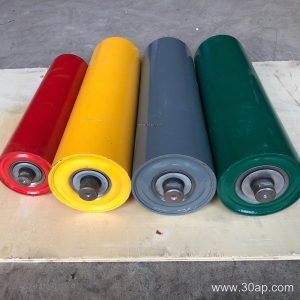
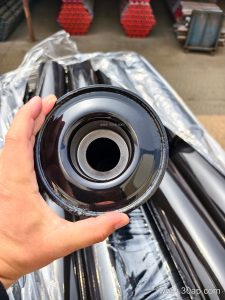
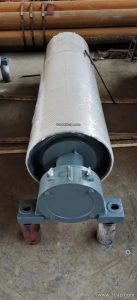
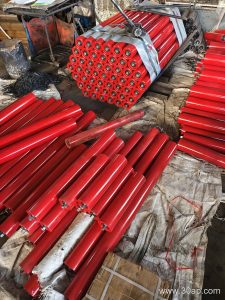
The body is usually a steel tube with machined end discs, fitted with sealed ball bearings in a pressed or cast housing. The cleaning action comes from the surface form, which is typically a rubber or polyurethane helix, sometimes combined with a plain steel face. The spiral ribs push loosened material toward the belt edges so it drops away instead of being pressed back into the belt.
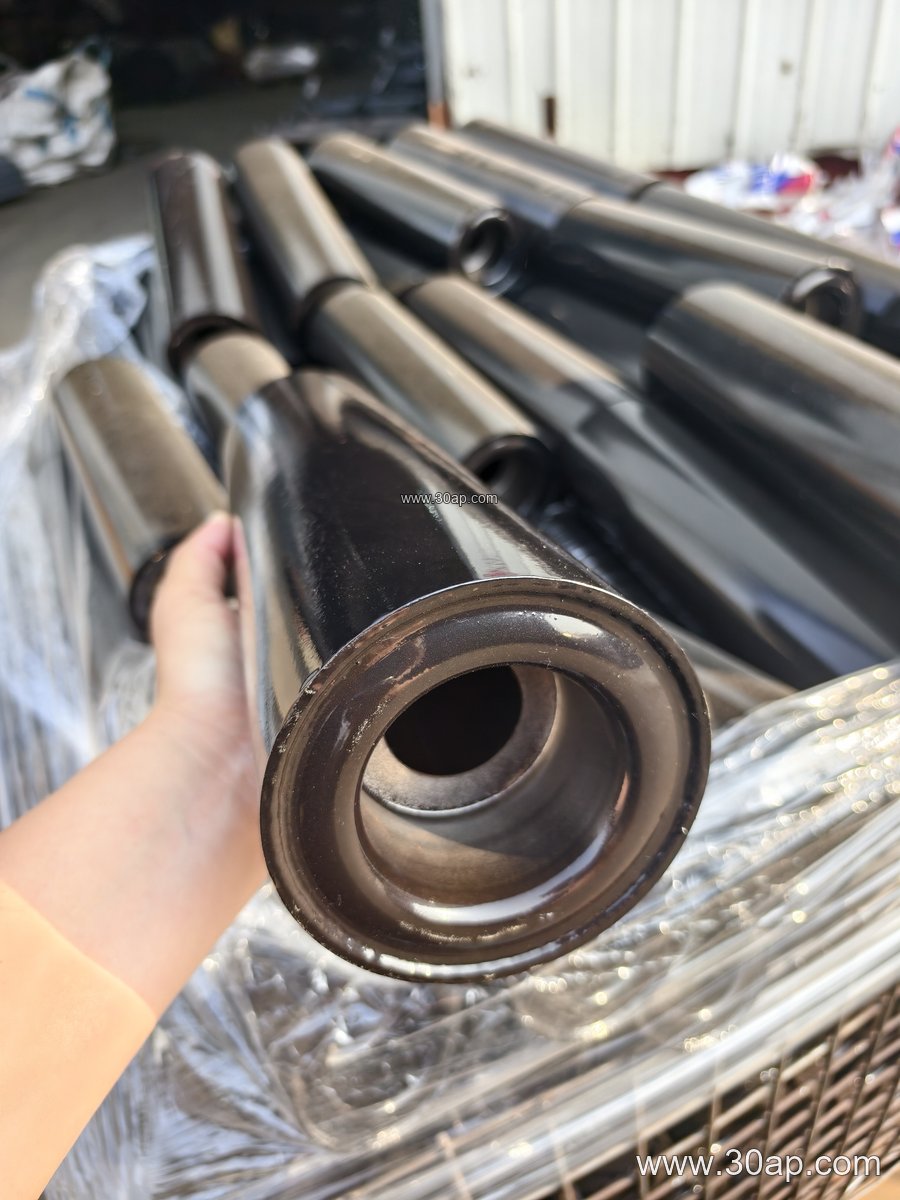
Common surface and bearing options
- Roller surface: plain steel tube, rubber spiral, rubber disc rings, or a combination
- Bearing sizes seen in practice: 6205, 6305, 6306, 6308
- Typical roller diameters: Ø89, Ø108, Ø127, Ø133, Ø159
- Lubrication: sealed-for-life or regreasable end caps, depending on the duty
Bearing selection should follow the actual load and speed, not the belt width alone. A wide belt with a heavy return load needs a larger shaft and bearing than a narrow one, but the correct pairing is set by the conveyor designer. Rubber-covered units are preferred where the material is abrasive, such as iron ore or copper ore dust on a steel cord conveyor belt line, because the resilient face wears longer and grips less.
Where It Fits in the Conveyor Layout
Position matters more than most buyers expect. The cleaning roller is normally installed on the return run, a short distance behind the head pulley and ahead of the first snub or bend pulley. In a coal mining conveyor belt system, it is often paired with a V-type return idler to keep the belt centered while the surface is being cleaned.
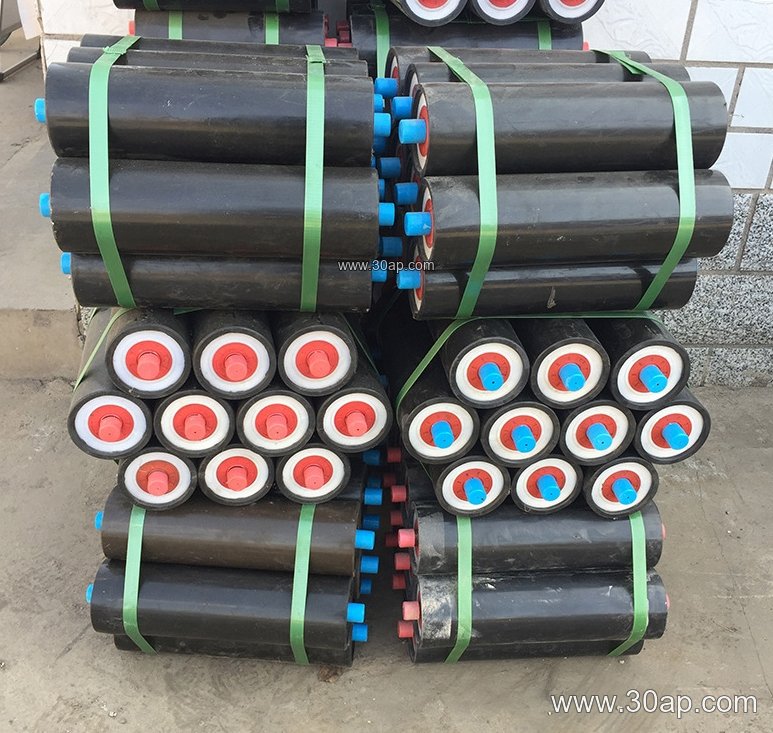
Applications are common in:
- Aggregate and sand making plant conveyor lines handling damp crushed stone
- Cement plant clinker and raw meal transport
- Power plant coal handling and ash systems
- Port ship loading conveyors where sticky cargo is unloaded
- Fertilizer and grain handling, where build-up causes spoilage and blockages
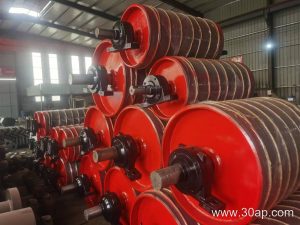
Do not confuse this component with a bend pulley. A bend pulley changes belt direction; a cleaning roller only supports and cleans the return strand. The two are not interchangeable, and neither is a drive pulley or tail pulley a substitute for a cleaning roller.
Selection Notes for Buyers
Start with the belt width and the return strand load. A cleaning idler for a 650 mm or 800 mm belt is a different assembly from one built for a 1400 mm or 1600 mm belt, and the roller length should be confirmed against the actual bracket spacing. Standard conveyor bracket dimensions vary between manufacturers, so match the shaft ends and mounting flats rather than assuming a universal fit.
Also check:
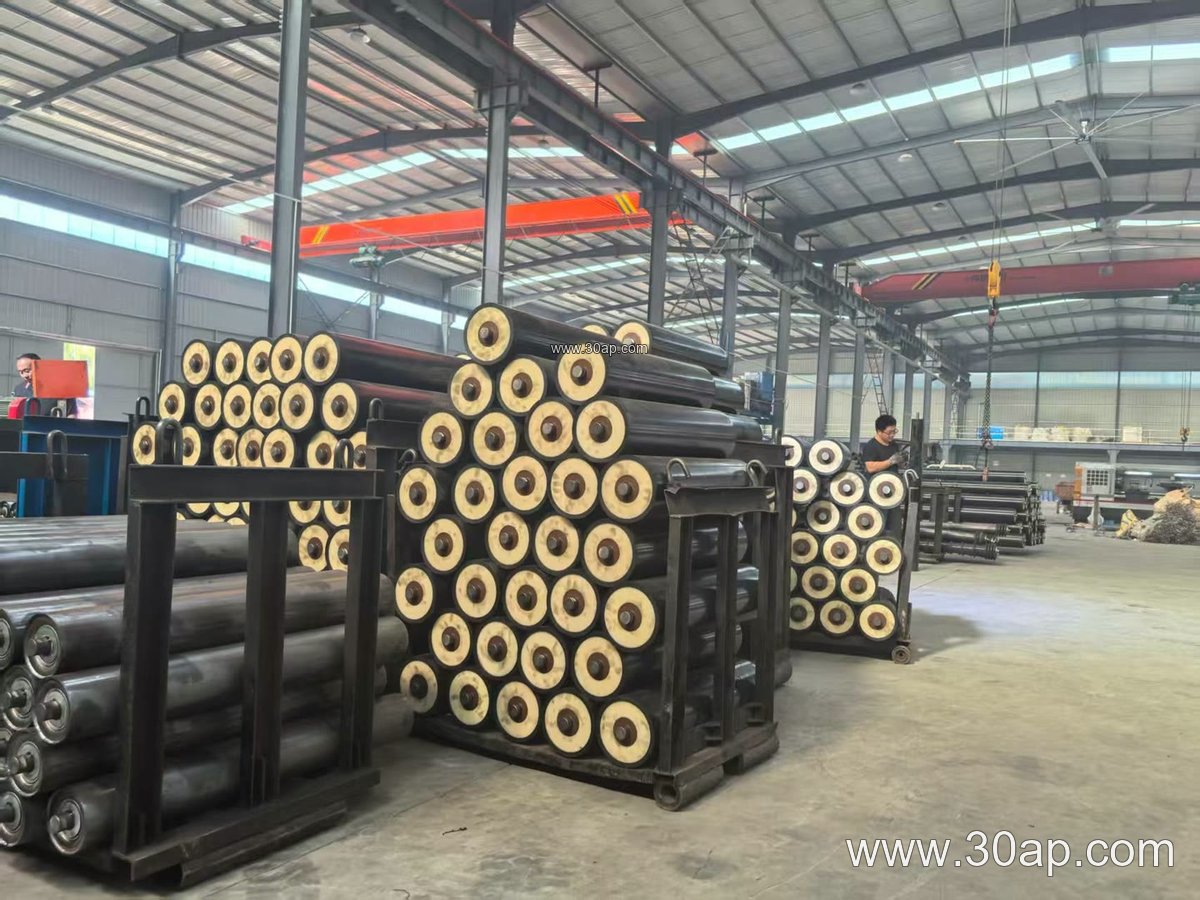
- Material stickiness and moisture level, which decide whether a rubber spiral or a disc-ring face works better
- Ambient conditions, such as heat in a sintering or clinker area, where a heat resistant conveyor belt may already be in use and the roller bearings need suitable clearance
- Dust and fire risk in underground coal mining, where anti-static and flame retardant conveyor belt grades are normal and the roller should not create a spark path
- Service access, because a cleaning idler needs periodic inspection of the scraper edge and bearing seals
For a heavy-duty mining conveyor belt duty, specify a reinforced shaft and a robust bearing housing. For a light food-grade conveyor belt line, a stainless or easy-clean surface may be more appropriate. Sizes and face forms should be confirmed with the supplier against the actual conveyor drawing.
Maintenance That Keeps It Effective
Inspect the cleaning roller at the same interval as the belt scrapers. Worn spiral ribs lose their ability to move fines to the edges, and a seized bearing will flat-spot the roller and damage the belt. Check for material trapped between the roller and the bracket, confirm free rotation by hand, and look for grease weep or seal damage. On a long overland conveyor handling abrasive ore, a scheduled change-out before the rubber face is worn through is cheaper than replacing a scored conveyor pulley or an expensive fabric core conveyor belt.
Keep the area around the discharge chute clear as well. A cleaning idler works best when the material it sheds has somewhere to fall, so check chute liners and skirt rubber at the same time. Small housekeeping habits extend the life of the whole return run.