What a Bend Pulley Does on a Conveyor
A bend pulley is a direction-changing drum that guides the conveyor belt along the return path or around a curve in the conveyor structure. It is not a drive pulley and not a tail pulley; it carries belt tension and redirects the belt without transmitting drive torque. In a typical arrangement, the bend pulley sits near a take-up unit, a vertical curve, or a transfer point where the belt must turn before reaching the next section. Because it works on the slack side in many layouts, its wrap angle and position influence belt tracking, tension balance, and the overall height of the conveyor frame.
On long overland lines, a bend pulley is often paired with a conveyor pulley at the head and a tail pulley at the loading end. The bend pulley may also be called a deflection pulley or angle pulley in some engineering drawings, but the function remains the same: change belt direction while keeping the belt supported and aligned.
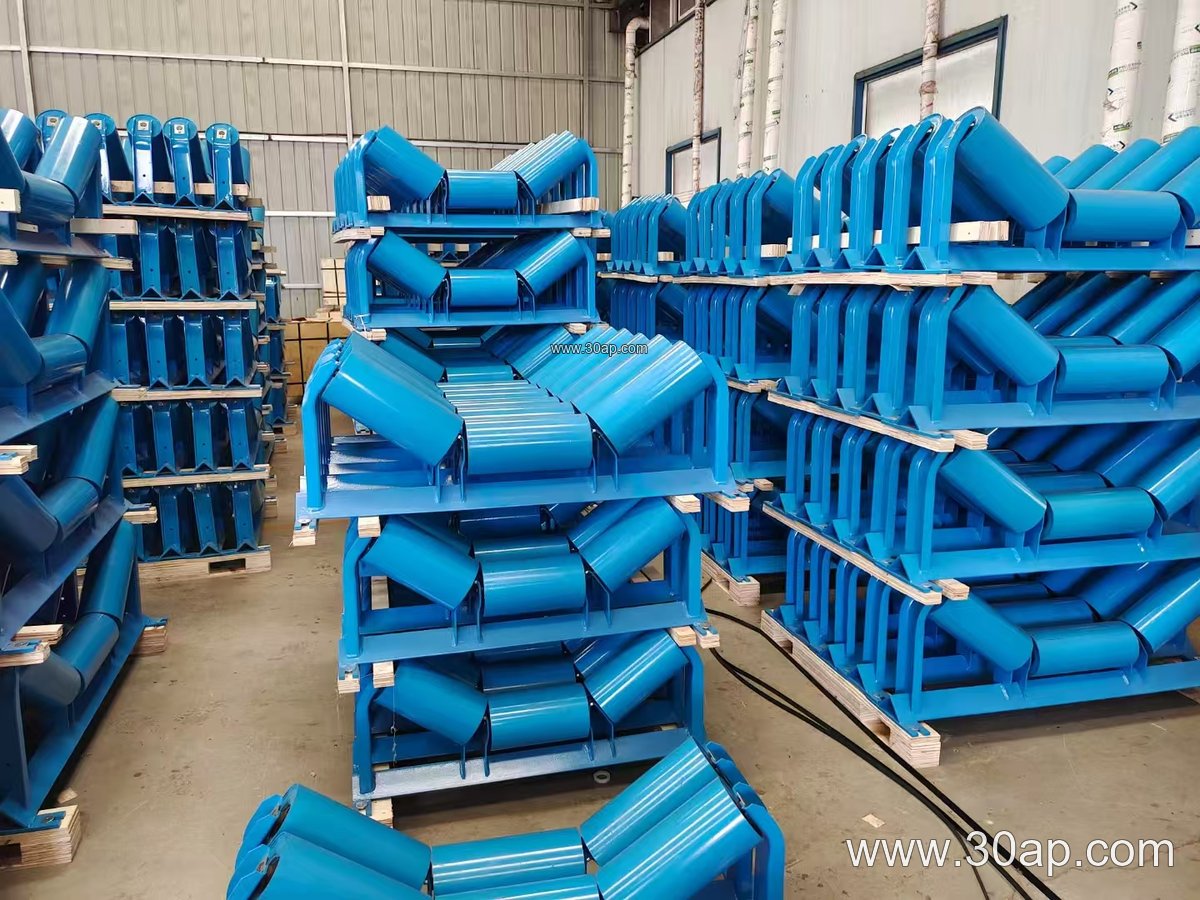
Construction and Surface Options
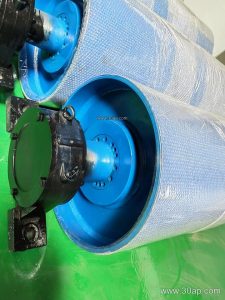
The drum body is usually a welded steel shell with machined end discs, a shaft, and bearing housings. Shaft diameter is selected by torque and radial load, not by belt width alone, so a B800 conveyor may use different shaft sizes depending on tension and duty. Common shaft diameters include Ø80, Ø100, Ø120, and Ø140 mm, while larger drums may use Ø160 or Ø180 mm.
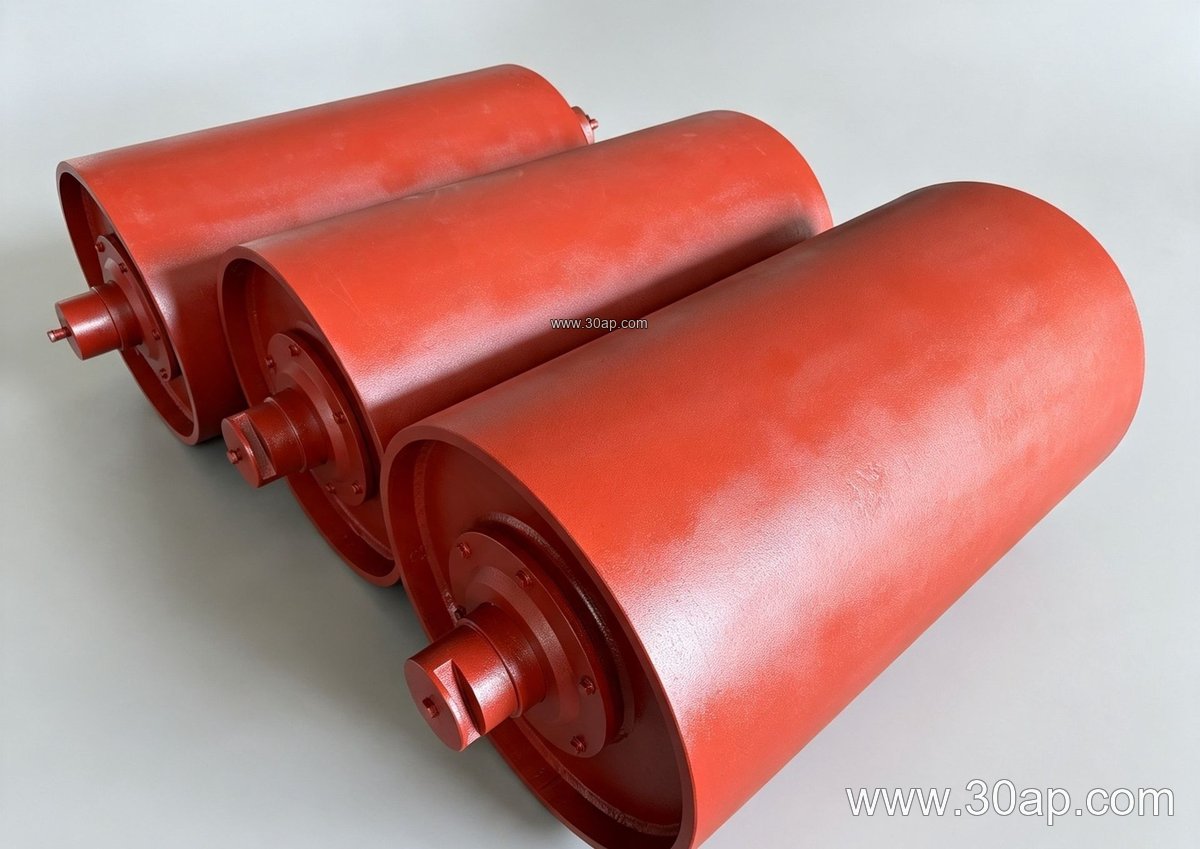
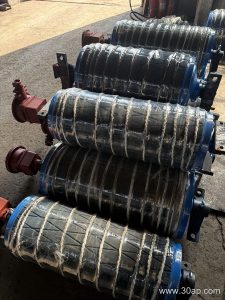
Surface treatment matters where slip and wear are concerns. Plain steel, cold-bonded rubber, hot-vulcanized rubber, diamond grooving, herringbone grooving, and ceramic lagging are all used. Lagging thickness is often 8, 10, 12, 15, or 20 mm. A rubber lagging helps grip and protects the shell, while ceramic lagging suits abrasive conditions in a quarry or iron ore plant. The pulley face width is normally wider than the belt, for example about 950 mm for a B800 belt and about 1400 mm for a B1200 belt.
Common Reference Dimensions
| Belt width | Typical pulley face width | Example diameter range |
|---|---|---|
| B500 | about 600 mm | Ø250 to Ø400 |
| B650 | about 750 mm | Ø315 to Ø500 |
| B800 | about 950 mm | Ø400 to Ø630 |
| B1000 | about 1150 mm | Ø500 to Ø800 |
| B1200 | about 1400 mm | Ø630 to Ø1000 |
| B1400 | about 1600 mm | Ø800 to Ø1250 |
These are reference values, not fixed matches. A B1200 × Ø1000 bend pulley and a B800 × Ø500 bend pulley can both be correct in different conveyor designs. The diameter should be checked against belt stiffness, minimum bend radius, and the space available in the frame.
Where It Fits in Bulk Handling
In a coal washing plant, a bend pulley may redirect the return belt around a take-up tower, while a flame retardant conveyor belt and anti-static conveyor belt are selected for underground or enclosed sections. In a cement plant, the same drum type helps route the belt through a transfer house before the clinker cooler. At a port bulk terminal, a bend pulley works with a heavy-duty conveyor belt and idler roller sets to keep the belt path compact. In a stone crushing line, a quarry conveyor belt may run over a bend pulley that turns the belt toward the screening building.
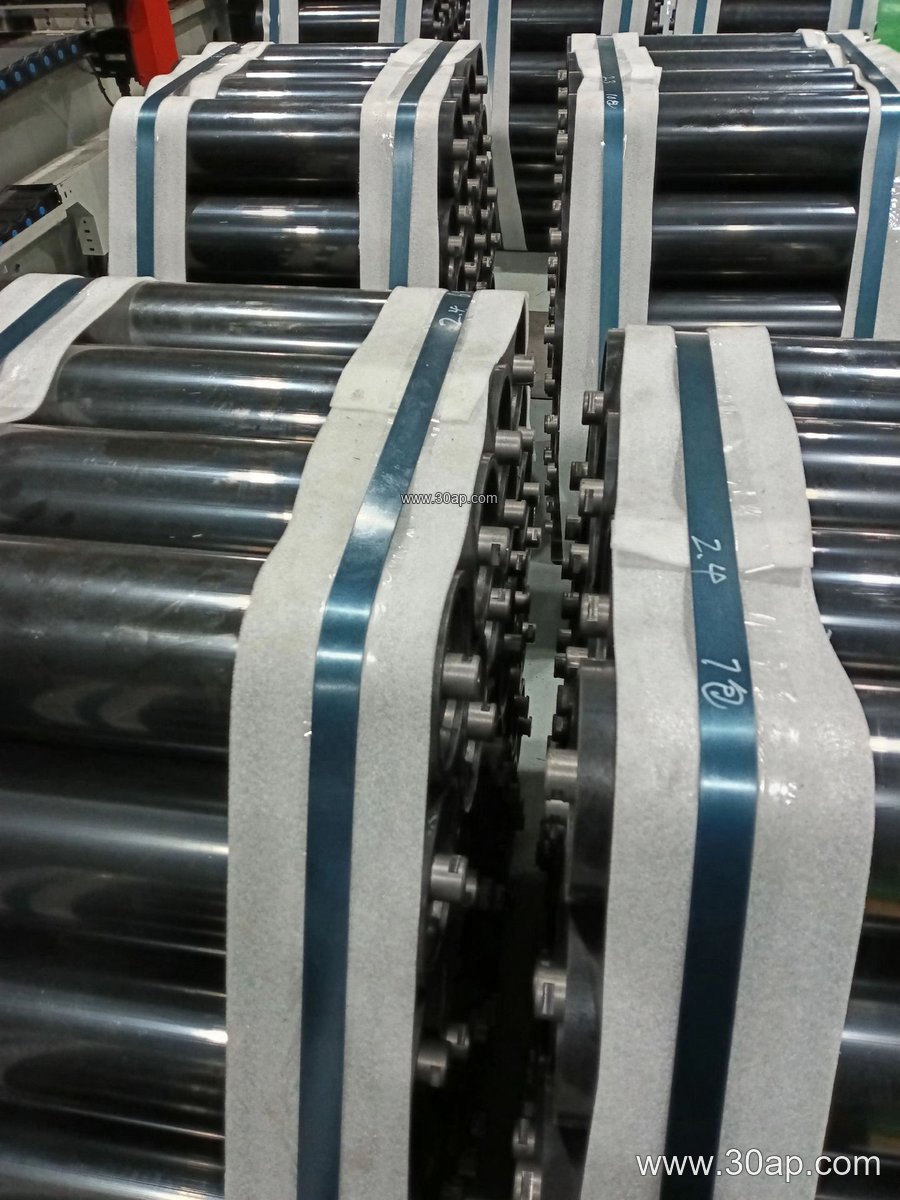
The drum is often mounted on a conveyor bracket or a sliding take-up frame. Alignment and bearing condition are critical because a misaligned bend pulley can cause edge wear and belt mistracking. Regular inspection of lagging wear, shaft seals, and bearing temperature is more useful than waiting for a failure.
Buyer Checklist
- Confirm the belt width, pulley face width, and required diameter for the route.
- State the belt type and duty, such as abrasion resistant conveyor belt, heat resistant conveyor belt, or oil resistant conveyor belt, so the lagging and bearing protection match the environment.
- Provide the shaft diameter required by the torque and load calculation, not a guessed value from belt width.
- Specify the lagging form and thickness if slip resistance or shell protection is needed.
- Check whether the position is a return-side deflection point or a tensioning point, as the wrap angle and bearing load differ.
A bend pulley is a simple component, but it is not interchangeable with a drive pulley or a tail pulley. Getting the diameter, lagging, and shaft details right keeps the conveyor belt running smoothly from the crusher to the stockpile.