What a Heavy-Duty Trough Idler Does
A heavy-duty trough idler is the component that supports the loaded run of a conveyor belt and shapes it into a trough so bulk material stays centered. In a quarry, limestone mine, or cement plant, the difference between a standard idler and a heavy-duty trough idler often shows up in uptime rather than in the catalog. The idler roller carries the belt, absorbs the weight of rock, ore, or clinker, and keeps the belt tracking through the load zone.
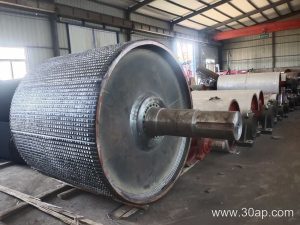
It is not a drive pulley, tail pulley, or bend pulley. Those components transmit power or change belt direction. The trough idler is a carrying roller that sits between them, usually arranged in a three-roll set with two side rolls angled upward. The trough angle, commonly 20, 30, 35, or 45 degrees, influences how much material the belt can hold and how the load sits on the belt.
Construction and Materials
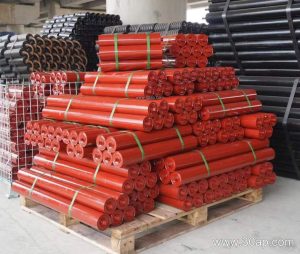
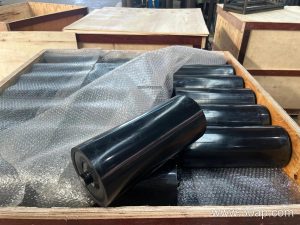
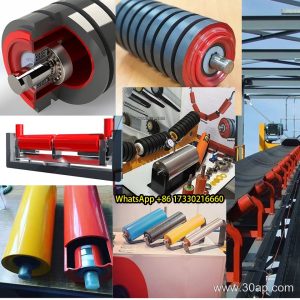
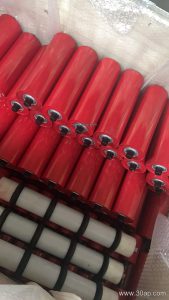
Heavy-duty trough idlers are built around a steel tube shell, a through shaft, and sealed bearing housings. The roller surface may be plain steel, nylon, ceramic, or rubber rings, depending on whether abrasion, material build-up, or impact is the main concern. Bearing sizes such as 6205, 6305, 6308, or 6310 are selected according to load and shaft design rather than tied to one belt width.
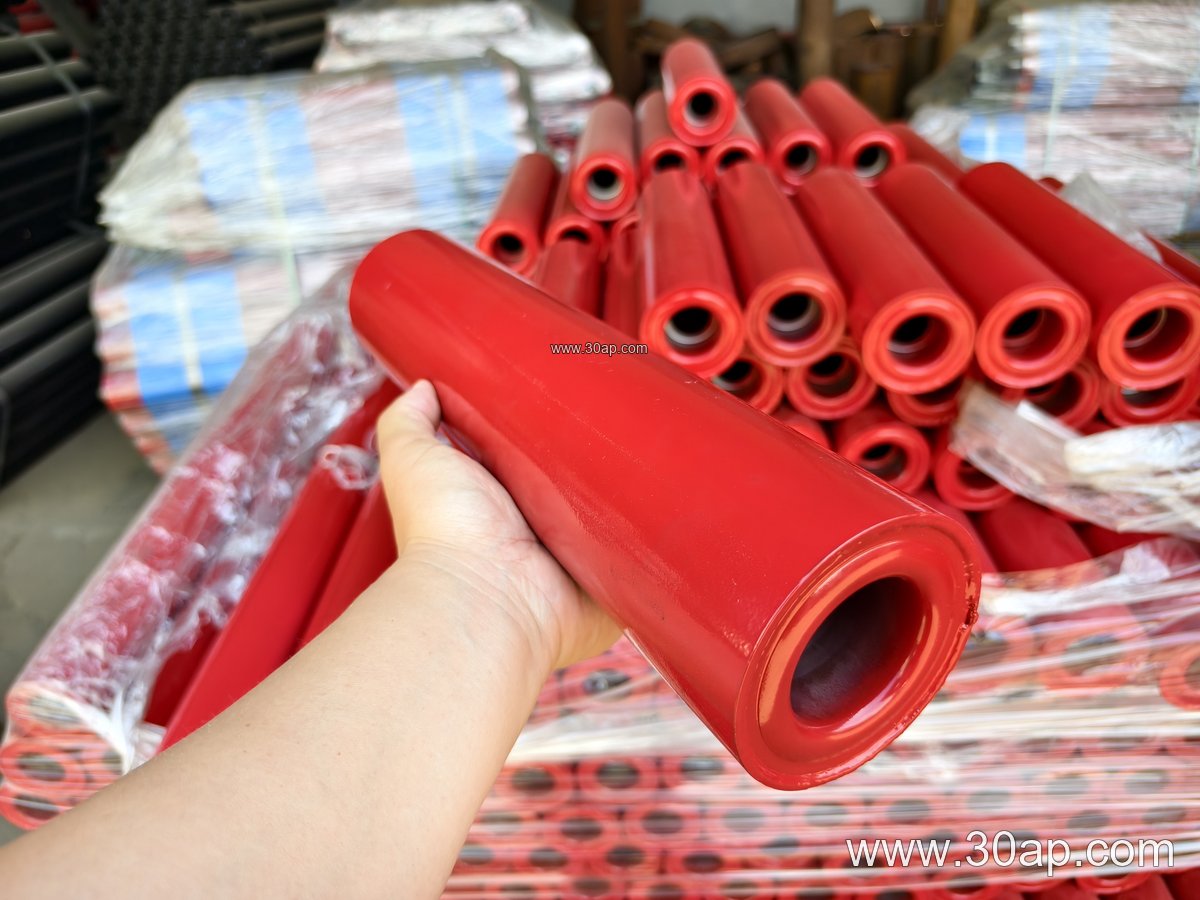
Sealing matters as much as the shell thickness. Dust from a crusher conveyor or a coal mining conveyor belt can enter a bearing if the seal is poor, and water ingress at a washdown point can do the same. A heavy-duty trough idler usually has a multi-stage labyrinth seal and sufficient grease capacity to keep the bearing running between maintenance intervals.
Where It Fits on the Conveyor
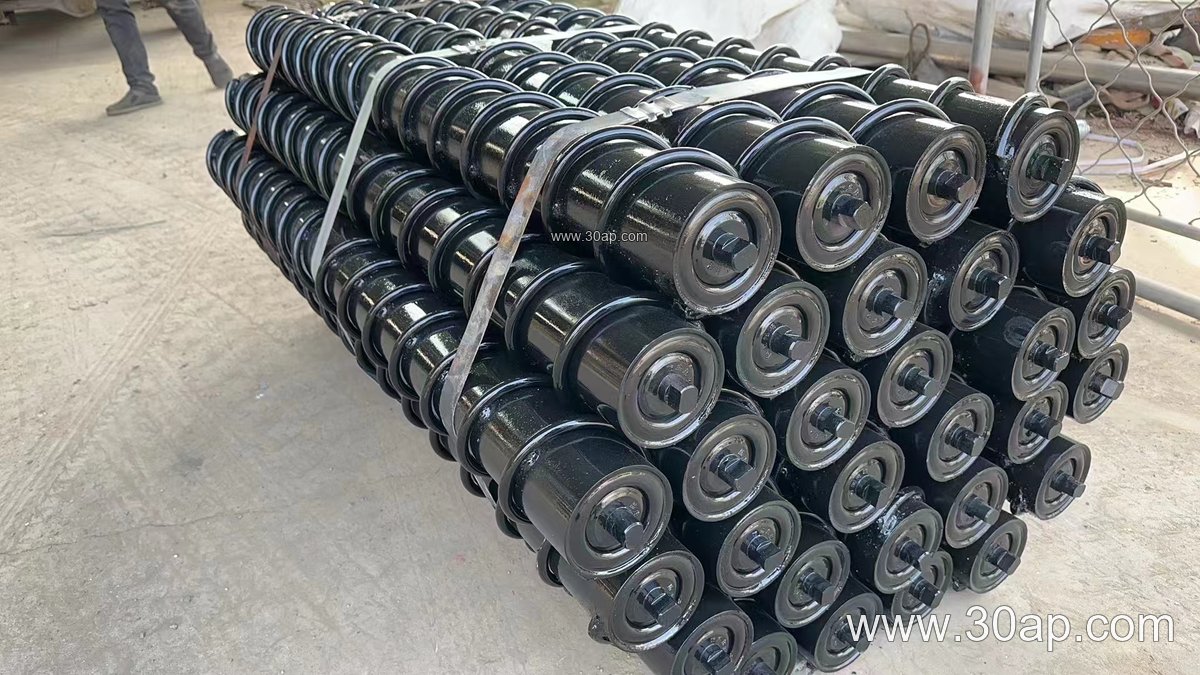
On a typical bulk material conveyor belt, the carrying run uses trough idlers while the return run uses flat or V-return rollers. The transition from the tail area to the full trough profile is handled by transition idlers, which gradually increase the trough angle. Impact idlers with rubber rings are used under the loading point where lumps fall onto the belt. A heavy-duty trough idler is the workhorse in the middle of the run.
Applications vary widely. In a sand and gravel line, the idler set may face abrasive dust and frequent starts. In a power plant coal handling system, flame retardant conveyor belt and anti-static properties belong to the belt, while the idler must handle coal dust and occasional spillage. In an iron ore or copper ore operation, the load is heavy and the idler frame needs enough strength to resist bending.
Sizing Notes for Buyers
Belt width and idler diameter are related through the conveyor design, not through a fixed rule. A B800 belt may use a 89 mm or 108 mm roller in one plant and a 127 mm roller in another, depending on load and speed. The table below shows common reference values, not mandatory matches.
| Belt width (B) | Common roller length for three-roll trough set | Typical trough angles |
|---|---|---|
| B500 | about 200 mm | 20, 30, 35 degrees |
| B650 | about 250 mm | 20, 30, 35 degrees |
| B800 | about 315 mm | 30, 35, 45 degrees |
| B1000 | about 380 mm | 30, 35, 45 degrees |
| B1200 | about 465 mm | 30, 35, 45 degrees |
| B1400 | about 530 mm | 30, 35, 45 degrees |
| B1600 | about 600 mm | 30, 35, 45 degrees |
| B1800 | about 670 mm | 30, 35, 45 degrees |
Roller diameters commonly range from 63 mm to 219 mm. The side rolls and center roll can differ in length. A buyer should confirm the idler frame dimensions, shaft ends, and mounting brackets against the existing conveyor bracket before ordering.
Selection and Maintenance Tips
- Match the idler load rating to the belt speed and material density, not only to belt width.
- Use impact idlers at transfer points and heavy-duty trough idlers along the carrying run.
- Check seal type and bearing size for dusty or wet conditions.
- Inspect roller rotation and alignment during scheduled shutdowns; a seized roller can damage the conveyor belt.
- Keep spare idler rollers for critical lines such as a crusher conveyor or ship loading conveyor.
For a reliable setup, the trough idler should be selected together with the conveyor pulley, frame, and belt specification. A heavy-duty trough idler will not compensate for a misaligned structure or an overloaded belt, but it will give the carrying run a better chance to stay stable in mining, cement, power, and aggregate operations.