What an Aggregate Conveyor Idler Does
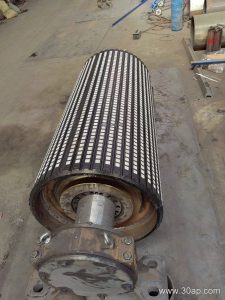
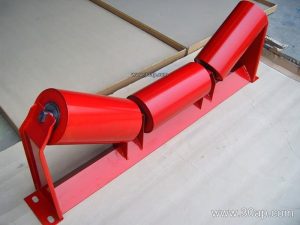
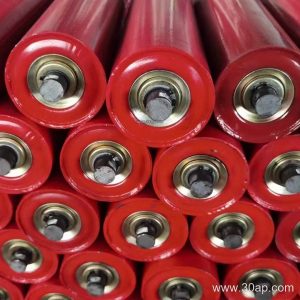
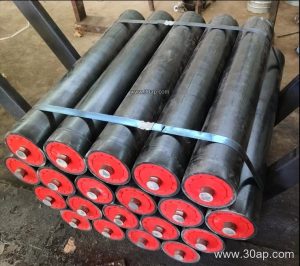
An aggregate conveyor idler is the rotating roller assembly that supports the conveyor belt along the carrying and return sides of a bulk handling conveyor. In sand and gravel operations, these idlers keep the belt aligned, reduce friction, and protect the belt from premature wear. A typical aggregate conveyor idler consists of a steel tube shell, bearing housings, a shaft, and sealing arrangement. The roller surface may be plain steel, nylon-coated, ceramic-covered, or fitted with rubber rings for impact absorption. The idler roller is mounted on a conveyor bracket or frame, and together with the conveyor pulley at the drive and tail ends, it forms the complete belt loop.
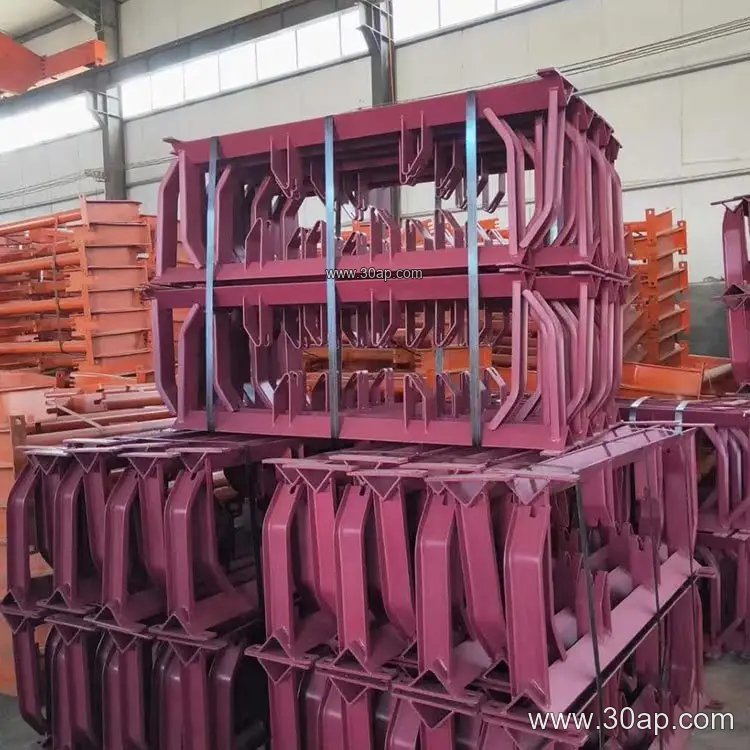
Construction Details That Matter
Most aggregate conveyor idlers use a seamless or welded steel tube with machined bearing seats. Common roller diameters include Ø63, Ø76, Ø89, Ø102, Ø108, Ø127, Ø133, Ø159, Ø178, Ø194, and Ø219 mm. Bearing sizes such as 6204, 6205, 6305, 6306, 6308, and 6310 are frequently used, but the bearing selection depends on load, speed, and sealing design rather than a fixed match to one roller diameter. The seal is critical in dusty aggregate plants: a good labyrinth or contact seal keeps fine grit out of the bearing cavity. Roller length varies with belt width, trough angle, and idler arrangement. For example, a three-roll troughing set commonly uses roller lengths around 200 mm for B500, 250 mm for B650, 315 mm for B800, 380 mm for B1000, 465 mm for B1200, 530 mm for B1400, 600 mm for B1600, 670 mm for B1800, and 750 mm for B2000. These are common examples, not fixed rules; side rollers and center rollers can differ.
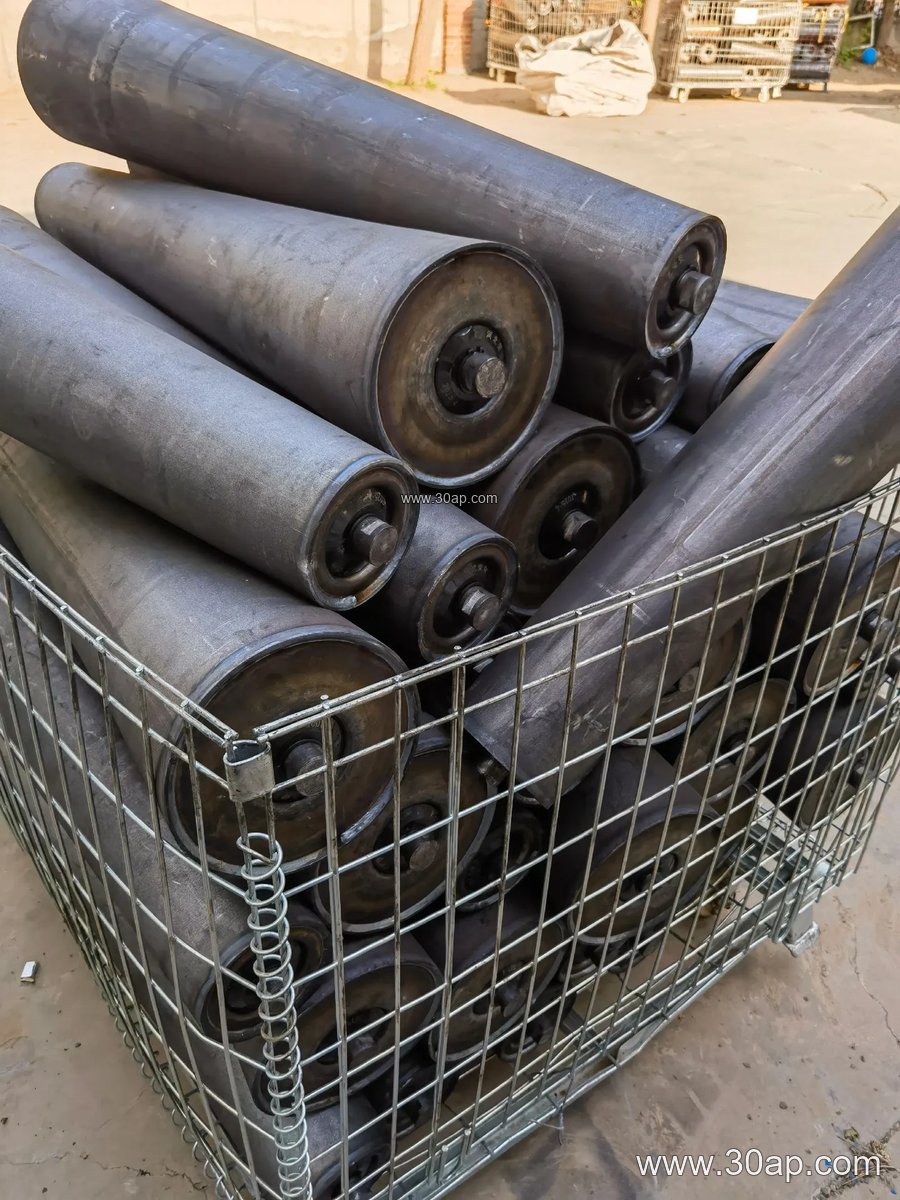
Where Aggregate Conveyor Idlers Are Used
These idlers appear throughout quarry conveyor belts, crusher discharge lines, and screening plants. In a sand and gravel pit, troughing idlers carry the loaded belt, while return idlers support the empty side. Impact idlers with rubber rings are often placed under the crusher discharge or transfer point to absorb falling rock energy. A self-aligning idler may be used on long runs to correct belt wander. The same idler family also works in cement plants, power plant coal handling, and iron ore or copper ore conveying, though the belt itself may be a heavier construction such as an abrasion resistant conveyor belt or a steel cord conveyor belt. In dusty or wet conditions, the idler seal and bearing protection matter as much as the roller shell thickness.
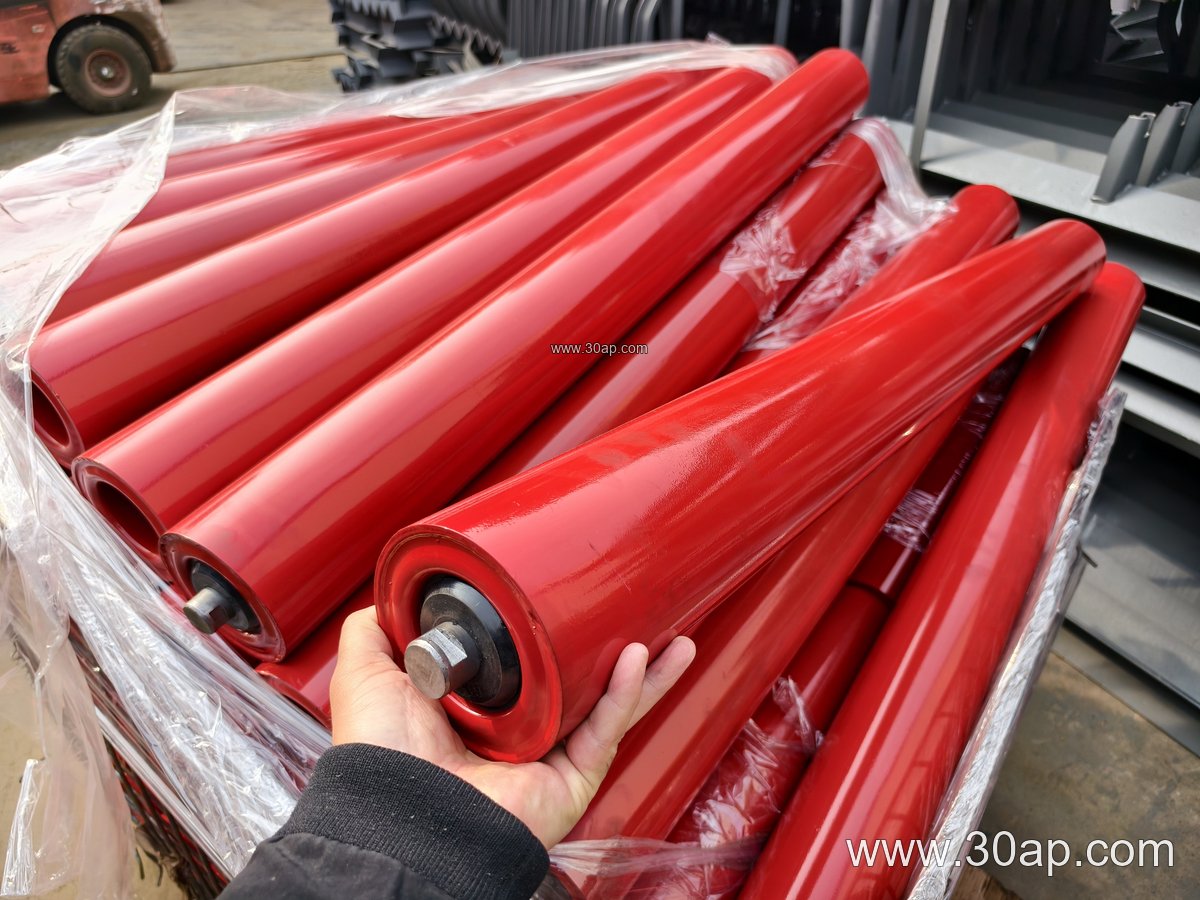
Matching Idlers to Belt and Conveyor Design
Selection starts with belt width, trough angle, and the idler set configuration. Common belt widths include B400, B500, B650, B800, B1000, B1200, B1400, B1600, B1800, B2000, B2200, and B2400. Trough angles of 20, 30, 35, and 45 degrees are used depending on material characteristics and belt flexibility. A three-roll troughing set is common for high-capacity aggregate lines, while a two-roll or single-roll arrangement may suit narrower belts or special transfer points. The idler roller diameter should be chosen with belt speed and load in mind; larger diameters generally handle higher loads and extend bearing life. Do not assume that one belt width locks in a single pulley diameter or shaft size. Drive pulleys, tail pulleys, and bend pulleys are separate components with their own design requirements, and they are not interchangeable with idlers.
Buyer Checklist for Aggregate Conveyor Idlers
- Confirm belt width and trough angle before ordering idler sets.
- Specify roller diameter, bearing size, and sealing type for the dust level.
- Choose impact or rubber-ring idlers at crusher and transfer points.
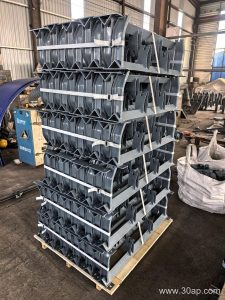
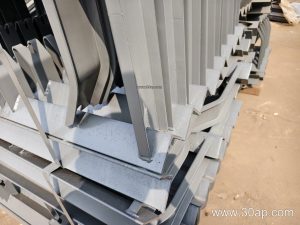
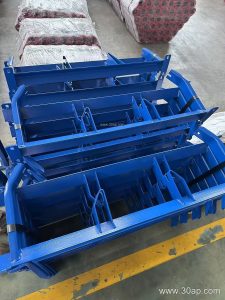
- Check roller length compatibility with the conveyor bracket and frame.
- For return side, consider flat or V-return idlers based on belt training needs.
- Ask for roller surface options such as steel, nylon, ceramic, or rubber ring.
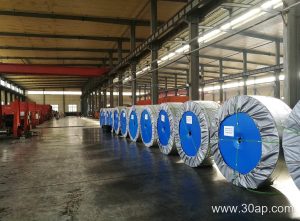
- Review the conveyor belt specification, including whether it is an EP conveyor belt, NN conveyor belt, or steel cord conveyor belt, because belt tension and load affect idler spacing.
In aggregate plants, idler maintenance is mostly about rotation and alignment. Seized rollers can wear the belt cover quickly, and misaligned frames can cause edge damage. Regular inspection of the idler roller, bearing play, and mounting brackets helps avoid unplanned downtime. Whether the plant handles limestone, granite, or recycled concrete, the aggregate conveyor idler remains a simple but critical part of the bulk material conveyor system.