What a PVC Mining Conveyor Belt Is
A PVC mining conveyor belt is a solid-woven or fabric-reinforced belt with polyvinyl chloride covers, built for moving bulk material in mines, quarries, cement works, power stations and sand and gravel yards. The PVC construction gives the belt a smooth, non-marking surface and good resistance to moisture, which suits tunnels, wash-down areas and open stockyard conveyors. It is often chosen for lighter to medium duty runs where a rubber conveyor belt would be heavier than necessary, and where flame retardant or anti-static behaviour matters underground.
The belt is not a substitute for heavy tension work. Where long centres and high tonnage dominate, an EP conveyor belt, an NN conveyor belt or a steel cord conveyor belt usually takes the duty. A PVC mining belt sits closer to the in-plant and face haulage side of the family.
How the Belt Is Built
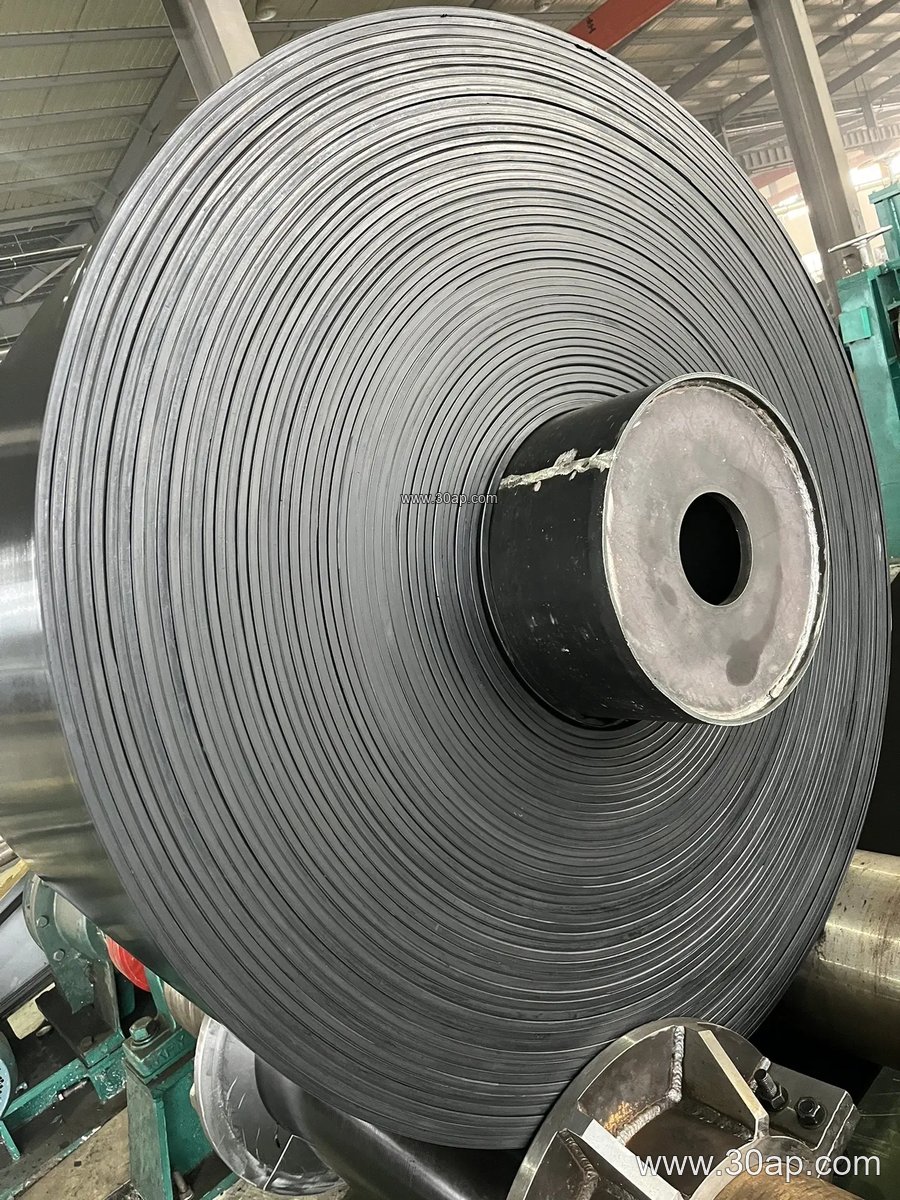
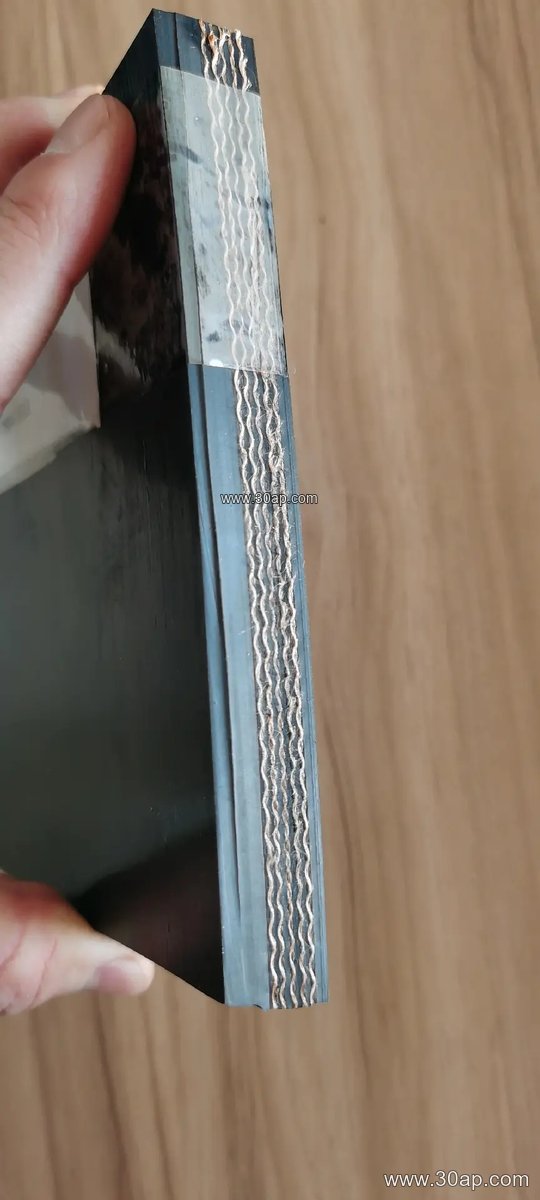
The carcass is normally a woven fabric core, often multi-ply, with the plies bonded and then covered on both faces with PVC compound. Cover thickness follows the duty: thin covers for clean, fine material, thicker covers for rough or damp loads. Edges may be cut square or sealed depending on the manufacturer. Surface forms are usually plain, though a chevron pattern or a low corrugated sidewall can be added for inclined runs and spill control.
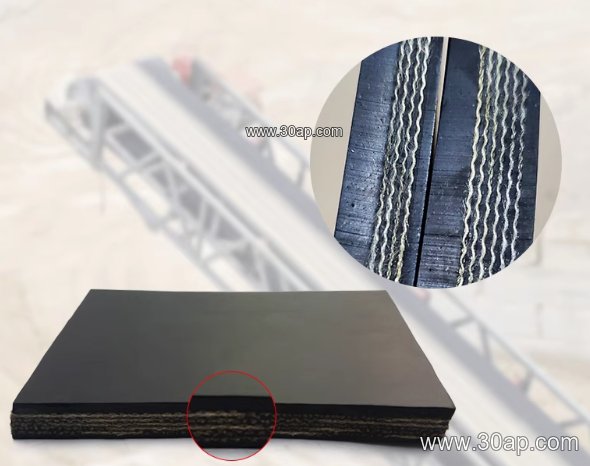
Because the covers are thermoplastic, the belt can be spliced by hot air or high-frequency welding in some constructions, which shortens downtime compared with vulcanised rubber splices. The buyer should confirm the splice method with the supplier before ordering, since fabric core and cover formulation both affect it.
Typical Sizes and Reference Data
Widths for this belt class commonly follow the standard range used across mining conveyors. The figures below are reference values, not a fixed supply promise.
| Parameter | Common reference values |
|---|---|
| Belt width | B500, B650, B800, B1000, B1200, B1400, B1600, B1800, B2000 mm |
| Fabric plies | 2 to 6 plies, depending on design |
| Cover thickness | 3+1.5, 4+2, 5+2, 6+2, 8+3 mm |
| Surface form | Plain, chevron, low sidewall |
| Special grades | Flame retardant, anti-static, oil resistant, cold resistant |
Belt width must be matched to the load profile and to the conveyor pulley and idler roller set, not chosen in isolation. A 1000mm or 1200mm belt on a poorly aligned frame will track badly no matter how good the cover is.
Where It Fits in the Plant
Mining and coal preparation plants use PVC belts on panel belts, transfer conveyors and drift conveyors where flame retardant and anti-static grades are required. Cement plants run them on clinker and additive lines. Power plants use them for coal and limestone handling. Quarries and sand making plants employ them on screened aggregate and return fines, and crusher conveyor duties often favour a plain PVC cover where material is dry and not too sharp.
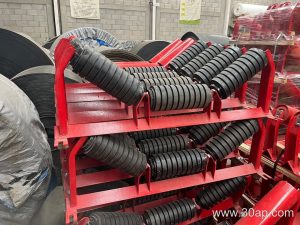
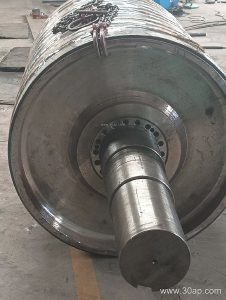
In these circuits the belt works with conveyor pulleys at the drive, tail and bend positions, supported by idler rollers on the carry and return sides, all held by conveyor brackets. The drive pulley, tail pulley and bend pulley each do a different job and are not interchangeable, so the belt tension and tracking behaviour should be reviewed against each pulley position.
Buyer Checklist Before Ordering
- State the material, lump size and moisture level so the cover grade and thickness can be set.
- Confirm whether a flame retardant or anti-static grade is needed for the tunnel or plant classification.
- Give centre distance, incline angle and capacity so belt tension can be calculated.
- Check pulley diameters and idler roller spacing against the belt flexing limits.
- Ask for the splice method and edge treatment in writing.
- For hot material, compare a heat resistant conveyor belt instead of a PVC grade.
- For oily loads, an oil resistant conveyor belt may be the better fit.
Good storage also matters. Rolls should stand on their ends on a clean floor, away from direct sun and ozone sources, because PVC covers soften in heat and can deform under stacking pressure.
Selection and Maintenance Notes
Track the belt weekly in the first month of service. Misalignment usually shows at the tail pulley before it damages the edge. Keep idler rollers turning freely and replace seized rollers early, since a dragging roller scuffs the cover and shortens belt life. On inclined sections, a chevron or sidewall form helps retain material, but the return side then needs suitable cleaning.
Where duty moves toward heavy ore, deep shafts or very long hauls, revisit the belt class rather than pushing a PVC belt beyond its design. An abrasion resistant conveyor belt, a heavy-duty grade, or a steel cord construction may be the more economical choice over the full service life. For general enquiries on belt, pulley and roller matching, visit conveyor belt or conveyor pulley references before finalising the specification.