What a Custom Idler Really Means
A custom idler is a conveyor idler roller made to a specific drawing or duty rather than pulled from a shelf. Instead of forcing the conveyor structure to accept a stock roller, the idler is matched to the belt width, the trough geometry, the load, and the environment. That could mean a non-standard roller length, a particular shaft end, a different bearing seat, or a roller face chosen for wet, abrasive, or sticky material.
On a quarry conveyor belt line, a small mismatch in roller length can cause belt tracking problems that no amount of adjustment fixes. That is where made-to-order idlers earn their place. The same logic applies in a coal handling plant, a cement kiln feed line, or a port ship loader where the frame was fabricated on site.
How the Roller Is Put Together
Most idlers share a common skeleton: a shell, a shaft, bearing housings, seals, and a lubricant path. A custom idler changes one or more of these to suit the application.
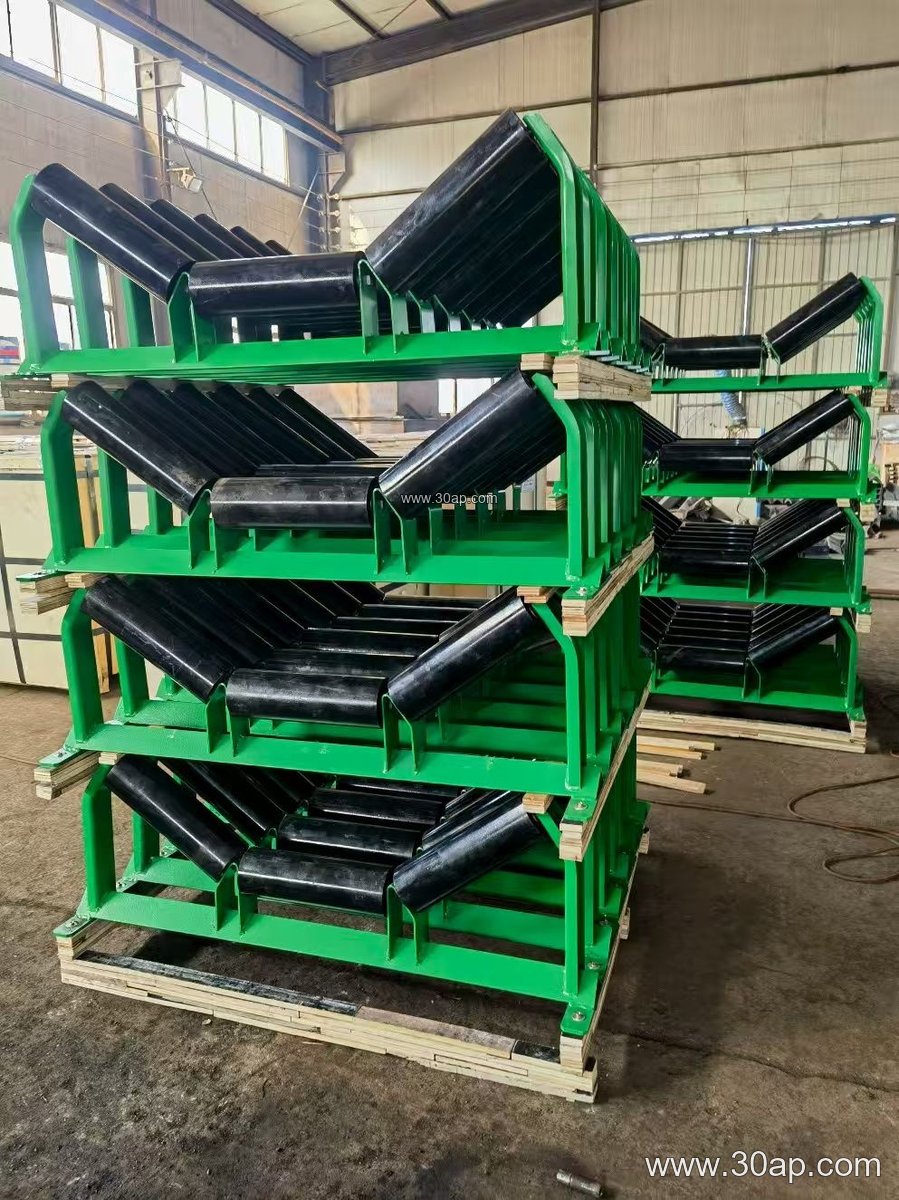
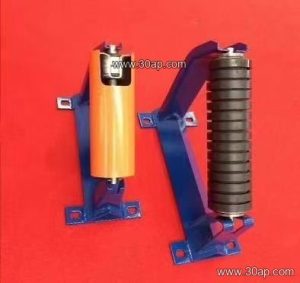
- Shell – usually steel tube, sometimes with a nylon, ceramic, or rubber ring surface for specific wear or noise conditions.
- Shaft – diameter and end configuration set by the bracket or frame, not by belt width alone.
- Bearing – common sizes include 6204, 6205, 6305, 6306, 6308, and 6310, but bearing selection follows load and speed calculations.
- Sealing – the deciding factor in dusty aggregate plants and wash-down areas.
Because the shell, shaft, and bearing seat are interdependent, a custom idler is normally specified as a complete assembly. Changing only the roller length without checking the bearing position can lead to premature failure.
Where Custom Idlers Fit on the Conveyor
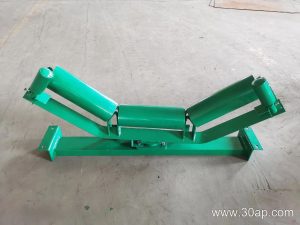
The position on the conveyor decides the form. Troughing idlers carry the loaded strand and are usually arranged as a single roller, two-roller, or three-roller set with trough angles of 20, 30, 35, or 45 degrees. Return idlers support the empty belt underneath, often as a flat roller or a V-return. Impact idlers sit below the loading point, and self-aligning idlers correct belt drift on long runs.
A custom idler may also be a transition idler placed between the tail pulley and the first full trough set, where the belt changes shape gradually. Getting that transition length right protects the belt edge and reduces stress at the splice.
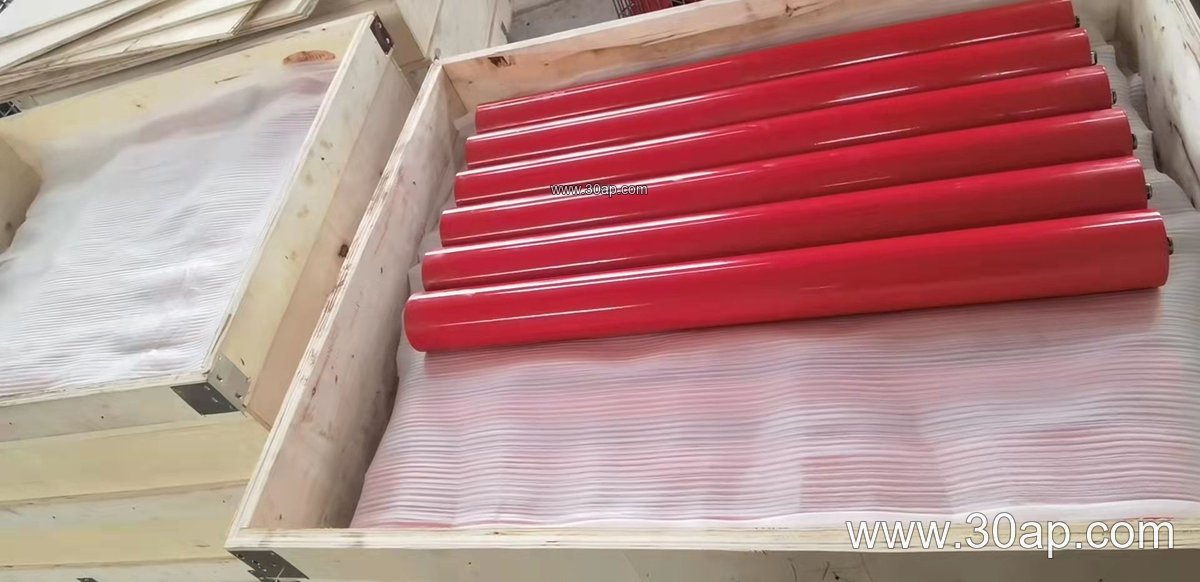
Typical roller diameters in these positions include Ø63, Ø76, Ø89, Ø102, Ø108, Ø127, Ø133, Ø159, Ø178, Ø194, and Ø219 mm. Belt widths from B400 up to B2400 are common across bulk handling, and the roller length usually scales with width and trough angle. As a reference, three-roller trough sets often use roller lengths near 200 mm at B500, 250 mm at B650, 315 mm at B800, 380 mm at B1000, 465 mm at B1200, 530 mm at B1400, 600 mm at B1600, 670 mm at B1800, and 750 mm at B2000. These are examples only; side rollers and center rollers can differ, and the final figure comes from the design drawing.
Applications Across Bulk Industries
Custom idlers appear wherever the conveyor was not built to a catalogue. In an iron ore or copper ore operation, heavy-duty rollers with reinforced shells handle lump sizes and shock loads. In a limestone quarry or sand and gravel line, abrasion-resistant roller faces and good sealing matter more than raw strength. Cement plants deal with fine, hot clinker and dusty limestone, so heat tolerance and dust exclusion both count. Power plant coal handling and underground coal mining conveyors add flame retardant and anti-static requirements that reach the belt and, indirectly, the roller specification.
Other settings include steel plant sinter lines, fertilizer plants, grain terminals, tunnel spoil removal, and concrete batching plants. In each case the conveyor belt, idler roller, conveyor pulley, and conveyor bracket form one system, and the idler should be specified with the frame in mind.
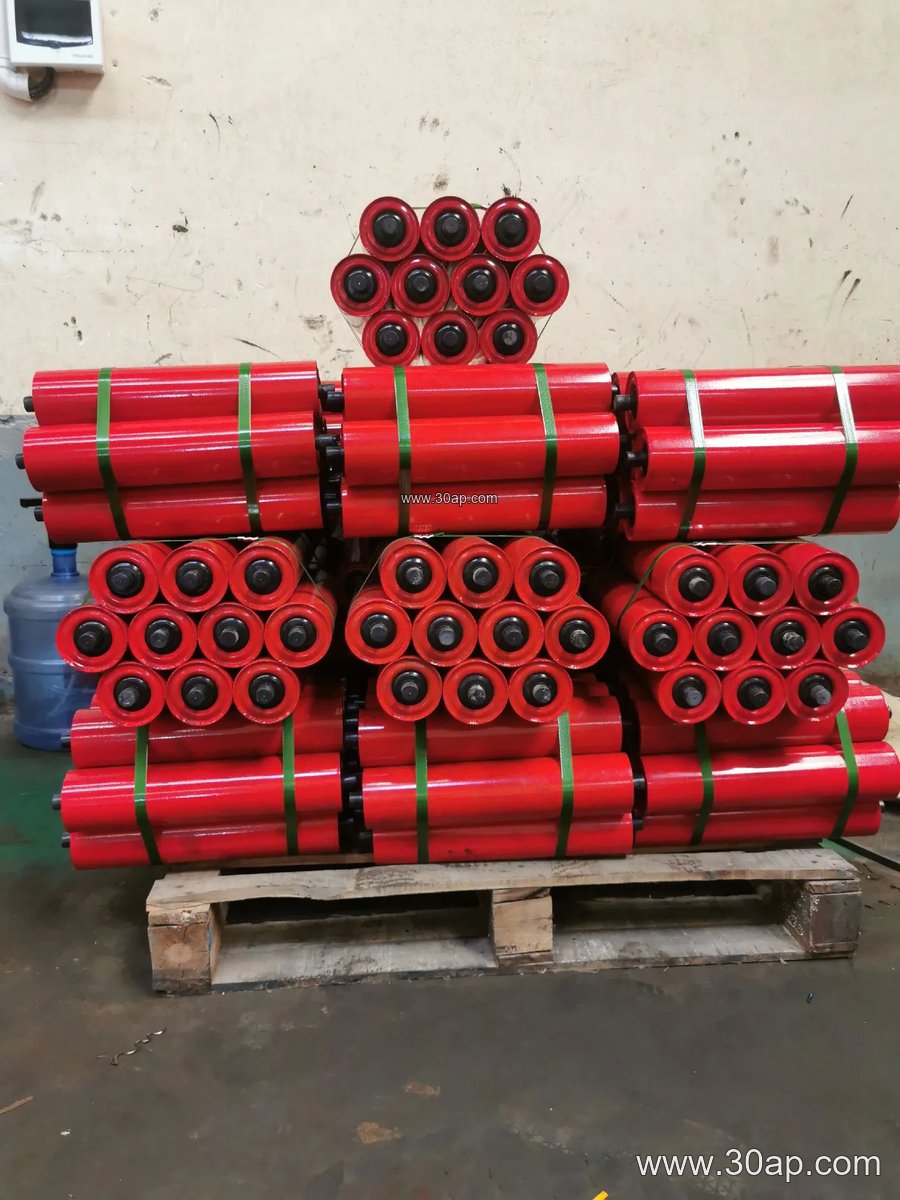
Specification Details a Buyer Should Confirm
Before ordering, gather the dimensions and duty data rather than guessing from belt width. A practical checklist looks like this:
- Roller diameter and overall roller length, measured from the drawing.
- Shaft diameter, shaft end type, and flat or threaded positions.
- Bearing size and seal type, matched to dust and moisture.
- Trough angle and idler set form (single, two-roller, three-roller).
- Shell material and surface: plain steel, nylon, ceramic, or rubber ring.
- Mounting height and bracket hole spacing.
- Operating conditions: material type, belt speed, load, temperature, and wash-down.
It also helps to state the belt construction, because a steel cord conveyor belt and a multi-ply fabric core belt behave differently under the same trough angle. A heavy abrasion resistant conveyor belt running at high speed may call for a larger roller diameter to reduce rotational speed and bearing load. A pipe conveyor belt or a corrugated sidewall belt may need special idler spacing at curves and transitions.
Selection and Maintenance Notes
Custom does not mean complicated. The goal is a roller that fits the frame, runs true, and keeps dust out of the bearing. During selection, check that the roller length and shaft end match the bracket, confirm the seal suits the site, and verify the load rating against the actual belt tension. During service, listen for noisy bearings, watch for a stopped roller that has seized and is rubbing the belt, and check for material build-up on the shell.
Replacing a worn idler with the same drawing keeps the conveyor geometry stable. Changing roller diameter without reviewing the frame height can change the belt line and affect the tail pulley wrap. For anyone sourcing idlers alongside a new conveyor, matching the roller drawing to the pulley and bracket drawings early avoids costly rework later. For more details on idler and conveyor component options, visit www.beltconveyorparts.com/custom-idler.