What a Cement Conveyor Belt Is
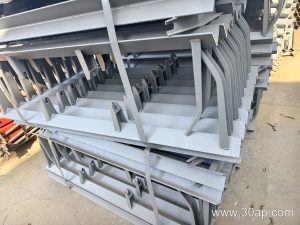
A cement conveyor belt is the heavy-duty carrying element that moves clinker, limestone, gypsum, raw meal, cement powder and bagged material between crushers, silos, mills and loading points. In most plants the belt runs on a troughed idler roller frame, is driven through a head pulley, returns over a tail pulley and is steered by bend pulleys. The belt itself is a composite: a fabric or steel cord carcass carries the tension, while top and bottom rubber covers protect the carcass from abrasion, heat and impact.
Because cement duty combines sharp clinker, fine dust and occasional hot spots, the specification usually points to an abrasion resistant conveyor belt with a heat resistant cover where the material temperature demands it. The same conveying line may run an EP conveyor belt on long overland sections and a steel cord conveyor belt where tension and distance grow.
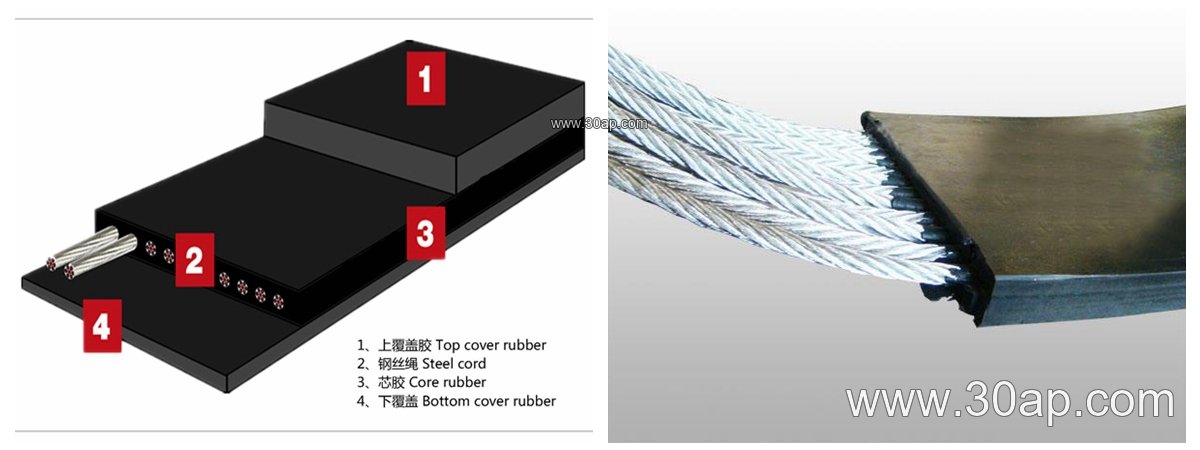
Construction and Common Specifications
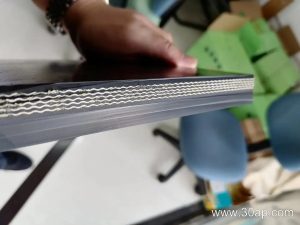
The carcass is the defining feature. Multi-ply fabric belts use two to six plies of EP or NN fabric; steel cord belts use brass-plated cords in a single plane. Cover thickness is normally quoted as top plus bottom, for example 4+2 mm or 6+2 mm, and thicker covers suit high-impact transfer points under a crusher. Belt width is selected from the lump size and required capacity, not from habit.
| Property | Typical reference range |
|---|---|
| Belt type | EP, NN, steel cord, PVC, PVG |
| Fabric strength grades | EP200, EP315, EP400, EP500, EP630, EP800, EP1000, EP1250 |
| Steel cord grades | ST1000, ST1250, ST1600, ST2000 |
| Belt width | B500, B650, B800, B1000, B1200, B1400, B1600 |
| Cover thickness | 3+1.5, 4+2, 5+2, 6+2, 8+3 mm |
| Carcass plies | 2 to 6 plies for fabric cores |
These figures are common reference values. Final strength, cover grade and width are confirmed by the conveyor design, since one width can serve several pulley diameters and one strength grade can be built in different cover compounds.
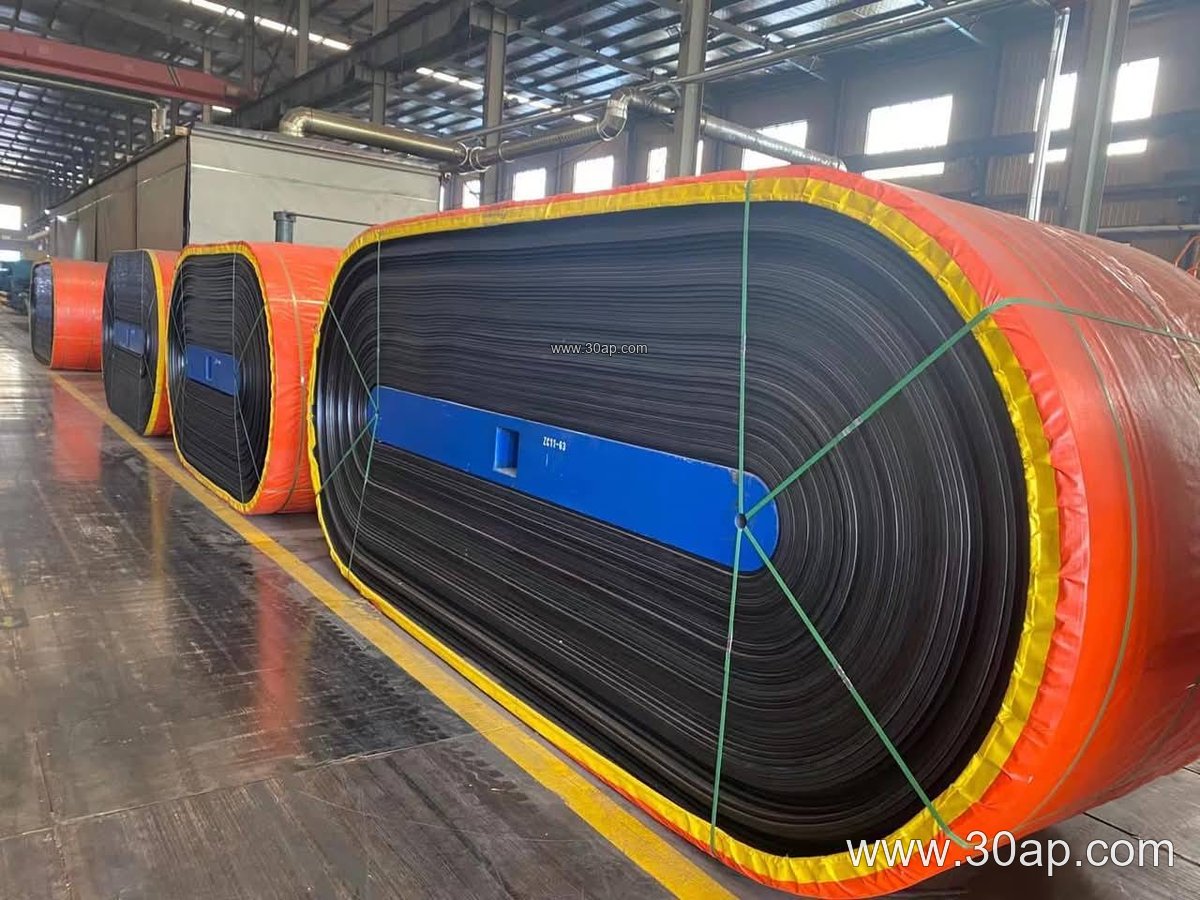
Where It Works in a Cement Plant
Quarry and crusher sections handle run-of-mine limestone, so a quarry conveyor belt or crusher conveyor belt needs impact resistance at the loading chute and good rip protection. Raw mill feed lines often run a fabric core conveyor belt with moderate covers. Clinker lines are the hardest duty: hot, abrasive and sometimes wet, which is where a heat resistant conveyor belt and a high abrasion resistant conveyor belt earn their place.
- Limestone and clay intake from the pit or quarry
- Crushed stone transfer to the raw mill and blending silo
- Clinker transport from cooler to storage
- Cement and gypsum feed to the finish mill
- Bulk loading at truck, rail and port terminals
Adjacent industries face similar conditions, so the same belt family appears in power plant conveyor belt lines handling coal, in steel plant conveyor belt routes moving ore and coke, and in sand making plant and stone crushing circuits. In underground coal mining, flame retardant and anti-static grades such as PVG conveyor belt are specified instead of ordinary rubber.
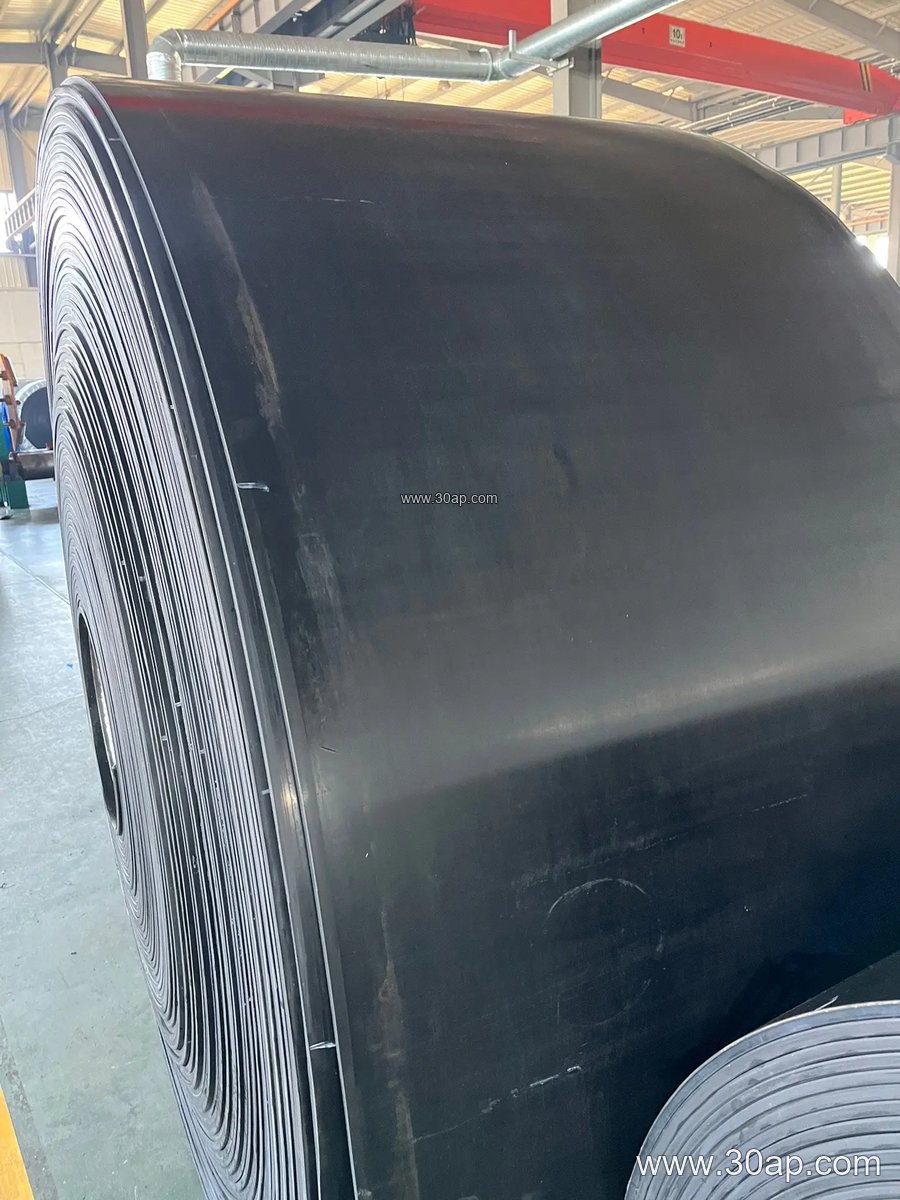
Special Profiles and Enclosed Routes
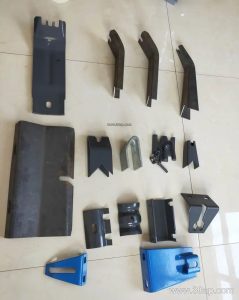
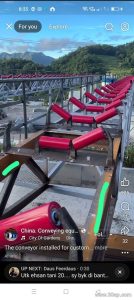
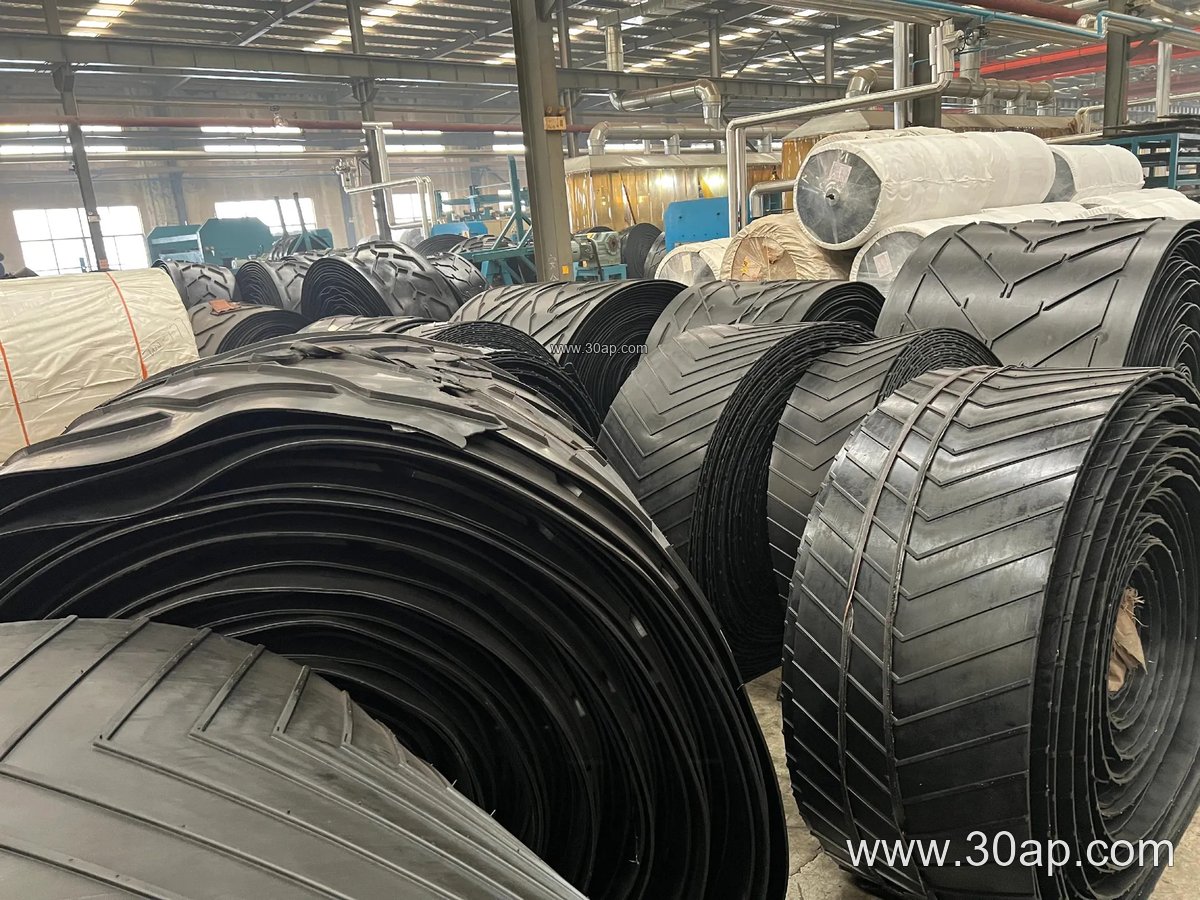
Where the route climbs steeply, a chevron conveyor belt or a corrugated sidewall conveyor belt keeps material from rolling back. A skirted conveyor belt contains the load at transfer points, and a pipe conveyor belt encloses the material for dust control through populated areas. For cement powder, dust suppression matters as much as abrasion life, so belt edges and skirt rubber should be checked together with the conveyor bracket and pulley alignment.
Special compounds cover other risks: oil resistant conveyor belt near gearboxes and lubricated drives, cold resistant conveyor belt in winter loading bays, and fire resistant conveyor belt in enclosed galleries. A food grade conveyor belt is not a cement product, but it illustrates how cover compound follows the cargo rather than the machine.
What Buyers Should Check
Start with the duty, not the price list. Record the material, lump size, temperature, moisture, tonnage per hour, incline and centre distance. Then confirm the carcass grade, cover thickness and belt width against the conveyor calculation. Ask how the belt will be joined: an endless conveyor belt spliced on site avoids mechanical fasteners but needs skilled vulcanising.
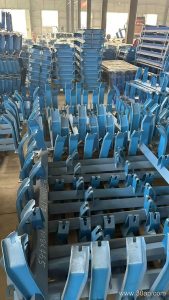
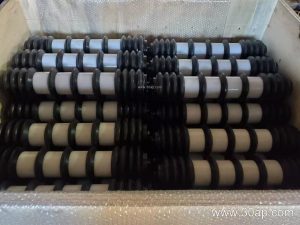
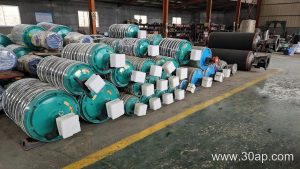
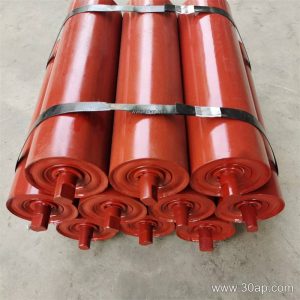
Check pulley diameters, take-up travel and idler roller spacing before ordering, because a thick, stiff belt needs larger pulleys than a thin fabric belt. Confirm that the drive pulley, tail pulley and bend pulleys are correctly sized and lagged, and that the conveyor bracket supports are square so the belt trains properly. Store spare belt rolls flat, away from sunlight, and keep a splicing kit matched to the cover compound.
Finally, ask for the actual data sheet for the offered belt rather than a generic catalogue page. Cover hardness, carcass ply count and splice strength should be stated. A cement line runs continuously, so the belt that lasts is the one matched to its real duty, installed straight and maintained with the pulleys and idlers in good order.