What a Ø108 Self-Aligning Idler Does
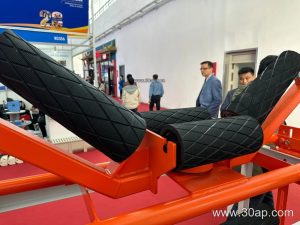
A Ø108 self-aligning idler is a training idler with a 108 mm roller diameter, built to keep a conveyor belt centered as it travels. On bulk handling lines, even a small drift can cause edge damage, spillage, and uneven wear. This idler responds to belt misalignment by pivoting slightly and steering the belt back toward the center line. It is often used on the carrying side and sometimes on the return side, depending on the conveyor design and the nature of the drift.
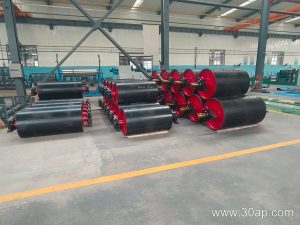
In a quarry or a cement plant, the Ø108 self-aligning idler is a practical choice for medium-duty conveyors where belt widths and loads call for a robust but not oversized roller. The same product is also called a 108 mm self-aligning training idler or a Ø108 self-centering idler. These names refer to the same item; they are not interchangeable with drive pulleys, tail pulleys, or bend pulleys, which serve different functions in the conveyor system.
Construction and Key Parts
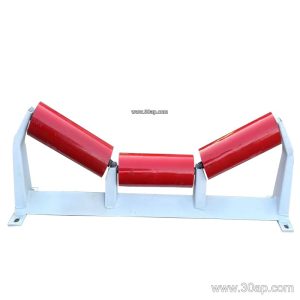
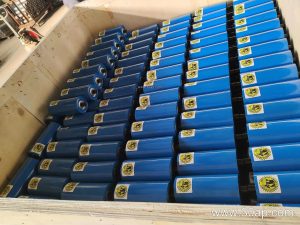
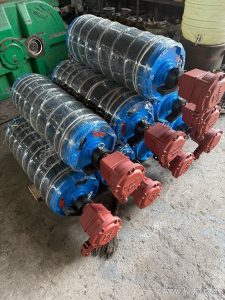
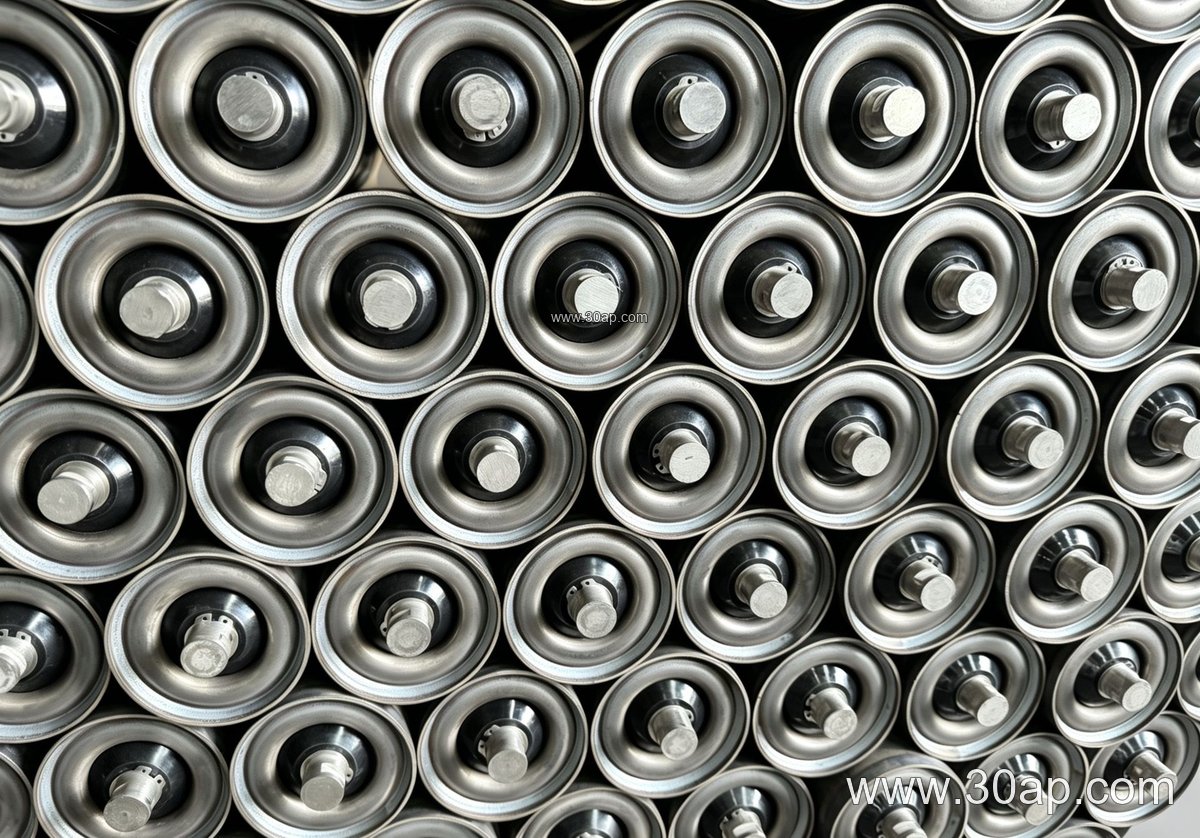
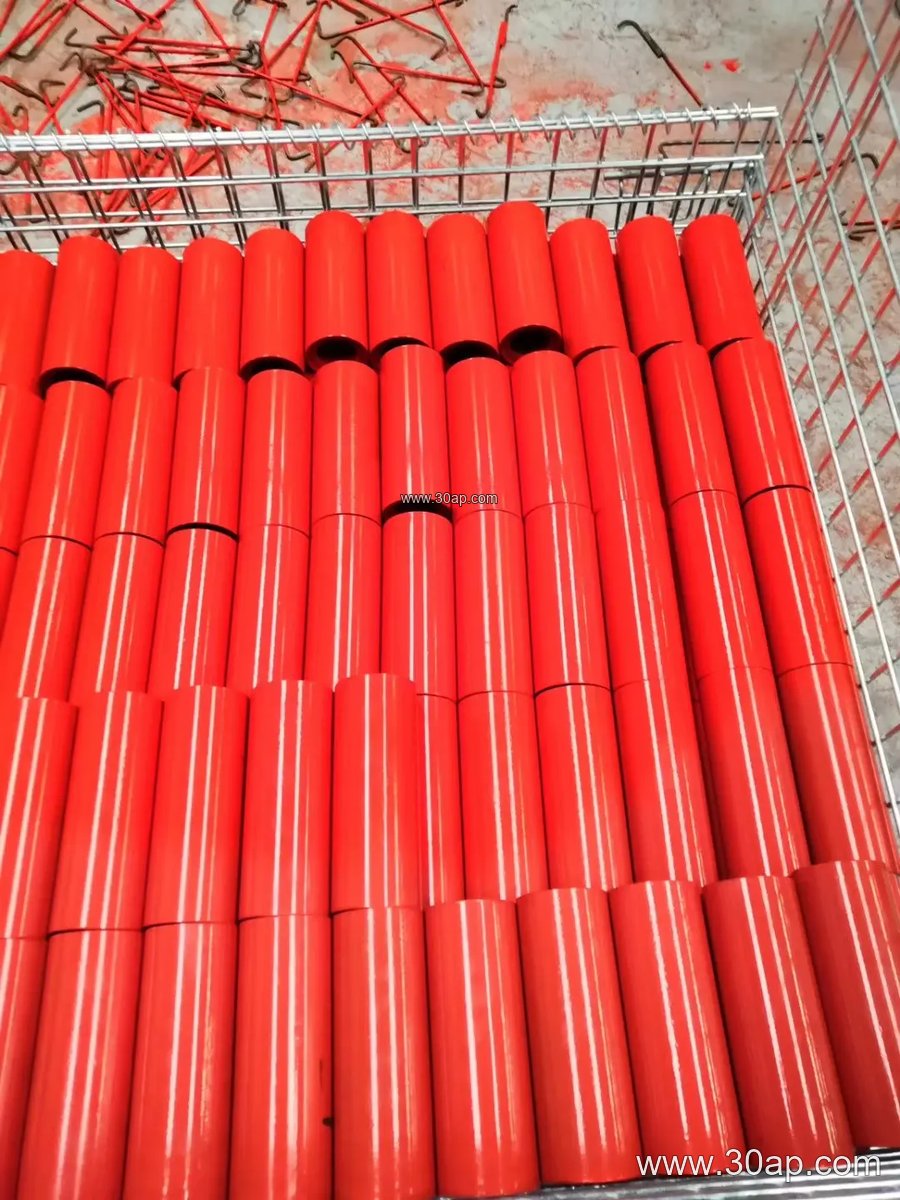
The idler usually consists of a steel tube shell, bearing housings, seals, and a shaft. The self-aligning action comes from a bracket or frame that allows the roller set to pivot around a vertical axis. Friction or conical designs may be used to create the steering effect. Common bearing sizes for this roller diameter include 6205, 6305, and 6306, but the final choice depends on load and speed. The roller surface can be plain steel, nylon, or rubber-covered; rubber rings are sometimes added for cushioning or grip. The idler works together with the conveyor belt, conveyor bracket, and conveyor pulley to maintain a stable belt path.
Where It Fits in the Conveyor
Self-aligning idlers are typically installed at intervals along the carrying run, especially after curves, transfer points, or anywhere the belt is prone to wander. In a coal mining conveyor or a power plant coal handling line, a Ø108 self-aligning idler can help control belt tracking without the need for constant manual adjustment. It is not a substitute for a drive pulley or a tail pulley; those are power transmission and direction-changing components. The idler is a supporting and guiding element. In a sand and gravel plant, it may be paired with a rubber conveyor belt or an EP conveyor belt to keep the belt centered under load.
Common Specifications and Selection Notes
Buyers should match the idler to the belt width, trough angle, and load. The Ø108 roller diameter is often used with belt widths from around B650 to B1400, but this is not a fixed rule. The roller length varies with belt width and idler arrangement; for a three-roll troughing set, common roll lengths are roughly 250 mm for B650, 315 mm for B800, 380 mm for B1000, 465 mm for B1200, and 530 mm for B1400. These are examples, not mandatory combinations. Trough angles of 20, 30, 35, and 45 degrees are common, and a slight forward tilt of about 1.5 to 2 degrees may be used on training idlers. The table below gives reference values; actual selection should follow the conveyor design.
| Parameter | Common Reference |
|---|---|
| Roller diameter | Ø108 mm |
| Belt width range (example) | B650 to B1400 |
| Trough angle | 20°, 30°, 35°, 45° |
| Bearing sizes (examples) | 6205, 6305, 6306 |
| Roller surface | Steel, nylon, rubber ring |
| Idler type | Self-aligning / training |
When specifying, confirm the shaft diameter with the manufacturer; it should not be assumed from belt width alone. Also check the mounting bracket dimensions and the available space. For heavy-duty mining conveyor belts or high abrasion resistant conveyor belts, a reinforced idler frame may be needed. In coal mining or underground mining applications, flame retardant and anti-static properties may be relevant for the belt, while the idler itself should be selected for the environment.
Buyer Checklist
- Verify the belt width and the required roller length for the idler station.
- Confirm the trough angle and whether a forward tilt is needed.
- Check the bearing size and sealing arrangement for dust and moisture.
- Match the idler frame to the existing conveyor bracket and structure.
- Consider the belt type, such as EP conveyor belt, NN conveyor belt, or steel cord conveyor belt, and the load it carries.
- Ask for the actual shaft diameter and mounting dimensions rather than assuming from belt width.
For more information on related conveyor components, visit guanjiangjixie.com for conveyor belt and idler roller references, or check guid conveyor pulley and conveyor bracket options. A properly selected Ø108 self-aligning idler helps reduce edge damage and extend belt life in demanding bulk handling operations.