What a High Wear-Resistant Lagged Pulley Does
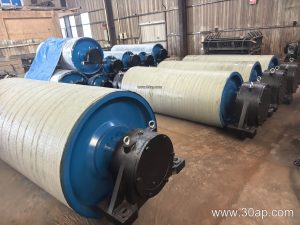
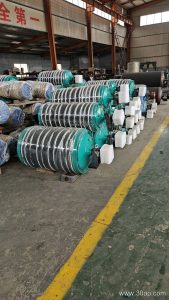
A high wear-resistant lagged pulley is a conveyor pulley whose shell carries a tough rubber or ceramic covering rather than running bare steel against the belt. That covering, usually called lagging, raises friction between the pulley face and the conveyor belt, protects the shell from abrasive material, and helps keep the belt tracking squarely under load. In a quarry or a sand and aggregate line, where grit and sharp stone dust are constant, a lagged pulley often outlasts a plain one by a wide margin. The same logic applies in a coal handling plant or a cement clinker circuit, where fine abrasive dust works its way into every gap.
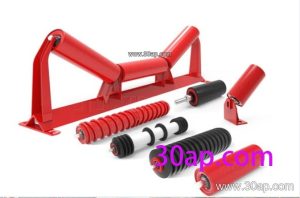
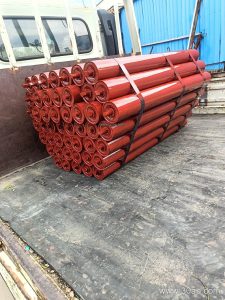
The product is a complete assembly: shell, shaft, end discs, bearing housings and the applied lagging. It is not a belt accessory, and it should not be confused with an idler roller, which supports the belt along the carrying run. A pulley transmits torque and changes belt direction; an idler simply carries load. Both matter, but only the pulley is asked to grip.
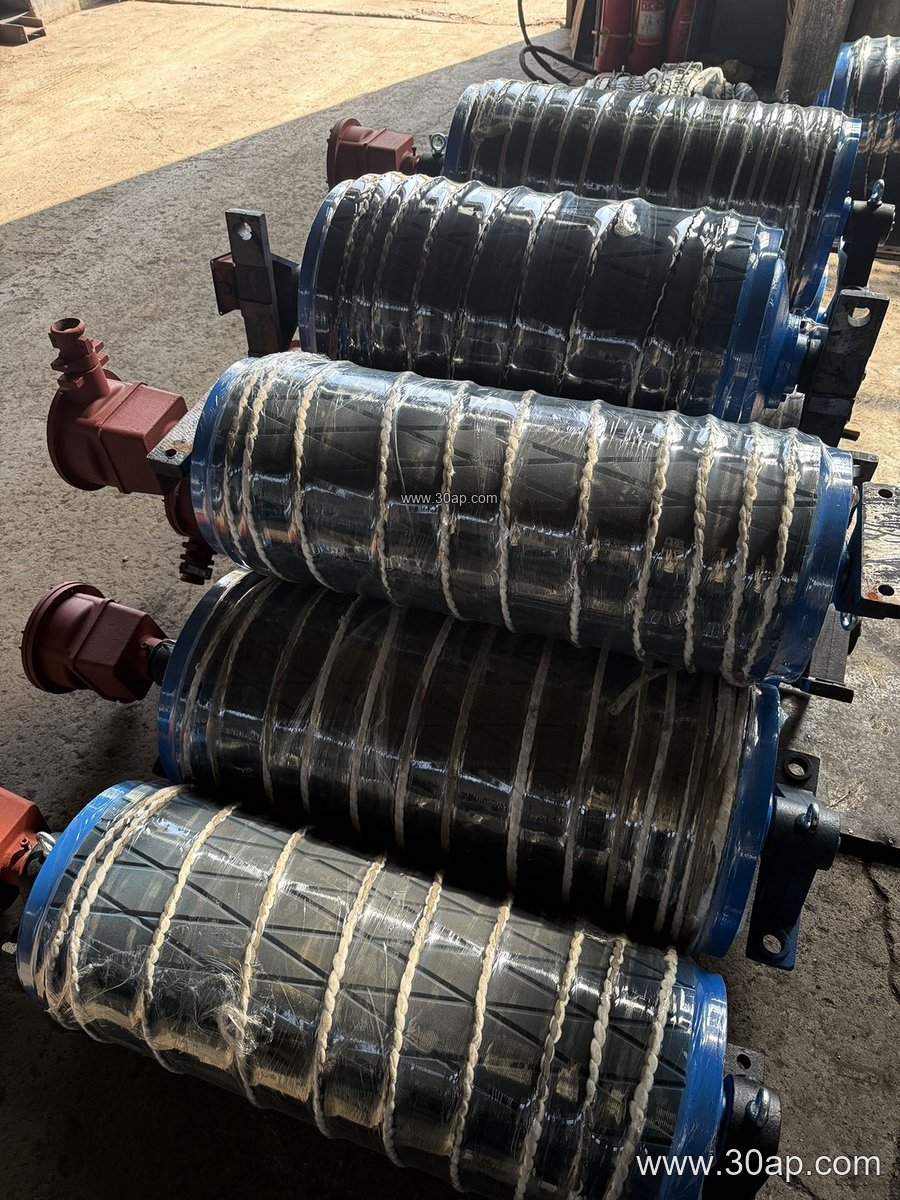
Construction and Surface Options
Manufacturers build these pulleys on a welded or rolled steel shell with machined end plates, then balance the assembly before lagging. The wear-resistant layer is applied in several ways, and the choice affects both grip and service life.
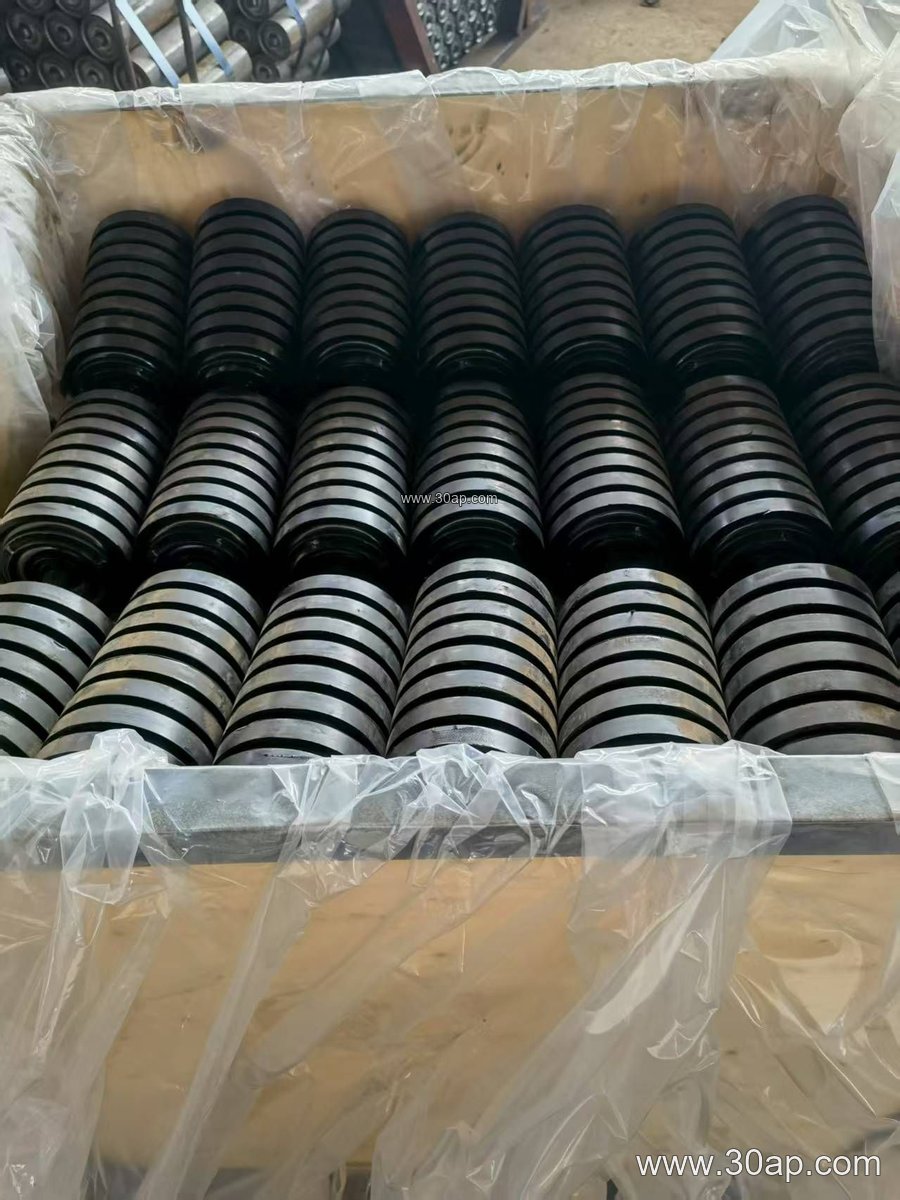
- Hot-vulcanized rubber lagging, bonded under heat and pressure for a dense, durable surface
- Cold-bonded rubber lagging, applied with adhesive and suitable for on-site refurbishment
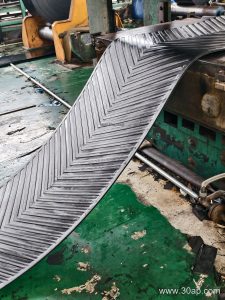
- Diamond or herringbone grooved rubber, which sheds water and fines while maintaining grip
- Ceramic lagging, where embedded tiles give very high abrasion resistance in wet or gritty conditions
- Plain flat rubber for general duty where cost and simplicity matter
Lagging thickness commonly ranges from 8 mm to 20 mm, with 10 mm and 12 mm frequent for general service and thicker layers used where impact and abrasion are severe. The shell face width is normally a little wider than the belt; for example, a B800 belt usually runs on a pulley face of roughly 950 mm, and a B1200 belt on about 1400 mm. Diameters follow the belt path and the torque requirement, so B800 x Ø500 and B1200 x Ø1000 are both realistic combinations, but no single diameter is fixed to a given belt width.
Where It Fits on the Conveyor
A high wear-resistant lagged pulley is most often found at the drive position, where it must transmit power without slipping, and at the tail position, where it turns the belt back after loading. It also appears as a bend or snub pulley in plants with tight layouts, and as a tension pulley on take-up systems. Each position makes different demands. A drive pulley needs grip and torque capacity; a tail pulley needs resistance to impact and fine material; a bend pulley needs a smooth, true-running face.
In a limestone mine or an iron ore handling line, the head or discharge pulley is exposed to constant abrasive dust and often to moisture, which is where ceramic or thick grooved rubber proves its value. In a power plant coal yard, a flame retardant conveyor belt may run alongside a lagged pulley, and the lagging compound should be selected with the same fire safety thinking in mind. The pulley and the belt are a pair, and a high abrasion resistant conveyor belt paired with a well-lagged drive pulley gives a more reliable train than either part alone.
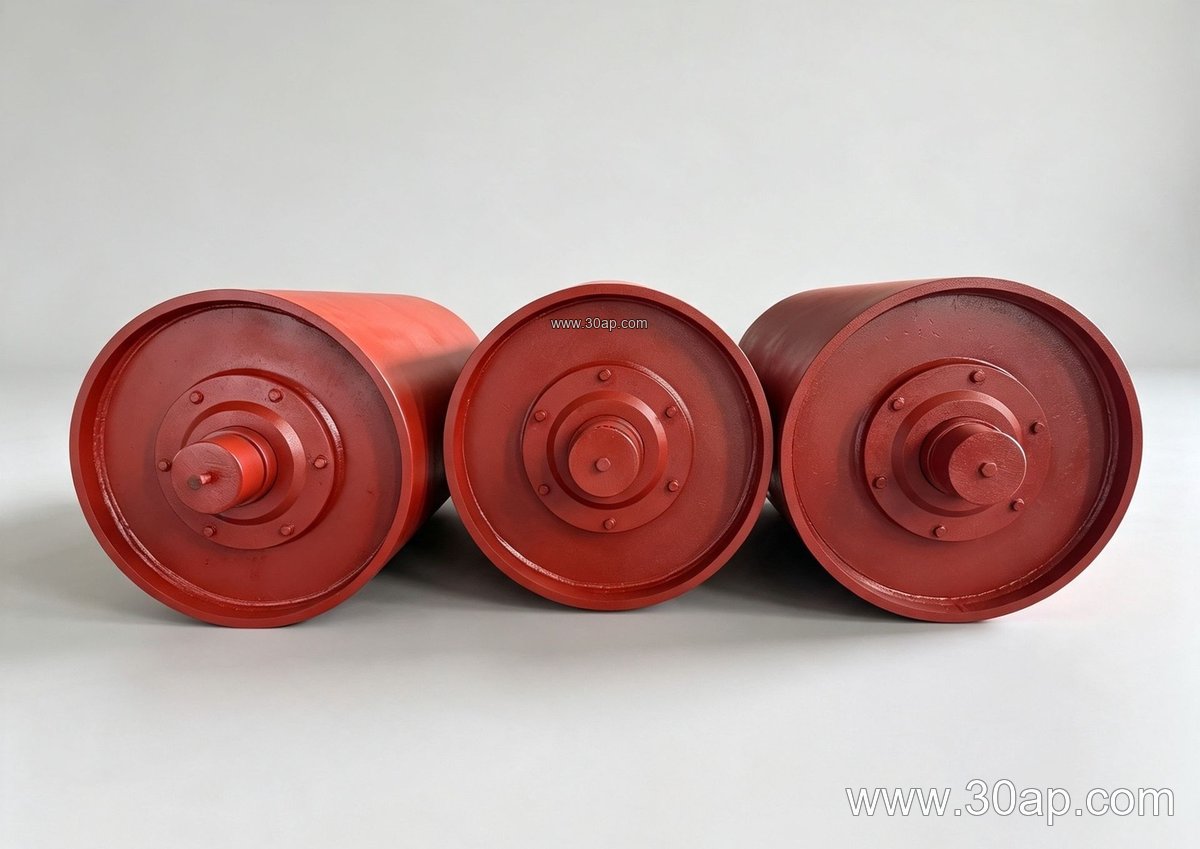
Matching the Pulley to the Belt and the Duty
Buyers should start from the belt, not from a catalogue page. Belt width, belt type and the expected tension all shape the pulley choice. A heavy-duty mining conveyor belt or a steel cord conveyor belt carrying ore at high tension needs a larger shaft and heavier bearings than a fabric core belt on a short run. Shaft diameters commonly fall between Ø50 and Ø200, but the correct value comes from torque and load calculations, never from belt width alone.
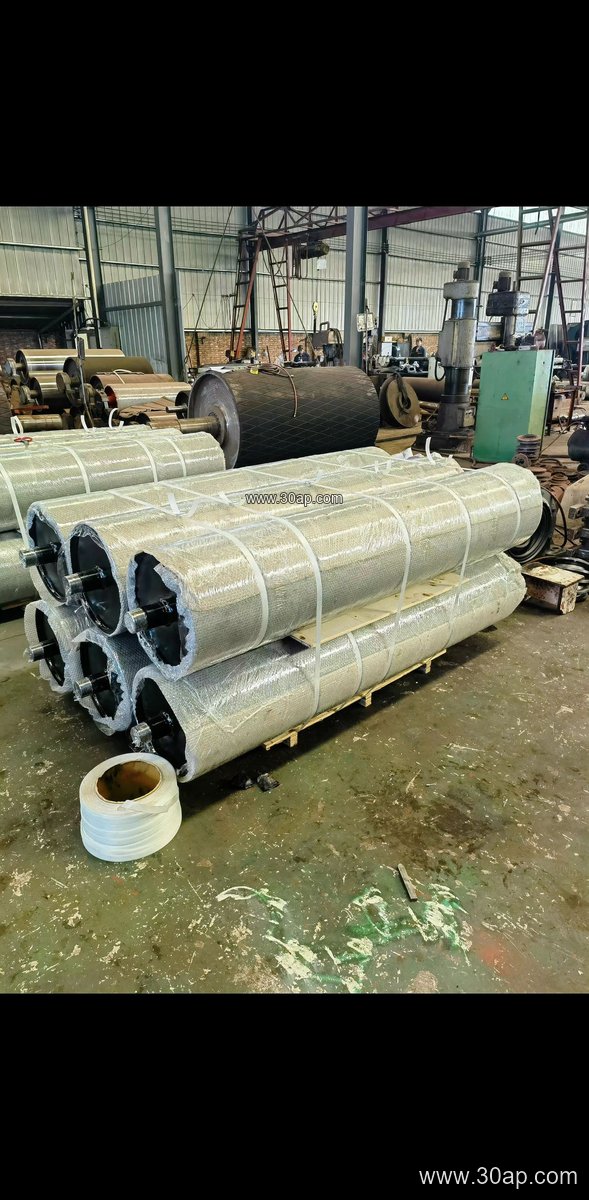
Useful details to confirm before ordering include belt width, pulley diameter, face width, shaft diameter, lagging type and thickness, bearing type, and the position on the conveyor. It also helps to state the material being carried and the environment, since wet, oily or dusty conditions change the lagging recommendation. A food grade conveyor belt line, for instance, calls for different lagging and cleaning considerations than a crusher conveyor belt in a stone crushing plant.
Installation and Maintenance Notes
Alignment is the first defence against uneven lagging wear. A pulley that sits out of square with the belt will wear one edge of the lagging long before the rest, and the belt will drift. Check conveyor brackets and bearing seats for squareness during installation, and confirm that the pulley face is centred on the belt.
During service, inspect the lagging for grooves, glazing, chunking and embedded material. Worn lagging reduces friction, which shows up as belt slip at the drive and as heat at the pulley face. Re-lagging is often cheaper than replacing a complete pulley, and cold-bonded rubber makes this possible without removing the shell in some cases. Keep the belt cleaner and the pulley area free of build-up, because caked fines act like an abrasive paste between belt and lagging.