What a Large Belt Conveyor Idler Does on a Heavy-Duty Line
A large belt conveyor idler is the rotating support that carries the loaded conveyor belt between the head and tail of the machine. In high-capacity circuits, these idlers are built around bigger roll diameters and longer shafts so that the belt, the material load, and the belt tension are spread over a wider contact area. You will see them in iron ore terminals, limestone quarries, coal preparation plants, cement kilns, power station coal yards, and aggregate crushing and screening lines. On a 1,800 mm or 2,000 mm wide conveyor belt moving thousands of tonnes per hour, the idler is not a small accessory; it is a structural component that influences belt life, energy draw, and maintenance intervals.
Construction Details That Matter
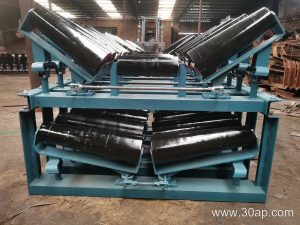
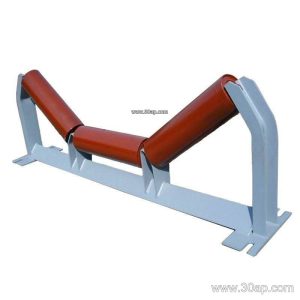
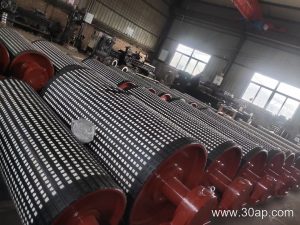
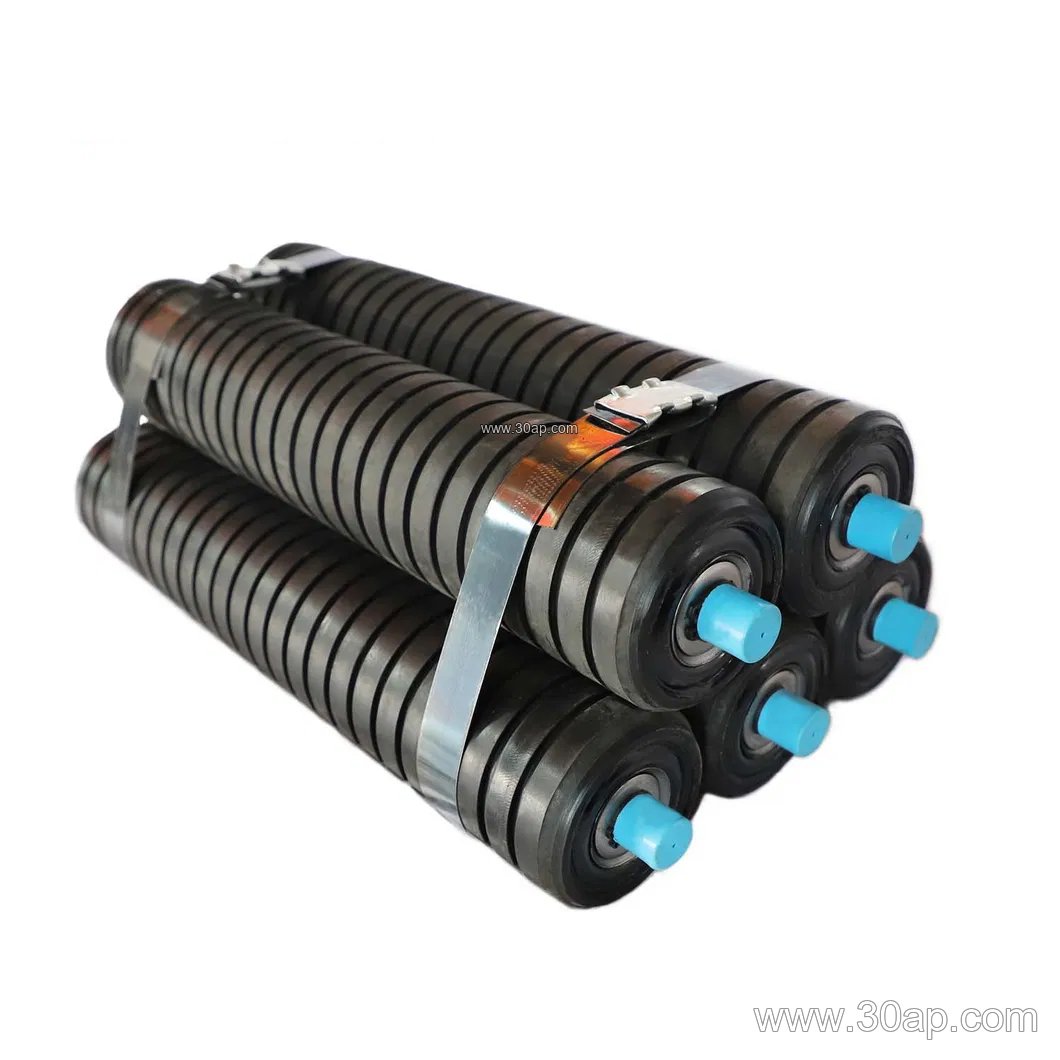
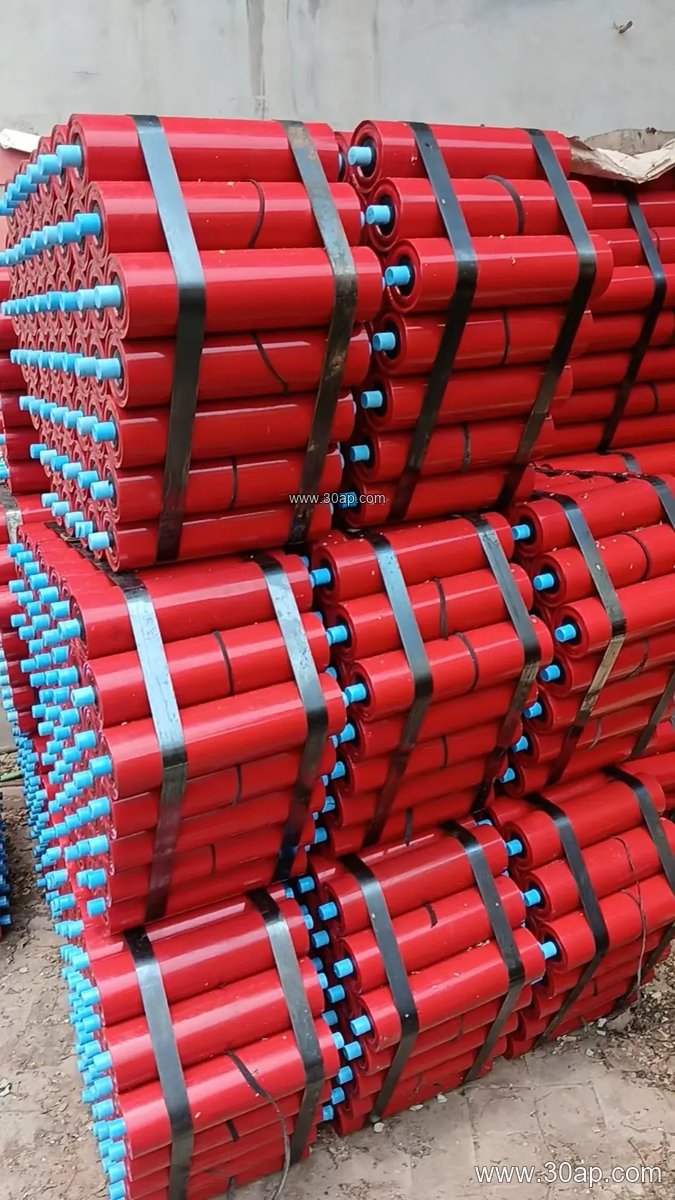
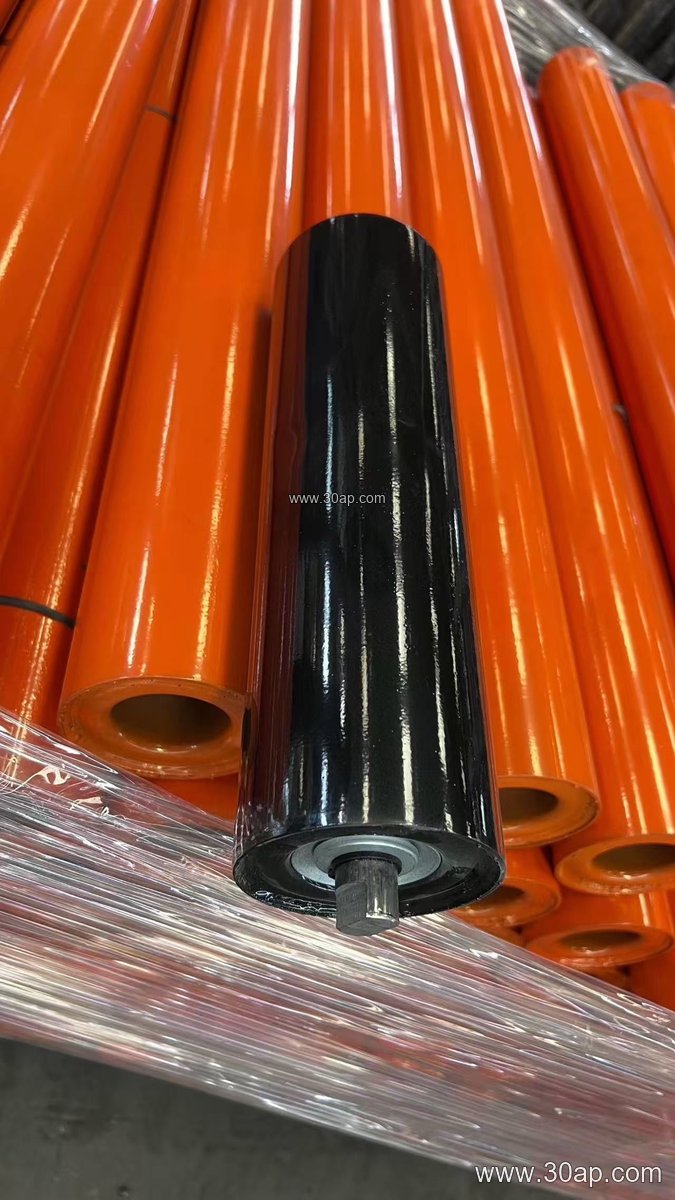
A typical heavy-duty idler roller consists of a steel tube shell, a through shaft, bearing housings at each end, and a multi-stage seal. The shell may be plain steel, nylon-coated, ceramic-covered, or fitted with rubber rings for impact zones. Bearings are commonly 6205, 6305, 6306, 6308, or 6310 depending on the roll diameter and load rating, and the seal arrangement usually combines a labyrinth passage with a lip seal to keep out dust and water. The shaft ends fit into a conveyor bracket or frame, and the roll length is matched to the belt width, trough angle, and idler arrangement.
Common Roll Diameters and Belt Widths
The table below shows typical reference values, not fixed pairings. Final selection depends on load, speed, and the conveyor designer’s calculations.
- Roll diameters commonly used: Ø89, Ø102, Ø108, Ø127, Ø133, Ø159, Ø178, Ø194, Ø219
- Belt widths commonly served: B800, B1000, B1200, B1400, B1600, B1800, B2000, B2200
- Trough angles: 20°, 30°, 35°, 45°, with 35° widely used in bulk handling
- Bearing references: 6205, 6305, 6306, 6308, 6310
Do not assume that a given belt width locks in one pulley diameter or one shaft size. A B1400 conveyor might run Ø133 or Ø159 rolls depending on the load profile, and a B1800 line may use Ø178 or Ø194 rolls in the carrying run.
Trough, Return, and Impact Positions
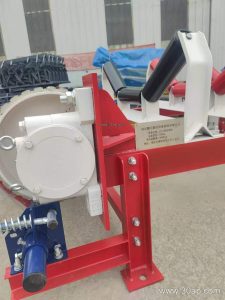
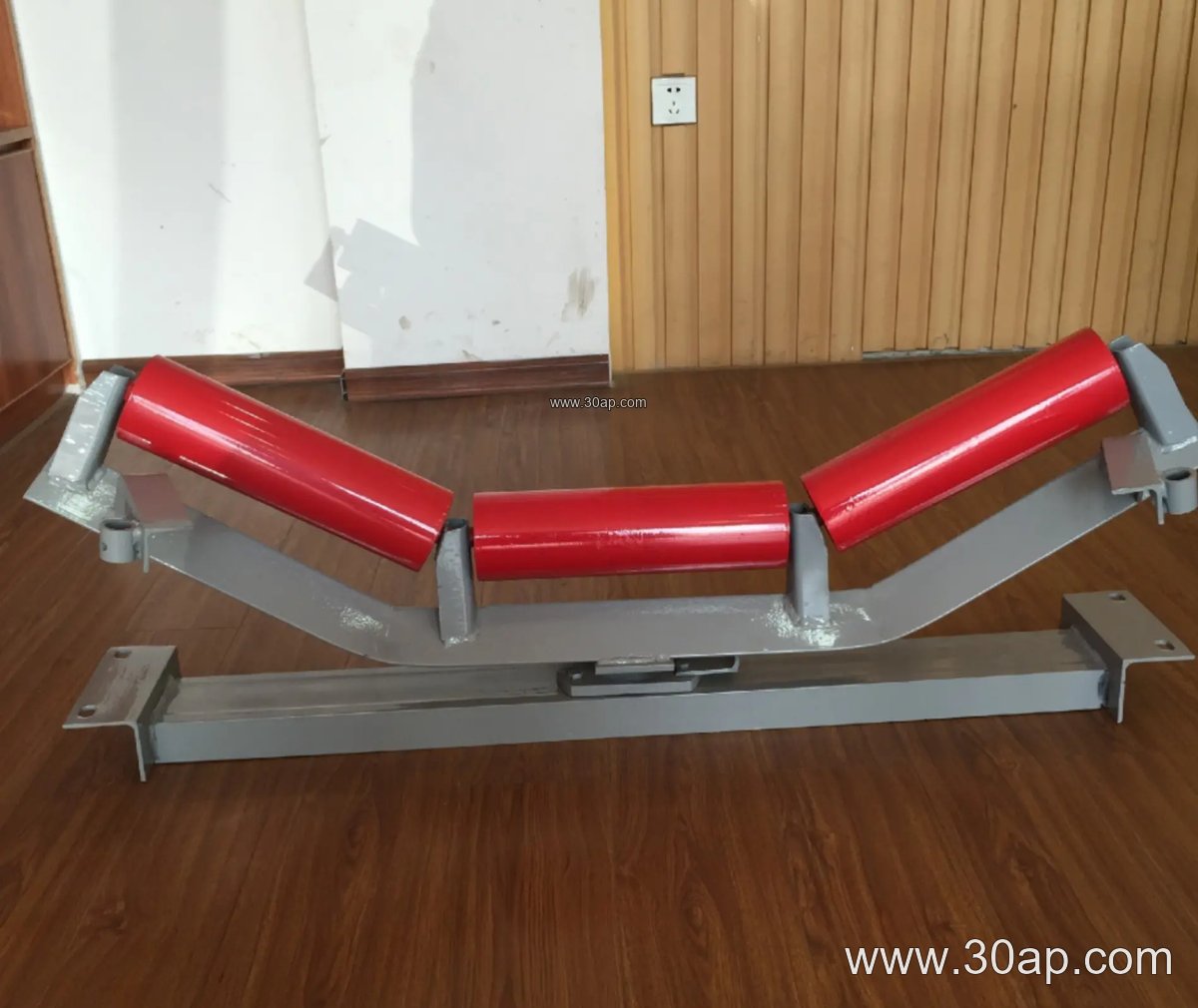
In the carrying run, three-roll troughing sets are common, and the side rolls are often inclined at 35° so the belt forms a deep trough that holds material at high tonnage. For a B1000 conveyor, a common three-roll troughing set may use roll lengths around 380 mm, while a B1600 set may use around 600 mm. These are examples only, and side rolls can differ from the centre roll. In the return run, flat or V-shaped return idlers support the empty belt, and spiral or rubber-disc types may be chosen to shed sticky material. At the loading point, impact idlers with rubber rings absorb the drop energy from crusher discharge or transfer chutes. Self-aligning idlers, including friction and tapered types, are used where belt tracking is a concern.
Where the Product Fits in the Plant
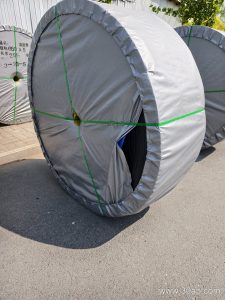
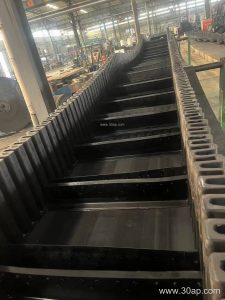
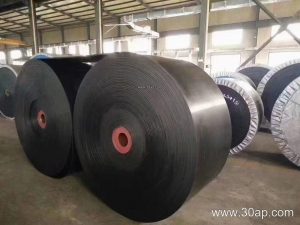
In a quarry or sand and gravel line, large idlers carry crushed rock after the primary crusher, often on an abrasion resistant conveyor belt. In a coal washing plant, flame retardant and anti-static properties of the belt matter, and the idlers must tolerate fines and moisture. In a cement plant, heat resistant conveyor belts may be used near the kiln, while the idlers in the raw material section handle limestone and clay. Port and ship loading conveyors use wide belts and heavy idlers to move bulk material at high rates. The idler itself does not determine those belt properties, but it must be matched to the belt width, speed, and load so the system runs smoothly.
Buyer Checklist Before Ordering
Confirm the belt width, the trough angle, the roll diameter, the shaft diameter, and the bearing size from the conveyor drawing rather than from a generic catalogue page. Check the seal type for dusty or wet conditions, and ask whether the shell is plain steel, nylon, ceramic, or rubber-covered. For impact zones, specify rubber-ring or cushion idlers. For long overland lines, consider the rolling resistance and the balance between idler spacing and belt sag. Also confirm the bracket or frame interface, because a conveyor bracket that does not match the shaft end will cause installation delays. Spare parts planning should include bearings and seals, since replacing a complete idler is faster but more costly than rebuilding one in a workshop.
Maintenance Notes
Inspect idlers for seized bearings, worn shells, and material build-up. A seized roll can wear through the belt cover quickly, especially on an abrasion resistant conveyor belt carrying sharp ore. Listen for squealing and check for belt misalignment after replacing a set. Keep the seal area clean and avoid pressure washing that drives water past the lip seal. On large belt conveyor idlers, a planned replacement schedule based on running hours is usually more economical than reactive maintenance.