What a Guide Pulley Does on a Conveyor
A guide pulley is a small-diameter roller mounted where the belt needs a gentle correction or a defined path. It is not a drive pulley, not a tail pulley, and not a bend pulley; those components carry the main tension and torque of the system. The guide pulley works on the slack side or at a transition point, touching the belt lightly to keep it centered or to steer it away from structural edges. In a quarry or a sand and aggregate line, a misaligned belt can spill material within minutes, so this small component often protects the whole transfer point.
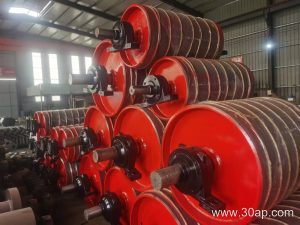
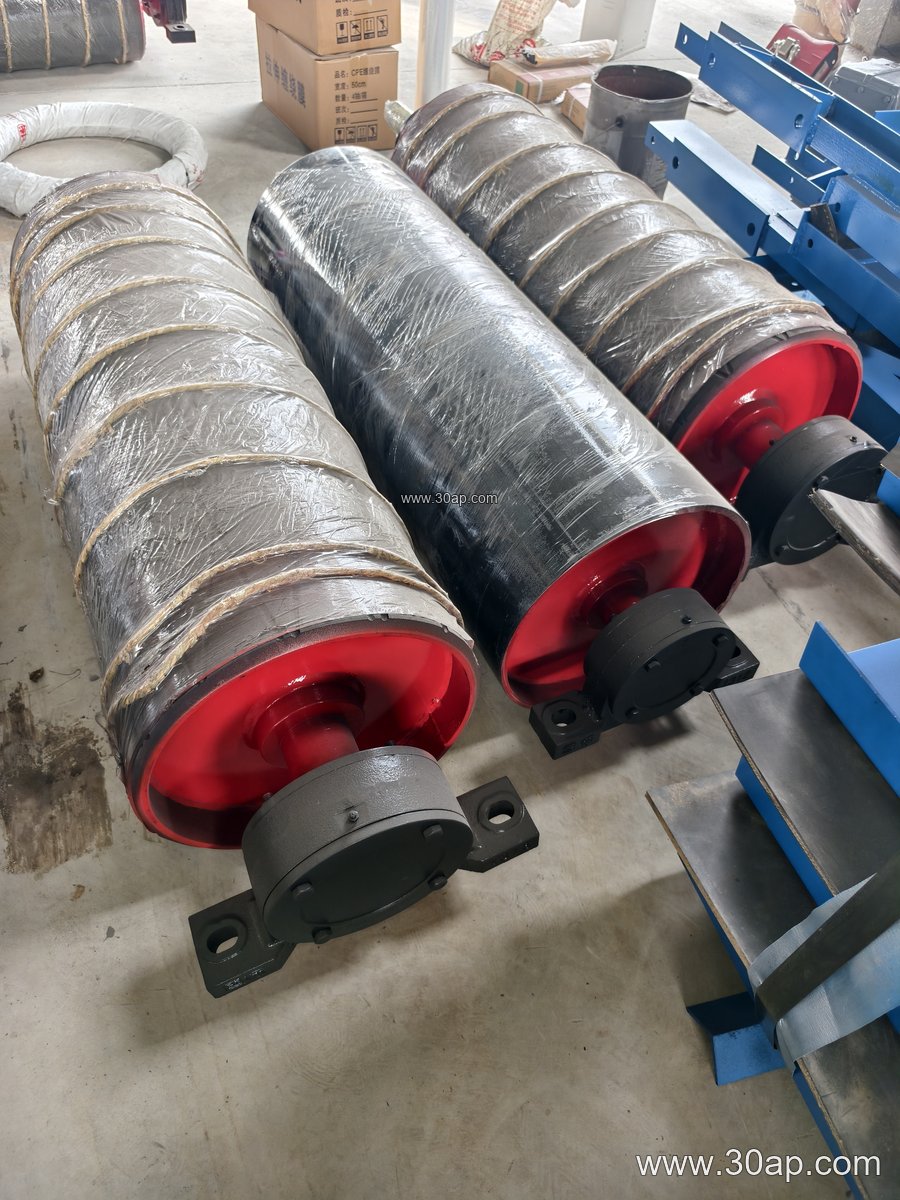
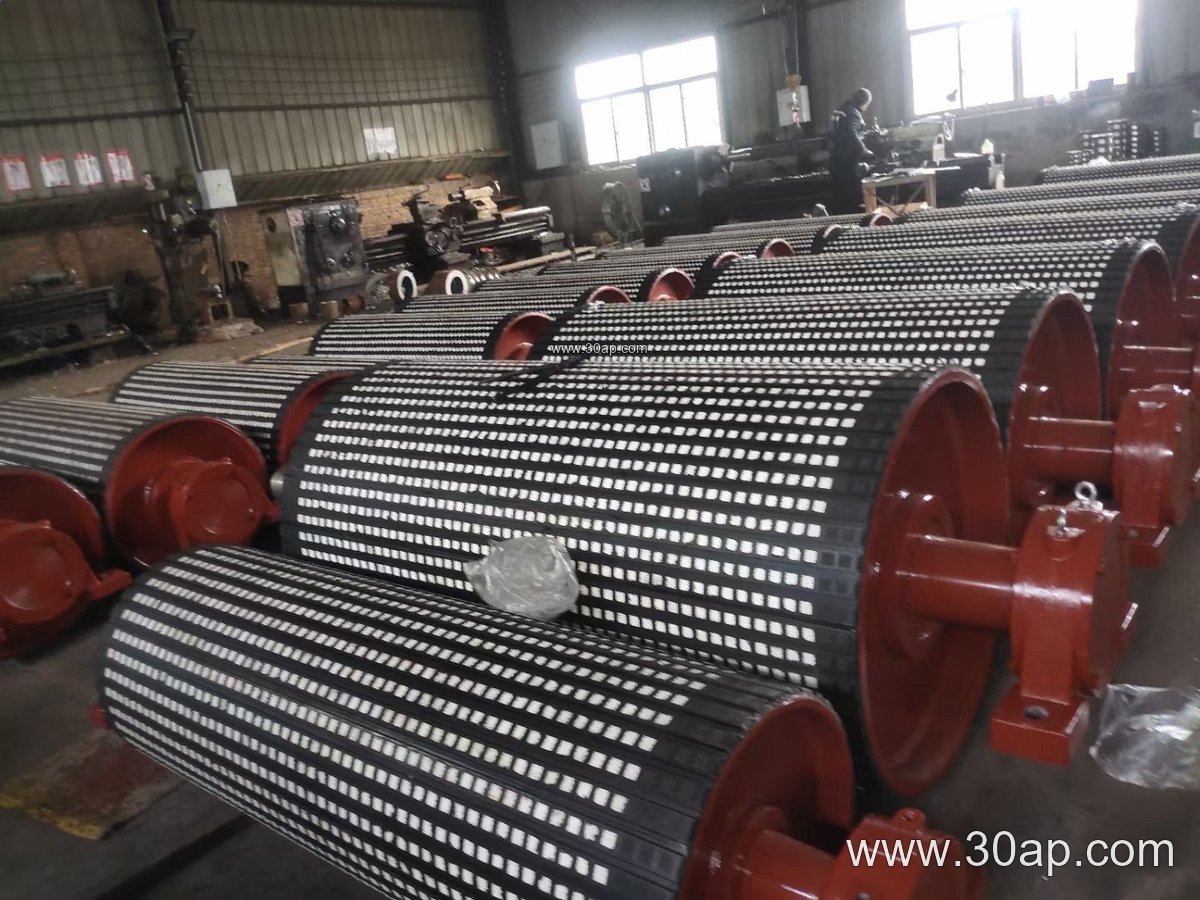
Because the load is modest, a guide pulley is usually built lighter than a conveyor pulley that drives the belt. The body can be a seamless steel tube or a fabricated drum, fitted with welded end discs and a through shaft. Bearings are commonly self-aligning ball or spherical roller types in pillow block housings, and the surface may be plain steel, painted, or covered with a thin rubber lagging. The diameter is typically smaller than a main conveyor pulley, and the face width is matched to the belt it guides. On a 650mm or 800mm conveyor belt line, a compact guide roller is often enough to hold the belt in place without adding significant rotating mass.
Construction Details That Matter
Three features separate a well-made guide pulley from a generic idler roller. First, the shaft ends must be machined to fit the conveyor bracket without play; a loose fit lets the pulley skew and makes tracking worse. Second, the bearing seals should suit the environment, whether that is cement dust at a clinker transfer, coal fines at a wash plant, or moisture at a port bulk terminal. Third, the surface should be true-running, because a pulley with runout will push the belt sideways in a rhythmic pattern.
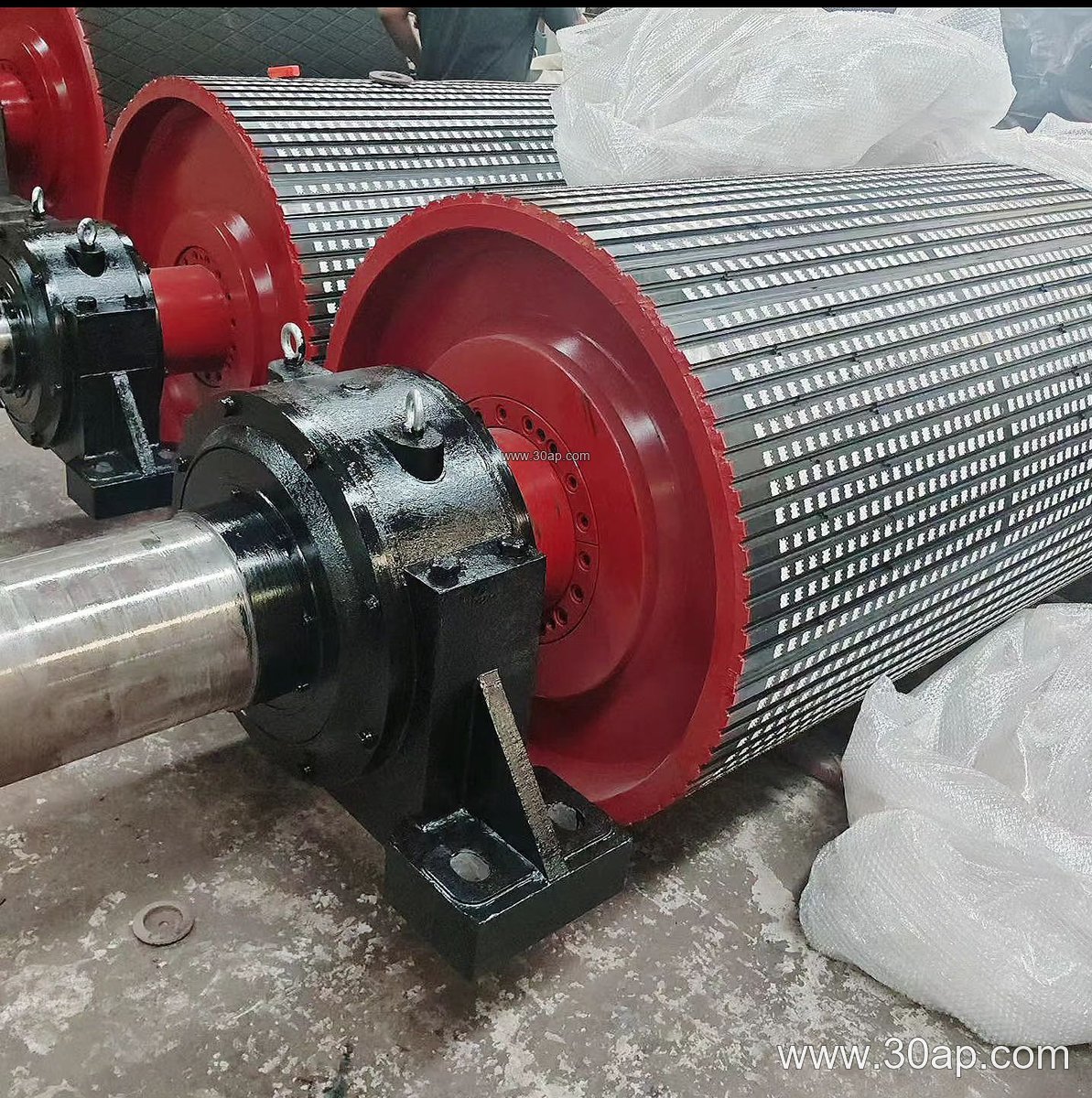
Lagging is optional on this component. A plain finish is common where the pulley only touches the belt lightly. A thin rubber cover can improve grip when the guide pulley also acts as a light snubber, and a crowned face may help centering on some layouts. None of these choices is universal; the right surface depends on belt tension, wrap angle, and the material being carried.
Where It Fits in the Conveyor Layout
Typical positions include just ahead of a head pulley to stabilize the belt before discharge, after a transition idler set, and near a loading point where the belt tends to wander. In a tunnel or an underground coal mining conveyor, space is tight, so a small guide pulley can be tucked into a frame where a full-size bend pulley would not fit. At a power plant coal yard or a steel plant sinter line, the same component helps keep the belt clear of chute walls and support steel.
The guide pulley is often confused with a bend pulley. A bend pulley changes belt direction and carries full tension; a guide pulley mainly influences lateral position. Keep the roles separate when specifying spares, because a lightweight guide roller is not a substitute for a bend or drive pulley in a high-tension position.
Common Reference Dimensions
The table below shows typical combinations used in inquiries. These are reference values, not fixed rules, and final sizes are set by the conveyor designer based on belt width, tension, and shaft load.
| Belt width | Face width (approx.) | Common pulley diameter | Shaft diameter range |
|---|---|---|---|
| B500 | 600 mm | Ø200 to Ø315 | Ø50 to Ø70 |
| B650 | 750 mm | Ø250 to Ø400 | Ø60 to Ø80 |
| B800 | 950 mm | Ø315 to Ø500 | Ø70 to Ø100 |
| B1000 | 1150 mm | Ø400 to Ø630 | Ø80 to Ø120 |
| B1200 | 1400 mm | Ø500 to Ø800 | Ø90 to Ø140 |
| B1400 | 1600 mm | Ø630 to Ø1000 | Ø100 to Ø160 |
A guide pulley for a 1200mm belt might be ordered as B1200 × Ø500 with a Ø100 shaft, while a smaller unit on a 650mm line could be B650 × Ø315 with a Ø70 shaft. Shaft size follows torque and bearing load, not belt width alone, so never assume a fixed pairing.
Buyer Checklist
- Confirm the mounting position and whether the pulley guides, snubs, or merely supports the belt return.
- State the belt type and service, for example an abrasion resistant conveyor belt in a crusher discharge or a flame retardant conveyor belt in a coal mine.
- Give belt width, pulley face width, desired diameter, and shaft size, plus bearing housing style and bolt spacing for the conveyor bracket.
- Describe the environment: dust, water, temperature, and whether the pulley sits near a transfer chute.
- Ask for dynamic balance and runout tolerances if the pulley runs at higher speed.
For matching belts and frames, plants often coordinate the guide pulley with the conveyor belt supplier and the conveyor bracket fabricator so that the shaft, bearing centers, and belt line all agree. A small component, sized correctly, keeps the belt centered and reduces edge damage over the long run.