What a Mining Conveyor Bracket Does on the Line
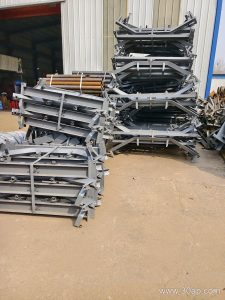
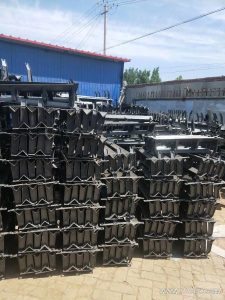
A mining conveyor bracket is the steel support that holds the idler roller in position along the carrying and return runs of a belt conveyor. It is often called a conveyor idler frame or idler support bracket, and its job is simple but demanding: keep the rollers at the right height, the right angle and the right spacing so the belt runs true under heavy load. In a quarry, a coal washing plant or a crushing and screening circuit, a weak or badly aligned bracket quickly shows up as belt wander, spillage and uneven roller wear.
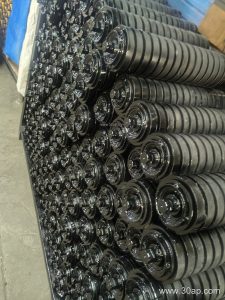
The bracket itself carries no drive function. It works together with the conveyor belt, the idler rollers and the conveyor pulley at each end of the line, and it must suit the belt width and the load profile of the installation.
How the Bracket Is Built
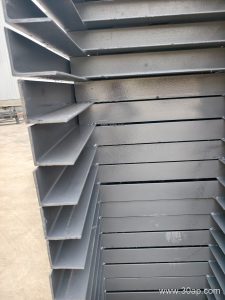
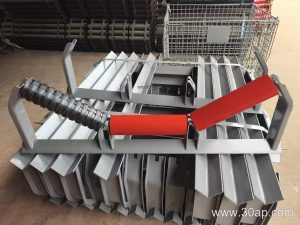
Most frames are fabricated from angle steel, channel steel or folded steel plate. The crossbeam carries the roller mounting points, while the end legs bolt to the conveyor stringer or to a floor-mounted base. Common forms include troughing brackets, transition brackets, return brackets, V-return brackets, impact brackets, self-aligning brackets and adjustable frames.
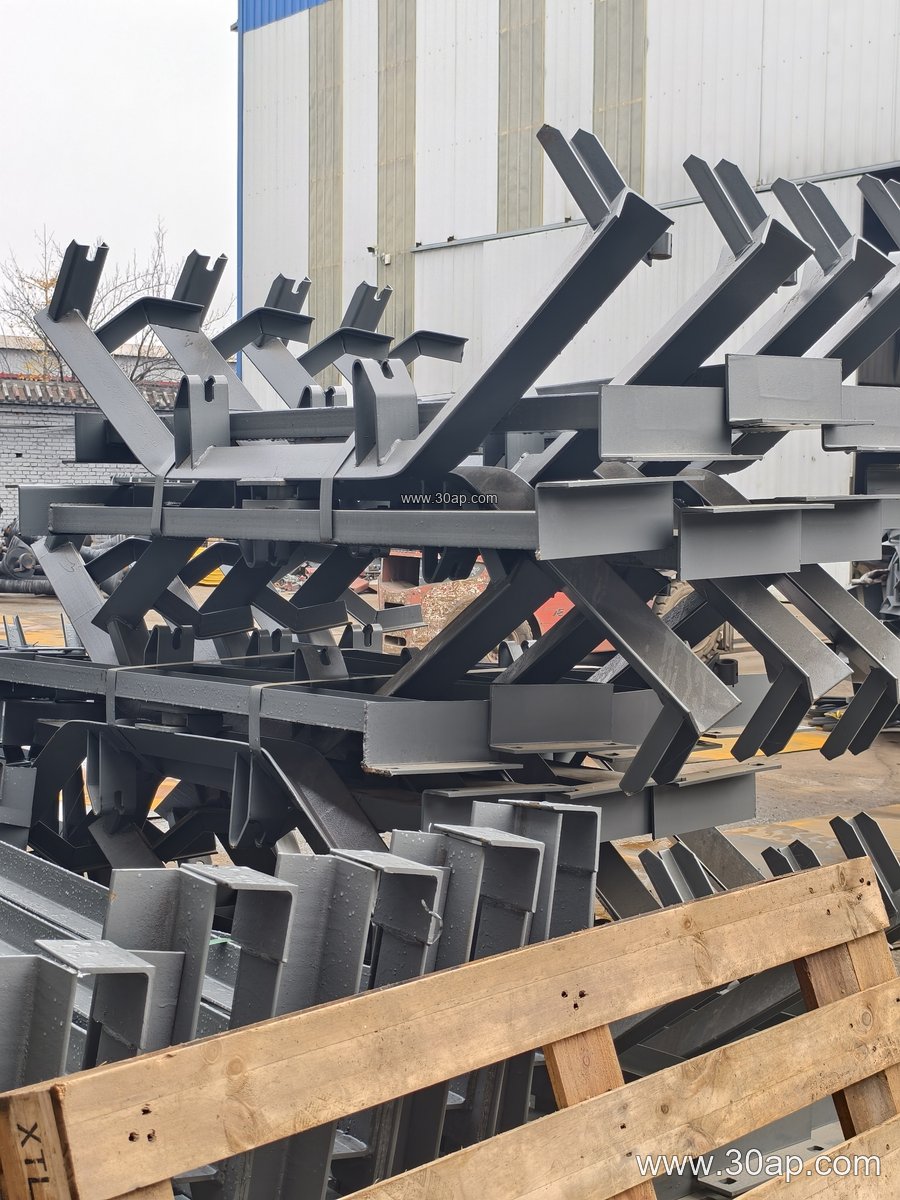
Because the bracket sets the trough angle, it directly shapes the belt cross-section. Typical trough angles are 20, 30, 35 and 45 degrees, and an adjustable bracket can be reset between these positions as the duty changes. A forward-tilted frame, usually around 1.5 to 2 degrees, helps keep the belt centred on the carrying side.
Matching Bracket, Belt Width and Roller Diameter
Selection starts with belt width and roller diameter, then moves to trough angle and mounting hole spacing. No single belt width locks the frame to one angle or one roller size, so the table below is a reference guide only; actual hole pitch and crossbeam length follow the conveyor design.
| Belt Width | Common Trough Angle | Typical Roller Diameter |
|---|---|---|
| B650 | 30 degrees | Ø89 |
| B800 | 35 degrees | Ø108 |
| B1000 | 35 degrees | Ø108 or Ø133 |
| B1200 | 45 degrees | Ø133 |
| B1400 | 35 or 45 degrees | Ø133 or Ø159 |
| B1600 | 35 or 45 degrees | Ø159 |
| B1800 | 35 or 45 degrees | Ø159 or Ø194 |
Wider lines such as B2000 and B2200 usually call for heavier crossbeams and larger roller diameters, and the bracket must be sized accordingly. The belt that rides on these frames may be an EP conveyor belt, an NN conveyor belt or a steel cord conveyor belt, depending on tension and distance.
Where These Frames Are Used
In a limestone quarry or an iron ore plant, troughing brackets support the loaded run from the crusher discharge to the stockpile. In a coal washing plant, flame retardant and anti-static belting is common, and the frames must be aligned carefully to avoid mistracking on long galleries. Cement plants and power plant coal yards use similar frames on incline and transfer conveyors, while ports and ship loading systems rely on wide, heavy-duty brackets that hold large rollers.
Impact brackets with resilient rollers are placed under the loading point, where ore or rock falls onto the belt. Transition brackets sit between the tail pulley and the first full trough set, gently shaping the belt from flat to troughed. Self-aligning brackets correct slight wander before it becomes a spillage problem.
Buyer Checklist
- Confirm belt width, trough angle and roller diameter before ordering.
- State the mounting hole spacing and crossbeam length required by the stringer.
- Choose the steel section and finish for the site: dusty, wet, corrosive or high-impact.
- Decide between fixed and adjustable frames where the trough angle may need revision.
- Check that the bracket suits the belt type, whether abrasion resistant, heat resistant or oil resistant.
- Plan inspection of alignment, bolt tightness and roller rotation as part of routine maintenance.
A well-chosen mining conveyor bracket is a low-cost part that protects expensive components. Correct alignment keeps the conveyor belt tracking, extends idler roller life and reduces downtime in mines, quarries and processing plants. For related belt and roller information, visit www.beltconveyorparts.com and review the conveyor bracket range alongside pulley and roller options.