What a Rubber Conveyor Belt Is
A rubber conveyor belt is the load-carrying component of a belt conveyor system, built to move bulk materials across long distances in mines, cement plants, power stations, ports, and aggregate quarries. The product is often simply called a rubber belt, but in technical terms it is a composite of rubber covers and a tension-bearing carcass. The carcass may be fabric (EP or NN) or steel cord, and the rubber covers protect the core from abrasion, impact, heat, oil, or fire depending on the duty.
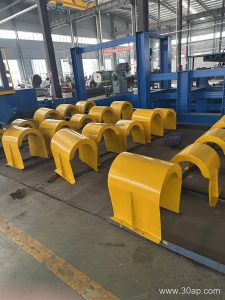
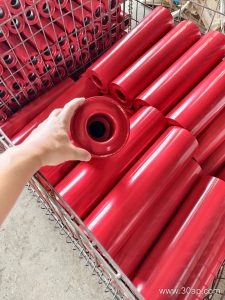
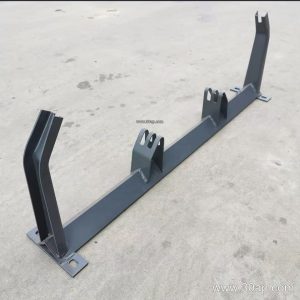
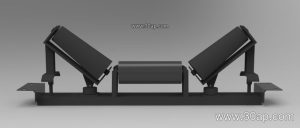
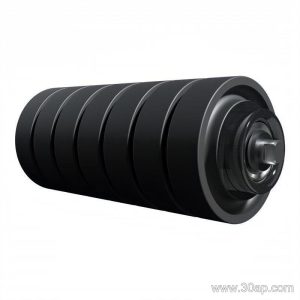
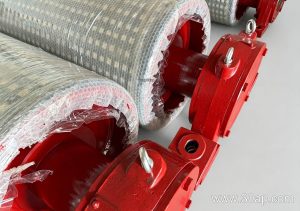
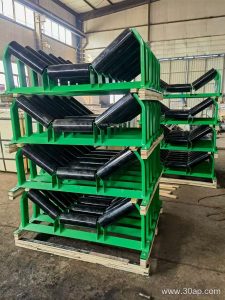
In a typical circuit, the belt runs over a drive pulley and tail pulley, supported by idler rollers and guided by conveyor brackets. The belt is the flexible link that ties these components together. Its selection affects throughput, energy use, and maintenance intervals, so buyers should treat it as an engineered part rather than a commodity.
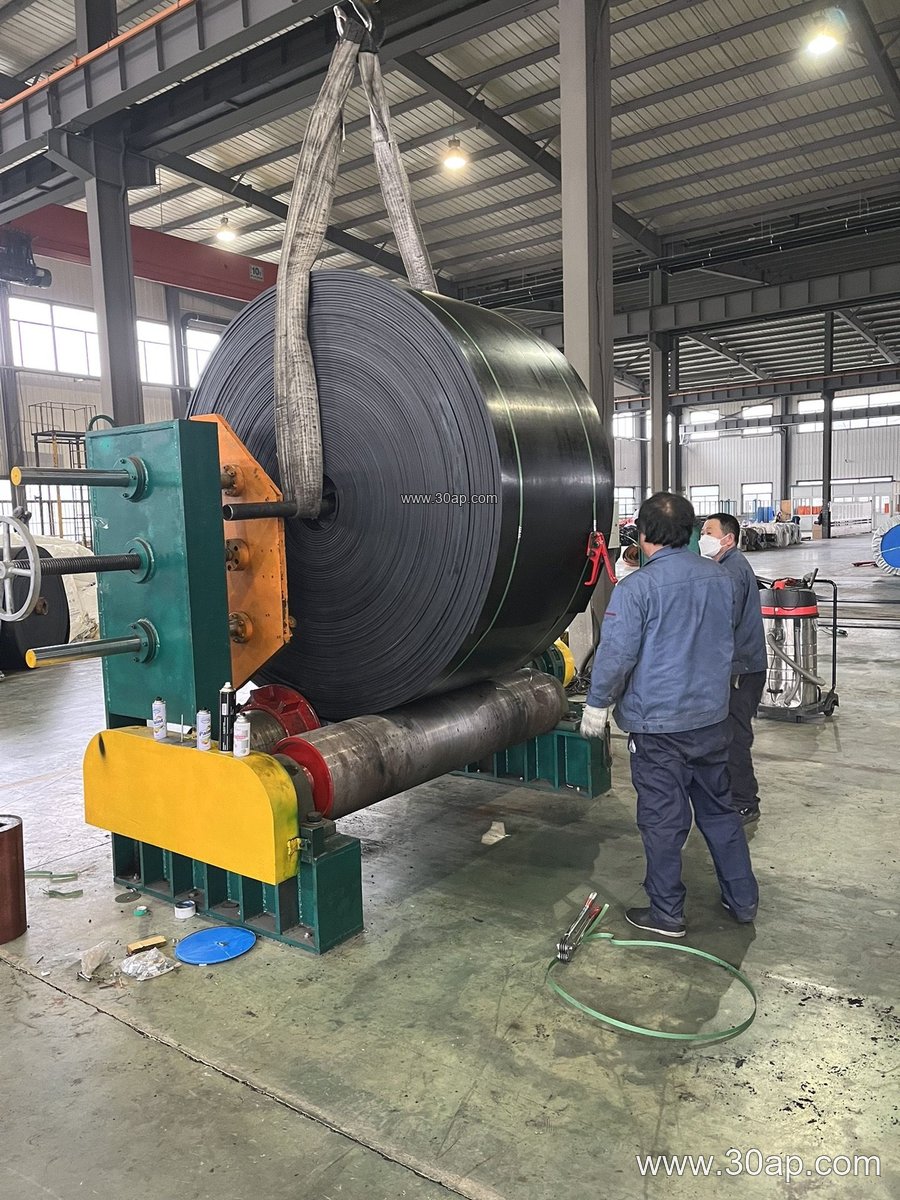
Construction and Common Types
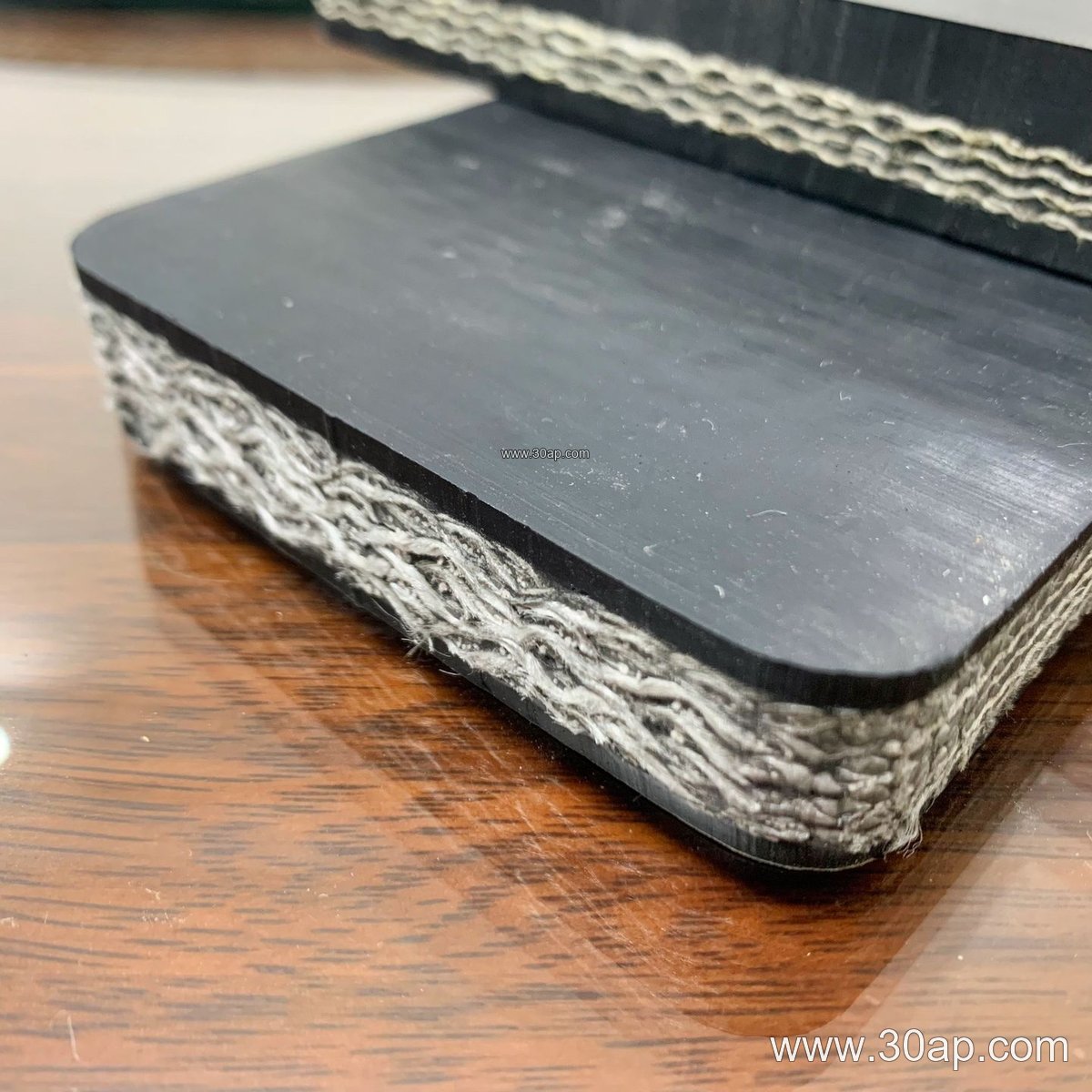
Most rubber belts share a layered build: top cover, carcass, and bottom cover. Fabric-core belts use multiple plies of EP (polyester-nylon) or NN (nylon-nylon) fabric. Steel cord belts use parallel steel wires for high tension and long center distances. Surface forms include smooth, chevron, corrugated sidewall, and skirted edges for different material behavior.
- EP Conveyor Belt – polyester-nylon carcass, good fatigue resistance, widely used in mining and cement.
- NN Conveyor Belt – nylon-nylon carcass, high elongation under load, suited to shock loading.
- Steel Cord Conveyor Belt – high strength for long overland and underground routes.
- Chevron Conveyor Belt – raised cleats to prevent rollback on inclines.
- Corrugated Sidewall Conveyor Belt – vertical or steep-angle conveying with cross-ribs.
- Pipe Conveyor Belt – forms a tube to contain dust and protect material.
- Heat Resistant Conveyor Belt – for clinker, sinter, and hot cement.
- Flame Retardant Conveyor Belt – for coal mining and underground service.
- Abrasion Resistant Conveyor Belt – for sharp rock, ore, and aggregate.
- Oil Resistant Conveyor Belt – for oily scrap, wood chips, and some recycling streams.
Special grades such as cold resistant, anti-static, acid resistant, and food grade are available when the duty calls for them. For underground coal mining, PVG and PVC belts are common because of their flame-retardant properties.
Typical Specifications and Sizes
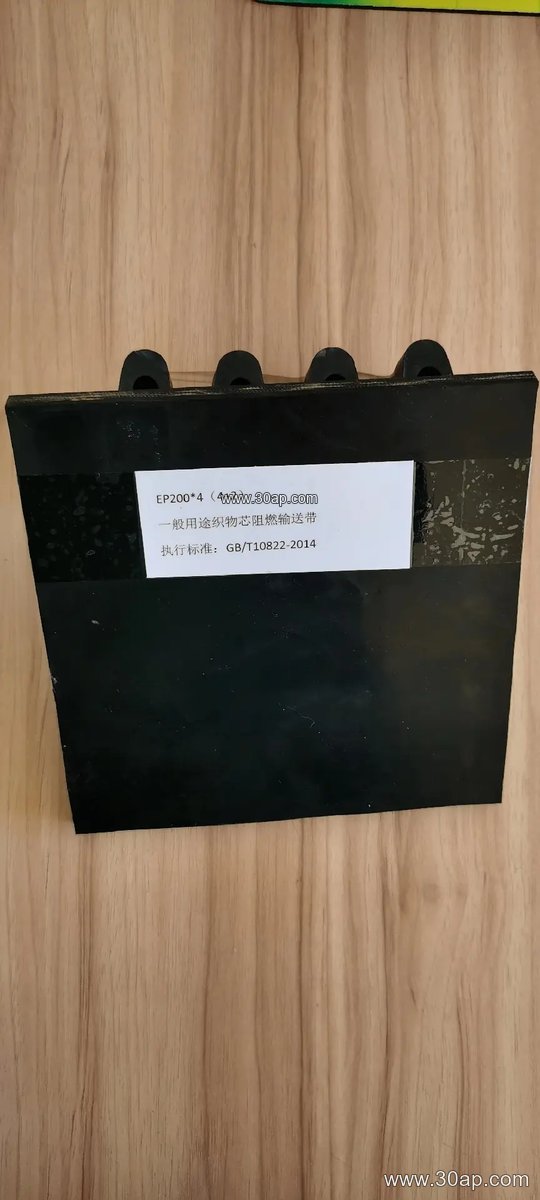
Belt strength is usually expressed by the carcass grade. For EP belts, common grades include EP200, EP400, EP630, EP1000, and EP1250; higher grades such as EP1600 and EP2000 are used for heavier duty. Steel cord belts are rated in ST grades, for example ST1000, ST1600, and ST2500. Widths range from B500 to B2000, and cover thickness is often given as top plus bottom, such as 4+2 mm or 6+2 mm. These values are reference data; final selection depends on the conveyor design, material lump size, and operating conditions.
| Parameter | Common Range | Notes |
|---|---|---|
| Belt width | B500 to B2000 | Wider belts suit high tonnage; match to pulley and frame design |
| EP grade | EP200 to EP2000 | Higher grade for longer runs or heavier loads |
| Steel cord grade | ST1000 to ST2500 | For high tension and long center distances |
| Cover thickness | 3+1.5 to 8+3 mm | Thicker covers for abrasive or impact duty |
| Carcass plies | 2 to 6 | Multi-ply fabric core for flexible strength |
When specifying, state the material, lump size, capacity, incline, and ambient conditions. A belt that is too stiff for the pulley diameter may crack; a belt that is too thin for the impact zone may puncture. Do not assume one belt width fits every pulley diameter, and do not derive shaft size from width alone. The conveyor pulley, idler roller, and bracket layout should be reviewed together with the belt datasheet.
Where It Is Used
In mining, a heavy-duty mining conveyor belt moves ore from crusher to stockpile. Coal mining conveyor belts in underground roadways require flame retardant and anti-static properties. Cement plants use heat resistant belts after the kiln and abrasion resistant belts for clinker and limestone. Power plants rely on rubber belts for coal and ash handling. Quarries and sand making plants use aggregate conveyor belts and crusher conveyor belts with impact-resistant covers. Ports and ship loading facilities use wide belts, sometimes 1200mm or 1500mm wide, for fast bulk transfer.
Other industries include steel plants, recycling lines, and construction sites. In each case, the rubber conveyor belt is matched to the material: sharp rock calls for high abrasion resistance, hot material calls for heat resistance, and oily material calls for oil resistance. The same belt should not be expected to perform well in all conditions.
Buyer Checklist
- Define the material and maximum lump size.
- Confirm the required belt grade and cover thickness.
- Check the pulley diameters and troughing angle.
- Specify flame retardant or anti-static needs for underground use.
- Plan splicing: endless belts reduce joint failure but need installation space.
- Ask for a datasheet with tension, elongation, and cover properties.
For more information on rubber conveyor belts and related components such as idler rollers, conveyor pulleys, and brackets, visit ccd-machinery.com. A well-matched belt keeps the whole conveyor line running smoothly.