What a Conveyor Idler Frame Does on the Line
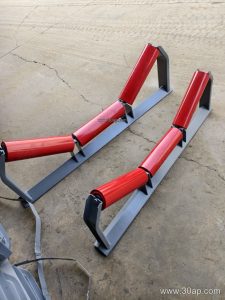
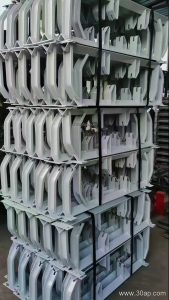
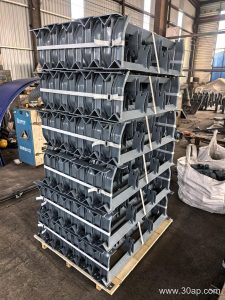
A conveyor idler frame is the structural support that holds the idler rollers in the correct position under or over the conveyor belt. It keeps the rollers aligned, sets the trough angle on the carrying side, and transfers the load from the belt and material into the conveyor stringer. In a quarry, a cement plant, or a coal handling system, the frame is easy to overlook, yet it decides how evenly the belt sits and how long the rollers last. The same assembly is often called a roller bracket or idler support frame, and it works together with the conveyor bracket that fixes it to the main structure.
Frames are usually made from angle steel, channel steel, or folded steel plate. The choice depends on belt width, load, and the environment. A frame in a wash plant or a port terminal faces moisture and dust, so coating and drainage matter as much as strength.
How the Frame Is Built and Where It Sits
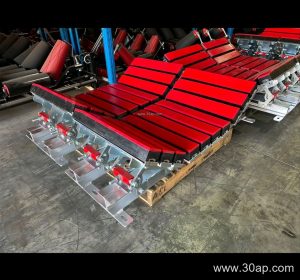
The basic carrying frame is a cross beam with two or three mounting positions for idler rollers. A three-roller arrangement forms the trough that keeps bulk material centered. A return frame sits below the belt and supports the empty strand, often with one flat roller or two rollers in a V shape. Buffer frames near a transfer point use impact rollers to absorb falling material, while self-aligning frames use angled rollers to correct belt drift.
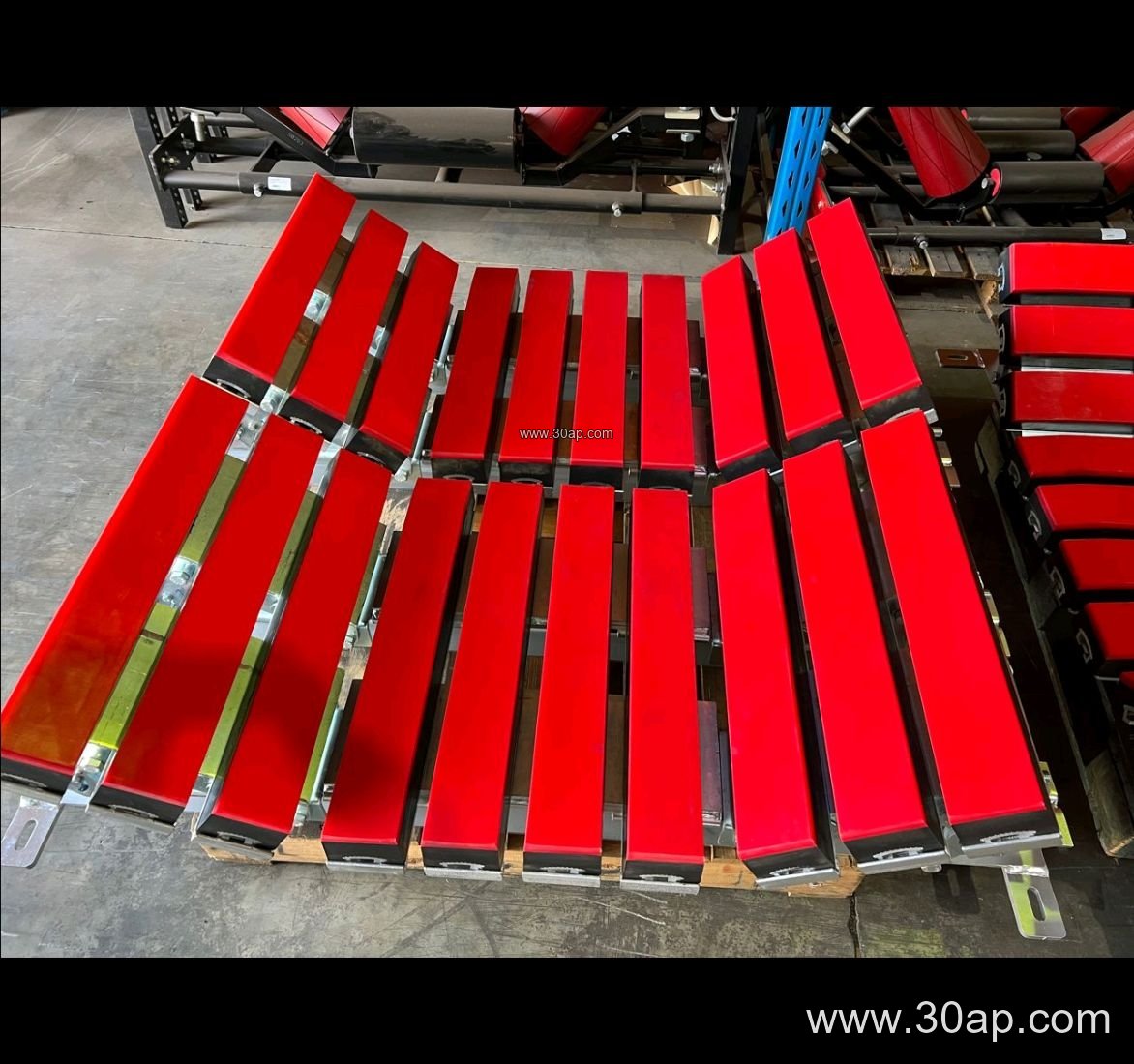
- Carrying trough frame with 20, 30, 35, or 45 degree trough angles
- Return frame with flat or V-shaped roller positions
- Impact frame at loading points
- Self-aligning and forward-leaning frames for tracking control
- Suspended and adjustable frames for special structures
Mounting hole spacing and cross beam length are not fixed numbers. They follow belt width, trough angle, and roller diameter, so a frame drawing should always be checked against the actual conveyor layout.
Matching Frame, Roller, and Belt Width
Belt width and roller diameter are linked through the frame, but they are not a single fixed pair. A B800 frame may be built with Ø89 or Ø108 rollers depending on load and speed, and a B1200 line often uses Ø133 or Ø159 rollers. The trough angle is a separate decision: 35 degrees is common for general bulk material, while 45 degrees gives a deeper trough for higher capacity. A frame with a forward lean of about 1.5 to 2 degrees can help the belt track, but it should be chosen with the whole conveyor in mind.
| Belt width | Typical trough angle | Common roller diameter |
|---|---|---|
| B500 to B650 | 20 to 30 degrees | Ø89 |
| B800 to B1000 | 30 to 35 degrees | Ø89 to Ø108 |
| B1200 to B1400 | 35 to 45 degrees | Ø108 to Ø159 |
| B1600 to B2000 | 35 to 45 degrees | Ø133 to Ø194 |
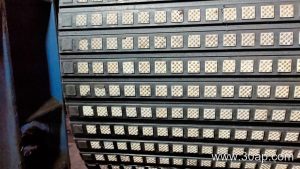
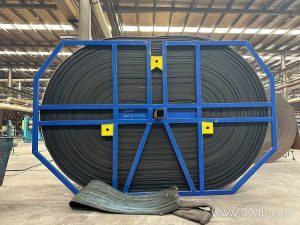
These are common reference combinations, not universal rules. A heavy-duty mining conveyor belt carrying iron ore may need a stronger frame than a light aggregate line of the same width. The belt itself matters too: a steel cord conveyor belt, an EP conveyor belt, or a thick abrasion resistant conveyor belt all apply different loads to the rollers and frame.
Fixed or Adjustable Frames
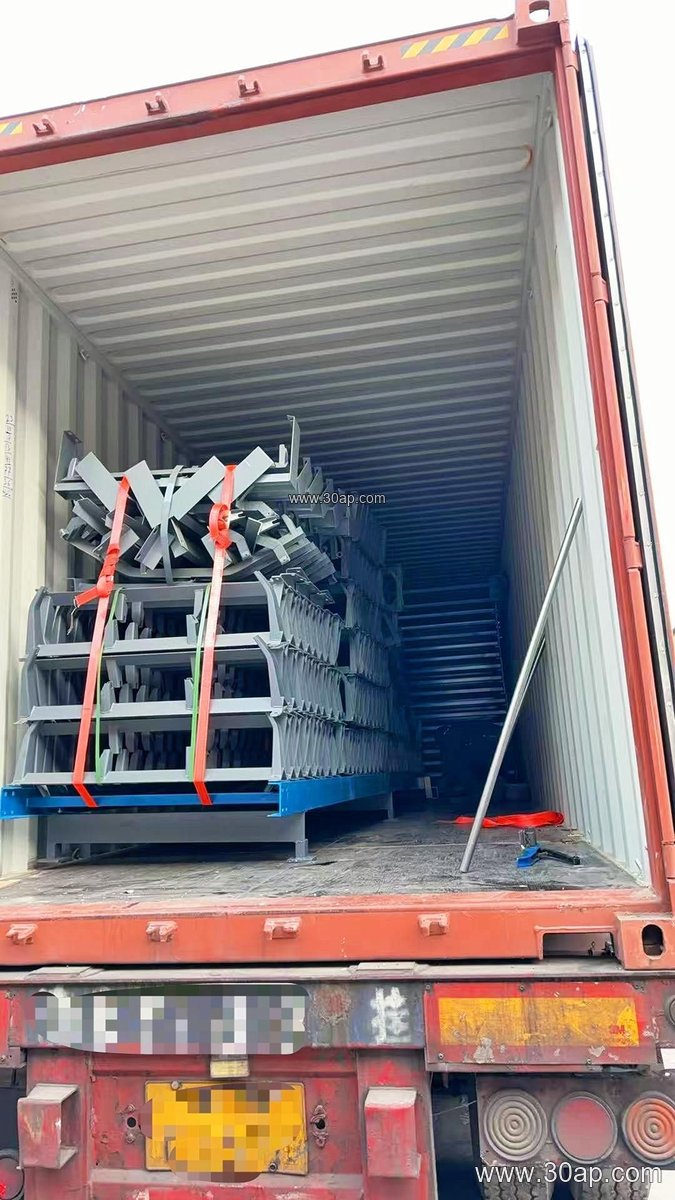
A fixed frame is welded or bolted to one trough angle and is simple and rigid. An adjustable frame lets maintenance staff change the trough angle within a range, which is useful when material flow changes or when a new belt needs fine tuning. Adjustable designs cost more and add a few setting points to check, so they suit lines where conditions vary. For a stable limestone or cement duty, a fixed 35 degree frame is often enough.
Buyer Checklist Before Ordering
Confirm the belt width, the roller diameter, and the required trough angle first. Then check the mounting dimensions, the stringer spacing, and the frame material. Ask how the frame is finished, since a wet coal preparation plant and a dry sand and gravel line have different needs. State whether the frame is for a carrying, return, impact, or self-aligning position, because these are not interchangeable. Finally, keep spare frames and conveyor idler rollers on hand for the loading zone, where wear is fastest.
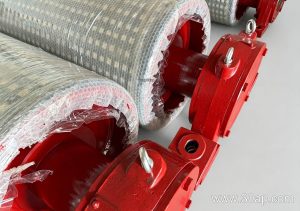
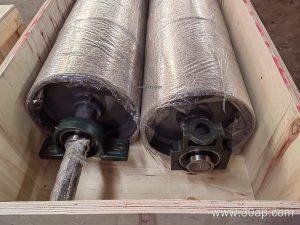
For related components, the conveyor pulley at the drive and tail ends and the conveyor belt itself should be reviewed together with the frame layout. A well-matched frame keeps the idler roller turning freely, protects the belt edge, and reduces unexpected downtime in mines, power plants, and bulk terminals.