What a Steel Cord Conveyor Belt Is
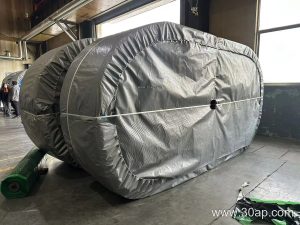
A Steel Cord Conveyor Belt is a heavy-duty rubber belt in which the tension-bearing skeleton is made of parallel brass-plated steel wires rather than woven fabric plies. Because the cords run longitudinally and carry the load directly, the belt can span long centre distances with fewer splices and less stretch than fabric constructions. It is often specified where a single flight must move large tonnages without an intermediate transfer point, for example in mining, cement plants, power stations, ports and large quarry or aggregate operations.
In everyday plant language the product is also called a steel cord belt or wire-cord belt. Those names describe the same article; they are not a different belt type. A common alternative on shorter or more flexible systems is an EP Conveyor Belt or NN Conveyor Belt with woven fabric plies, but those are separate constructions and should not be treated as drop-in replacements.
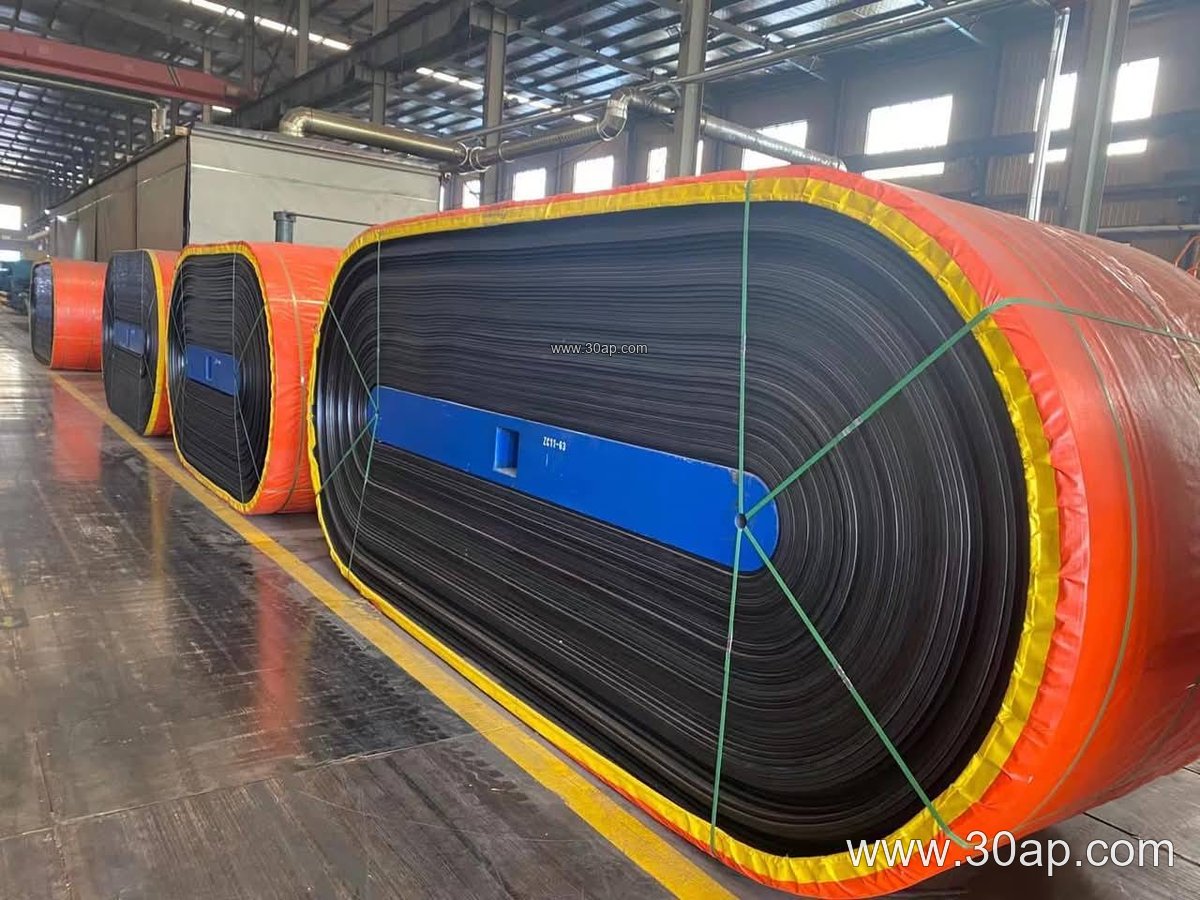
How the Belt Is Built
The core is a single layer of high-tensile steel cords, spaced at a defined pitch and embedded in a bonding rubber compound. Top and bottom cover rubber protect the cords from abrasion, impact, moisture and, where needed, heat, oil or flame. The cord pitch, cord diameter and cover thickness are selected together with the pulley diameters and the duty, so the belt, pulleys and idler roller arrangement form one design package.
- Steel cord layer: carries the working tension.
- Bonding and cushion rubber: holds the cords and absorbs dynamic load.
- Top cover: receives the material and the abrasion.
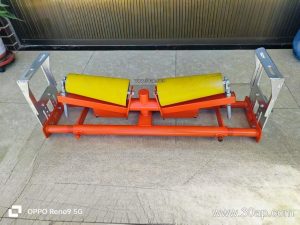
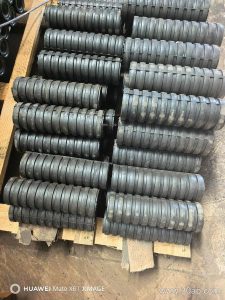
- Bottom cover: runs over the idler roller and pulleys.
Cover grades follow the environment. A Heat Resistant Conveyor Belt may be chosen for clinker or sinter service, an Oil Resistant Conveyor Belt for oily scrap or certain ores, and a Flame Retardant Conveyor Belt for underground coal mining. Abrasion Resistant Conveyor Belt grades are common in quarry and crusher duty. These suffixes qualify the cover compound; they do not change the fact that the belt is a steel-cord product.
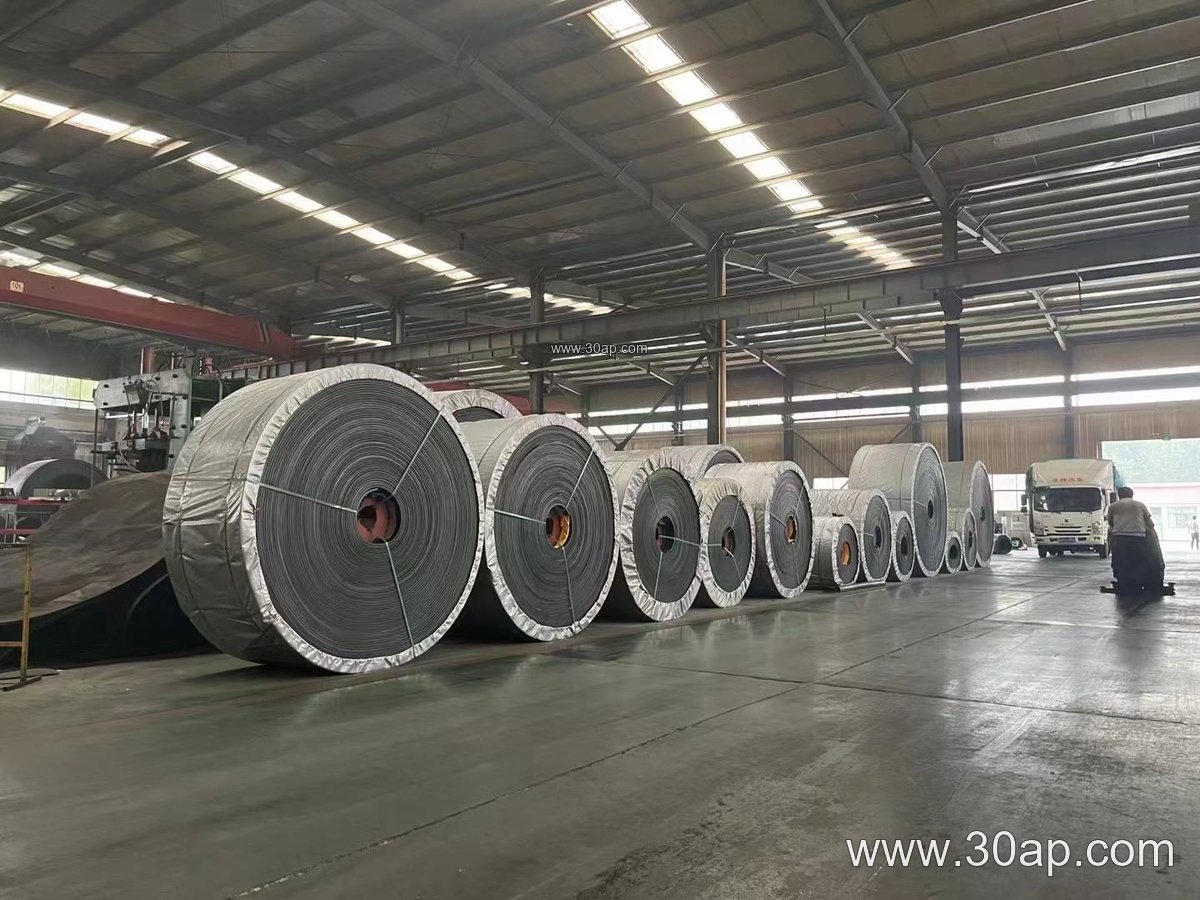
Typical Service Conditions
Steel cord belts are at home in continuous, high-capacity circuits: coal handling at a power plant, limestone transport in a cement works, ore transfer at a copper or iron ore mine, and ship loading at a port terminal. They also appear in long overland routes and in some Underground Mining Conveyor Belt installations where the fire performance and tensile strength suit the mine plan.
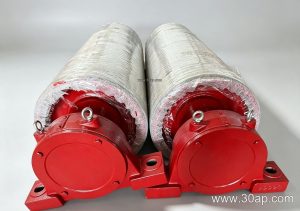
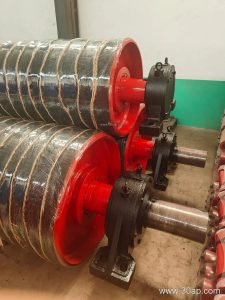
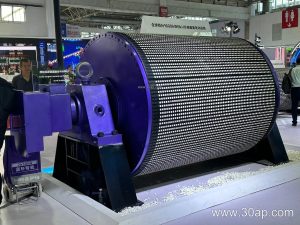
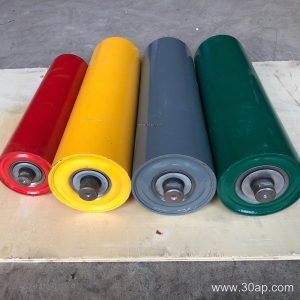
Because the cords are stiff in the running direction, the belt needs generous pulley diameters and careful transition geometry. Drive pulley, tail pulley and bend pulley sizes are each set by the belt manufacturer’s cord and tension data; they are separate components with separate duties and must not be swapped in a specification. A conveyor pulley that is too small for the cord layer can shorten belt life, just as a poorly aligned idler roller can damage the bottom cover.
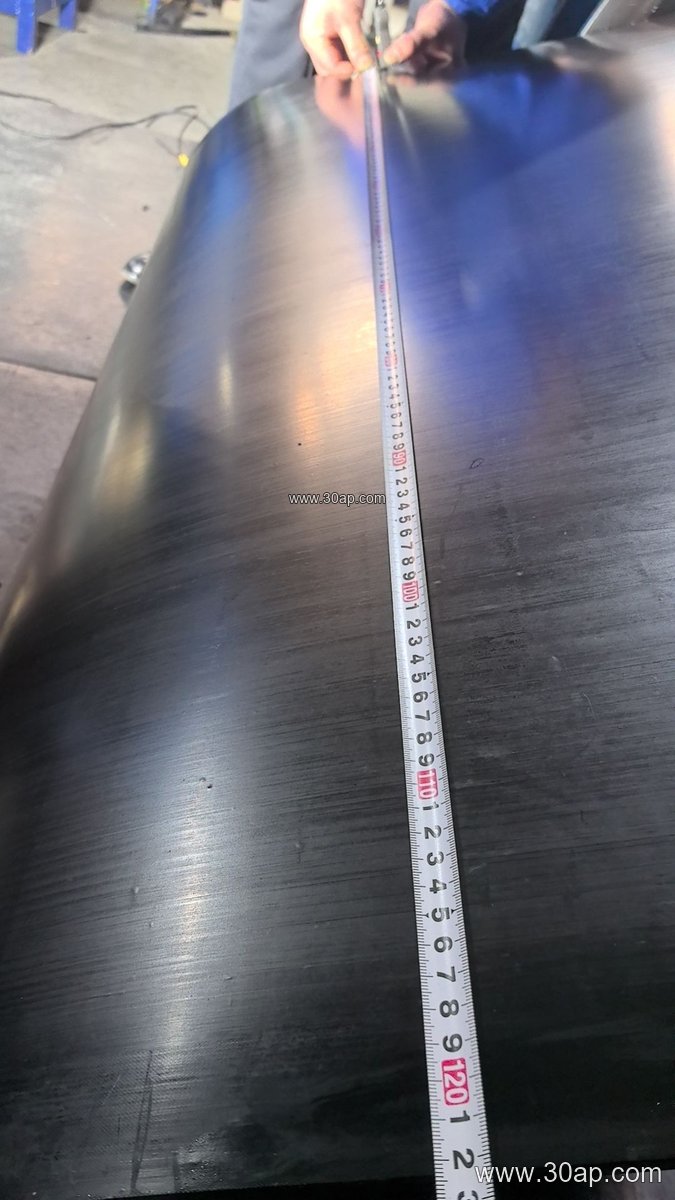
Reference Data and Selection Points
The following table gives commonly quoted reference ranges only. Actual values are confirmed by the belt maker against the conveyor design.
| Item | Common reference |
|---|---|
| Nominal strength grades | ST1000, ST1250, ST1600, ST2000, ST2500, ST3150 |
| Belt width examples | B800, B1000, B1200, B1400, B1600, B1800, B2000 |
| Cover thickness examples | 4+2, 5+2, 6+2, 8+3 mm |
| Cover grades | abrasion, heat, oil, flame retardant, anti-static, cold resistant |
Width and strength are independent choices. A given belt width does not fix one pulley diameter, and shaft size must come from the pulley maker’s calculation, never from belt width alone. When comparing, note that a Chevron Conveyor Belt or Corrugated Sidewall Conveyor Belt solves inclination or spillage on a different principle; a steel cord belt is chosen primarily for tensile capacity and long reach.
What a Buyer Should Check
- Confirm the required tension and the cord grade with the conveyor calculation, not by habit.
- Match cover compound to the real material: hot, oily, wet, sharp or flammable.
- Check pulley diameters, splice method and take-up travel with the belt supplier.
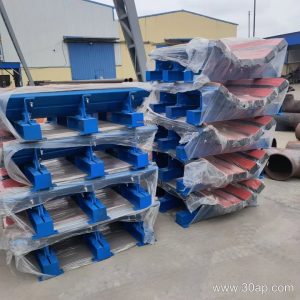
- Review the conveyor bracket and frame alignment, since a twisted frame loads the belt edge.
- Ask for the maker’s storage and installation guidance; cord belts need correct splicing.
For plant engineers sourcing through a bulk material conveyor belt supplier, the useful comparison is total life cost: the belt, the pulley set, the idler roller fleet and the splice quality all act together. A well-matched Steel Cord Conveyor Belt on a properly aligned conveyor will usually outlast a fabric belt in the same heavy duty, but only when the whole system is designed as one.