What a Construction Industry Conveyor Belt Does
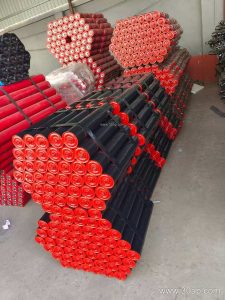
A construction industry conveyor belt is the endless carrying surface that moves crushed stone, sand, gravel, cement, recycled concrete and excavated spoil between crushers, screens, stockpiles and load-out points. On a typical crushing and screening spread it works alongside conveyor pulleys, idler rollers and conveyor brackets, but the belt itself is the component that actually contains the load and transmits the drive force. Because site conditions vary from wet sand to hot asphalt-mill feed, the belt is usually specified as a system of cover compound, carcass and edge construction rather than as a simple rubber strip.
How the Belt Is Built
Most construction belts use a fabric core or a steel cord core. The fabric core carries the tension and is bonded between top and bottom cover rubber. Common carcass options include EP conveyor belt (polyester warp, nylon weft), NN conveyor belt (nylon warp and weft), and multi-ply fabric core constructions where several plies are laminated together. For very long hauls or high tonnage, a steel cord conveyor belt replaces the fabric plies with brass-plated steel cords for greater strength with less stretch.
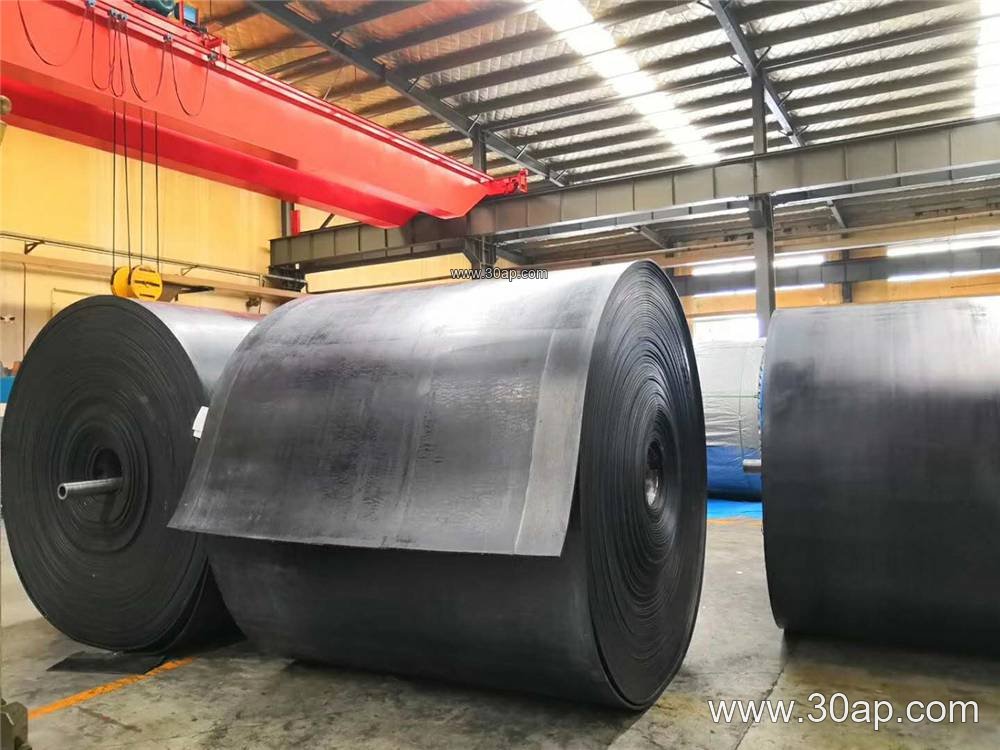
Cover compound choice matters as much as the core. Abrasion resistant conveyor belt grades suit sharp crushed rock; heat resistant conveyor belt grades suit hot clinker or asphalt; oil resistant conveyor belt grades handle bitumen or oily aggregates; and flame retardant conveyor belt or fire resistant conveyor belt grades are used where regulations require reduced flame spread, such as coal handling or enclosed tunnels. Anti-static conveyor belt grades help dissipate static charge in dusty or potentially explosive atmospheres.
Common Belt Types in Construction
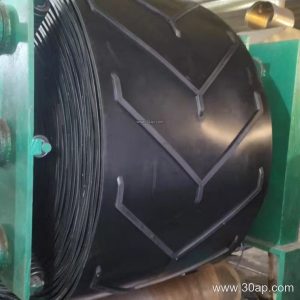
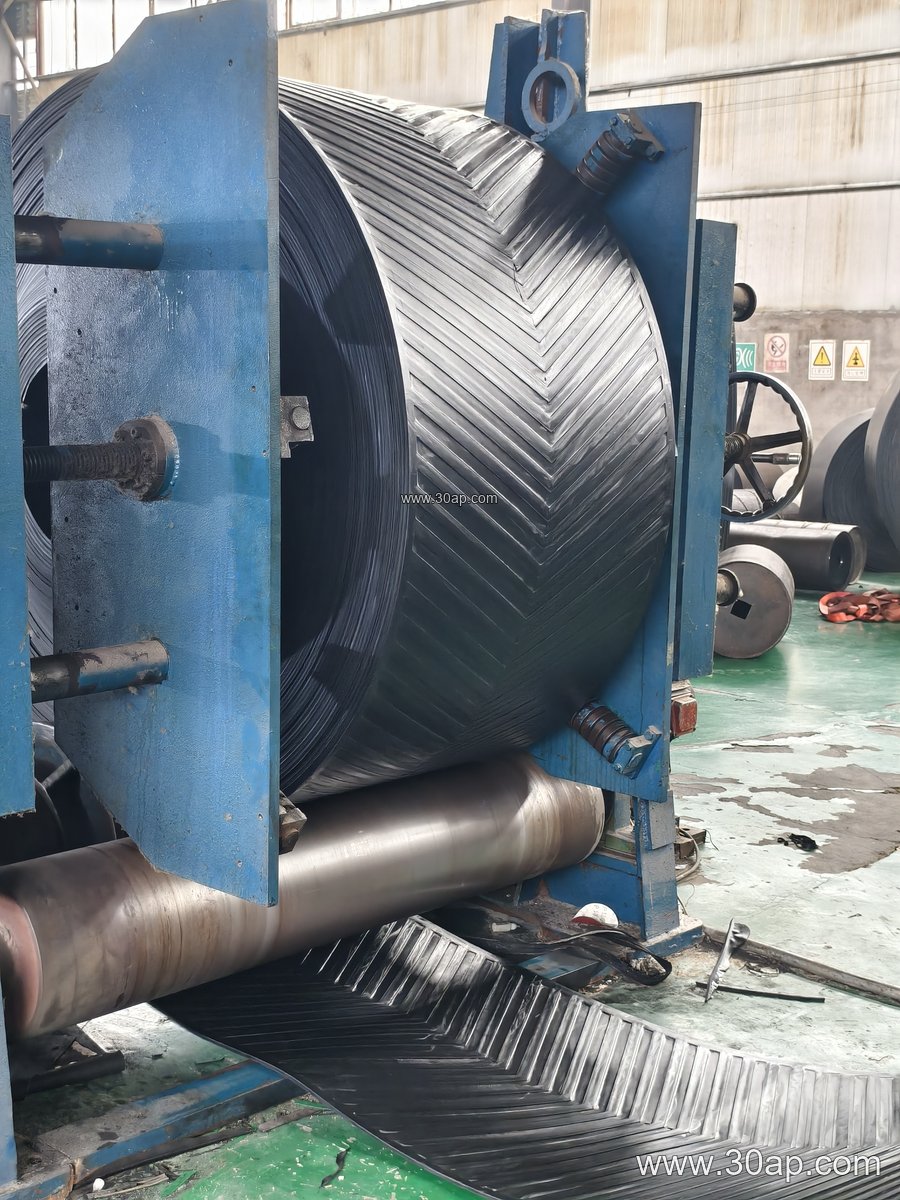
Beyond the flat belt, several designs solve specific site problems. A chevron conveyor belt uses raised ribs to hold material on inclines steeper than a smooth belt allows. A corrugated sidewall conveyor belt with transverse cleats contains material on steep or vertical lifts. A pipe conveyor belt forms a closed tube to protect dusty or sensitive material and to follow curved routes. An endless conveyor belt is spliced at the factory or on site to form a continuous loop, reducing joint fatigue on short, high-cycle conveyors.
Typical Reference Data
The figures below are common industry reference ranges, not fixed combinations. Final values should be confirmed by the belt designer for each conveyor.
- Fabric core grades: EP200, EP315, EP400, EP500, EP630, EP800, EP1000, EP1250, EP1600, EP2000
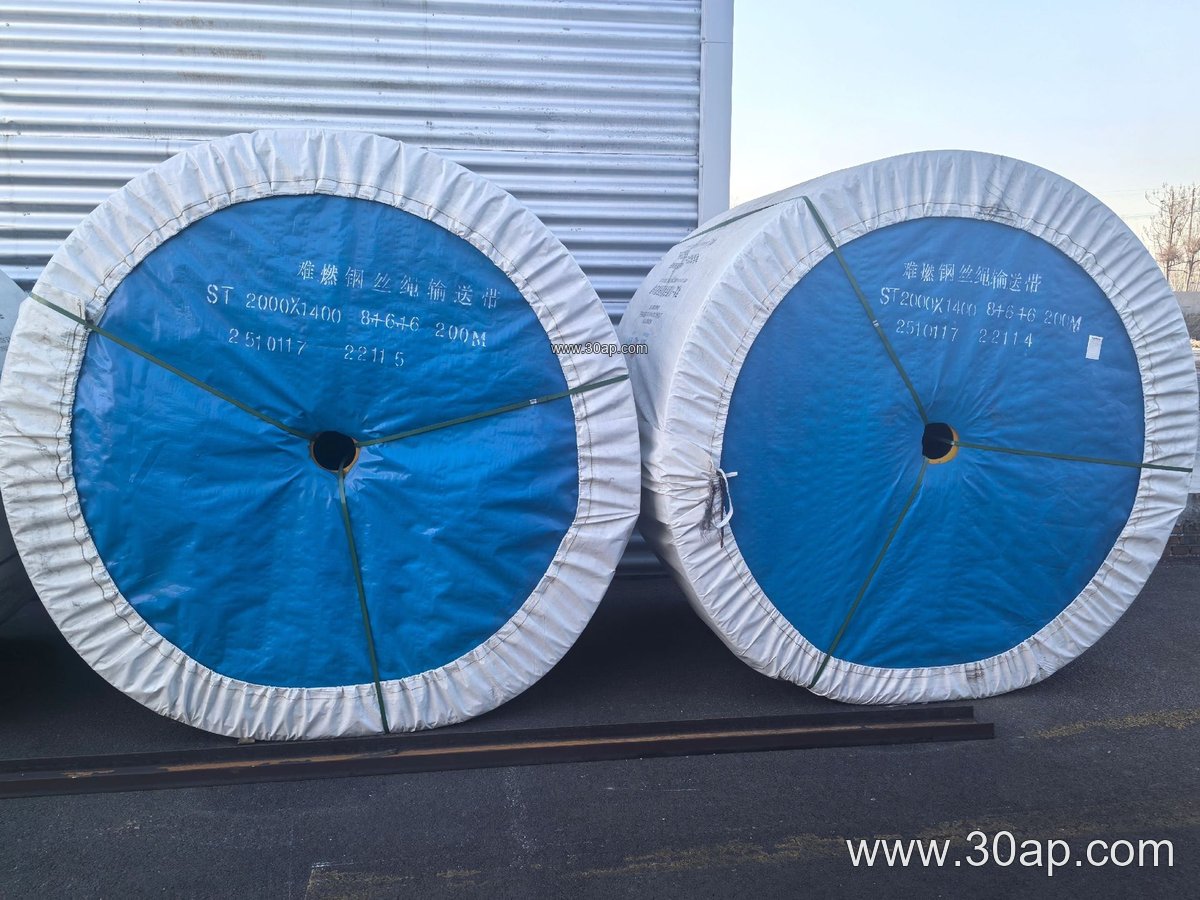
- Steel cord grades: ST1000, ST1250, ST1600, ST2000, ST2500, ST3150
- Common belt widths: B500, B650, B800, B1000, B1200, B1400, B1600, B1800, B2000
- Cover thickness examples: 3+1.5 mm, 4+2 mm, 5+2 mm, 6+2 mm, 8+3 mm
- Carcass plies: commonly 2 to 6 for fabric belts
Where It Is Used
Construction sites are only one home for this belt family. The same heavy-duty conveyor belt designs appear in quarries and aggregate plants moving crushed stone and sand, in cement plants handling clinker and raw meal, in power plants and steel plants moving coal and ore, and in port and ship loading terminals. In mining, a mining conveyor belt or coal mining conveyor belt may need flame retardant and anti-static properties for underground use, while an iron ore or copper ore duty calls for high abrasion resistance. A quarry conveyor belt and a crusher conveyor belt usually face the highest impact at the loading point, so impact resistant grades and adequate top cover thickness are worth considering.
Buyer Checklist
Before ordering, confirm the material being carried, lump size and impact energy, belt speed, incline angle, ambient and material temperature, and whether the belt will run underground or in a classified area. Check the pulley diameters and troughing idler arrangement with the conveyor designer, because a stiff heavy belt needs larger pulleys than a thin fabric belt; belt width alone does not determine pulley or shaft size. Ask for the splice method, edge condition and cover thickness in millimetres. For sticky or wet material, a chevron or cleated profile may be more useful than a plain smooth belt. For dusty, enclosed or curved routes, consider a pipe conveyor belt. Keep spare idler rollers and a spare conveyor pulley inspected as part of the same maintenance plan, since a worn roller can damage an otherwise sound belt.