What a Self-Aligning Idler Bracket Does
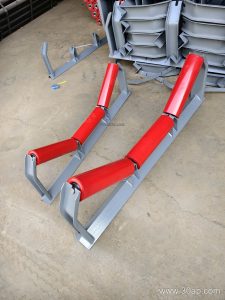
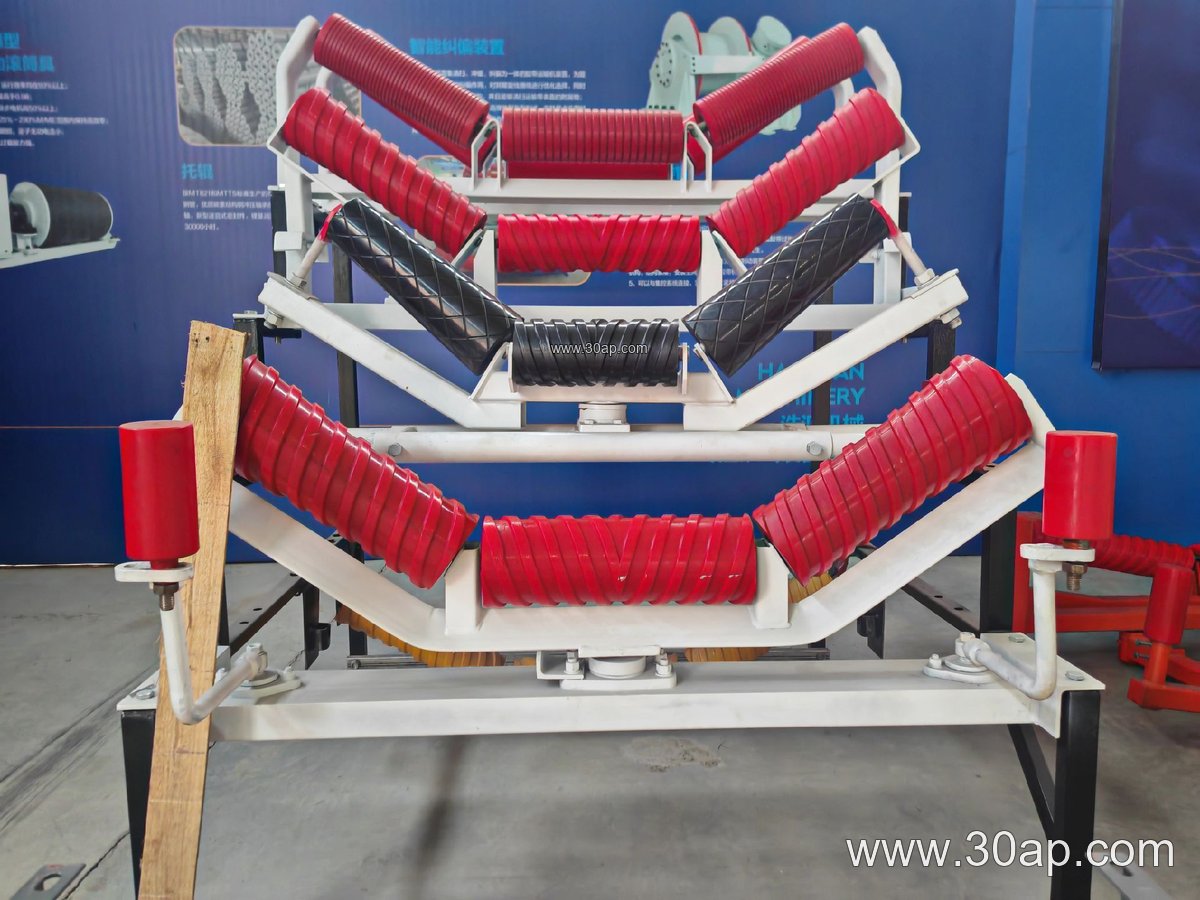
A self-aligning idler bracket is the mounting frame that holds a set of idler rollers on a conveyor and lets that roller set pivot slightly when the belt begins to drift sideways. Instead of fixing the rollers rigidly to the stringer, the bracket sits on a vertical pivot or a swivel base, so the roller frame can rotate a few degrees in the horizontal plane. When the conveyor belt touches the rollers at an angle, the resulting friction turns the frame, which steers the belt back toward the center line. In practice, this bracket is a simple mechanical correction device that works continuously without operator input.
It is common to see this component described as a self-tracking idler frame or a swivel idler bracket. Both names refer to the same product. It is not a drive pulley, tail pulley or bend pulley, and it should not be confused with those components when specifying a conveyor.
How the Bracket Is Built
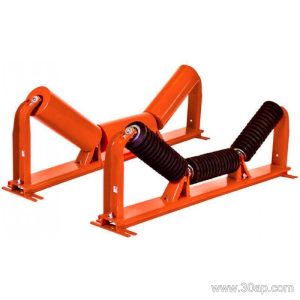
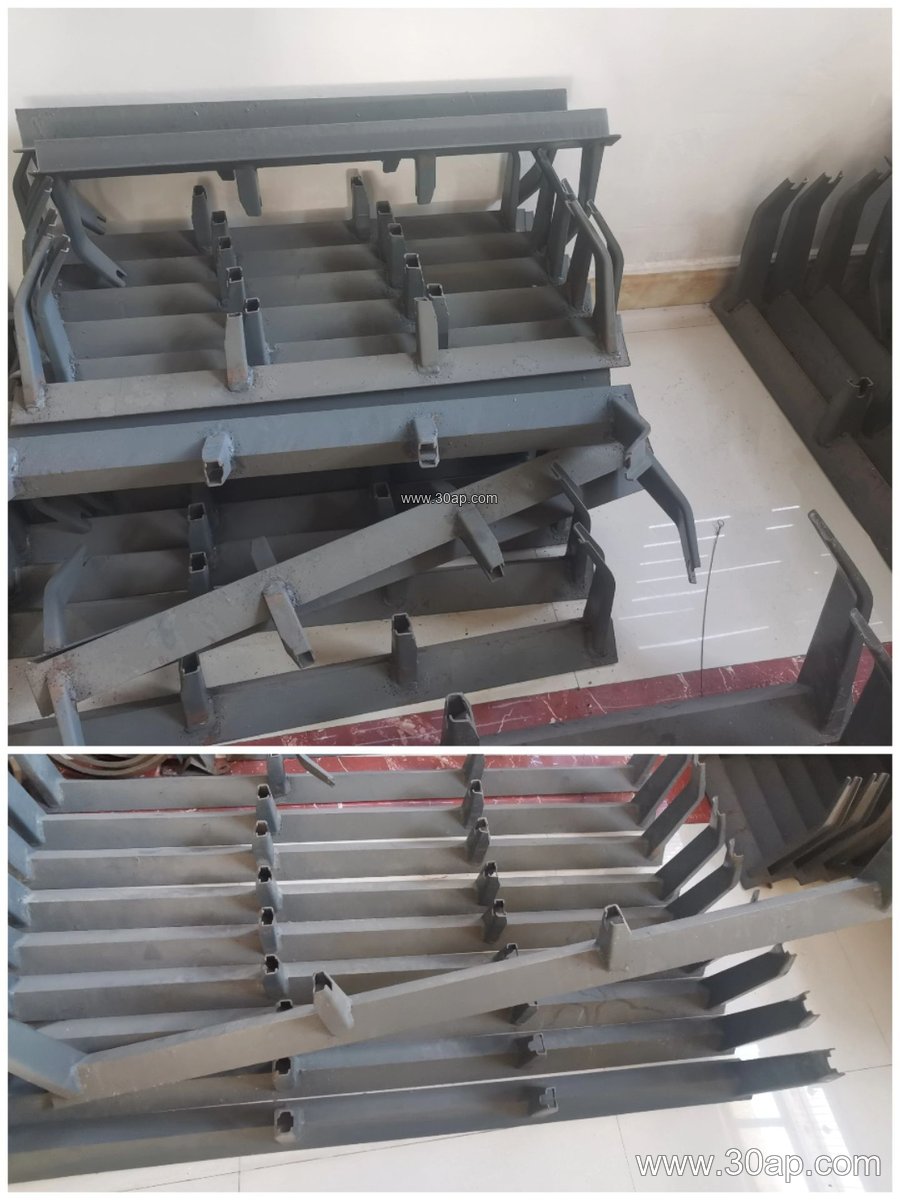
Most units are fabricated from angle steel, channel steel or folded steel plate, then welded into a crossbeam with two side arms. The roller mounting slots are positioned according to belt width and trough angle. A central pivot pin, a bearing seat or a pair of bushings allows the frame to rotate, while stops or limit lugs prevent excessive swing.
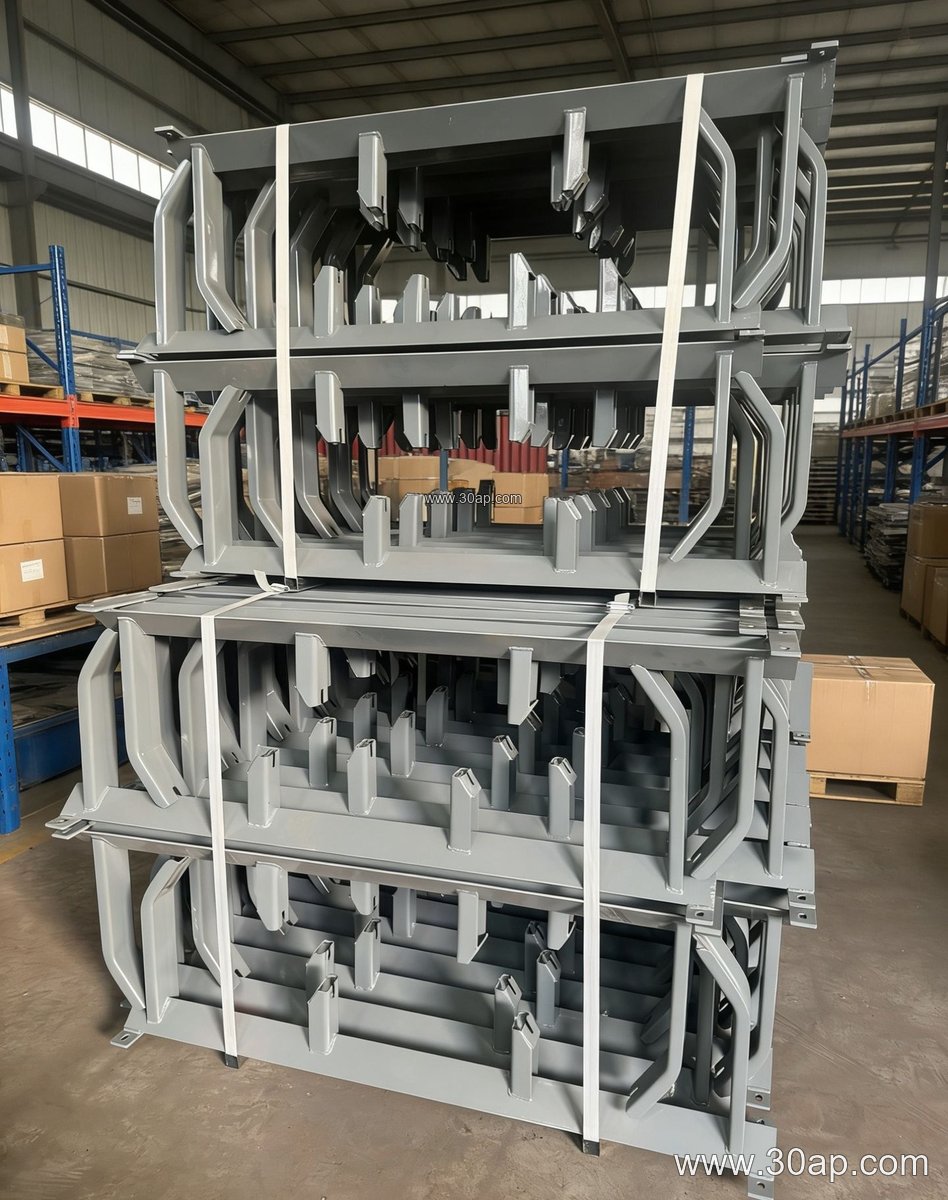
- Frame material: angle steel, channel steel or bent plate, usually painted or galvanized.
- Pivot: pin and bushing design, sometimes with a sealed bearing seat for dusty conditions.
- Roller seats: slotted or bolted holes so the idler roller can be adjusted or replaced.
- Optional features: self-cleaning gap, rubber buffer pads, or a return-side V configuration.
The bracket must match the idler roller diameter and the belt width. Common roller diameters include Ø89, Ø108, Ø133, Ø159 and Ø194, and common belt widths run from B500 to B2200. A typical combination might be B800 with a 35 degree trough and Ø108 rollers, or B1200 with 45 degree troughing and Ø133 rollers. These are reference examples, not fixed rules, and the final match depends on the conveyor design.
Where It Fits on the Conveyor
Self-aligning brackets are usually installed on the carrying side at intervals along the belt, especially before and after curves, transfer points and long straight runs. They also appear on the return side as V-return or flat-return self-aligning frames. In a quarry or sand and gravel line, a self-aligning bracket after the crusher discharge helps keep the belt centered when stone loads shift. In a coal mining conveyor or a power plant coal handling system, the same bracket reduces edge wear on the conveyor belt and lowers spillage.
Other industries that rely on this part include cement plants, iron ore and copper ore handling, port ship loading, steel plant sintering lines, and tunnel muck removal. In each case, the goal is the same: keep the belt on the idler roller set and avoid the uneven loading that shortens belt life.
Matching the Bracket to Belt and Roller
Buyers should confirm four things before ordering: belt width, trough angle, roller diameter and mounting hole spacing. Trough angles of 20, 30, 35 and 45 degrees are common, and adjustable brackets can be set between these angles. Forward-leaning frames often use about 1.5 to 2 degrees of lead angle to assist tracking.
| Belt width | Trough angle | Roller diameter | Typical use |
|---|---|---|---|
| B650 | 30 degrees | Ø89 | Small aggregate or sand line |
| B800 | 35 degrees | Ø108 | Quarry and crushing plant |
| B1000 | 35 degrees | Ø133 | Cement plant and coal handling |
| B1200 | 45 degrees | Ø133 | Iron ore and port bulk material |
| B1400 | 45 degrees | Ø159 | Heavy-duty mining conveyor |
Note that the mounting hole distance and crossbeam length change with belt width and trough angle. They are not fixed numbers, so always check the drawing. A wider belt such as a 1200mm or 1500mm conveyor belt does not automatically dictate one trough angle or one roller size.
Installation and Maintenance Notes
Install the bracket square to the conveyor center line and keep the pivot free of packed material. Check that the roller set rotates freely and that the belt has enough tension. A loose belt will not generate the friction needed for self-alignment. Inspect the pivot bushings and the frame welds during routine shutdowns, and clear dust or sticky material from the swivel area. When replacing rollers, use the same diameter and length so the bracket geometry stays correct.
For more conveyor components and matching belt options, visit conveyoridler.com and review the self-aligning bracket range together with the conveyor belt and conveyor pulley data. A well-chosen bracket, paired with a suitable abrasion resistant conveyor belt or flame retardant conveyor belt, keeps the whole conveyor line running straighter and longer.