What a Conveyor Ceramic Lagged Pulley Is
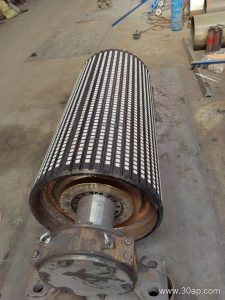
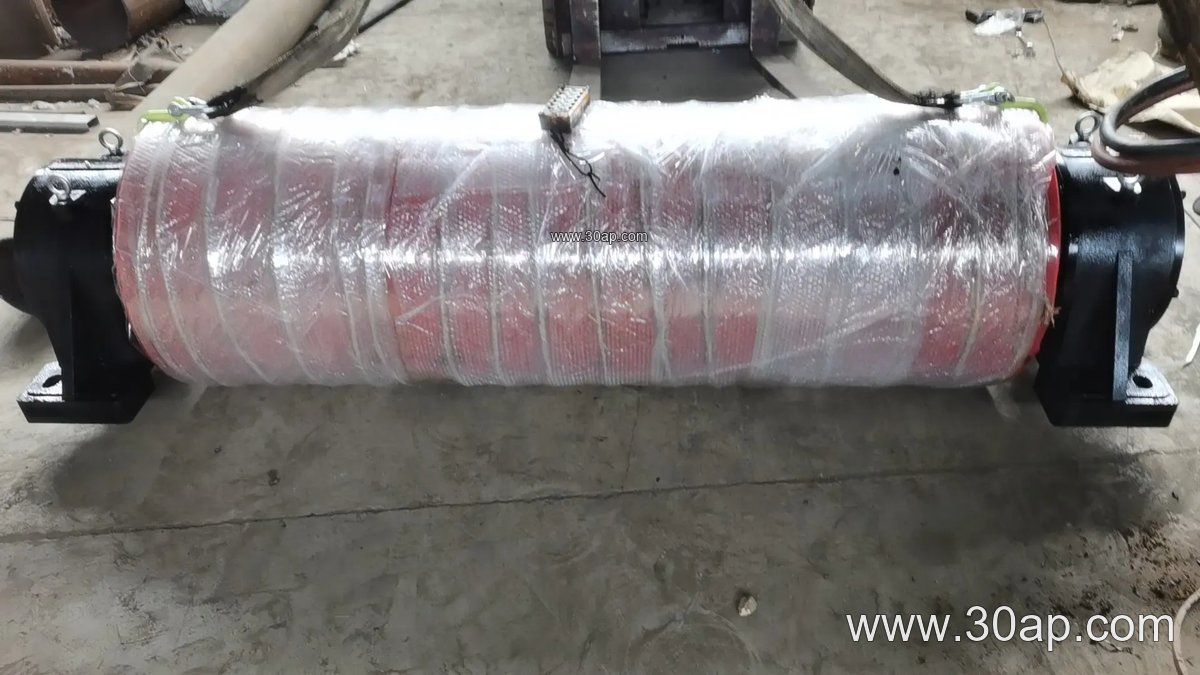
A conveyor ceramic lagged pulley is a conveyor pulley whose outer shell is covered with ceramic tiles set in a rubber matrix. This ceramic lagging is bonded to the drum surface to raise friction between the pulley and the conveyor belt, reduce slip, and extend service life in abrasive or wet conditions. It is a specialized form of lagged pulley, distinct from plain rubber or diamond-groove lagging. Drive, tail, and bend pulleys are not interchangeable; the ceramic lagged version is most often specified for drive positions where torque transmission is critical, though it can also appear on other pulleys in demanding circuits.
Construction and Surface Form
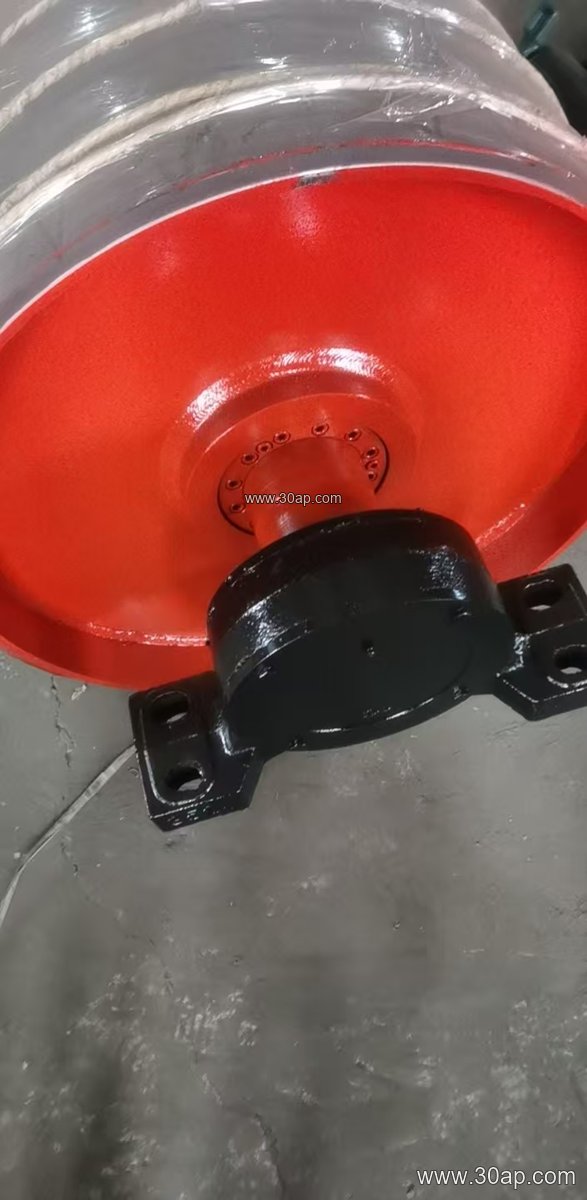
The pulley body is typically a welded steel drum with machined end discs and a shaft sized by torque and load, not by belt width alone. Common shaft diameters include Ø50, Ø60, Ø70, Ø80, Ø90, Ø100, Ø120, Ø140, Ø160, Ø180, and Ø200 mm, with the final value determined by design. Ceramic lagging is applied in tiles—often 8, 10, 12, 15, or 20 mm thick—embedded in a rubber layer that is bonded to the shell. The ceramic surface may be flat or feature raised profiles for extra grip. Pulley face width usually exceeds belt width; for example, a B800 belt may run on a pulley face around 950 mm, while B1200 may use about 1400 mm. Diameters range from Ø200 to Ø1800 mm depending on duty; a B800 × Ø500 or B1200 × Ø1000 combination is common in medium-duty service, but no single diameter is mandatory for a given belt width.
Where It Is Used
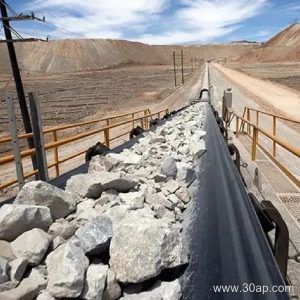
These pulleys are found in quarry and aggregate lines, coal washing plants, cement clinker handling, power plant coal conveying, and port bulk terminals. In a sand and gravel operation, a ceramic lagged drive pulley helps maintain grip when the conveyor belt carries wet, gritty material. In a coal mining conveyor system, the same pulley type resists wear from fine coal dust and reduces belt slippage under high tension. They also suit iron ore and copper ore circuits where abrasive fines coat the belt and pulley. The pulley works alongside the conveyor belt, idler rollers, and conveyor brackets, and its performance depends on correct alignment and tension.
Matching the Pulley to the Belt and Duty
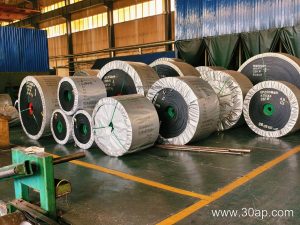
Selection starts with the belt specification. A heavy-duty mining conveyor belt or a steel cord conveyor belt such as ST1600 or ST2000 may require a larger diameter and thicker lagging to handle high tension. Fabric core belts—EP conveyor belt grades like EP200 or EP400, or NN conveyor belt grades—often pair with ceramic lagged drive pulleys in abrasive service. For underground coal mining, flame retardant conveyor belt and anti-static conveyor belt properties must be considered alongside lagging choice. Abrasion resistant conveyor belt is common in quarry conveyor belt and crusher conveyor belt duties, where ceramic lagging helps maintain traction despite dust and moisture. Heat resistant conveyor belt in cement plant or power plant applications may call for careful temperature review, as standard ceramic lagging has thermal limits.
Buyer Checklist
- Confirm the pulley position: drive, tail, bend, or tension. A ceramic lagged pulley is not a universal replacement for every pulley type.
- Provide belt width, belt type (e.g., EP1000, NN300, ST1250), and operating tension so the manufacturer can size the shell, shaft, and lagging.
- Specify the environment: wet, abrasive, oily, or high-temperature. Ceramic lagging excels in wet and abrasive conditions but may not suit all oil or heat exposures.
- Ask for the lagging thickness and tile pattern, and verify the bond quality and concentricity.
- Check that the pulley face width and diameter suit the conveyor frame and available space. Do not assume a fixed shaft diameter from belt width alone.
For bulk material conveyor belt systems in mining, quarrying, and processing plants, a correctly specified conveyor ceramic lagged pulley can improve reliability and reduce downtime. Review the entire conveyor pulley assembly—including bearings, brackets, and belt tracking—before installation.