What the Three-Roll Idler Bracket Does
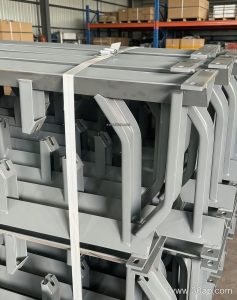
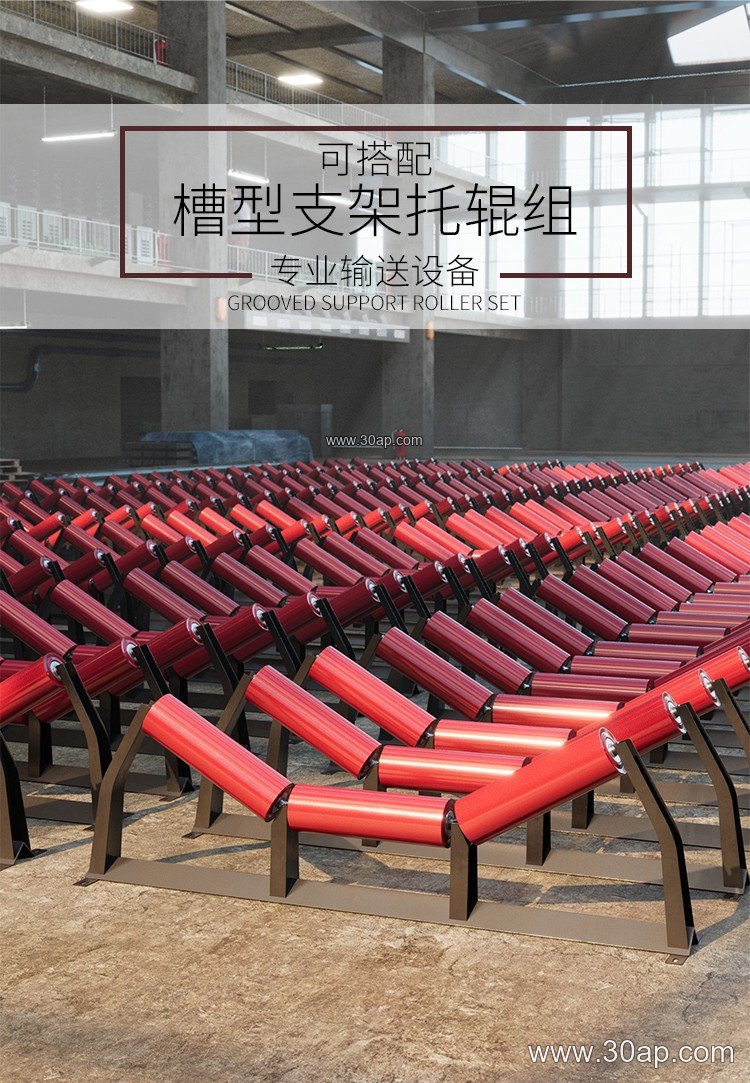
On a troughed belt conveyor, the three-roll idler bracket is the steel frame that holds the three carrying idler rollers in their trough shape. The two outer rolls sit at an angle, the centre roll stays roughly horizontal, and the bracket ties all three together so the belt keeps its profile under load. In practice this bracket is often called a three-roll troughing idler bracket or simply a troughing bracket, and it is the part that transfers the weight of the belt and material into the conveyor stringer. Anyone maintaining a quarry conveyor, a coal handling line, or a cement plant transfer point will meet it on every carrying section.
How the Bracket Is Built
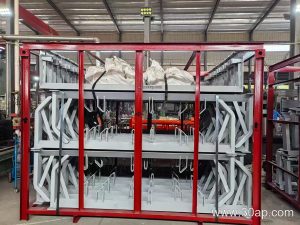
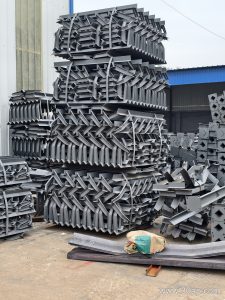
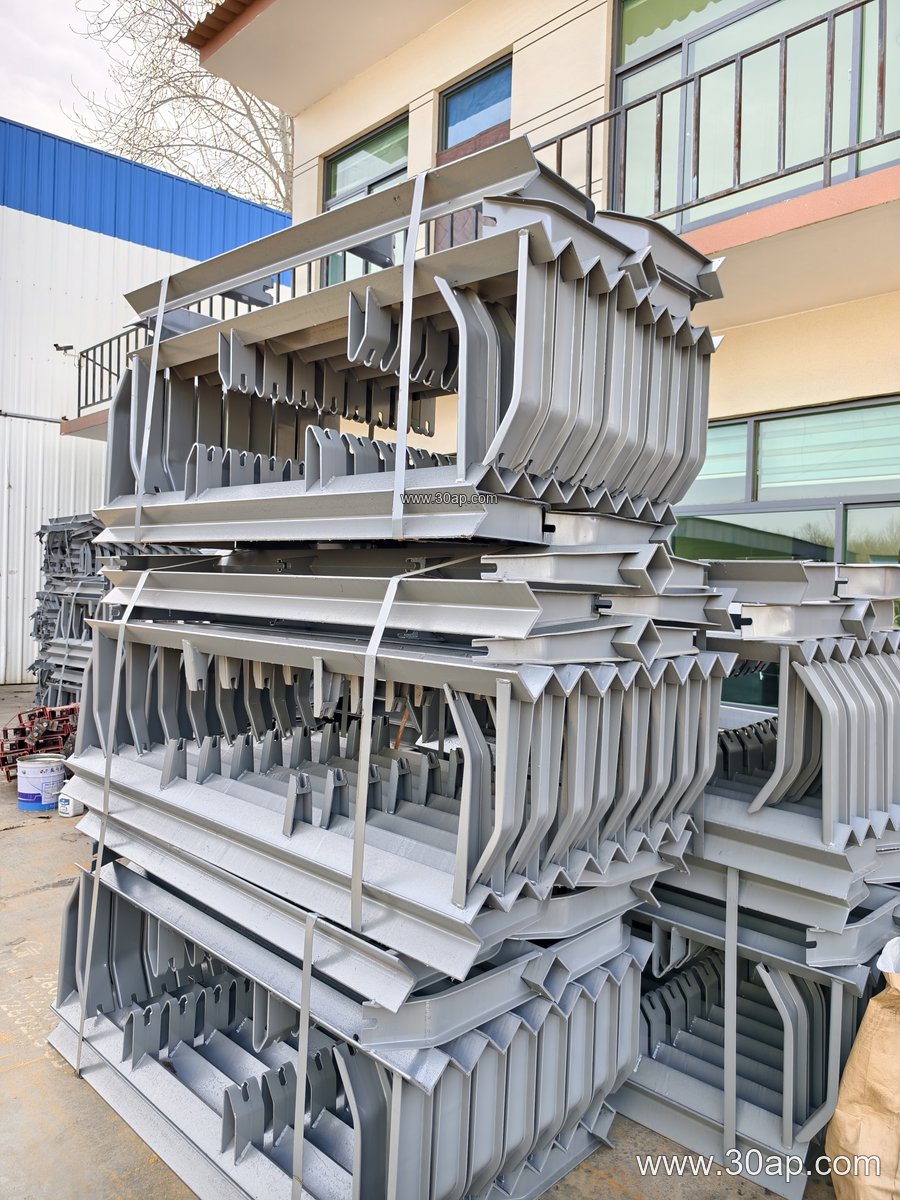
Most three-roll idler brackets are fabricated from angle steel, channel steel, or folded steel plate. The two side arms are formed or welded to set the trough angle, while the centre section carries the middle roll. Roll mounting slots or notches are positioned so the idler shafts sit correctly, and the base is drilled to bolt onto the conveyor frame.
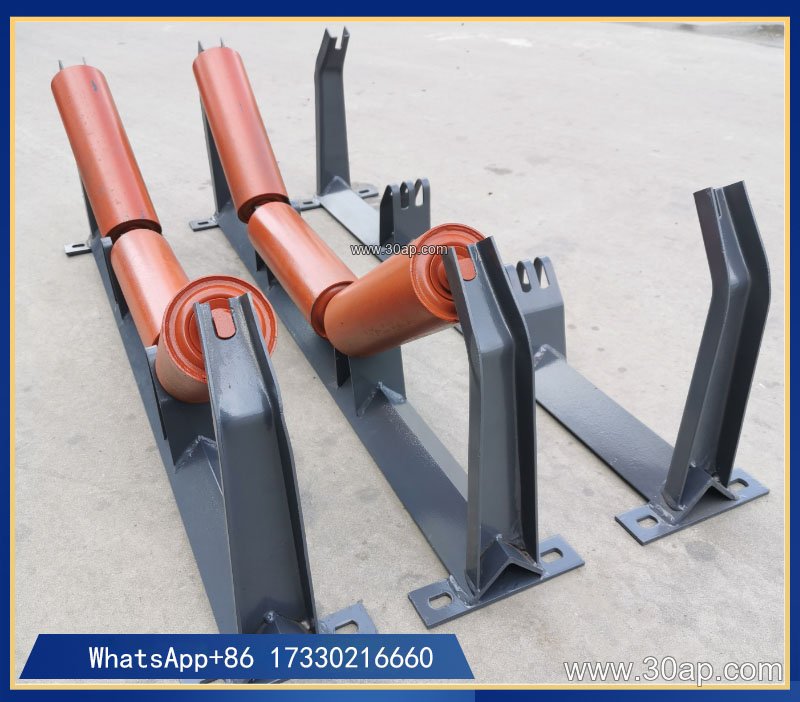
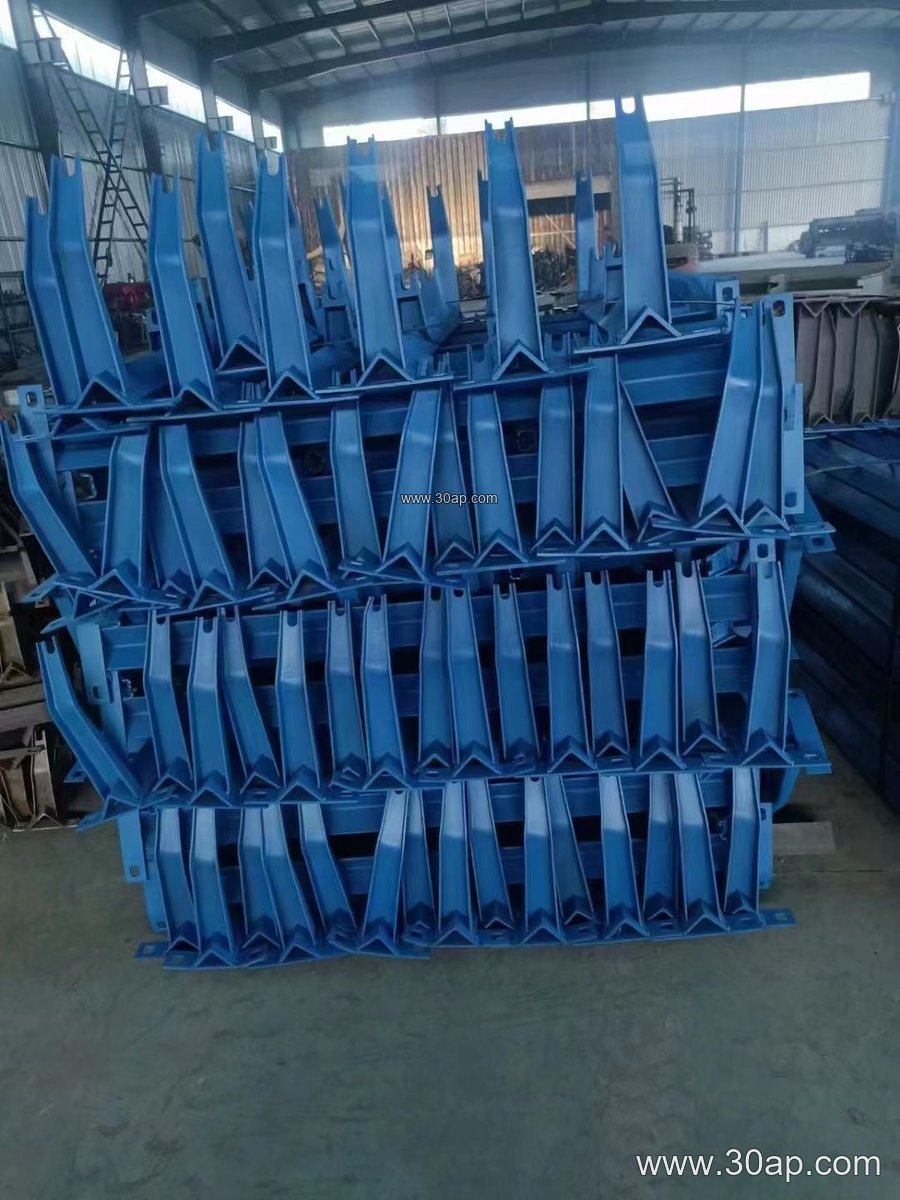
- Material: angle steel, channel steel, or bent plate, usually painted or galvanised
- Roll support: fixed notches, bolt slots, or adjustable arms
- Mounting: bolt holes sized to the stringer spacing, determined by belt width and trough angle
- Options: fixed troughing frames, transition frames near pulleys, and adjustable frames that allow the angle to be changed on site
Because hole spacing and crossbeam length change with belt width and trough angle, a three-roll idler bracket should always be ordered against the actual conveyor drawing rather than by belt width alone.
Common Reference Configurations
The table below shows typical combinations used in design discussions. These are reference values, not universal rules, and the final choice depends on load, belt tension, and frame design.
| Belt width (B) | Trough angle | Idler diameter |
|---|---|---|
| B500 / B650 | 20 to 30 degrees | Ø89 or Ø108 |
| B800 / B1000 | 30 to 35 degrees | Ø108 or Ø133 |
| B1200 / B1400 | 35 to 45 degrees | Ø133 or Ø159 |
| B1600 / B1800 | 35 to 45 degrees | Ø159 or Ø194 |
| B2000 / B2200 | 35 to 45 degrees | Ø194 |
A 35 degree frame with Ø133 rolls is common on medium-width lines, while wide 45 degree brackets with Ø159 or Ø194 rolls suit high-capacity ore and aggregate duty. A three-roll idler bracket for a 650 mm belt does not have to use the same angle as one for a 1800 mm belt, and no single belt width locks the bracket to one trough angle or one roll diameter.
Where It Fits on the Conveyor
The bracket appears along the carrying run, at transition zones where the belt leaves a conveyor pulley, and at loading points where impact frames are used. In a limestone quarry or a sand and gravel line, the bracket works directly with the conveyor belt and the idler roller set. In a coal preparation plant or a power station coal yard, flame retardant and anti-static belt grades are typical, and the bracket must match the same frame height. Similar frames are also used in iron ore handling, sintering plants, and batching stations, and the same basic part appears on any bulk material conveyor.
Fixed vs Adjustable Brackets
A fixed three-roll idler bracket is welded or bolted to one trough angle, which keeps alignment simple and reduces movement. An adjustable bracket lets maintenance staff change the trough angle between positions such as 20, 30, 35, and 45 degrees, which is useful when a conveyor is being recommissioned for a different material or belt. Forward-leaning brackets, usually around 1.5 to 2 degrees, are a separate design used for belt training and should not be confused with the standard troughing frame. Transition brackets near a drive or tail pulley are also a distinct subtype and are selected for the belt path, not as a general replacement.
What Buyers Should Confirm
- Belt width and required trough angle, plus the mounting hole spacing on the existing frame
- Idler diameter and shaft end type, so the rolls seat correctly
- Frame height and stringer spacing, measured on site rather than assumed
- Material and surface treatment for the environment, such as wet washing areas or dusty coal handling
- Whether the position needs a fixed, adjustable, impact, or transition bracket
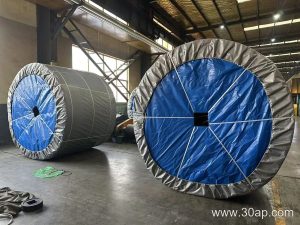
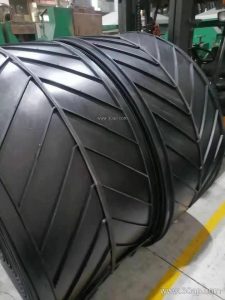
It also helps to check the belt specification at the same time. A heavy-duty mining conveyor belt or a high abrasion resistant conveyor belt may call for a sturdier frame and larger rolls, while a pipe conveyor belt or corrugated sidewall belt uses different support arrangements entirely. For general product data on belts and rollers, see cxmachinery.com. Matching the three-roll idler bracket to the actual belt, roller, and frame dimensions remains the safest way to avoid misalignment and premature roller wear.